Family and Vocation
The Holy Work of Mourning: Love, Loss, and the Nearness of Christ
Christian hope does not silence sorrow. It gives grief a place within prayer, family life, and the promise of resurrection.
Site Admin | October 25, 2026 | 4 views
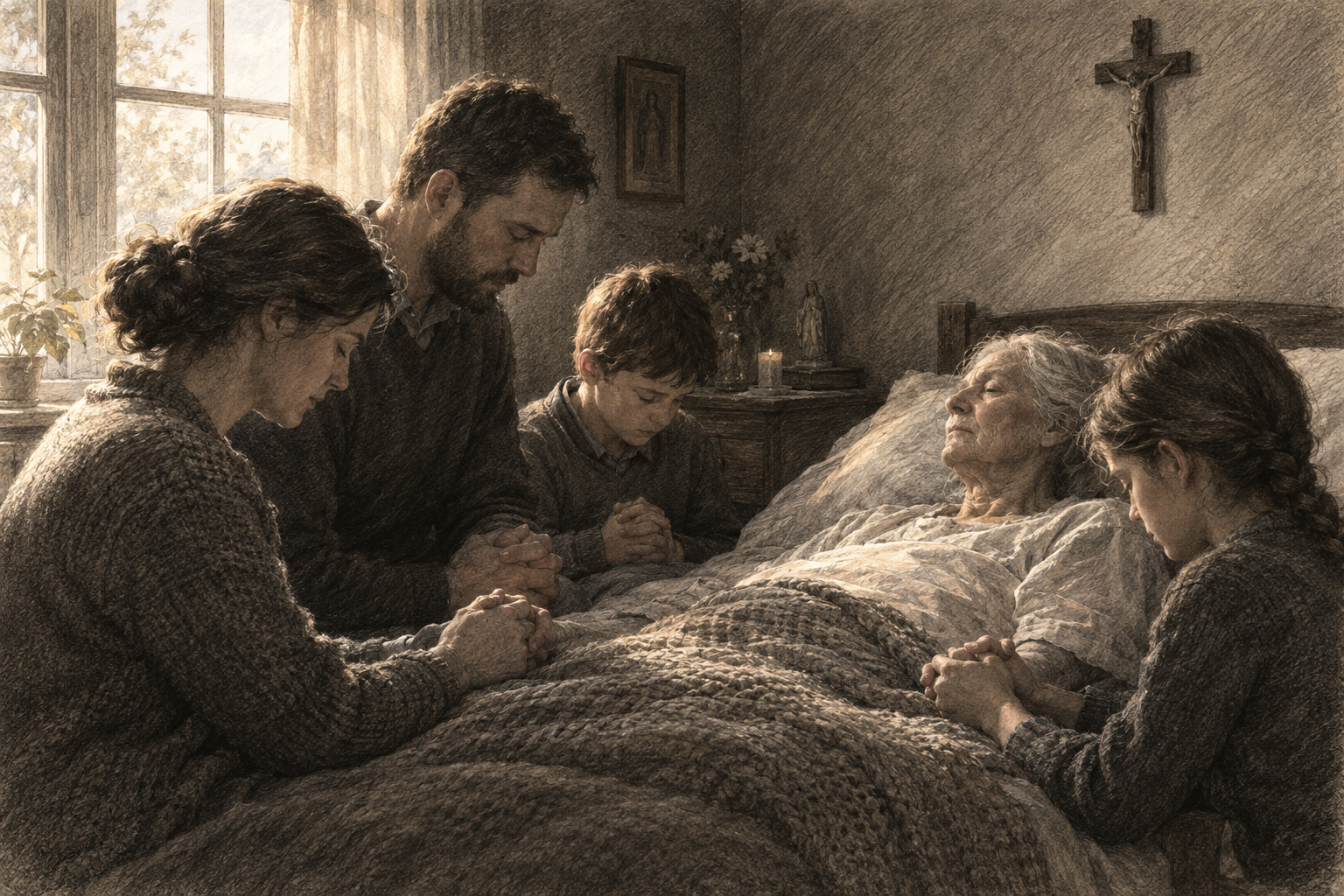
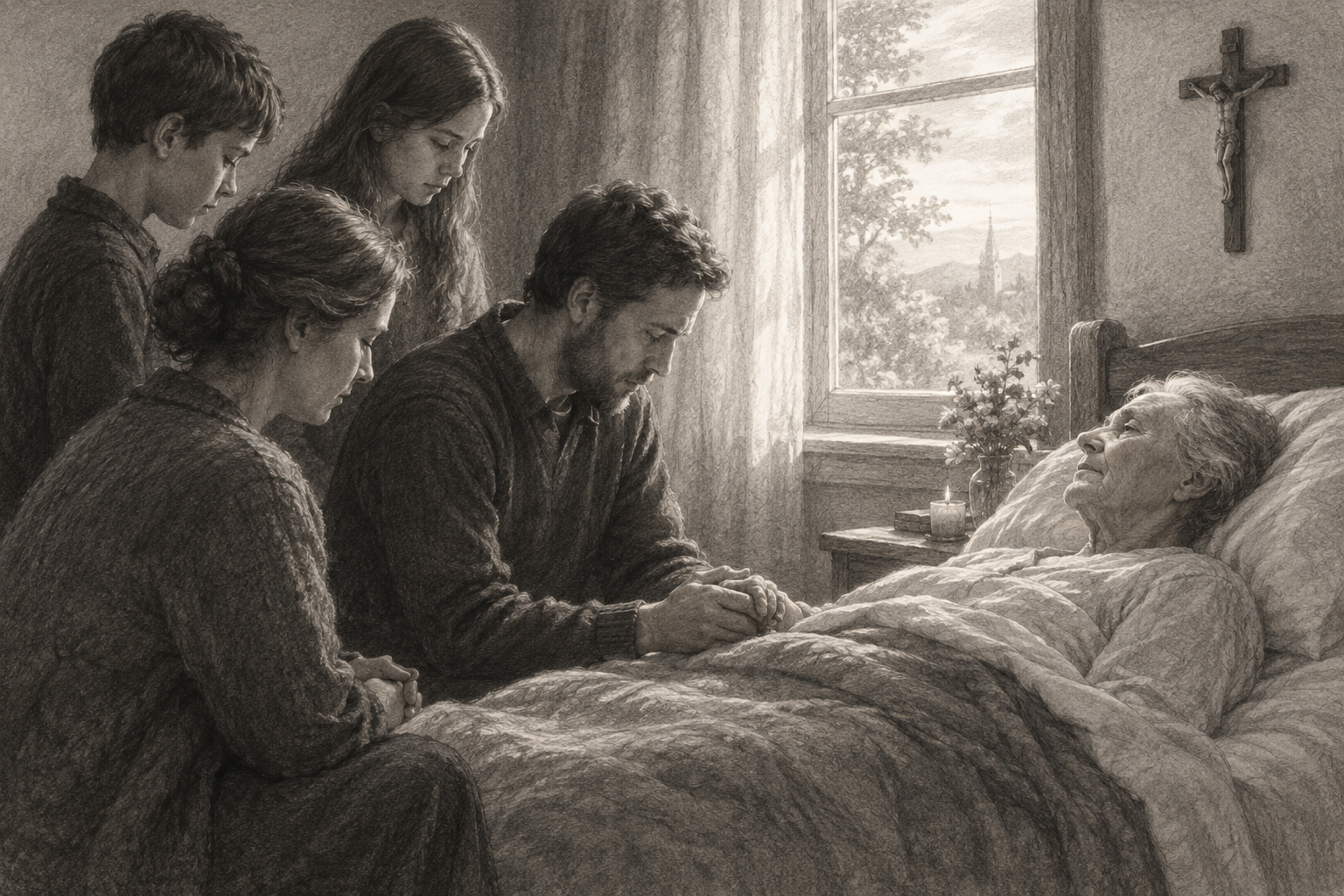
Grief can enter a family quietly or all at once. A death, miscarriage, serious diagnosis, broken relationship, or other profound loss can alter the shape of ordinary life. Familiar rooms feel different. Duties that once seemed simple become exhausting. Prayer may bring comfort one day and feel impossible the next.
A faithful grief Catholic perspective does not ask mourners to pretend that loss is small. Christianity takes death seriously because love is serious. The Church proclaims the resurrection of the body, but she does not treat sorrow as a failure of belief. Catholic hope makes room for tears, silence, questions, remembrance, and the gradual work of learning how to live after loss.
Grace does not always remove grief. More often, grace meets us within it. Christ draws near through prayer, the sacraments, the care of other people, and the quiet endurance of duties that must still be done. The path is rarely orderly, but it can become a path of deeper communion with God and with those we are called to love.
Jesus does not stand at a distance from sorrow
One of the shortest verses in Scripture gives Christians an enduring image of divine compassion:
Jesus wept. John 11:35
Jesus knew that he would raise Lazarus, yet he still wept at his friend's tomb. His tears reveal that hope and sorrow are not enemies. The promise of new life did not make the death of Lazarus unimportant. Nor did divine power make human anguish beneath Christ's attention.
This matters when grief becomes tangled with guilt. A bereaved person may wonder whether crying means that faith is weak. Someone else may feel ashamed for becoming angry, distracted, numb, or unable to pray as before. The tears of Christ show that sorrow itself is not a spiritual defect. Grief is often the wound left by love when someone or something precious has been taken away.
Jesus also speaks to Martha before the tomb is opened: I am the resurrection and the life John 11:25. Christian hope is therefore more than optimism that circumstances will improve. It rests in a person. The risen Christ has entered death and conquered it, so death cannot have the final word over those who belong to him.
Grief from a Catholic perspective
Catholic faith holds several truths together. Death is an enemy and a consequence of humanity's fallen condition. The human person is created for communion with God, not for annihilation. Christ has defeated death through his Paschal Mystery. The faithful departed remain within the communion of saints, and the Church continues to pray for them.
These beliefs do not explain every detail of a particular loss. They do, however, keep grief from collapsing into meaninglessness. Saint Paul tells Christians not to grieve as those who have no hope 1 Thessalonians 4:13. He does not tell them not to grieve. The distinction is essential. Christian mourning remains mourning, but it is held within the promise that death does not sever the bonds established in Christ.
This is why Catholic funeral rites are both sober and hopeful. The funeral Mass does not merely celebrate memories or attempt to distract people from death. It places the deceased and the mourners before the saving death and resurrection of Jesus. The Eucharist proclaims the Paschal Mystery at the very moment when a family most needs to hear that love is stronger than the grave.
Catholics also pray for the dead because love continues beyond death. Prayer for the faithful departed entrusts them to God's mercy and asks for their purification. This practice is not a declaration that we know the state of a particular soul. It is an act of humble charity rooted in confidence that God's judgment is both just and merciful.
When grief disrupts family and vocation
Loss affects more than private emotion. It can unsettle the responsibilities through which a person lives a vocation. A grieving parent may struggle to care for children while carrying sorrow that feels physically heavy. A spouse may suddenly face decisions once shared with another. Adult children may mourn a parent while sorting possessions, arranging care for relatives, or managing practical obligations.
Different family members may grieve differently. One may need to speak often about the person who died. Another may grow quiet. One may weep immediately, while another feels numb for weeks or months. These differences can produce misunderstanding, especially when each person assumes that love must look the same in everyone.
Charity in a grieving family often begins by allowing these differences without judgment. A quiet mourner is not necessarily indifferent. A person who returns to work quickly is not necessarily avoiding grief. Someone who cries unexpectedly has not gone backward. Grief has no universal timetable, and its intensity can return around anniversaries, holidays, liturgical seasons, or ordinary moments.
Vocation does not disappear during grief, but it may need to be lived more gently. Some duties remain necessary, while others can wait. Receiving help is not an abandonment of responsibility. It can be an honest recognition that members of the Body of Christ are meant to bear one another's burdens Galatians 6:2.
Practices that make room for grace
No spiritual practice can force grief to resolve on demand. Certain habits can nevertheless give sorrow a place to be expressed before God rather than hidden or denied.
Pray truthfully rather than impressively
Prayer in grief may be as simple as naming the loss: Lord, I miss this person. Lord, I am angry. Lord, help me through today. The Psalms give believers permission to lament, question, remember, and hope. The psalmist cries from the depths and still waits for the Lord's mercy Psalm 130:1.
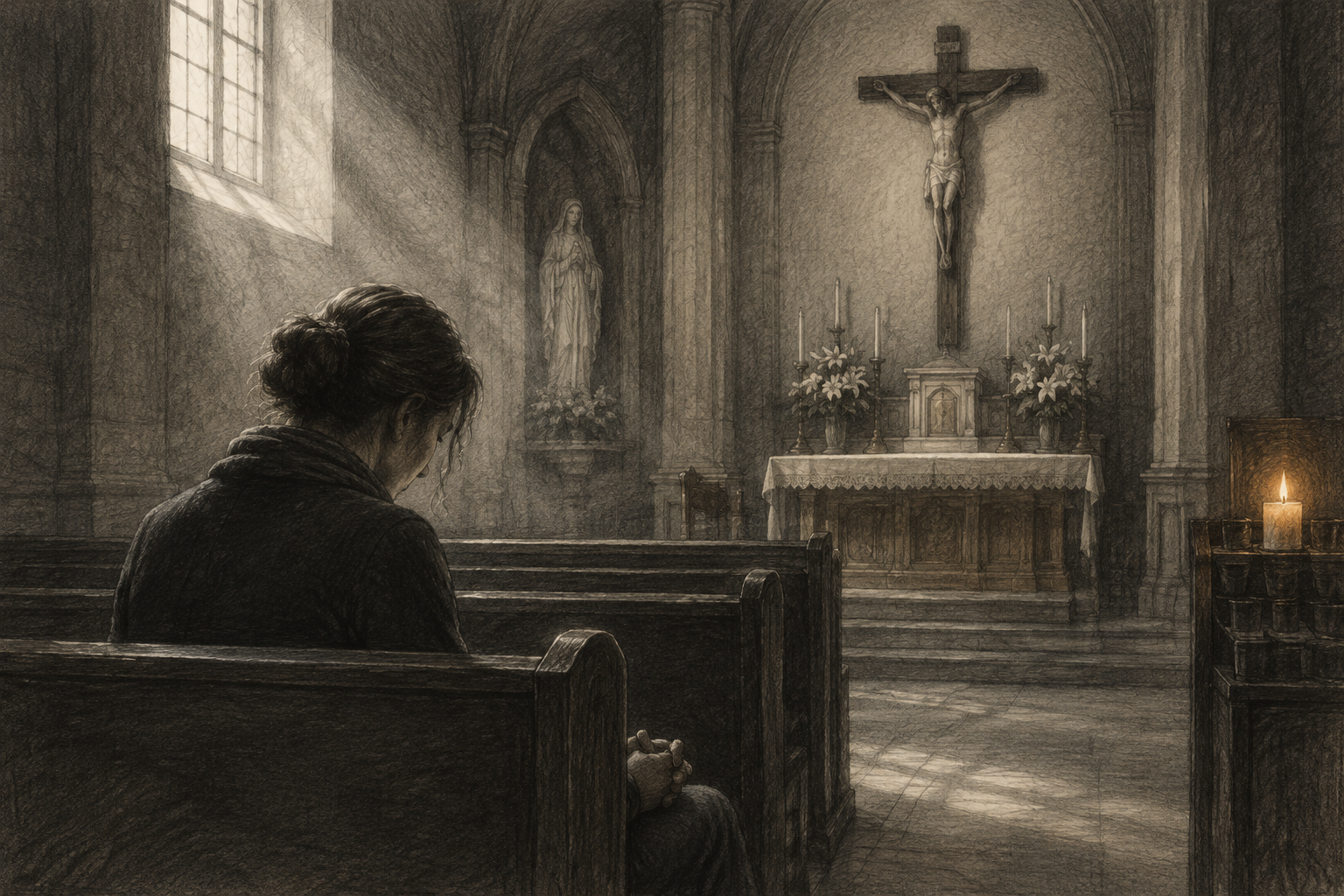
If personal prayer feels impossible, familiar prayers can carry the heart. The Our Father, Hail Mary, Rosary, Divine Mercy Chaplet, and prayers for the faithful departed provide words when one's own words are exhausted. Even sitting silently before a crucifix or in Eucharistic adoration can be genuine prayer.
Remain close to the sacraments
The Eucharist unites the Church on earth with the worship of heaven and strengthens those who are weary. Confession can also be a place of healing, especially when grief has become entangled with resentment, regret, or genuine sin. Yet not every painful thought or emotional reaction is sinful. A good confessor can help distinguish moral responsibility from the distress that naturally accompanies loss.
Care for the body without embarrassment
Grief is not only an idea. It can affect sleep, appetite, concentration, memory, and energy. Regular meals, rest, movement, and medical care are not distractions from spiritual life. Human beings are a unity of body and soul, and care for the body can support the work of prayer and mourning.
Accept concrete help
Vague offers can be difficult to answer, so practical requests may be useful. A grieving person might ask someone to bring a meal, drive a child to school, make a telephone call, attend Mass with them, or sit nearby without demanding conversation. Those supporting a mourner should not rush to explain the loss. Presence is often more merciful than advice.
Seek skilled support when needed
Pastoral care and professional mental health care can serve different but complementary needs. A priest, deacon, religious sister, or trained parish minister may offer spiritual accompaniment. A qualified counselor can help when grief is prolonged, traumatic, or bound up with depression, anxiety, addiction, or family conflict.
Seeking such help is not evidence that prayer has failed. God often provides care through the knowledge, patience, and skill of other people. If a grieving person is in immediate danger or thinking of self-harm, urgent local emergency or crisis support should be contacted.
Memory, regret, and unfinished words
Grief often brings memories that are not simple. Relationships contain failures as well as affection. A mourner may regret a final conversation, time not spent together, forgiveness delayed, or words left unsaid. Some losses reopen older wounds that were never fully healed.
Catholic faith does not require us to rewrite a difficult relationship as though everything had been peaceful. We may tell God the truth. Where we have sinned, we can repent and receive mercy. Where another person hurt us, we can begin the difficult work of forgiveness without denying the harm. Forgiveness may be a gradual act of the will rather than an immediate feeling.
It can help to remember the dead through acts of mercy. A Mass intention, a donation, service to someone in need, or a family prayer offered in the person's memory can direct love toward charity. Such acts do not purchase salvation or erase sorrow. They give mourning a concrete form within the life of faith.
Hope can be quiet and still be real
In the early days of grief, hope may not feel radiant. It may look like getting out of bed, lighting a candle, attending Mass, or answering one necessary message. It may be the decision to pray for the dead even when the prayer feels dry. Small acts of fidelity matter because grace often works beneath the level of strong emotion.
Christians await not an escape from creation but its renewal. Scripture looks toward the day when God will wipe away every tear and death shall be no more Revelation 21:4. Until then, the Church mourns with those who mourn, buries the dead with reverence, prays for souls, and accompanies the living.
Grief changes over time, but love need not be discarded in order for life to continue. In Christ, remembrance can become prayer, sorrow can deepen compassion, and dependence can open the heart to grace. The mourner does not walk toward forgetfulness. With the whole Church, the mourner walks toward the resurrection, carrying both love and loss into the merciful presence of God.
Keep Reading on Lets Read The Bible
Frequently Asked Questions
Is grief a sign of weak Catholic faith?
No. Grief is a natural response to loss, and even Jesus wept at the tomb of Lazarus. Catholic hope does not eliminate sorrow. It places sorrow within trust in Christ's resurrection and God's mercy.
Why do Catholics pray for someone who has died?
Catholics pray for the dead as an act of charity, entrusting them to God's mercy and asking for their purification. The practice expresses belief in the communion of saints and in the enduring bonds among those who belong to Christ.
Can a grieving Catholic seek counseling?
Yes. Professional counseling can complement prayer, pastoral care, and the sacraments. Seeking qualified help is especially important when grief is traumatic, severely disrupts daily life, or is accompanied by depression, addiction, or thoughts of self-harm.