Family and Vocation
The Cross in the Middle of Ordinary Life
A suffering reflection on family, vocation, and the hope that remains when life does not unfold as we expected
Site Admin | October 24, 2026 | 9 views
Suffering rarely arrives at a convenient moment. It enters a marriage already carrying responsibilities, a family stretched by work and care, or a vocation that once seemed clear. Illness, grief, infertility, unemployment, estrangement, disability, anxiety, and disappointment can alter the shape of ordinary life. They can also make familiar religious language sound distant.
A faithful suffering reflection must begin with honesty. Christianity does not require us to call evil good, pretend that pain does not hurt, or insist that every loss is easily explained. The Catholic faith offers something deeper. It proclaims that God has entered human suffering in Jesus Christ, that grace remains active in weakness, and that no life offered to God is wasted.
When suffering interrupts a vocation
A vocation is not merely a personal plan. It is a call from God to love within a particular form of life. Marriage, parenthood, ordained ministry, consecrated life, and faithful single life are all lived through concrete duties and relationships. Suffering can make those duties harder, but it does not automatically erase the call to love.
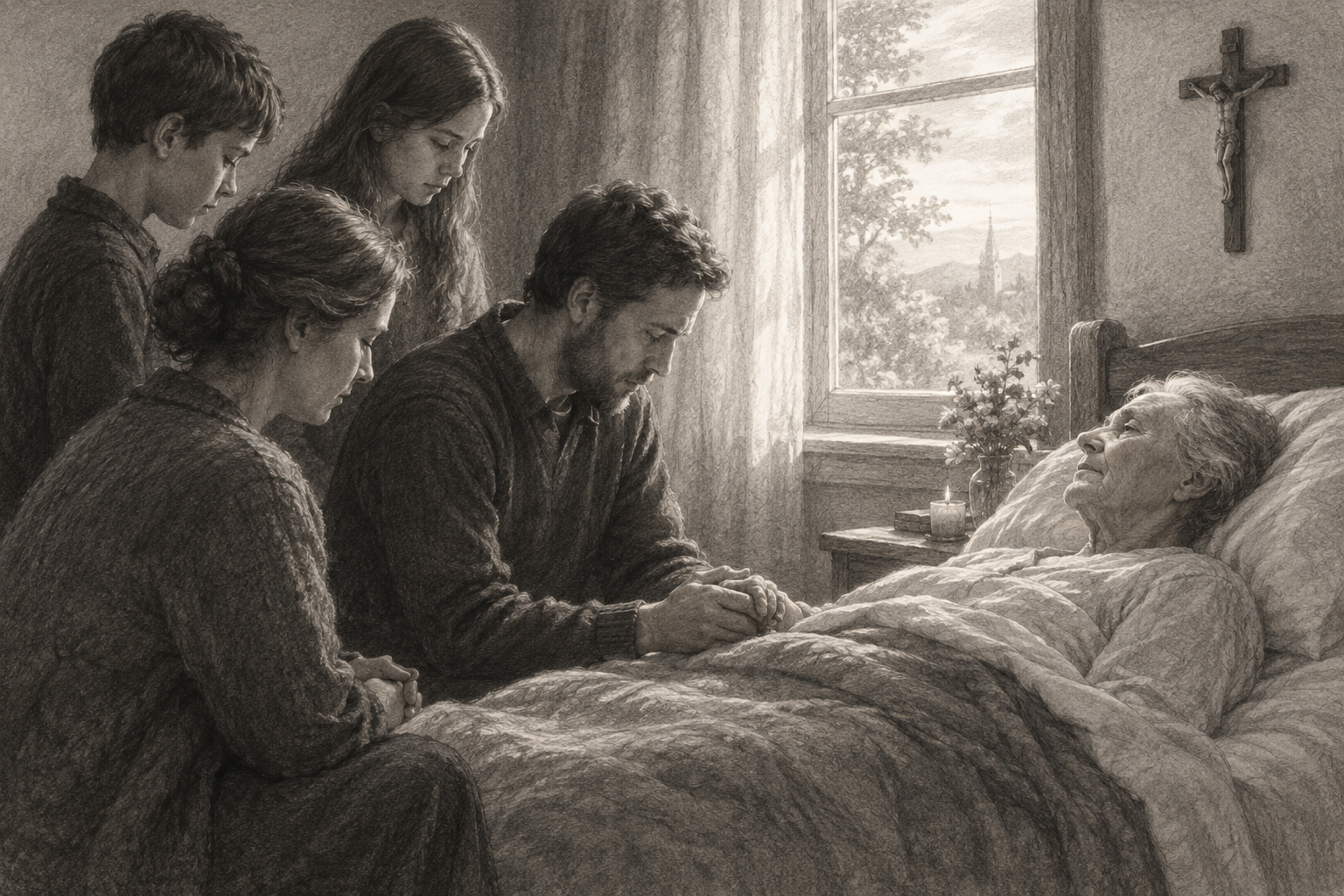
A sick parent may no longer serve the family as before, yet may receive care with humility and offer affection from a place of dependence. A spouse carrying grief may have little emotional strength, yet remain faithful through presence and truthfulness. Someone whose plans for marriage, children, ministry, or work have collapsed may still be called to acts of generosity that are hidden from public view.
This does not mean every painful circumstance is sent directly by God as a punishment or lesson. When the disciples assumed that a man's blindness must have resulted from personal sin, Jesus rejected their simple calculation John 9:3. Scripture describes creation itself as groaning while it awaits redemption Romans 8:22. Human freedom, bodily frailty, injustice, accident, and the wounded condition of the world all belong to the setting in which suffering occurs.
The Cross does not make evil good
At the heart of Catholic faith is not an explanation but a Person. The Son of God did not remain distant from pain. Jesus knew rejection, fatigue, betrayal, fear, physical agony, and death. In Gethsemane he asked that the cup pass from him, while entrusting himself to the Father's will Luke 22:42. His prayer shows that surrender is not the same as emotional numbness. A person may fear suffering and still be faithful.
Christ's death does not teach that cruelty, disease, or injustice become good simply because they can be endured. The Cross reveals what divine love does in the presence of evil. Jesus freely gives himself, remains obedient in love, and passes through death into resurrection. He does not praise the violence done to him. He defeats sin and death through self-giving love.
This is the basis of what Catholics call redemptive suffering. The phrase does not mean that our pain adds something missing from Christ's sacrifice. His saving work is complete. Rather, those who belong to him may unite their trials to his offering. What would otherwise feel isolated can become an act of communion, prayer, and love.
My grace is sufficient for you, for my power is made perfect in weakness. 2 Corinthians 12:9
The Catechism teaches that Christ's compassion and healing reveal God's concern for the whole person. It also teaches that union with Christ gives suffering a new meaning. This new meaning is not always a new feeling. Pain may remain painful. The change is that suffering no longer has to be borne as though Christ were absent.
Scripture gives believers permission to lament
The Bible contains prayers that are troubled, confused, and urgent. The psalmist asks, "How long, O Lord?" Psalm 13:1. Job protests the misery he cannot explain. The prophets grieve over injustice and destruction. Biblical faith is not maintained by suppressing sorrow. It is maintained by bringing sorrow into conversation with God.
Mary also belongs within any Christian reflection on suffering. Simeon foretold that a sword would pierce her soul Luke 2:35. She did not seek suffering for its own sake. She received a vocation of love whose cost unfolded over time. At Calvary, she stood near the Cross John 19:25. Her steadfast presence offers a pattern for families who cannot fix a loved one's pain but can refuse to abandon the one who suffers.
Lament and hope can exist together. Hope does not demand that a Christian feel cheerful. Saint Paul compares present suffering with the glory yet to be revealed Romans 8:18. His words do not trivialize present anguish. They place it within a future secured by the resurrection of Christ.
Love becomes concrete in families
Suffering can draw a family together, but it can also expose fear, resentment, exhaustion, and old wounds. Caregivers may feel guilty for being tired. The person receiving care may feel ashamed of needing help. Spouses may grieve differently. Children may misunderstand what adults are carrying. These tensions are not proof that faith has failed. They are invitations to practice truth, patience, repentance, and mercy.
Several habits can help families live faithfully during a painful season:
- Name the reality. Honest language is usually kinder than forced reassurance. It is possible to say, "This is hard," without denying God's goodness.
- Accept appropriate help. Assistance from relatives, friends, parishioners, physicians, counselors, and community services can be an expression of providence rather than a sign of failure.
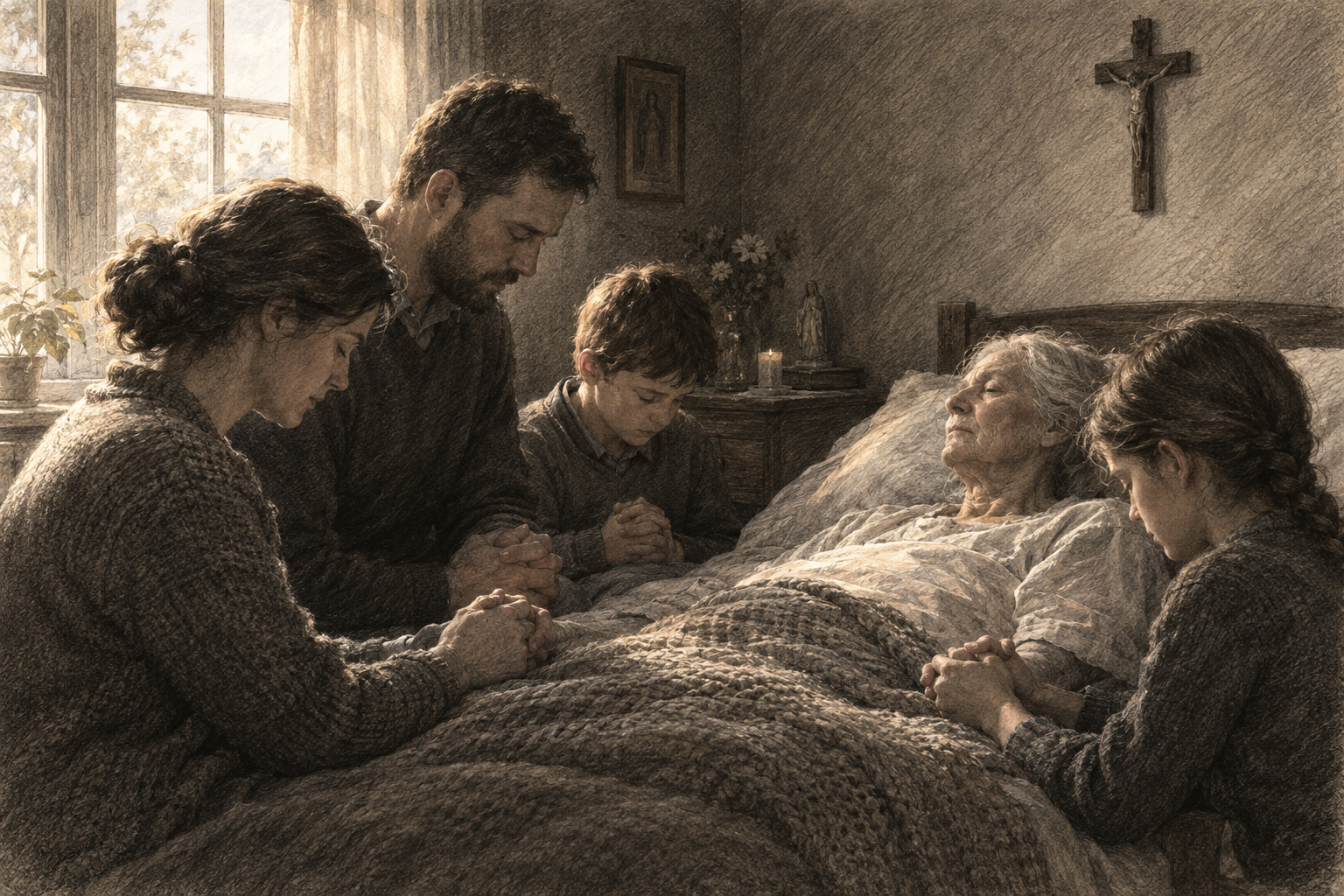
- Keep prayer small when necessary. A single Our Father, a decade of the Rosary, a brief reading from the Psalms, or quiet presence before a crucifix may be enough for that day.
- Make room for different forms of grief. Family members do not always process loss at the same pace or with the same emotions.
- Protect the vulnerable. Christian patience does not require someone to remain in immediate danger, conceal abuse, or refuse necessary intervention. Seeking safety and responsible help can be an obligation of love.
The Church also offers sacramental care. The Anointing of the Sick is not reserved only for the final moments of life. It is intended for the faithful who face serious illness or the frailty of old age. The Letter of James directs the sick to call for the presbyters of the Church, who pray and anoint in the Lord's name James 5:14. Confession, the Eucharist, and pastoral companionship can also strengthen a person and family for the road they must walk.
Offering suffering to God
Catholics sometimes speak of "offering it up." Properly understood, this is not a command to remain silent about harm or to reject relief. It is a way of placing unavoidable suffering into Christ's hands. A person may seek treatment, ask for deliverance, set healthy boundaries, and still unite what cannot presently be changed to the sacrifice of Jesus.
This offering can be simple:
- Acknowledge the suffering without exaggerating or minimizing it.
- Ask Christ for healing, strength, wisdom, and trustworthy assistance.
- Unite the burden to his Cross for a particular person or intention.
- Choose the next available act of love, even if it is very small.
Saint Paul urges Christians to offer their bodies as a living sacrifice to God Romans 12:1. For someone in pain, that offering may consist of attending a medical appointment, accepting a meal from a neighbor, speaking gently while exhausted, or praying for another person from a hospital room. These actions may appear ordinary, but love gives them spiritual weight.
Hope is more than optimism
Optimism expects circumstances to improve. Christian hope rests in God's faithfulness even when improvement cannot yet be seen. Catholics may pray confidently for healing while recognizing that every earthly life remains mortal. The final promise is not an escape from being human, but the resurrection of the body and life with God.
The Book of Revelation looks toward the day when God will wipe away every tear and death will be no more Revelation 21:4. Until then, believers live between promise and fulfillment. We visit the sick, bury the dead, forgive one another, seek justice, receive the sacraments, and continue the duties of love.
Suffering may narrow a person's world, but it cannot place that person beyond the reach of Christ. When prayer becomes little more than a sigh, he is near. When a family has no answer but chooses to remain present, he is near. When the future is hidden and the next faithful step is all that can be offered, that step can still be taken with the One who carried the Cross and rose from the tomb.
Keep Reading on Lets Read The Bible
Frequently Asked Questions
Does Catholic teaching say that God directly causes every instance of suffering?
No. Catholic teaching recognizes that suffering can arise from natural frailty, human sin, injustice, harmful choices, accidents, and the wounded condition of creation. God may permit suffering without approving the evil involved. His providence can bring grace and goodness from painful circumstances, but this does not make cruelty, disease, or loss good in themselves.
What does it mean to offer suffering to God?
To offer suffering means to unite an unavoidable burden with the self-offering of Jesus Christ. A person can ask for healing, seek medical or psychological care, establish necessary boundaries, and accept help while also entrusting the pain to God. The offering can be made for a loved one, the Church, the conversion of sinners, or another worthy intention.
Is seeking relief from suffering a sign of weak faith?
No. Jesus showed compassion to the sick, and the Church supports responsible care for the body and mind. Seeking treatment, counseling, safety, rest, or practical assistance can be an act of stewardship. Faith does not require passivity in the face of illness, abuse, or preventable harm. It calls believers to pursue what is good while trusting God with what remains beyond their control.