Family and Vocation
Held in Her Heart: Mary and the Daily Vocation of Motherhood
From Nazareth to Calvary, the Mother of Jesus reveals a love shaped by trust, attention, sacrifice, and hope.
Site Admin | October 20, 2026 | 4 views
Christian reflection on motherhood begins not with an idealized picture of family life, but with a real woman receiving a difficult call from God. Mary is young, betrothed, and confronted by a message that surpasses human understanding. Her response is neither careless nor passive. She asks a sincere question, listens to the angel, and freely gives herself to God's will: "Behold, I am the handmaid of the Lord" Luke 1:38.
That moment has rightly become a model of discipleship for the whole Church. It also speaks with particular tenderness to mothers. Motherhood often begins and continues through acts of consent that cannot fully predict what will follow. A mother welcomes a child whose personality, gifts, trials, and future remain hidden. She accepts responsibility for a life she cannot control. Even when motherhood is long desired, its daily reality asks for a renewed yes.
Mary's example does not reduce motherhood to sweetness or sentiment. Her path includes joy, uncertainty, poverty, misunderstanding, fear, separation, and grief. Yet through all of it, she remains receptive to grace. She shows that holy motherhood is not measured by having a painless family life. It is found in loving faithfully within the life one has actually been given.
Mary's Yes Was Free, Thoughtful, and Courageous
The Annunciation reveals an essential truth about vocation: God calls, but he does not treat the human person as an object. Mary listens and responds freely. Catholic teaching has always guarded this freedom. Her obedience is not weakness, and her humility is not self-contempt. She places her intelligence, body, future, and relationships at the service of divine love.
This helps correct two common misunderstandings of maternal sacrifice. The first treats self-giving as if a mother should have no legitimate needs, limits, or voice. The second treats freedom as the absence of obligation. Mary shows another way. Christian freedom reaches maturity in love. Her yes creates real responsibilities, but those responsibilities flow from a personal gift rather than coercion.
For an ordinary mother, this kind of freedom may appear in small decisions: rising to comfort a frightened child, seeking medical help, apologizing after impatience, protecting time for prayer, accepting assistance, or setting a necessary boundary. Love is not proved by exhaustion alone. Sometimes love serves by giving more. Sometimes it serves by admitting that help is needed.
The Hidden Work of Nazareth
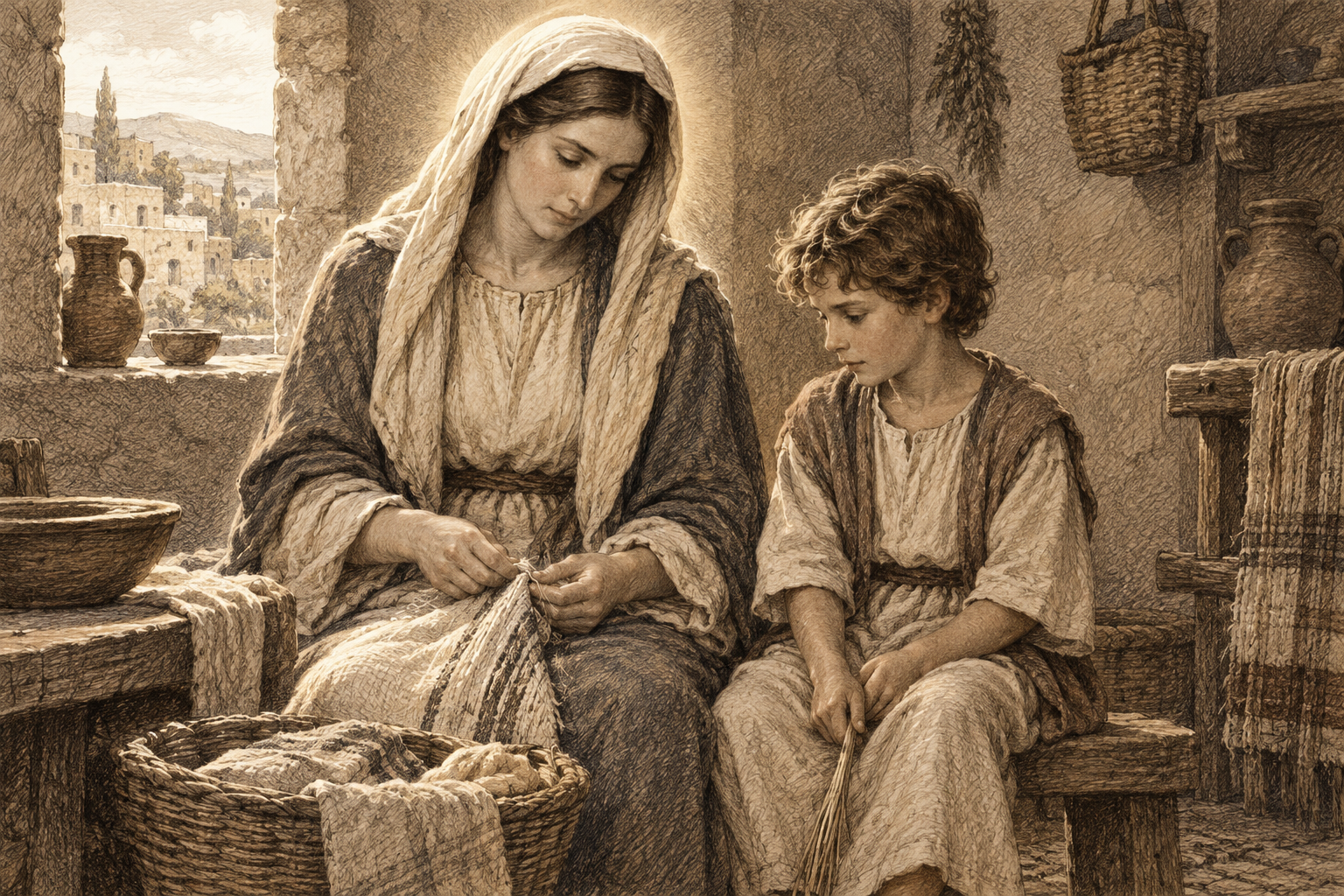
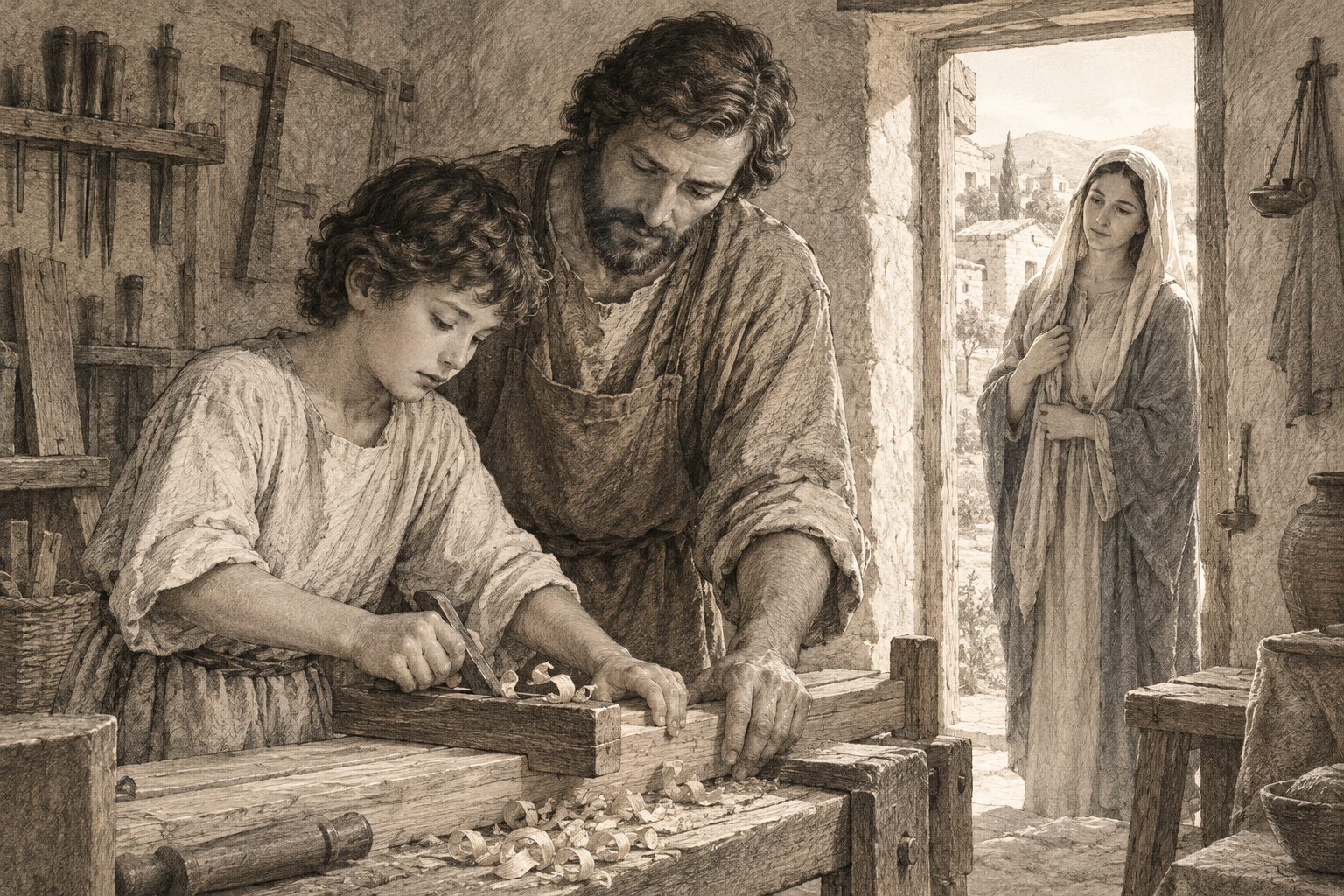
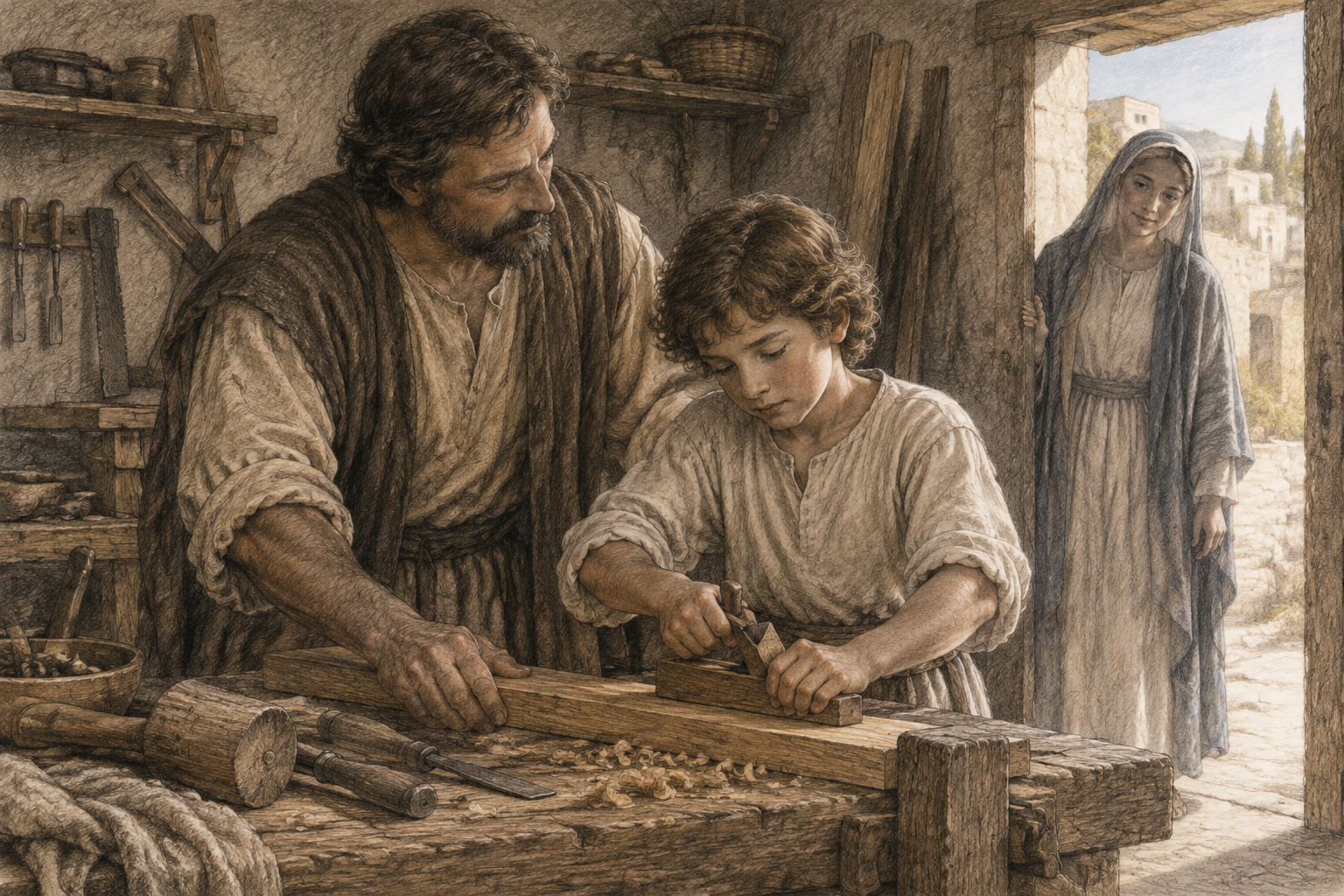
After the great events surrounding Jesus' birth, much of Mary's motherhood unfolds in obscurity. The Gospel gives few details about the home at Nazareth. That silence is itself instructive. Most of family life is not dramatic enough to be recorded. Meals are prepared, clothing is mended, prayers are taught, work is done, and the same needs return the next morning.
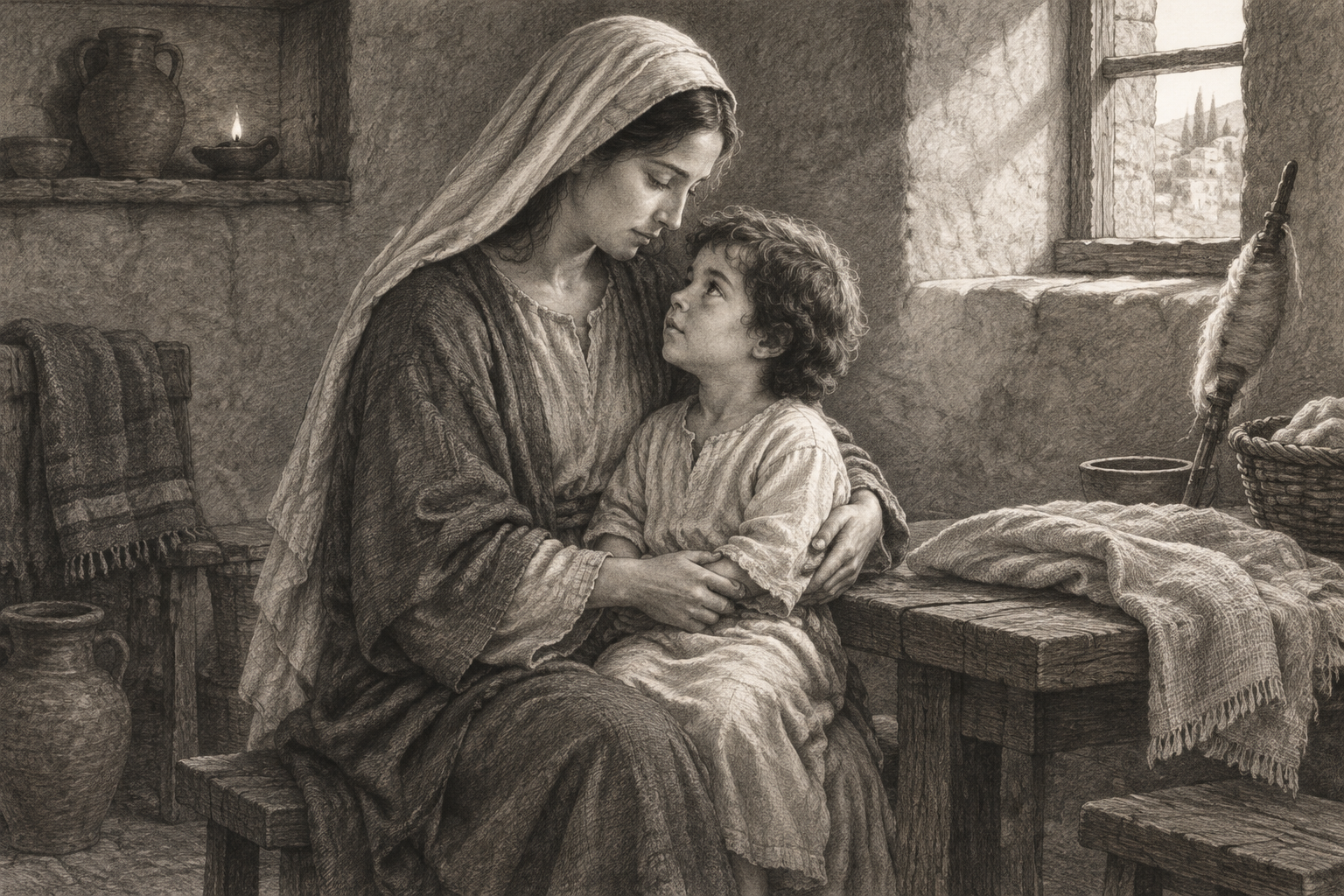
Luke gives one precious description of Mary's interior life: she kept the events concerning Jesus and pondered them in her heart Luke 2:19. Later, after finding the young Jesus in the Temple, the Gospel again says that she treasured these things in her heart Luke 2:51. Mary does not understand everything immediately. She remembers, considers, and remains near.
This contemplative attention is one of her greatest lessons for parents. A child is not a problem to solve or a project to manage. Each child is a mystery entrusted to a family and ultimately belonging to God. Attentive motherhood notices without trying to possess. It asks who this child is becoming, what wounds require care, what gifts need encouragement, and where God may already be at work.
Such attention is difficult in a distracted age. Families face crowded schedules, financial pressure, constant notifications, and conflicting advice. Mary's pondering heart invites mothers to make room for quiet, even if only for a few minutes. Prayer does not remove the practical demands of family life. It allows those demands to be seen in the light of providence rather than panic.
A Mother Who Could Not Control Every Outcome
Mary's care for Jesus never becomes ownership. At the finding in the Temple, she speaks honestly about the sorrow that she and Joseph have experienced Luke 2:48. Jesus' answer points toward his unique mission and his relationship with the Father. Mary does not receive a complete explanation, yet she continues with him.
Every healthy form of motherhood must gradually make room for a child's God-given freedom. This can be one of its most painful demands. A baby depends almost entirely upon others. An older child begins to choose, question, fail, repent, and discern. An adult child may follow a path a mother did not imagine. Maternal love remains real, but its form must change.
Mary teaches mothers to accompany without controlling. This does not mean indifference or silence in the face of danger. Parents have a duty to guide, correct, and protect according to a child's age and circumstances. Yet even the wisest mother cannot guarantee virtue, success, health, or belief. She can teach the faith, offer counsel, maintain appropriate boundaries, and pray. She cannot replace another person's freedom.
This truth can be both painful and liberating. A mother is responsible for loving faithfully, not for exercising divine providence. God alone sees the whole path of a child's life.
At Cana, Mary Notices and Intercedes
At the wedding feast of Cana, Mary recognizes a need before it becomes a public humiliation. She tells Jesus that the wine has failed, then directs the servants toward him: "Do whatever he tells you" John 2:5. Her words offer a compact portrait of Christian maternal care. She notices, intercedes, and points others to Christ.
Mary does not draw attention to herself. Nor does she dictate the manner in which Jesus must act. She brings the need to him with confidence. Catholic devotion to Mary follows this same pattern. The Church does not adore Mary. Adoration belongs to God alone. Catholics honor her as the Mother of God because the one she bore is truly the eternal Son made man. They ask for her prayers because Christian life is lived within the communion of saints, not in spiritual isolation.
For mothers, Cana offers a practical pattern of prayer. They can name a child's need before Christ without pretending to know exactly how he should answer. They can pray for healing, conversion, friendship, wisdom, employment, courage, or peace. Then, like Mary, they can encourage obedience to Jesus rather than dependence upon themselves.
Motherhood Beneath the Cross
Any reflection on Mary and motherhood must eventually reach Calvary. Simeon had foretold that a sword would pierce her soul Luke 2:35. At the Cross, that prophecy takes a terrible form. Mary cannot remove the nails, stop the mockery, or spare her Son from death. She can only remain.
Her presence is not nothing. In a world that often values action more than fidelity, Mary reveals the holiness of staying near when suffering cannot be fixed. Many mothers know some part of this helpless love. They sit beside hospital beds, wait through addiction and estrangement, accompany children with disabilities, grieve miscarriages, or pray through crises that have no quick resolution. Their presence does not solve every sorrow, but faithful presence can become an offering of profound love.
From the Cross, Jesus speaks to Mary and the beloved disciple, entrusting them to one another John 19:26 John 19:27. Catholic tradition sees in this scene more than a private arrangement for Mary's care. Mary is received as mother within the household of faith. Her spiritual motherhood does not compete with Christ's saving work. It depends entirely upon it and serves it.
This wider motherhood matters because maternal fruitfulness is not limited to biological parenthood. Some women long for children they have not received. Some have lost children. Some are unmarried, consecrated, adoptive, foster, or called to forms of service that nurture the life of grace in others. The Church needs this spiritual motherhood. Teaching, mentoring, interceding, welcoming, protecting, and accompanying can all become genuinely maternal acts when they help another person grow in truth and love.
Mary Does Not Set an Impossible Standard
Because Mary was preserved from sin by God's grace, some mothers may feel that her example is too distant from their daily failures. Yet Marian devotion should never produce despair. Mary's holiness is first the work of grace, and grace is given to draw human beings toward God, not to humiliate them.
Mothers do not honor Mary by pretending to be serene at every moment. They honor her by returning to God. A tired mother may lose patience. A worried mother may become controlling. A wounded mother may struggle to give affection. The Christian response is not denial, but repentance, repair, and renewed trust. Asking forgiveness from a child can be an act of parental authority purified by humility.
Nor should Mary's example be used to pressure women into enduring abuse or neglecting serious physical and mental health needs. Christian sacrifice is governed by truth and charity. Seeking safety, professional care, pastoral counsel, or practical support can be an act of responsibility toward both mother and child.
Practices for a Marian Heart at Home
Mary's life suggests several simple practices that can shape family life without turning it into a performance.
- Begin with a daily yes. Offer the day's work, interruptions, and relationships to God before trying to manage them alone.
- Ponder before reacting. When possible, pause before correcting a child or answering a painful remark. A brief prayer can create room for wisdom.
- Bring needs to Jesus. Intercession does not require eloquence. Name the person and the need honestly, then entrust the outcome to Christ.
- Point beyond yourself. Teach children that their deepest identity rests in God, not in achievement, popularity, or even parental approval.
- Remain near in suffering. When no solution is available, offer attention, prayer, and steady companionship.
- Receive help from the Church. Mary prayed with the disciples as they awaited the Holy Spirit Acts 1:14. Mothers also need the sacraments, friendship, counsel, and the support of a worshiping community.
The example of Mary is not an ornament placed above the untidy realities of home. It belongs in kitchens, cars, sickrooms, school meetings, parish pews, and sleepless nights. She knows the joy of welcoming life, the strain of uncertainty, the necessity of letting go, and the grief of standing beside suffering. Through it all, she directs attention to her Son.
Motherhood shaped by Mary is not perfect efficiency or constant emotional calm. It is a life repeatedly opened to grace. Its deepest prayer may be quiet and simple: let Christ be welcomed here, let this child be loved as a person entrusted by God, and let today's imperfect offering become another faithful yes.
Keep Reading on Lets Read The Bible
Frequently Asked Questions
How does Mary serve as a model for Catholic mothers?
Mary models free consent to God's call, attentive care, prayerful reflection, intercession, and faithful presence in suffering. Her life shows that holy motherhood is not control or perfection, but a repeated willingness to love and trust God in real circumstances.
Does honoring Mary take attention away from Jesus?
No. Authentic Catholic devotion to Mary is centered on Christ. Catholics honor her because she is the Mother of the incarnate Son of God, and they ask for her intercession as a member of the communion of saints. Like Mary at Cana, genuine Marian devotion directs believers to do what Jesus commands.
Can Mary's motherhood speak to women who are not biological mothers?
Yes. Catholic tradition recognizes spiritual motherhood as a real form of Christian fruitfulness. Women may nurture the life of others through prayer, teaching, mentoring, hospitality, consecrated life, adoption, foster care, service, and faithful accompaniment.