Family and Vocation
A Mother's Yes in the School of Nazareth
Mary reveals how trust, attention, sorrow, and ordinary service can become a path of grace within the vocation of motherhood.
Site Admin | October 19, 2026 | 4 views
Motherhood often unfolds far from public attention. Its most demanding moments may be known only to God: a feeding in the night, a difficult conversation, an anxious wait outside a doctor's office, a prayer whispered over a sleeping child. These acts can look small from the outside, but they belong to a vocation in which love is repeatedly asked to become concrete.
For Catholics, Mary stands at the heart of any reflection on motherhood. She is not a sentimental figure placed beyond ordinary human experience. She is a real woman who freely welcomed God's call, carried Jesus in her womb, cared for him in the hidden life of Nazareth, followed him during his public ministry, and remained near him at the Cross. Her motherhood was unlike any other because the child she bore is the eternal Son of God made man. Yet within that unique vocation, mothers can recognize familiar demands: uncertainty, sacrifice, attentiveness, patience, grief, and hope.
Mary's motherhood begins with trust
At the Annunciation, Mary receives a calling that she did not design for herself. She asks a sincere question, listens to the angel's answer, and then gives her consent: Luke 1:38. Her response is not passive resignation. It is an act of faith offered by a person with intellect, freedom, and courage.
This moment helps clarify an important Catholic principle. A vocation is a gift from God, but grace does not erase human freedom. Grace enables a person to respond more fully. Mary's yes is wholly dependent on God's initiative, yet it is truly her yes.
Motherhood also includes many forms of consent that must be renewed. There is the first welcome of a child, followed by countless daily choices to love that child as a person entrusted by God. Mothers may have to surrender expectations about temperament, health, achievement, family size, or the shape of the future. This surrender does not mean indifference. It means receiving a child rather than trying to possess or control that child's life.
Mary's example does not tell a mother that every difficulty will disappear. It shows that God can be trusted within a life whose full meaning is not yet visible.
The Mother of God and the truth about Christ
The Church calls Mary the Mother of God because Jesus is one divine person who possesses both a divine nature and a human nature. Mary did not originate his divinity, but the one she conceived and gave birth to is truly God the Son. This title protects the truth about Jesus. It also honors the astonishing closeness of the Incarnation: the Son of God accepted gestation, birth, dependence, and family life.
Mary's dignity always points toward Christ. Catholic devotion does not treat her as a rival to him or as a separate source of salvation. Every grace comes from God through the saving work of Jesus Christ. Mary is honored because of what God accomplished in her and because of her faithful cooperation with his grace.
This Christ-centered understanding keeps Marian devotion healthy. A mother who turns to Mary in prayer is asking a fellow member of Christ's Body, and the foremost among the saints, to intercede for her. She is not stepping away from Jesus. She is asking for help in following him.
The hidden formation of Nazareth
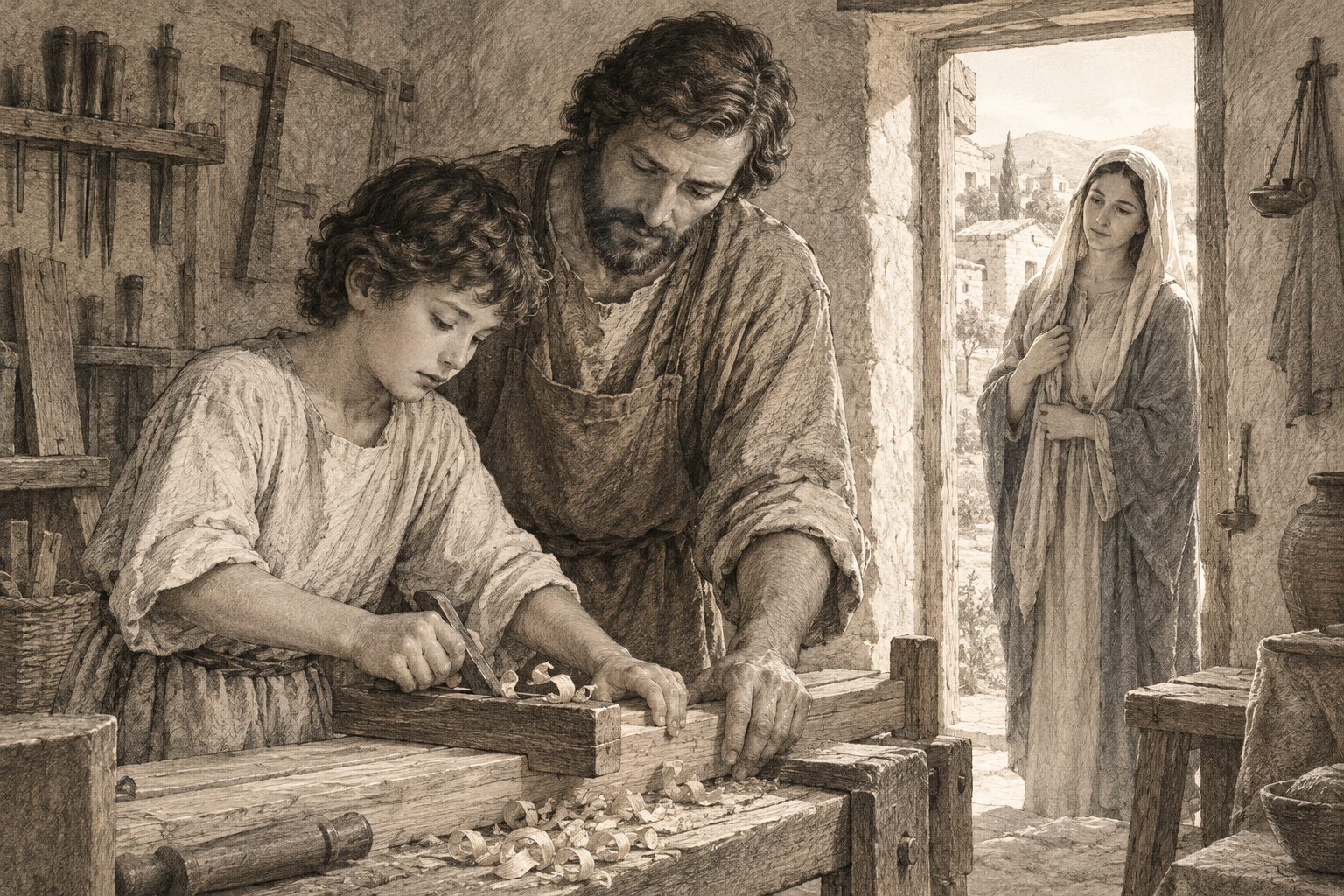
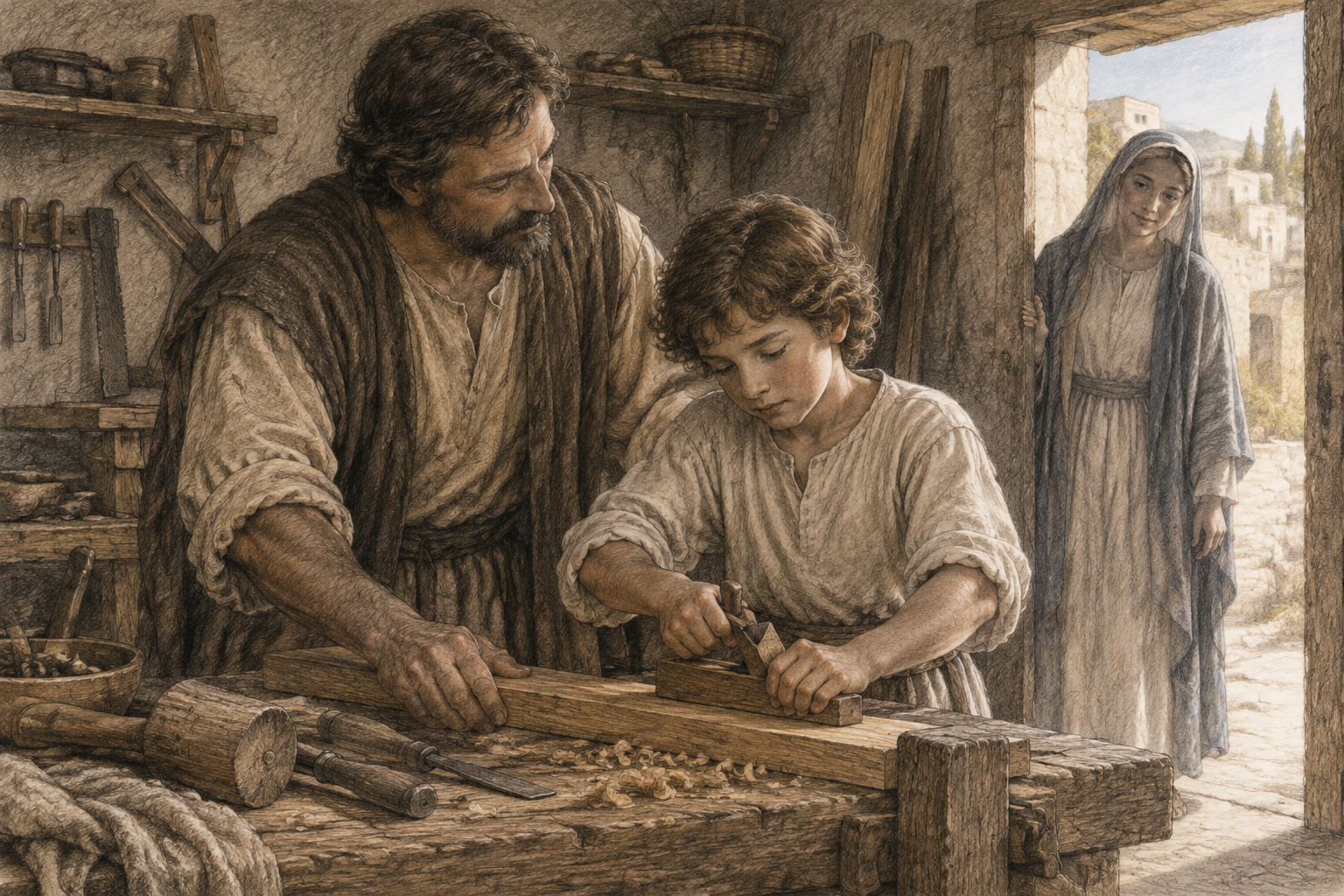
The Gospels give few details about the years Jesus spent in Nazareth, but they tell us that he lived in obedience within the Holy Family: Luke 2:51. Those hidden years affirm the value of ordinary family life. Meals, work, worship, conversation, correction, rest, and hospitality can all become part of a child's formation.
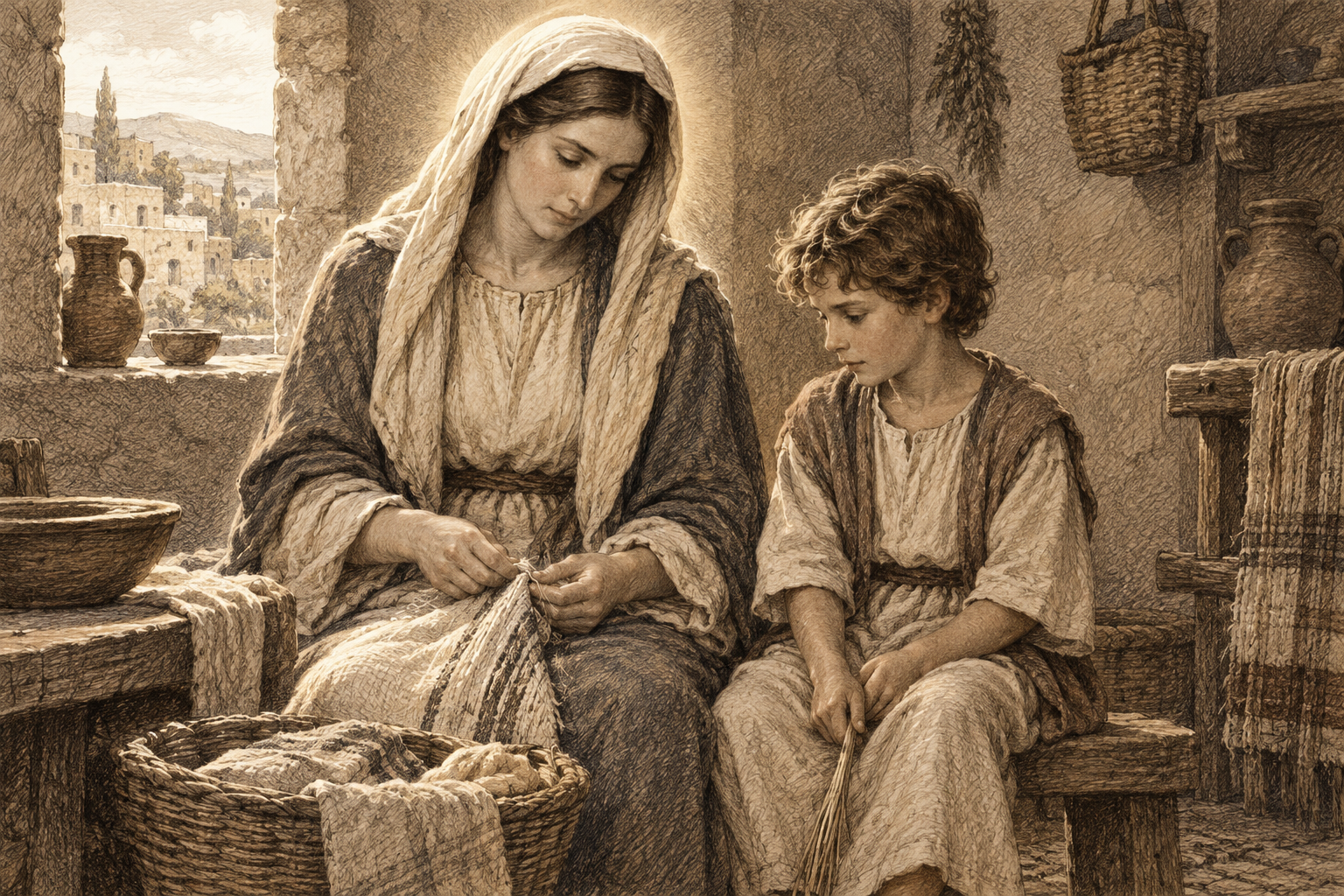
Mary did not raise Jesus by performing only visibly extraordinary acts. Much of her motherhood must have involved the repeated duties by which a household is sustained. The silence of Scripture about those years should not make them seem empty. It suggests that holiness can mature in daily faithfulness without public recognition.
This is consoling for mothers whose work feels repetitive. Preparing food, washing clothes, keeping appointments, answering questions, setting limits, and offering comfort are not distractions from spiritual life. When offered in love, they can become expressions of it. The home is not automatically holy simply because it is a home, but grace can transform domestic work into service of persons made in the image of God.
That truth also guards against romanticizing motherhood. Domestic life may include exhaustion, financial strain, disability, conflict, loneliness, or mental and physical illness. Some mothers work outside the home out of necessity or calling. Others remain at home and encounter a different set of burdens. The Church's reverence for motherhood should never become a reason to dismiss a mother's need for rest, medical care, friendship, or practical help.
She kept these things in her heart
Twice in the account of Jesus' early life, Luke draws attention to Mary's interior attentiveness. After the shepherds visit, she treasures and ponders what has happened: Luke 2:19. Her contemplation does not remove her from responsibility. It allows her to receive events more deeply.
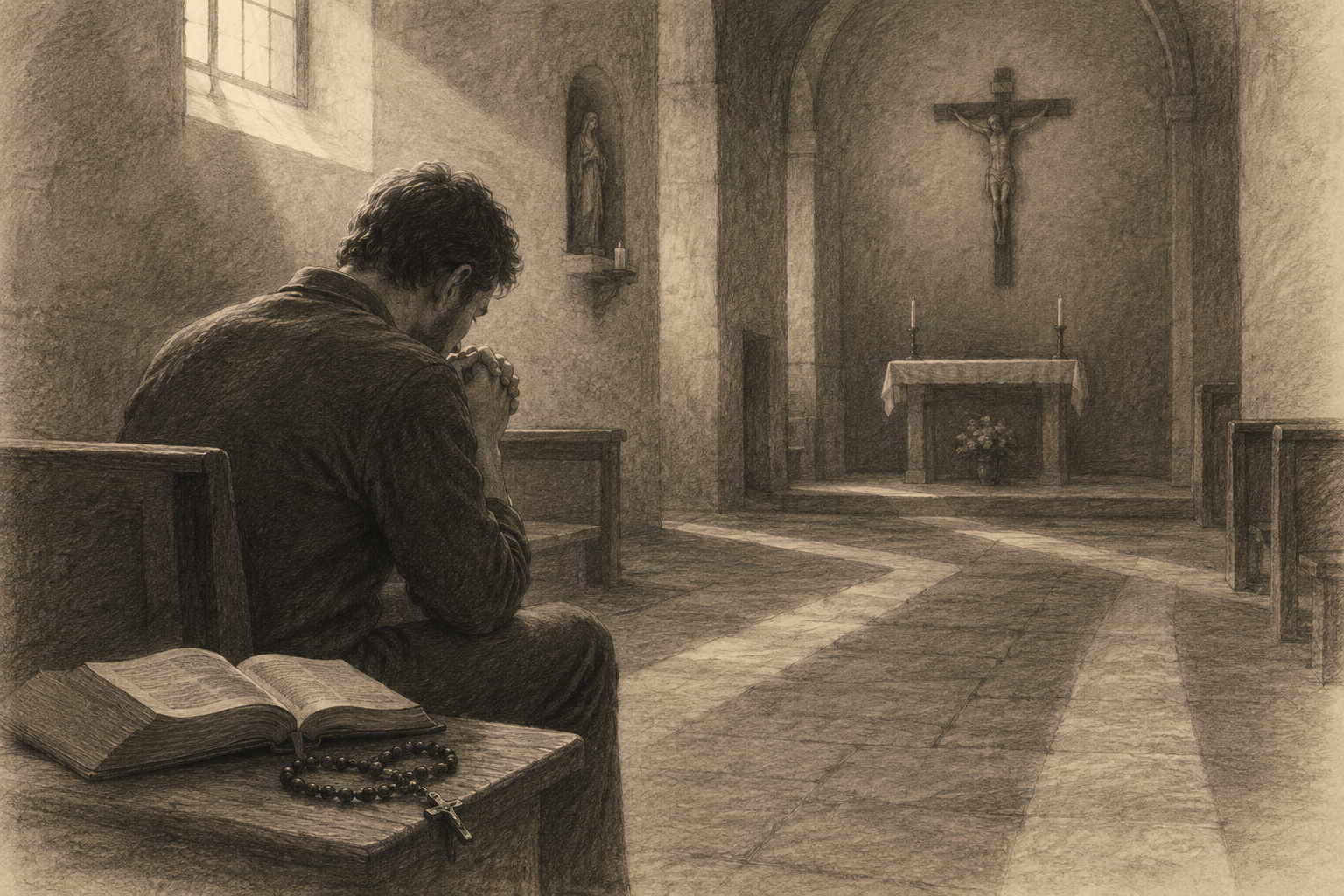
Mothers often carry many concerns at once. A child's immediate needs can crowd out silence, and prayer may be interrupted almost as soon as it begins. Mary's example suggests that prayer is not limited to uninterrupted periods of calm. A mother can return events to God throughout the day, asking what they reveal, where repentance is needed, and how love should respond.
This kind of pondering is different from anxious rumination. Rumination circles around fear as if everything depended on one's own ability to predict and prevent harm. Christian contemplation places real concerns before God. It does not deny danger or pain, but it remembers that neither mother nor child exists outside divine providence.
Simple habits of Marian prayer
- Offer the day early. A brief morning prayer can place both planned duties and unexpected interruptions in God's hands.
- Pray one decade of the Rosary. When a full Rosary is not possible, one decade prayed attentively can still unite a mother to the life of Christ with Mary.
- Bless children by name. A mother can ask God to guard each child and give the grace most needed that day.
- Pause before reacting. A short invocation such as Mary, help me to listen can make room for a patient response.
- End with thanksgiving and mercy. At night, a mother can thank God for one grace, acknowledge one failure, and entrust what remains unfinished to him.
Love includes guidance and release
Mary's maternal presence was not controlling. At Cana, she noticed a need and brought it to Jesus. Her instruction to the servants was simple: John 2:5. She directed others toward trust in her Son.
This offers a pattern for Christian parenting. Mothers teach, correct, protect, and establish boundaries, but the ultimate goal is not to make a child dependent on maternal approval. It is to help the child grow in freedom, virtue, and responsiveness to God. A mother is called to exercise real authority while gradually releasing the control that belongs only to God.
That balance is difficult. Fear can disguise itself as vigilance, while avoidance can disguise itself as gentleness. Prudence asks what love requires in the actual situation. Sometimes love comforts. Sometimes it says no. Sometimes it listens without immediately solving the problem. Sometimes it seeks help from a spouse, pastor, physician, counselor, teacher, or trusted friend.
Mary's example should not be used to demand silent endurance of abuse. Christian patience is not permission for another person to commit violence, coercion, or grave mistreatment. Seeking safety and qualified help can be an act of responsibility toward oneself and one's children.
A sword will pierce your soul
When Jesus is presented in the Temple, Simeon tells Mary that a sword will pierce her soul: Luke 2:35. Her vocation includes suffering that she cannot prevent. At Calvary, she remains near Jesus as he is crucified: John 19:25. Her presence does not remove his agony, but neither does love abandon him.
Many mothers know the pain of being unable to fix what wounds a child. They may accompany illness, estrangement, addiction, unemployment, infertility, miscarriage, disability, rejection of the faith, or the death of a son or daughter. These sorrows should never be reduced to easy lessons. Lament has a rightful place in Christian prayer.
At the Cross, Jesus entrusts Mary and the beloved disciple to one another: John 19:26. Catholic tradition sees in this scene more than provision for Mary's earthly care. It also recognizes her spiritual motherhood toward Christ's disciples. She accompanies the Church as a mother who knows both the cost of discipleship and the victory of her Son.
This does not make suffering good in itself. The Cross reveals that God can enter suffering and bring redemption from it. A sorrowing mother may not feel strong or peaceful. Her prayer may be little more than remaining before God. Mary's presence at Calvary shows that such remaining can itself be an act of profound faith.
No mother is meant to carry the vocation alone
The example of Mary is sometimes addressed to mothers as though they alone were responsible for making family life holy. That is neither realistic nor just. Mary belonged to a household. Joseph served Jesus and Mary through obedient, protective fatherhood. The wider community of faith also had a place in the life of the Holy Family.
Fathers, relatives, friends, parishes, and neighbors should honor motherhood through more than praise. Mothers need meals, childcare, patient friendship, economic justice, sacramental life, and room to speak honestly. A parish that celebrates mothers while overlooking those who are isolated or overwhelmed has not yet understood the practical nature of Christian communion.
The Church also remembers women whose maternal love is expressed outside biological motherhood. Some women long for children they have not been able to bear. Some are unmarried. Some have lost children. Some serve as adoptive mothers, foster mothers, godmothers, teachers, religious sisters, caregivers, or spiritual mentors. These vocations are not interchangeable, and biological motherhood retains its particular meaning. Yet genuine spiritual motherhood is also a fruitful gift through which women nurture life in Christ.
Grace in the unfinished day
Mary's holiness can seem intimidating if she is imagined as untouched by effort or uncertainty. Catholic faith teaches that she was uniquely graced, but grace made her more fully human, not less. She listened, acted, traveled, served, pondered, suffered, and persevered. Her life was centered on God rather than protected from the demands of love.
A mother does not imitate Mary by reproducing first-century Nazareth or by maintaining a flawless home. She imitates Mary by allowing grace to shape her own circumstances. That may mean apologizing to a child after speaking harshly, asking for help before exhaustion becomes collapse, returning to the sacraments after a long absence, or accepting that faithful love often grows through small beginnings.
The Christian measure of motherhood is not constant success. It is faithful self-gift sustained by grace, repentance, and hope. Children are not projects, and mothers are not saviors. Christ alone saves. That truth relieves mothers of an impossible burden while giving their daily work eternal dignity.
In the school of Nazareth, love is attentive without possessing, sacrificial without denying human limits, and prayerful without escaping ordinary duties. Mary leads mothers to her Son, who receives every sincere yes, every hidden labor, every sorrow, and every unfinished offering placed in his hands.
Keep Reading on Lets Read The Bible
Frequently Asked Questions
Why do Catholics look to Mary as an example for motherhood?
Catholics honor Mary because she freely welcomed God's call, gave birth to Jesus, cared for him, and remained faithful through joy and suffering. Her motherhood was unique because Jesus is the divine Son, but her trust, attentiveness, courage, and perseverance offer a genuine pattern for other mothers.
Does devotion to Mary take attention away from Jesus?
Authentic Marian devotion is centered on Christ. Catholics ask Mary to intercede for them as a member of Christ's Body and the foremost among the saints. Her role is never to replace Jesus, but to help believers follow him more faithfully.
Can Mary's example speak to women who are not biological mothers?
Yes. Biological motherhood has its own distinct meaning, but the Church also recognizes spiritual motherhood expressed through adoption, godparenthood, teaching, religious life, caregiving, mentoring, and other forms of life-giving service. Mary's maternal care for Christ's disciples offers hope without erasing the real grief of infertility or child loss.