Family and Vocation
When Love Changes Pace: Caring for Parents in Their Later Years
A reflection on honor, mercy, limits, and the quiet vocation of accompanying aging parents.
Site Admin | November 9, 2026 | 20 views
There often comes a moment when the familiar order of family life begins to change. A parent who once drove everywhere stops driving at night. A mother who remembered every birthday begins repeating the same question. A father who managed the household finances now needs help understanding a bill. The changes may arrive gradually, or they may follow a sudden illness, fall, or diagnosis.
For adult children, this season can awaken love, gratitude, fear, frustration, and grief at the same time. Caring for aging parents is rarely a simple exchange in which devotion is rewarded by clarity. It is more often a daily practice of attention. Phone calls must be returned, appointments arranged, medications checked, and difficult conversations attempted. Old family wounds may also resurface just when everyone is tired and vulnerable.
The Catholic response does not begin with the demand to perform every task perfectly. It begins with the recognition that each aging parent remains a person made in the image of God. Age, illness, disability, and dependence never diminish human dignity. They change what love may require, but they do not change the value of the person who needs care.
Honor takes a new form
The commandment to honor one's father and mother is given in Exodus 20:12. In childhood, this honor ordinarily includes obedience. In adulthood, the relationship changes. The Catechism of the Catholic Church teaches that adult children no longer owe their parents obedience in the same way, but they continue to owe respect. It also says that grown children should provide material and moral support in old age and in times of illness, loneliness, or distress, according to their ability.
This qualification matters. Honor is not measured only by how many hours a person can provide direct care. One adult child may live nearby and manage appointments. Another may contribute financially. A third may call regularly, organize paperwork, bring meals, or give the primary caregiver a needed afternoon of rest. Families differ in geography, health, income, employment, and responsibility for young children. Faithfulness cannot always look the same in every household.
Honor also involves taking an aging parent's concerns seriously. It means speaking directly to the parent rather than discussing the parent as though he or she were absent. It means explaining decisions, listening patiently, and preserving appropriate choices wherever possible. Even when memory or judgment is impaired, the person should not be reduced to a list of symptoms or tasks.
Sirach urges children to care for an aging father and to remain patient even when his understanding fails: [[VERSE|sirach|3|12-14|Sirach 3:12-14]].
Patience in this setting is not mere politeness. It is a form of mercy. The same story may need to be heard again. A simple change in routine may provoke anxiety. A conversation about driving, finances, or additional care may need to unfold over weeks rather than in one decisive meeting. Patience does not require pretending that serious problems do not exist. It means facing them without treating the parent as an obstacle.
Receiving the parent who is here now
Part of the sorrow of aging is the temptation to compare a parent constantly with the person he or she used to be. An energetic mother becomes frail. A confident father becomes uncertain. A parent who once offered advice now needs instructions. Adult children can feel as though they are losing someone who is still physically present.
This grief is real, and it should not be dismissed with religious slogans. Yet love must gradually learn to receive the person who is here now. The parent is not only a memory of former strength. Nor is the parent merely a future loss that the family is trying to prevent. He or she is a person living today, with present fears, pleasures, habits, and spiritual needs.
Jesus gives a profound example of filial care from the cross. In the midst of his suffering, he entrusts his mother to the beloved disciple and the disciple to her in [[VERSE|john|19|26-27|John 19:26-27]]. This scene does not offer a detailed plan for elder care, but it reveals something essential: love notices concrete human need. Christ does not treat family responsibility as separate from his saving mission.
Care can therefore become an expression of Christian vocation. This does not mean every care decision will feel peaceful or spiritually rewarding. Much of it may feel repetitive and hidden. Holiness is often formed in precisely such places, where love is chosen without applause and where another person's needs interrupt a carefully arranged day.
Mercy needs practical form
Good intentions alone are not enough. Aging parents often need practical help, and avoiding difficult details can expose them to preventable harm. Families may need to discuss medical information, transportation, housing, finances, legal documents, household safety, and preferences for future care. These conversations are easier when they begin before a crisis.
A helpful approach is to ask rather than assume. Questions such as these can open a respectful conversation:
- Which daily tasks have become tiring or confusing?
- Who should receive medical information if an emergency occurs?
- Are medications being taken safely and consistently?
- Does the home need better lighting, handrails, or fewer tripping hazards?
- What forms of assistance would feel acceptable now?
- Who should help with bills, insurance, or important records?
- What parish or sacramental support would be welcome?
When decisions become complex, qualified professionals can help. Physicians, nurses, social workers, elder care specialists, attorneys, and parish clergy each have distinct areas of competence. Seeking advice is not a failure of family love. It can be one of its most responsible expressions.
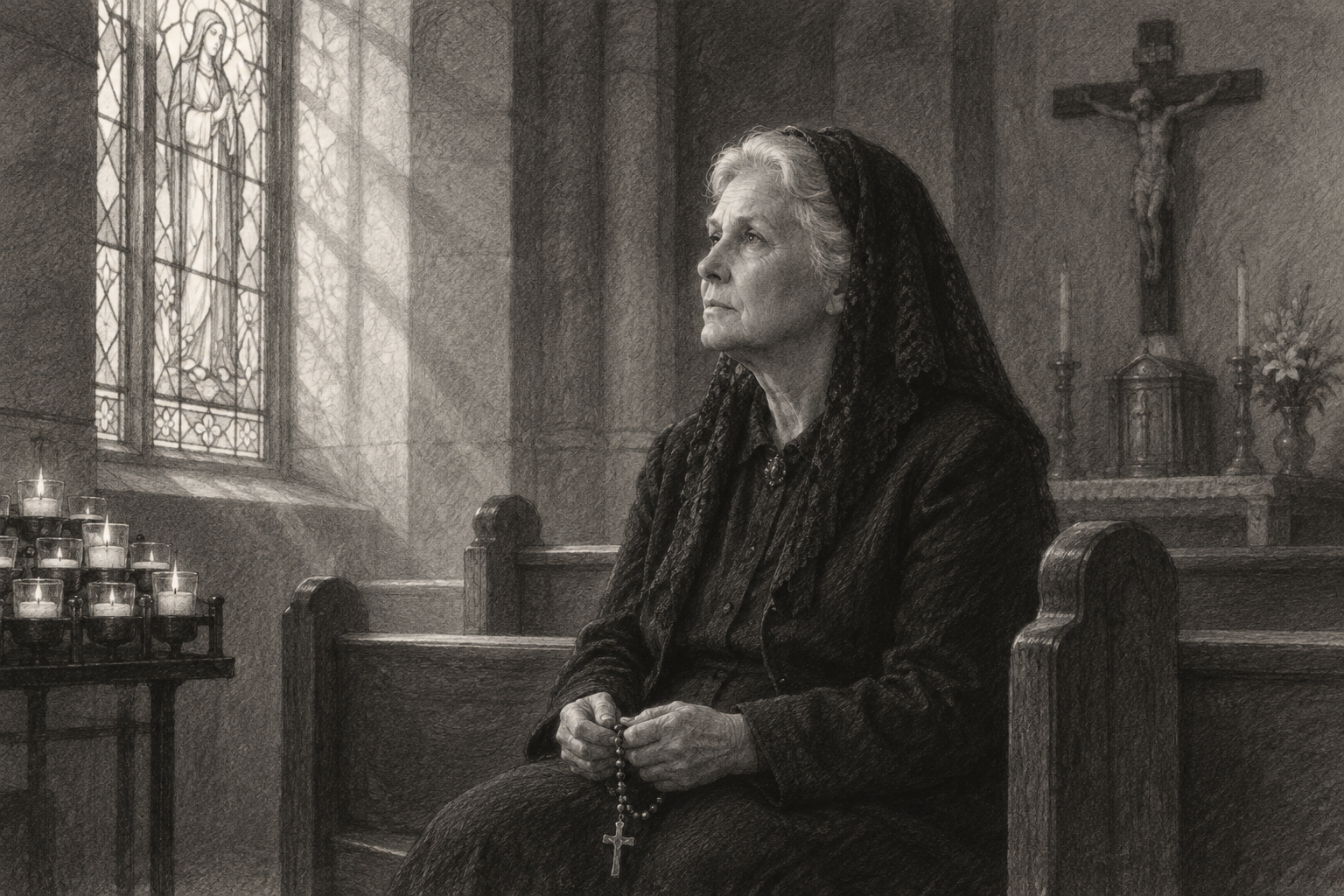
Catholic families should also remember the spiritual needs of an aging parent. If the parent desires it, family members can help arrange transportation to Mass, a visit from a priest, reception of Holy Communion, or the Anointing of the Sick. The Anointing of the Sick is not reserved only for the final moments of life. It may be received by those seriously impaired by sickness or old age, in keeping with the Church's sacramental discipline.
Small practices can sustain spiritual communion when leaving home is difficult. A family might pray a decade of the Rosary, listen to the readings from Mass, keep a crucifix within view, or offer a familiar morning prayer. These gestures should be invitations rather than performances imposed on the parent. Authentic spiritual care respects the person's history, freedom, and present capacity.
Caregiving does not erase human limits
Many caregivers carry a quiet burden of guilt. They believe that a loving son or daughter should be endlessly available, consistently patient, and able to solve every problem. When fatigue or resentment appears, they conclude that they have failed.
Christian charity does ask for sacrifice, but it does not require the denial of creaturely limits. Sleep, health, marriage, employment, and responsibilities toward children still matter. A caregiver who never rests may eventually become unable to provide safe or loving care. Accepting help, arranging respite, or considering professional care can be prudent rather than selfish.
Saint Paul calls Christians to bear one another's burdens in Galatians 6:2. The word one another is important. Family care should not automatically become the solitary burden of the most available daughter, the unmarried sibling, or the relative who has difficulty saying no. Responsibility may not be divided equally, but it should be discussed honestly.
Limits are especially important where there is a history of abuse, addiction, manipulation, or severe family conflict. Honoring a parent does not require submitting to ongoing harm or concealing dangerous behavior. In some situations, love must be expressed through firm boundaries, indirect assistance, or care coordinated by others. A trusted priest, therapist, physician, or other competent adviser may help a person distinguish guilt from genuine responsibility.
Safety can also require decisions that a parent resists. A family may need to address unsafe driving, financial exploitation, wandering, medication errors, or an inability to live alone. These moments demand evidence, patience, and humility. The goal is not to seize control unnecessarily, but to protect life while preserving as much freedom as the situation reasonably allows.
The grief hidden inside ordinary tasks
Caregiving grief does not begin only at death. It may appear when a parent forgets a family name, can no longer attend Mass, leaves a beloved home, or needs help with personal care. Adult children may mourn the loss of guidance, shared traditions, and the feeling that the parent will always be the stronger one.
The Psalms give language to the fear of being abandoned in old age. The prayer, "Do not cast me off in the time of old age," appears in Psalm 71:9. An aging parent may carry this fear even without speaking it. A caregiver may carry a related fear: that there will not be enough time, money, wisdom, or strength for what lies ahead.
Prayer does not remove every uncertainty. It gives uncertainty a place before God. A caregiver can pray honestly: for patience before entering the house, for wisdom before calling the doctor, for gentleness during an argument, or for forgiveness after speaking sharply. Brief prayers offered in a hallway, car, or waiting room can become part of the day's hidden liturgy.
The caregiver also needs permission to lament. Tears are not evidence of weak faith. Jesus himself wept at the death of Lazarus in John 11:35. Grief and hope can inhabit the same heart. The Christian promise of resurrection does not make present losses unreal. It assures us that love offered in Christ is not wasted.
A work shared by the family and the Church
Parishes can serve aging people and caregivers through more than occasional words of encouragement. Practical support may include home visits, Communion to the homebound, transportation, meal assistance, caregiver groups, and help connecting families with trustworthy community services. Priests and deacons can also help families think through sacramental care and morally serious medical decisions.
Friends should not wait for an overwhelmed caregiver to design the perfect way to help. A specific offer is often easier to receive than a general promise. Bringing dinner on Tuesday, sitting with a parent during an appointment, mowing the lawn, or making a weekly phone call can relieve a real burden.
Caregivers, in turn, may need to practice the humility of accepting help. This can be difficult when family duty has become part of one's identity. Yet allowing others to serve honors the communal nature of the Church. No Christian vocation is meant to be lived in isolation.
Caring for an aging parent will not always produce tender moments. There may be resistance, confusion, old disagreements, and decisions for which no option feels ideal. Still, love can remain faithful without being flawless. It can make the next phone call, prepare the next meal, ask for needed help, and begin again after a difficult day.
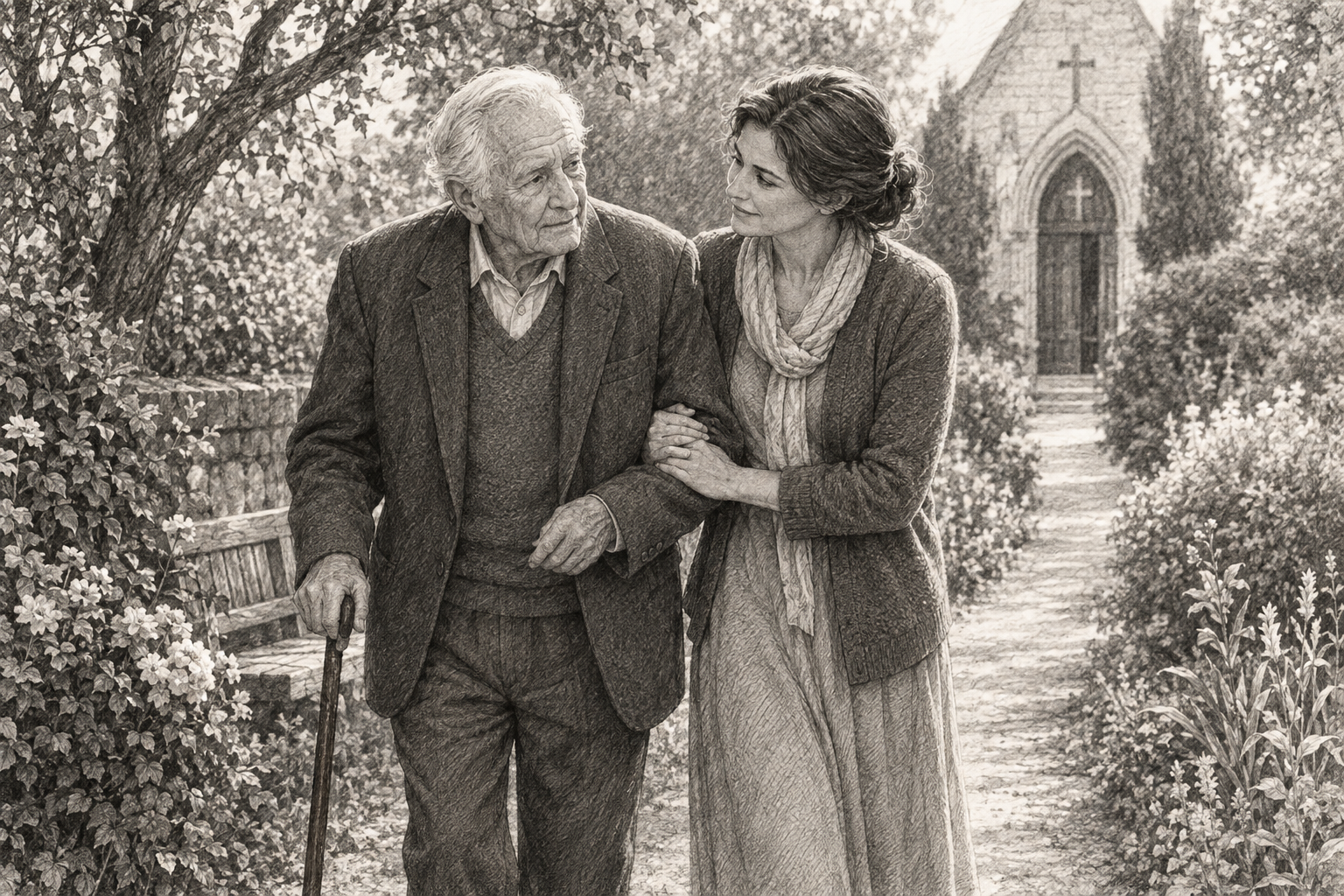
In these ordinary acts, the parent is not merely managed but accompanied. The caregiver, too, is accompanied by Christ, who receives works of mercy offered to the vulnerable as service offered to him, as he teaches in Matthew 25:40. The pace may be slower than it once was, but the road is not empty. Grace is present in the waiting, the listening, the necessary boundaries, and the hand held quietly when words have become difficult.
Keep Reading on Lets Read The Bible
Frequently Asked Questions
Does honoring an aging parent mean an adult child must obey every request?
No. Catholic teaching distinguishes the obedience owed by dependent children from the enduring respect owed by adult children. Adult sons and daughters should offer appropriate material and moral support, but they may also need to set prudent boundaries, protect others, and decline requests that are unsafe, unjust, or beyond their ability.
Is moving an aging parent into professional care a failure of Catholic family duty?
Not necessarily. Professional or residential care may be the safest and most responsible choice when medical, cognitive, or personal needs exceed what relatives can provide at home. The moral question is whether the parent is treated with dignity, accompanied with love, and given suitable care, not whether every task is performed by family members personally.
How can a parish support families caring for aging parents?
A parish can offer visits, Communion to the homebound, transportation, meals, caregiver support, prayer, and contact with clergy. Parishioners can help most effectively by offering specific, dependable assistance while respecting the privacy and decisions of the family.