Family and Vocation
After the Shared Life: Widowhood in the Keeping of God
Grief changes the shape of daily life, but it does not place the bereaved beyond the tenderness, grace, or calling of Christ.
Site Admin | November 10, 2026 | 16 views
Widowhood begins with an absence that can be felt everywhere. A familiar voice is missing from the room. Ordinary decisions no longer belong to a conversation between two people. Meals, bills, parish life, family gatherings, and quiet evenings may all carry the weight of what has changed.
For a Christian widow or widower, faith does not make this loss unreal. The Church does not ask the bereaved to pretend that death is harmless or that sorrow can be overcome by sufficient determination. Christianity speaks of death as an enemy, even while proclaiming that Christ has defeated it. The resulting hope is not shallow optimism. It is confidence in a crucified and risen Lord who enters human grief and promises that death will not have the final word.
A Catholic perspective on widowhood and Christian hope therefore begins with honesty. A real marriage has been wounded by death. A shared earthly life has ended. Yet love has not become meaningless, and the surviving spouse has not been abandoned by God.
When marriage is interrupted by death
Catholic teaching honors marriage as a covenant in which a man and woman give themselves to one another for life. The marriage bond endures until death. This is why the wedding promise speaks of lifelong fidelity and why the death of a spouse brings both grief and a genuine change in the surviving spouse's state of life.
To say that death ends the marriage bond is not to say that the marriage has been erased. The years of fidelity, sacrifice, forgiveness, affection, and shared responsibility remain part of the widow's or widower's history. Children, friendships, habits of prayer, and works of mercy may continue to bear the fruit of that union.
This distinction can be painful but important. A surviving spouse is no longer married in the sacramental and canonical sense and is free to marry again, provided there is no other impediment. At the same time, no one should be pressured toward remarriage. Some are eventually called to a new marriage. Others remain single, devoting themselves to family, prayer, service, or a more explicitly consecrated form of life according to what is available and appropriately discerned within the Church.
Neither path should be treated as a betrayal. Remarriage does not prove that the first spouse was forgotten. Remaining unmarried does not necessarily mean that a person is trapped in the past. The question is not what will satisfy the expectations of others, but how this particular person can respond faithfully to God now.
Scripture does not look away from widows
The Bible repeatedly places widows among those who deserve particular protection and care. Their vulnerability in the ancient world could be economic, social, and legal. God's people were therefore commanded to notice them rather than allow them to disappear at the margins.
The Letter of James calls care for widows and orphans a mark of pure religion before God: James 1:27. Saint Paul instructs the Church to honor widows who are truly in need: 1 Timothy 5:3. These passages are not sentimental gestures. They impose responsibilities on the community of believers.
Jesus himself pays close attention to widows. He praises the poor widow whose small offering represents profound trust and sacrifice: Mark 12:43. At Nain, he encounters a mother who has lost her only son. Before restoring the young man to life, Jesus sees her and is moved with compassion: Luke 7:13. Christ's response reveals the heart of God. He does not overlook the bereaved or regard grief as an inconvenience.
The Psalms likewise proclaim that the Lord is near to the brokenhearted: Psalm 34:18. That nearness may not always be emotionally perceptible. A grieving person can pray faithfully and still feel numb, distracted, angry, or exhausted. God's presence does not depend upon the intensity of our feelings. Grace can be active even when prayer seems dry and consolation is absent.
Christian hope makes room for mourning
Christian hope is sometimes misunderstood as an obligation to recover quickly. A widow may hear that a spouse is in a better place or that everything happens for a reason. Even when such remarks are well intended, they can rush past the anguish of separation.
The Gospel offers a more patient pattern. At the tomb of Lazarus, Jesus weeps: John 11:35. He knows that he will raise Lazarus, yet he still enters the sorrow surrounding death. His tears show that mourning is not a failure of faith. Love grieves because the person who died truly mattered.
Saint Paul does not tell Christians that they must not grieve. He tells them not to grieve as those who have no hope: 1 Thessalonians 4:13. Christian mourning has a horizon. The dead are entrusted to the mercy of God, and the faithful await the resurrection of the body and the life of the world to come.
This hope remains centered on Jesus Christ. It is not based on vague confidence that loving memories somehow defeat death. Christ truly died, truly rose, and promises resurrection to those who belong to him. The Church prays for the dead precisely because love and communion in Christ are stronger than the boundary of the grave.
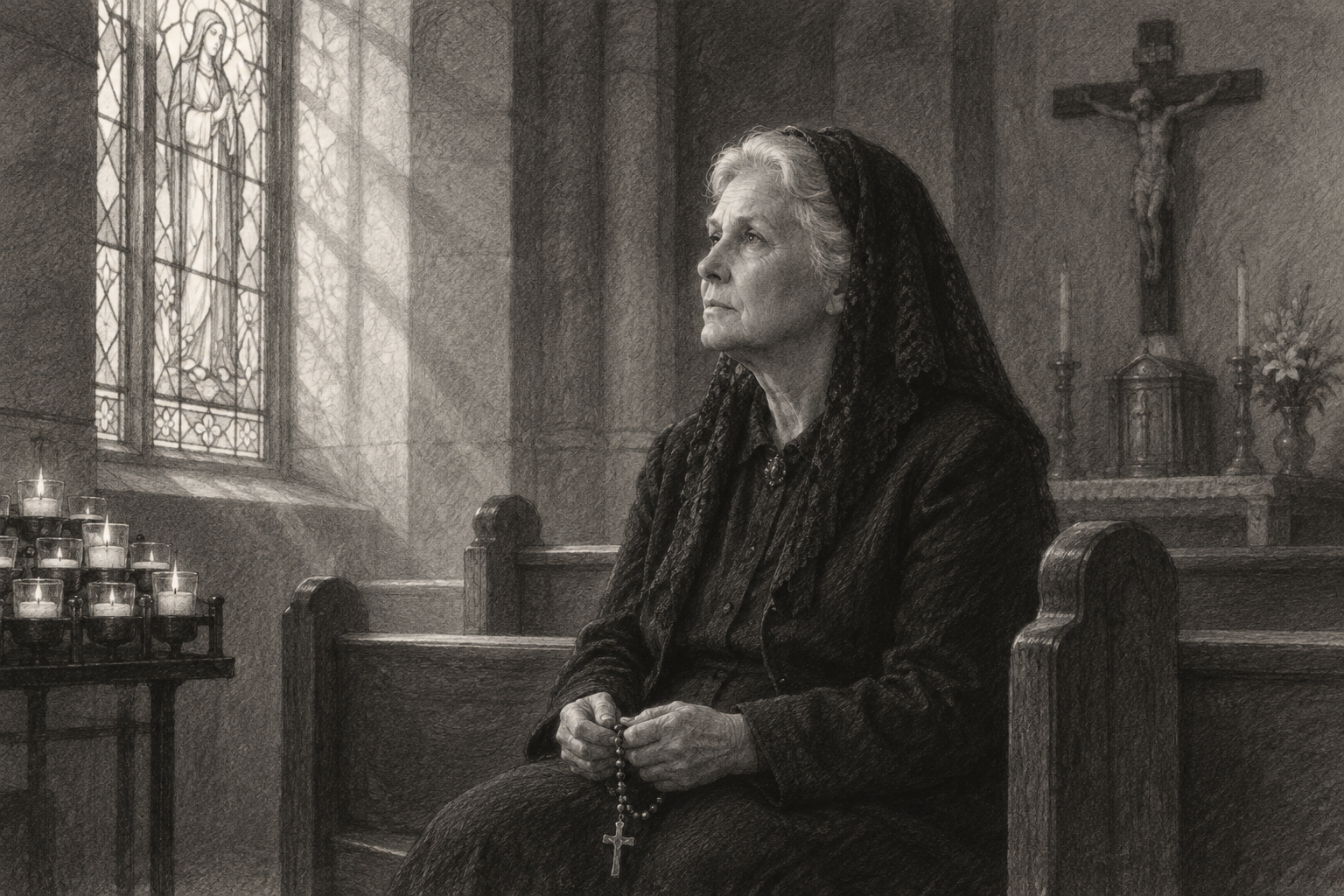
For a Catholic widow or widower, praying for a deceased spouse can become a continuing act of love. The Mass, prayers for the dead, works of mercy, and visits to the cemetery allow grief to be placed within the communion of saints. These practices do not deny separation. They entrust the beloved to God while keeping the survivor oriented toward eternal life.
The practical burdens are also spiritual concerns
Widowhood is not only an interior sorrow. It often brings a sudden accumulation of tasks. There may be funeral arrangements, legal documents, financial decisions, household repairs, medical bills, employment questions, or the care of children and aging relatives. A person who is grieving may have to make serious choices while concentration and energy are diminished.
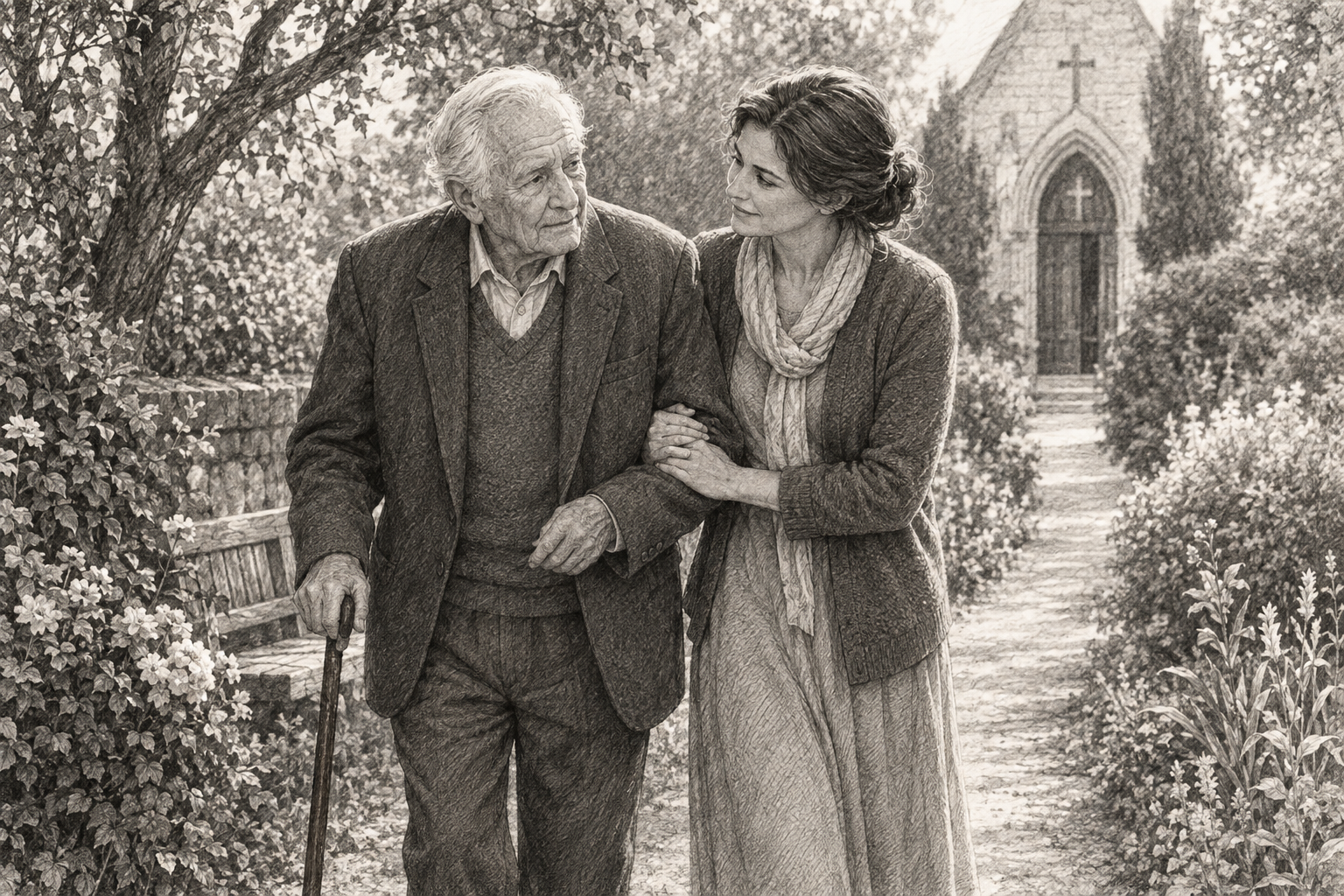
The parish community should not reduce its care to kind words after the funeral. Practical charity matters. Catholics can serve a widow or widower by offering specific, dependable help rather than a general invitation to call if anything is needed.
- Bring a meal on an ordinary weeknight after the first rush of attention has passed.
- Offer transportation to Mass, appointments, or the cemetery.
- Help identify reputable professional assistance for legal or financial questions without pressuring the bereaved into decisions.
- Include the surviving spouse in social invitations while respecting the freedom to decline.
- Remember anniversaries, birthdays, and liturgical seasons that may intensify grief.
- Continue using the deceased spouse's name when the widow or widower welcomes it.
Good support does not attempt to manage another person's grief. It provides companionship, stability, and room to speak. Some people need to tell the story of the death many times. Others need silence. Some want company at Mass but cannot manage a social gathering afterward. Charity listens before it organizes.
Grace within the altered day
After bereavement, spiritual practices may need to become smaller and simpler. A person who once prayed a full set of devotions may now struggle to finish one familiar prayer. This should not automatically be interpreted as spiritual decline. Grief affects the body, memory, attention, and sleep.
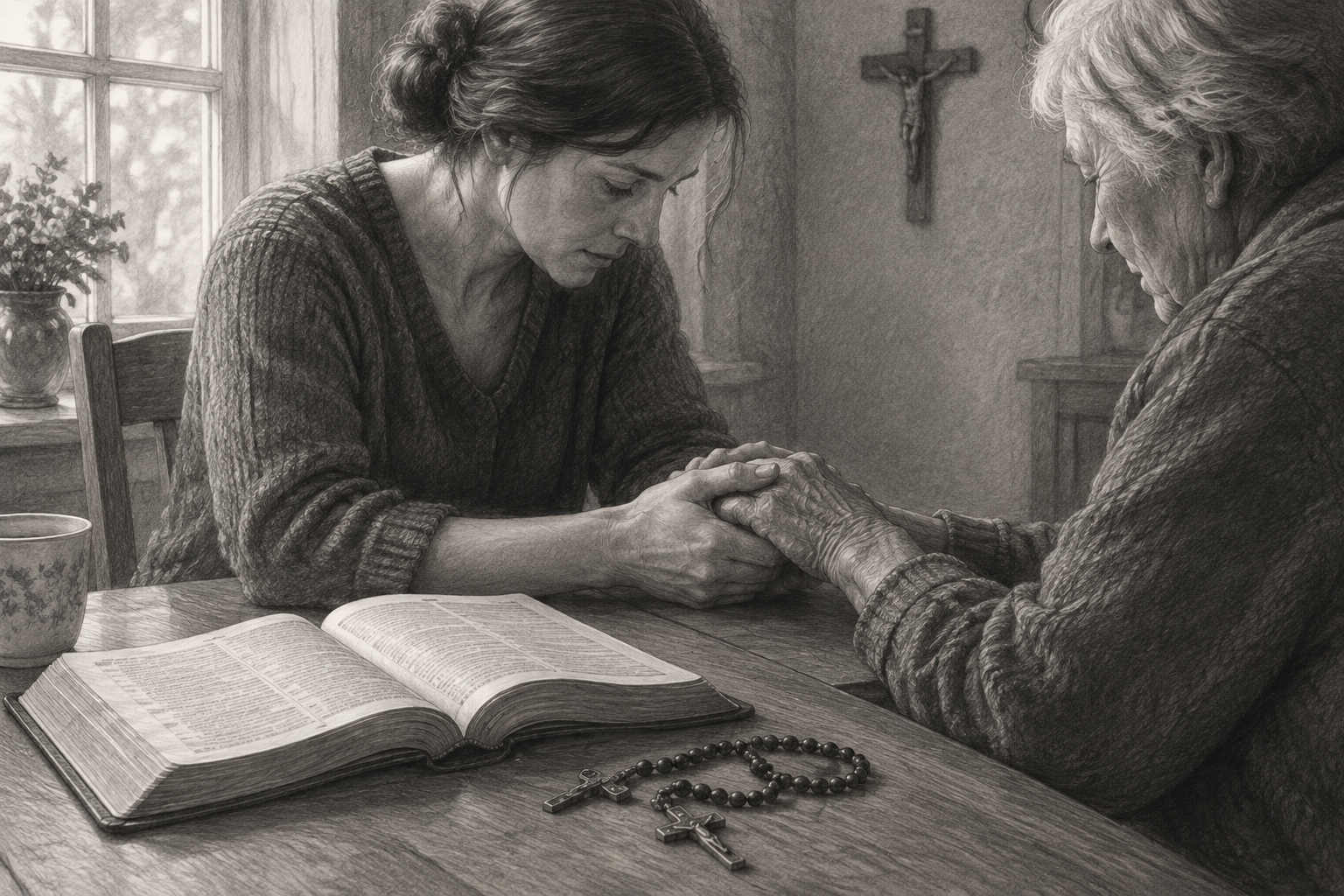
A brief morning offering, one psalm, a decade of the Rosary, or a few quiet minutes before the tabernacle can become a real act of fidelity. The sacraments are especially important because they do not depend upon emotional strength. In the Eucharist, Christ gives himself to his people. In confession, he meets weakness with mercy. In the Anointing of the Sick, when its conditions are present, he strengthens those facing serious illness and the frailty associated with it.
The bereaved may also need professional care. Persistent inability to function, thoughts of self harm, severe depression, substance misuse, or overwhelming anxiety should be taken seriously. Seeking help from a qualified mental health professional is not contrary to trust in God. Human skill and Christian faith can cooperate in the work of healing.
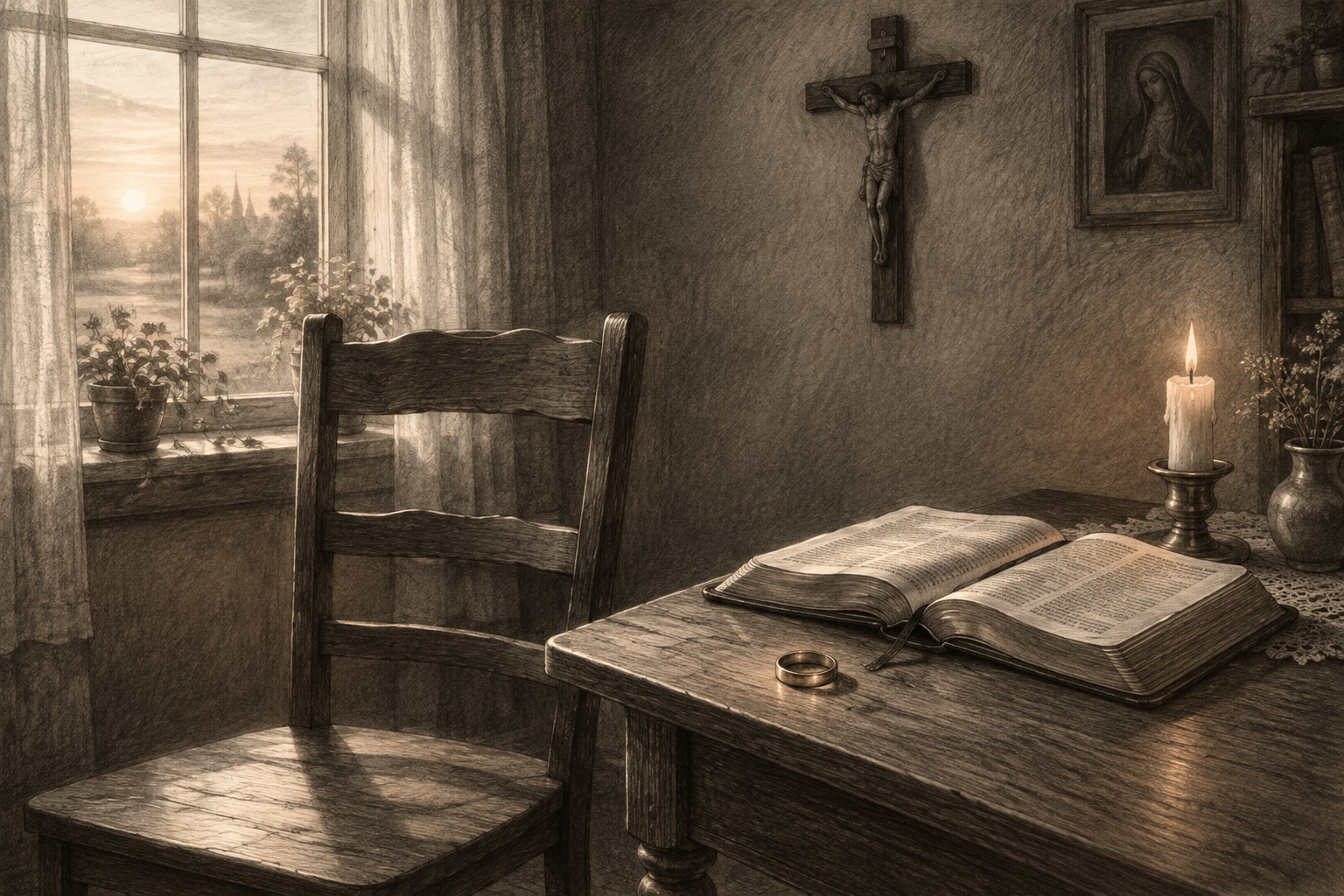
Grace does not always remove loneliness. Often it reshapes the way loneliness is carried. The empty chair remains empty, but the day can slowly contain other signs of life: a grandchild's visit, service at the parish, a walk with a friend, a task completed, a prayer offered for someone else. These moments do not cancel grief. They show that sorrow and gratitude can inhabit the same heart.
A vocation is changed, not discarded
Widowhood can create a crisis of identity, especially after a long marriage. The surviving spouse may wonder, Who am I now that I am no longer a husband or wife in the same earthly sense? Catholic faith answers first at the level of baptism. Before every particular vocation, the Christian belongs to Christ. That identity survives bereavement.
The call to holiness also remains. It may now be lived through patient endurance, care for children or grandchildren, hospitality, intercessory prayer, parish service, or quiet acts known only to God. Widows and widowers are not merely recipients of ministry. They possess experience, wisdom, and gifts needed by the Church.
At the same time, no one should romanticize their suffering or turn it into an immediate assignment. A newly bereaved person does not owe the community an inspiring testimony. There is a season for receiving care. Fruitful service, if and when it comes, should arise from grace rather than pressure.
Discernment about the future also deserves patience. Major decisions made in the first intensity of grief can be difficult to evaluate clearly. When circumstances allow, trusted family members, a prudent priest, a spiritual director, or qualified advisers can help a widow or widower consider housing, finances, ministry, and possible remarriage without haste.
Hope rests in a Person
The deepest Christian answer to widowhood is not an explanation of every loss. It is the presence of Jesus Christ, who has passed through death and opened the way to resurrection. Nothing, including death, can separate the faithful from the love of God in Christ: Romans 8:38.
This promise does not require a widow or widower to stop missing a spouse. It makes possible a grief that can speak honestly to God and still await his future. The Church accompanies that waiting through the liturgy, the sacraments, prayer for the dead, and the ordinary fidelity of her members.
Some days hope may feel like confident trust. On other days it may be no more than the decision to rise, pray one sentence, and receive the help of another person. Christ is present in both. He keeps the dead in his mercy, sustains the living in their changed vocation, and teaches the grieving heart to wait for the day when every faithful love will be gathered into the life of God.
Keep Reading on Lets Read The Bible
Frequently Asked Questions
Does the Catholic Church allow a widow or widower to remarry?
Yes. Because the marriage bond ends with the death of a spouse, a widow or widower is ordinarily free to marry again if no other impediment exists. Remarriage is not required, however. The decision should be made through prayerful and prudent discernment.
Is deep grief a sign that a Catholic lacks faith?
No. Grief is a fitting response to the loss of someone deeply loved. Christian hope does not eliminate mourning. It places mourning within faith in Christ's resurrection and the promised resurrection of the dead.
How can a parish support someone who has lost a spouse?
A parish can offer sustained prayer, companionship, practical assistance, invitations without pressure, and remembrance after the funeral period has passed. Specific help with meals, transportation, household needs, or finding reputable professional advice is often more useful than general offers.