Family and Vocation
The Long Work of Mercy at Home
Forgiveness within a family begins in grace, grows through truth, and often asks for patient courage.
Site Admin | November 1, 2026 | 7 views
Family life gives us some of our earliest experiences of love. It can also give us some of our deepest wounds. A careless word from a stranger may fade quickly, while a harsh sentence spoken by a parent, spouse, sibling, or adult child can remain vivid for years. The wound carries a history. We remember not only what was said, but who said it, what we had hoped for, and why we expected safety from that person.
For this reason, forgiveness inside the family is rarely a simple matter of deciding to stop being upset. It may involve grief, anger, repentance, boundaries, patient conversation, and a gradual surrender of resentment to God. Some relationships are healed through mutual humility. Others remain strained because one person will not acknowledge the harm. In serious cases, love requires distance and protection rather than a quick return to ordinary contact.
The Catholic vision of forgiveness is neither sentimental nor naive. It begins with the mercy of God, faces the truth about sin, and seeks the genuine good of every person involved. It does not require us to call evil good. It invites us to refuse hatred, entrust judgment to God, and remain open to whatever form of healing is truthful and prudent.
Mercy begins with what we have received
Christ places forgiveness at the heart of Christian prayer:
"Forgive us our debts, as we also have forgiven our debtors." Matthew 6:12
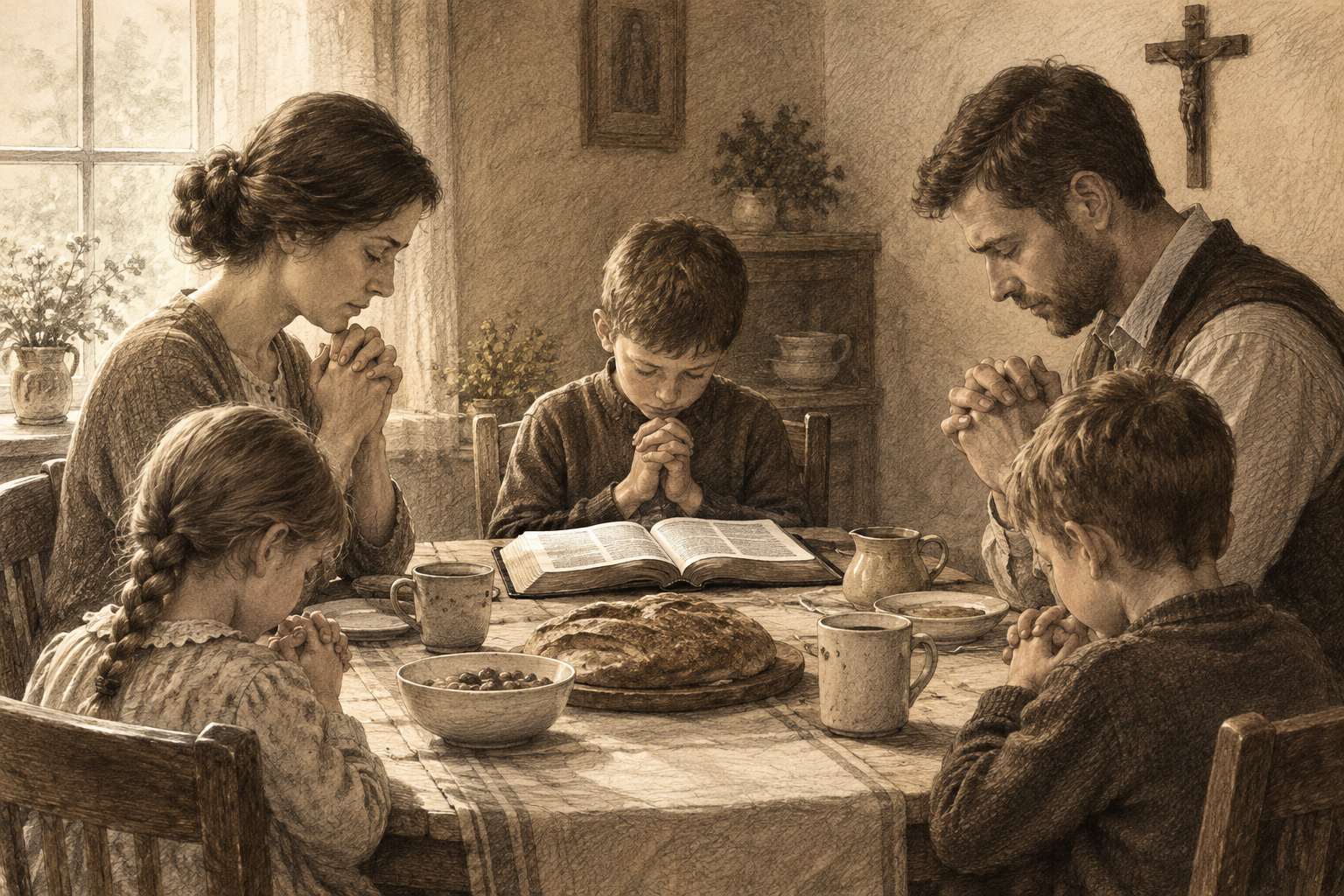
These words can be difficult to pray when a family wound is still raw. Yet the Lord's Prayer does not tell us that another person's sin is insignificant. Instead, it places our struggle within the greater reality of God's mercy. We forgive because we ourselves live by a mercy we could never earn.
The Catechism of the Catholic Church teaches that God's mercy cannot penetrate a heart that refuses to forgive. This is a serious warning, but it should not be used as a weapon against the wounded. The same Catechism also recognizes that it is not within our power simply to stop feeling an offense. The Holy Spirit can transform the wound by helping us offer it to Christ and choose charity even before our emotions have caught up.
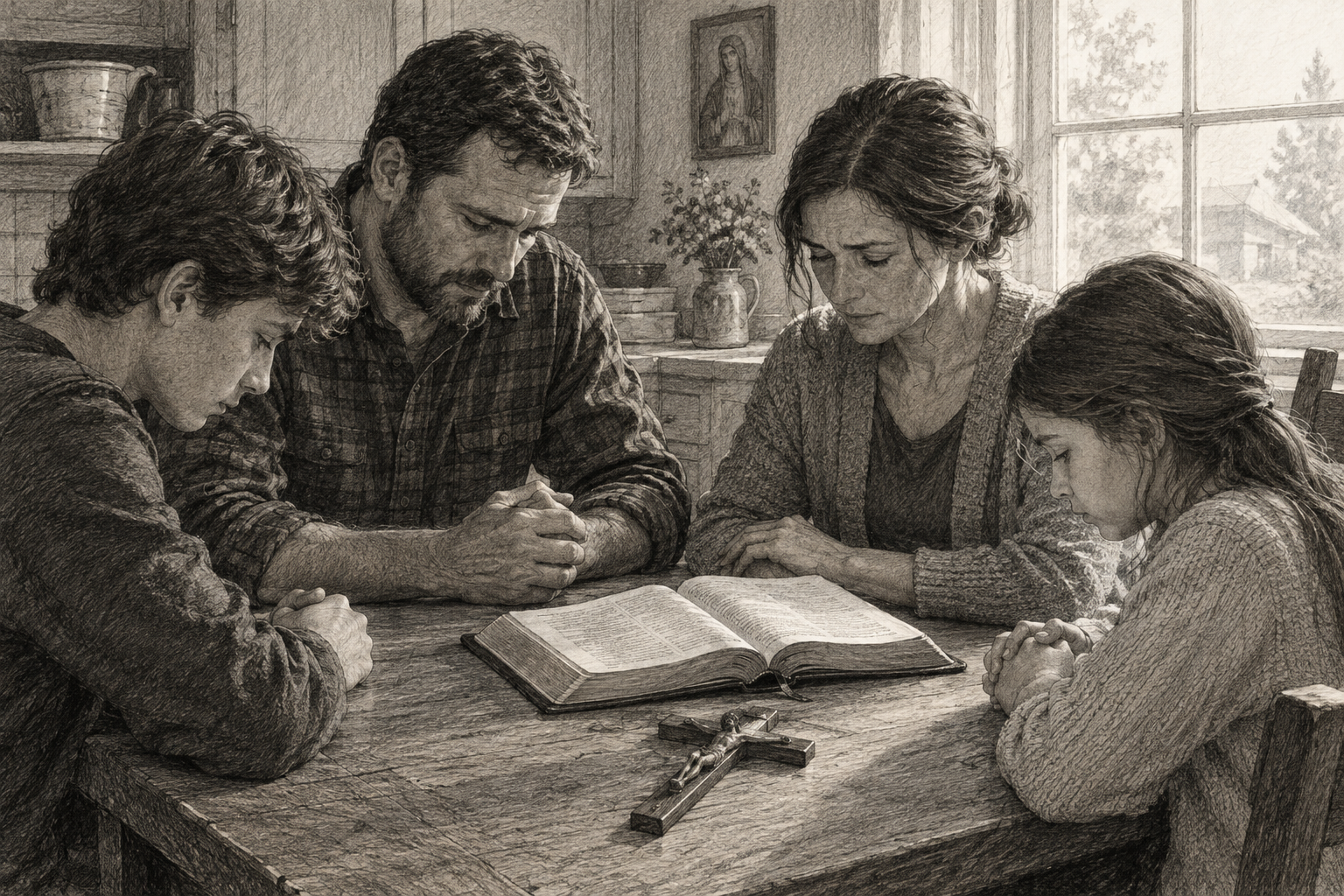
Forgiveness, then, is first an act of grace. It is not a performance of good manners or a denial of pain. We ask God for the freedom to surrender vengeance and to desire the sinner's conversion rather than destruction. Sometimes that desire begins as little more than a prayer: "Lord, I am not ready, but make me willing to become willing." Such a prayer can be honest, humble, and deeply Christian.
Forgiveness is not the same as pretending
Within families, pressure to preserve appearances can become an obstacle to real mercy. Someone may say, "We are family, so let us forget it," when the injury has never been named. Another may demand forgiveness as a way to avoid apologizing or changing harmful behavior. This is not the pattern Christ gives us.
When Jesus teaches about a brother who sins, he includes direct and truthful correction. Matthew 18:15 Christian love can require us to speak plainly: "What happened was wrong. It hurt me. It cannot continue." Such words need not be vindictive. They can serve the truth on which any durable reconciliation must rest.
It helps to distinguish three related realities:
- Forgiveness is the decision to release personal vengeance, to place judgment in God's hands, and to seek freedom from hatred.
- Reconciliation is the restoration of a relationship. It ordinarily requires truth, repentance, and the willingness of both people to pursue peace.
- Trust is confidence built through demonstrated honesty and responsible behavior. When trust has been broken, rebuilding it may take time.
A person can forgive while recognizing that reconciliation is not presently possible. A person can also reconcile in some measure without immediately restoring the same degree of trust. These distinctions are especially important when there has been manipulation, addiction, repeated betrayal, violence, or abuse.
Forgiveness never obliges someone to remain in danger. Seeking help from appropriate family members, clergy, counselors, medical professionals, or civil authorities can be a morally responsible act. Protecting children and vulnerable people is not a failure of mercy. Boundaries may be necessary for safety, for the correction of harmful behavior, and for the spiritual good of everyone involved.
The repeated choice Christ asks of us
Peter asks Jesus how often he must forgive a brother who sins against him. He proposes seven times, already a generous number. Jesus answers with a number that points beyond careful counting. [[VERSE|matthew|18|21-22|Matthew 18:21-22]]
In family life, repeated forgiveness does not always mean forgiving a long series of new offenses. Sometimes it means surrendering the same old offense whenever it returns to memory. A conversation, holiday, photograph, or familiar tone of voice may awaken the pain again. We may discover that yesterday's sincere act of forgiveness must be renewed today.
This does not make the earlier act false. Human healing often happens in layers. The will may have chosen mercy while the emotions still need time, prayer, and wise care. Each return of the memory can become another opportunity to say, "Jesus, I give this wound to you again. Keep me from bitterness. Show me what love requires now."
St. Paul urges Christians to bear with one another and forgive as the Lord has forgiven them. Colossians 3:13 Bearing with one another does not mean accepting every behavior without protest. It means recognizing that life together requires patience with weakness, readiness to repent, and the refusal to reduce a person to his or her worst moment.
Practical steps toward forgiveness at home
There is no single timetable for the healing of every family wound. Still, several practices can help us cooperate with grace.
1. Name the wound honestly before God
Vague resentment is difficult to surrender. In prayer, identify what happened and why it hurt. Was there humiliation, abandonment, betrayal, control, or indifference? Ask God to reveal the truth without allowing the memory to become an occasion for rehearsing accusations endlessly.
The Psalms show that prayer can include distress, anger, and lament. We do not have to hide our pain from the Lord. He already knows it. Honest prayer gives pain a place to go other than gossip, retaliation, or silent resentment.
2. Examine your own conscience without taking false blame
Family conflicts are sometimes mutual, though not always equal. Ask whether you contributed through pride, impatience, avoidance, or cruel words. If you did, confess your own fault clearly and without attaching an excuse.
At the same time, humility does not mean accepting blame for another person's choices. A victim of abuse is not responsible for the abuser's sin. Sound examination of conscience distinguishes genuine responsibility from shame imposed by someone else.
3. Pray for the person in a concrete way
Christ commands his disciples to pray for those who persecute them. Matthew 5:44 In a family conflict, begin with a modest prayer if anything more feels impossible. Ask that the person receive truth, repentance, healing, and salvation. You do not need to manufacture warm feelings. The prayer itself is an act of charity.
Prayer for another person also changes the interior shape of the conflict. It reminds us that the offender is a soul loved by God, not merely the source of our pain. This recognition does not erase accountability. It prevents accountability from becoming a desire for ruin.
4. Choose the right form of conversation
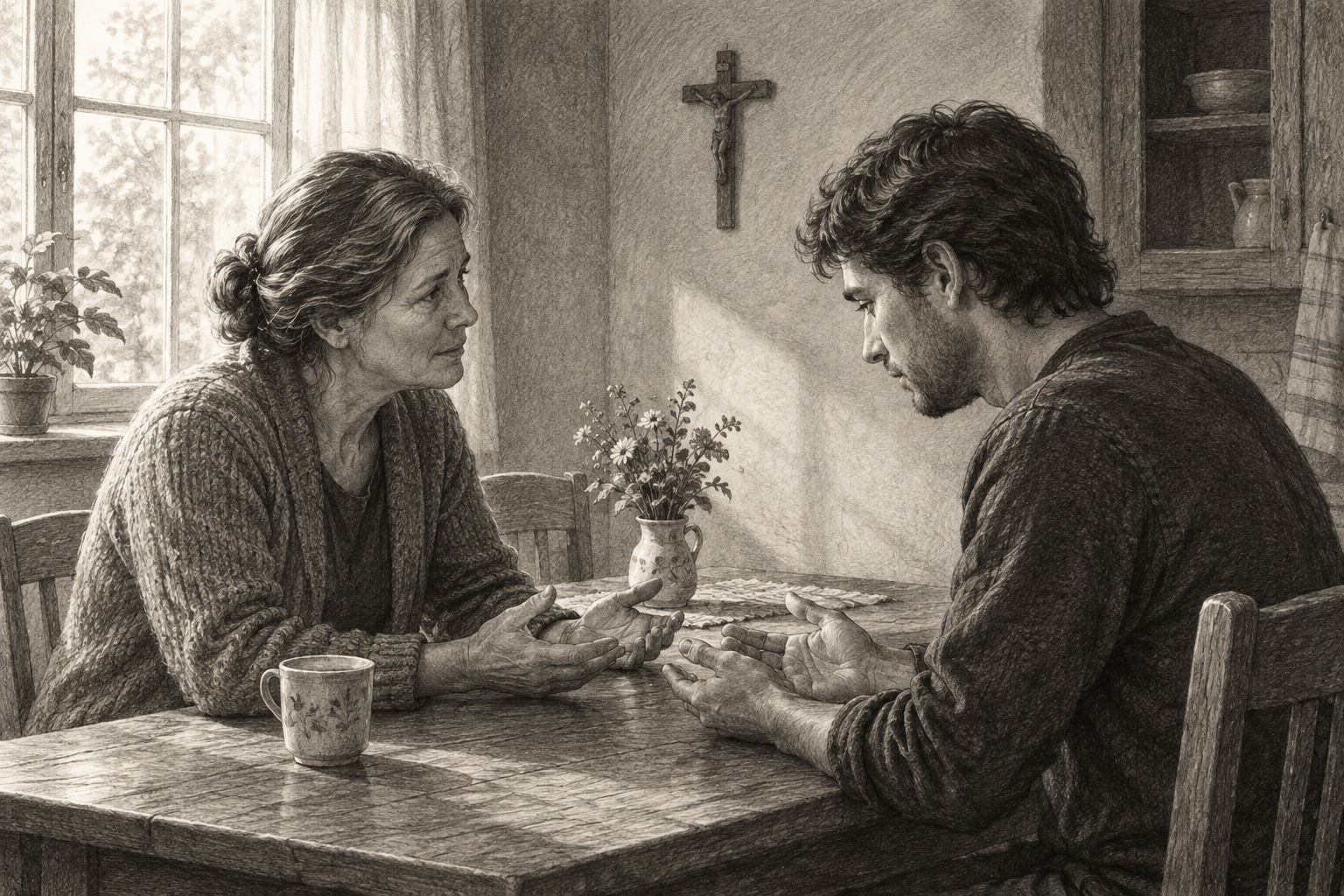
Not every wound should be addressed in the same way. Some misunderstandings can be resolved through a quiet conversation. More serious conflicts may require a mediator, counselor, priest, or another trustworthy person. If direct conversation is likely to produce danger or manipulation, it may be unwise.
When conversation is appropriate, speak about specific actions rather than condemning the person's entire character. Listen for genuine repentance, but do not force an immediate emotional resolution. An apology may open a door, yet the repair of a relationship often requires consistent action over time.
5. Establish boundaries without contempt
A boundary states what you will do in response to harmful conduct. It may limit certain topics, visits, financial involvement, or forms of communication. A good boundary is not revenge disguised as prudence. It should be proportionate, clear, and directed toward safety and peace.
Whenever possible, boundaries should be maintained without insults or public humiliation. Their purpose is not to punish someone into submission. They acknowledge reality and create room for responsible choices.
6. Refuse to recruit the whole family into the quarrel
Family pain can spread when every relative is asked to take sides. There may be legitimate reasons to seek counsel or protection, but sharing details merely to damage another person's reputation deepens division. Before speaking, ask whether the listener can actually help and whether the information is necessary.
This restraint is not secrecy about abuse or serious wrongdoing. Harmful conduct should be reported to those able to protect, intervene, or provide competent care. The distinction lies in the purpose: seeking help is different from seeking an audience for contempt.
Sacramental grace for a difficult vocation
The family is called to be a place where faith, love, sacrifice, and mercy are learned. That calling does not mean Catholic families are free from conflict. It means their conflicts can become places where grace is sought and practiced.
In the Sacrament of Reconciliation, we bring our own sins to Christ. We do not confess the faults of our relatives, but we can confess our hatred, revenge, dishonesty, or refusal to love. The sacrament assures us that mercy is not an abstract idea. Christ meets repentant sinners and gives grace for conversion.
The Eucharist also draws believers into a communion they did not create by their own effort. At Mass, family members may stand before God carrying unresolved sorrow. They can still ask Christ to purify their intentions, strengthen rightful boundaries, and prepare a path toward peace. Sacramental life does not replace necessary conversations, counseling, or protection. It gives spiritual nourishment for facing them truthfully.
The father in Christ's parable sees his returning son and runs to meet him. Luke 15:20 That embrace follows the son's return and confession. It reveals the eagerness of divine mercy without making sin unreal. In our own families, we may be called at different times to repent, to welcome repentance, to wait patiently, or to love from a prudent distance.
Forgiveness inside the family is often quiet work. It may look like a sincere apology, a restrained reply, a boundary kept without spite, or a prayer whispered for someone who is not yet ready to change. These acts may seem small, but they place the home under the mercy of Christ. In that mercy, truth need not be feared, wounds need not become identities, and even a long history of pain can be entrusted to the God who makes all things new. Revelation 21:5
Keep Reading on Lets Read The Bible
Frequently Asked Questions
Does forgiving a family member mean I must trust that person again immediately?
No. Forgiveness releases personal vengeance and rejects hatred, while trust is rebuilt through truthful and responsible behavior. Reconciliation may be gradual, and prudent boundaries can remain necessary.
Can a Catholic forgive someone while keeping distance from that person?
Yes. Distance may be appropriate when contact is unsafe, manipulative, or repeatedly harmful. Forgiveness does not require exposure to danger. A Catholic can pray for the person's conversion and refuse revenge while maintaining necessary boundaries.
What if I want to forgive but still feel angry?
Forgiveness can begin as a decision of the will before painful emotions have changed. Bring the anger honestly to God, renew the choice not to seek revenge, and seek pastoral or professional help when needed. Healing often unfolds gradually.