Prayer and Devotion
At the Edge of Sleep, Place the Day in God's Hands
How the Examen, Compline, and a simple habit of surrender can bring the whole day before God
Site Admin | November 15, 2026 | 4 views
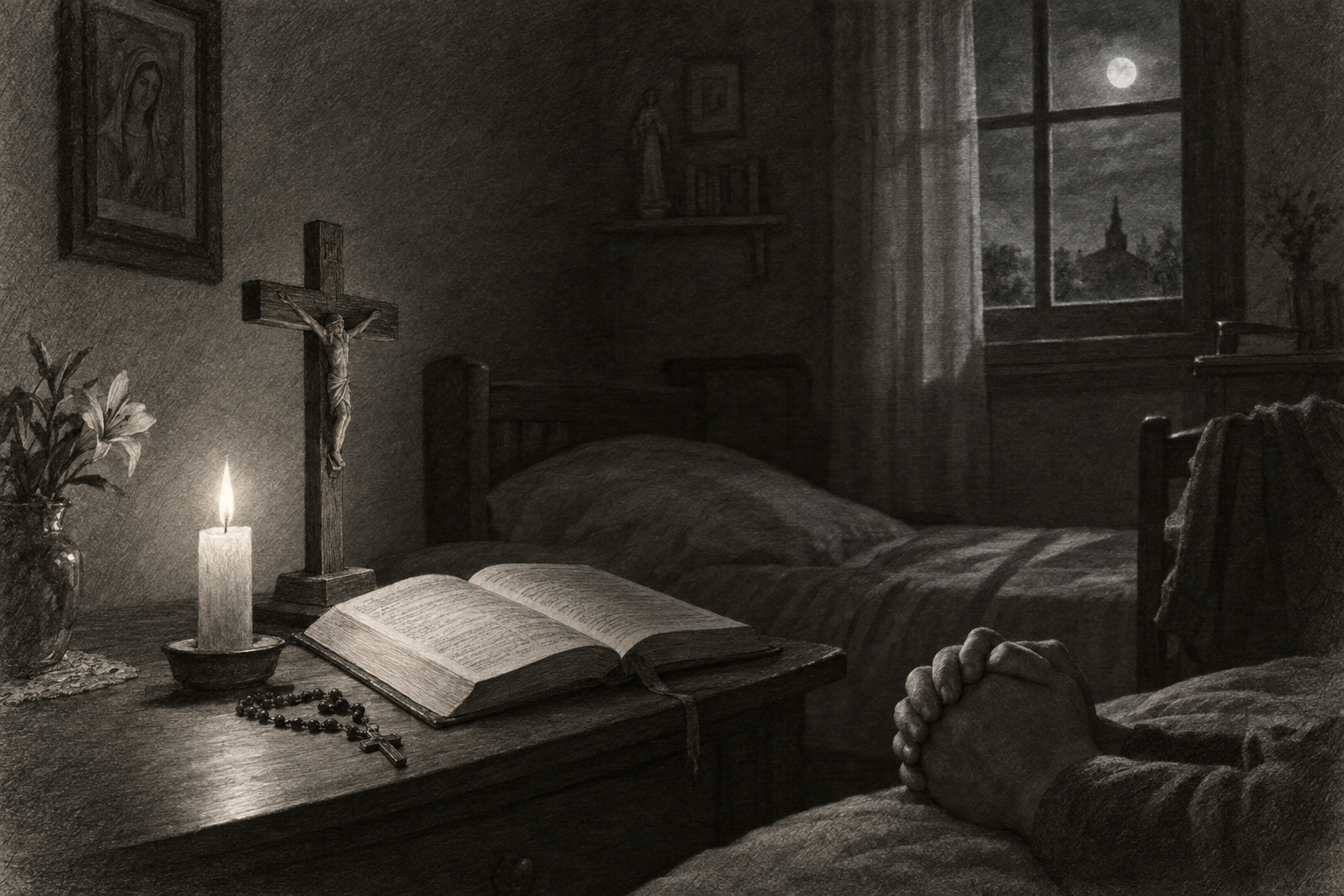
At night, the events of the day often return with surprising force. A hurried conversation troubles us. An unfinished duty waits for tomorrow. Gratitude rises for a kindness received, while anxiety begins rehearsing everything that might go wrong. The body may be tired, but the mind is still carrying the day.
This is where the Church's wisdom about prayer becomes especially practical. Night prayer is not an attempt to force a peaceful mood or to finish the day with a perfect spiritual performance. It is the act of bringing the day, as it actually was, into the presence of God.
Night prayer explained simply is the prayer of return. We return our attention to the Lord, recognize his gifts, acknowledge our sins, and place ourselves beneath his care. Some Catholics do this through the Church's official Night Prayer, traditionally called Compline. Others pray an examination of conscience, often known as the Examen. Many combine elements of both.
A prayer shaped by the setting sun
The instinct to pray as darkness falls reaches deep into biblical faith. Evening naturally marks a threshold. Work ceases, human control becomes more obviously limited, and the world passes into a darkness that no person can command.
The psalms give words to this nightly surrender. One of the clearest is: In peace I will both lie down and sleep; for you alone, O Lord, make me dwell in safety Psalm 4:8. This is not a denial of danger. It is a confession that safety, life, and the coming day remain gifts of God.
Christian communities gradually developed regular hours of prayer around the natural rhythm of the day. In Western monastic practice, the final office came to be called Compline, from the Latin idea of completion. It gathered together themes especially suited to bedtime: repentance, protection during the night, confidence in God's mercy, and readiness to rest in peace.
These themes remain present in the Liturgy of the Hours, the public prayer of the Church. Bishops, priests, deacons, and many religious have particular obligations concerning this liturgical prayer. Lay Catholics are also invited to share in it according to their circumstances. When laypeople pray Night Prayer from the Liturgy of the Hours, they are not merely practicing a private devotion. They are joining, in a real way, the prayer of the Church.
What happens spiritually at the end of the day
Morning prayer offers the coming hours to God. Night prayer receives those hours back. It allows us to ask where grace was present, where we responded faithfully, and where we resisted love.
This review is not meant to become anxious self-surveillance. Christian examination of conscience takes place before a Father who already knows us and desires our salvation. We are not searching the day for proof that we are hopeless. We are learning to see our lives truthfully beneath the light of mercy.
That truth includes gratitude. Much of God's work is quiet: strength to complete an ordinary task, patience that arrived just in time, a meal, an unexpected conversation, a moment of beauty, or the grace to begin again after failure. A nightly review trains the heart to recognize gifts that haste would otherwise conceal.
Truth also includes sin. We may notice selfishness, resentment, dishonesty, impurity, neglect, or a refusal to help someone who needed us. Night prayer gives us a regular opportunity to name such failures without excuses. We can make an act of contrition and ask for the grace to repair what can be repaired. If we are conscious of serious sin, this prayer should lead us toward sacramental confession rather than serve as a substitute for it.
The Examen and examination of conscience
The terms Examen and examination of conscience are related, although they can emphasize different things. An examination of conscience often focuses on recognizing sins, particularly in preparation for confession. The Examen, strongly associated with the spiritual tradition of Saint Ignatius of Loyola, reviews the whole day for the movement of grace and the response of the heart.
A simple Examen can include five movements:
- Become aware of God's presence. Be still and ask the Holy Spirit for light.
- Give thanks. Recall particular gifts rather than speaking only in general terms.
- Review the day. Walk through its events, conversations, desires, and decisions.
- Ask forgiveness. Name failures honestly and receive God's invitation to conversion.
- Look toward tomorrow. Ask for the grace needed for duties, relationships, and known difficulties.
This is not a rigid formula. On some nights, gratitude may occupy most of the prayer. On others, a difficult event may need to be brought before God slowly. The purpose is not to analyze every minute. It is to become attentive to how one is living before God.
Compline and the prayer of surrender
Compline has a somewhat different character. It is liturgical rather than merely personal. Its psalms, readings, responses, Gospel canticle, and closing prayer give the believer words received from the Church.
At the heart of the office is the Canticle of Simeon. After receiving the Christ child, Simeon is ready to depart in peace because he has seen God's salvation [[VERSE|luke|2|29-32|Luke 2:29-32]]. Placed at the end of the day, his words teach a profound form of surrender. Sleep becomes a daily reminder that life is received rather than possessed.
This does not make Catholic night prayer gloomy. The Church remembers death because Christ has transformed its meaning. Night prayer entrusts both sleep and death to the Lord who rose from the tomb. Each evening becomes a quiet rehearsal of Christian hope: the believer lets go, rests in God's keeping, and awaits the light.
A practical pattern for ordinary evenings
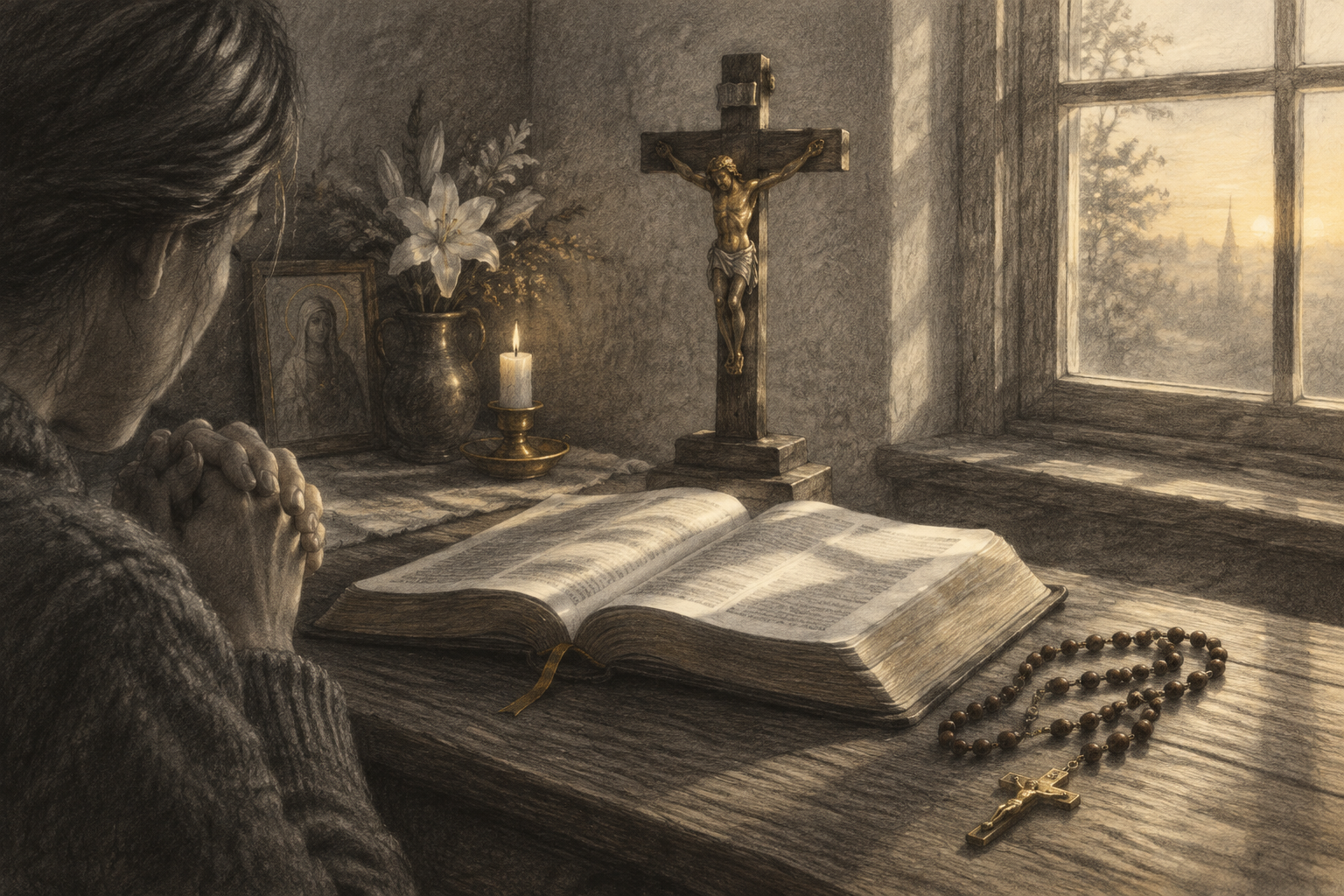
A sustainable habit is usually better than an ambitious routine that quickly collapses. Ten attentive minutes can bear more fruit than a long prayer attempted with resentment or exhaustion. The following pattern can be adapted for individuals, couples, or families.
- Make a deliberate pause. Put aside the phone, turn off unnecessary noise, and make the Sign of the Cross.
- Thank God for one concrete gift. Name a person, event, protection, or grace from the day.
- Ask for light. Invite the Holy Spirit to show the day truthfully.
- Review the day briefly. Notice moments of peace, resistance, temptation, generosity, and failure.
- Ask for mercy. Make an act of contrition in your own words or use a familiar form.
- Intercede for others. Bring family, the suffering, the dead, and the needs of the Church before God.
- Surrender the night. Pray a psalm, part of Compline, the Our Father, or another trusted prayer.
If anxious thoughts remain, they do not mean the prayer has failed. Peace is a gift, not a sensation that can be demanded. Scripture invites believers to cast their anxieties upon God because he cares for them 1 Peter 5:7. The act of surrender can be real even when the emotions take longer to settle.
When fatigue, family life, or insomnia intervenes
Night prayer must fit the duties of one's state in life. Parents of young children may rarely have an undisturbed evening. A caregiver may be interrupted. A person working a night shift may pray before sleeping in daylight. The essential point is not the position of the clock but the offering of one's period of rest to God.
Families can keep the practice simple. A parent might invite each person to name one blessing and one person who needs prayer. Together they can pray the Our Father, Hail Mary, and Glory Be. This need not become a long lesson. A short, peaceful practice can teach children that God belongs within the ordinary rhythm of home.
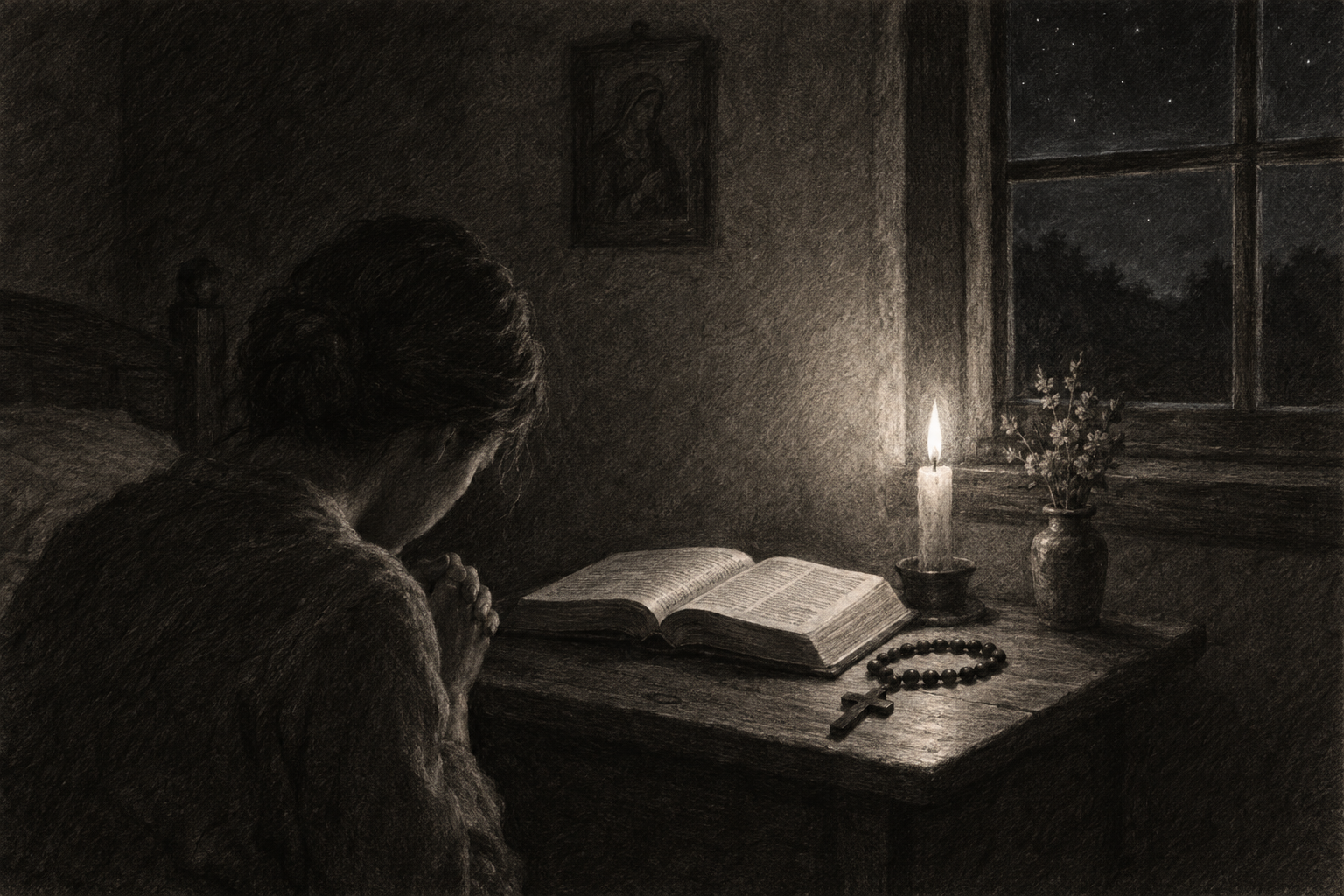
On nights of extreme fatigue, even a few words are enough: Lord, thank you for this day. Forgive my sins. Protect those I love. Into your hands I place myself. Love is not measured by length. Falling asleep while sincerely trying to pray is not an offense against God.
Insomnia presents a different challenge. Prayer can accompany wakefulness, but it should not become another technique by which a person tries to control sleep. A slowly repeated psalm verse, the Jesus Prayer, or a decade of the Rosary can turn restless time toward God. Persistent sleep difficulties may also deserve appropriate medical attention. Seeking such help is compatible with faith.
A habit that teaches the heart to let go
Regular night prayer changes more than the final minutes before sleep. It can shape the way the entire day is lived. When we know that we will review the day before God, we may become more attentive to grace as it occurs. Gratitude becomes more specific. Patterns of sin become harder to ignore. The need to reconcile with others becomes clearer.
Most importantly, night prayer teaches surrender. We cannot complete every task, solve every problem, or guarantee tomorrow. We can repent of what was wrong, give thanks for what was good, and entrust what remains unfinished to divine providence.
The day does not have to end in distraction or fear. It can end with the humility of a creature returning everything to the Creator. Beneath the darkness, God remains awake. In his mercy, we may release the day, accept the limits of our strength, and rest in the hope that the light will come again.
Keep Reading on Lets Read The Bible
Frequently Asked Questions
What is the difference between Catholic Night Prayer and the Examen?
Night Prayer, or Compline, is part of the Liturgy of the Hours and uses the Church's appointed psalms, reading, canticle, and prayers. The Examen is a prayerful review of the day that emphasizes gratitude, awareness of grace, repentance, and preparation for tomorrow. Catholics may pray either one or combine elements of both.
Does a nightly act of contrition replace confession?
No. Nightly contrition is a valuable practice, but it does not replace the Sacrament of Reconciliation when sacramental confession is needed. A Catholic who is conscious of mortal sin should seek confession and should not receive Holy Communion until absolved, except in the limited circumstances recognized by the Church.
What should I do if I am too tired to pray at night?
Keep the prayer brief and sincere. Make the Sign of the Cross, thank God for one gift, ask forgiveness, entrust your loved ones to him, and pray the Our Father. A short act of loving surrender is better than abandoning prayer because a longer routine feels impossible.