Saints and Witnesses
Why St. Monica Still Inspires the Church
A look at the holiness, perseverance, and maternal faith that make St. Monica a lasting model for Catholics
Site Admin | May 8, 2025 | 78 views
Why St. Monica Still Inspires the Church
Few saints are remembered with such quiet affection as St. Monica. She was not a bishop, a martyr, or a founder of a religious order. She was a wife, a mother, and a woman of deep prayer who carried years of sorrow with remarkable fidelity to God. Yet the Church still turns to her because her life speaks directly to ordinary Catholic experience. Many believers know what it is to pray for a loved one for years, to wait through disappointment, and to trust that God is still working when results are not visible. That is why St. Monica Catholic inspiration remains so strong today.
Monica lived in North Africa in the fourth century, in a Christian world shaped by the great struggles of the early Church. She married Patricius, a pagan man known for a difficult temperament, and she endured the tensions of domestic life with patience and restraint. She also faced the pain of a son, Augustine, who wandered far from the faith in his youth. Her story is preserved especially through the witness of Augustine himself, whose own conversion later became one of the great mercies in Christian history.
What makes Monica so enduring is not simply that her prayers were answered, but that her life shows how a saintly response to suffering looks in practice. She did not surrender to bitterness. She did not stop praying. She did not reduce faith to a private feeling. Instead, she gave the Church a living example of perseverance joined to trust.
A Mother Who Prayed Without Losing Hope
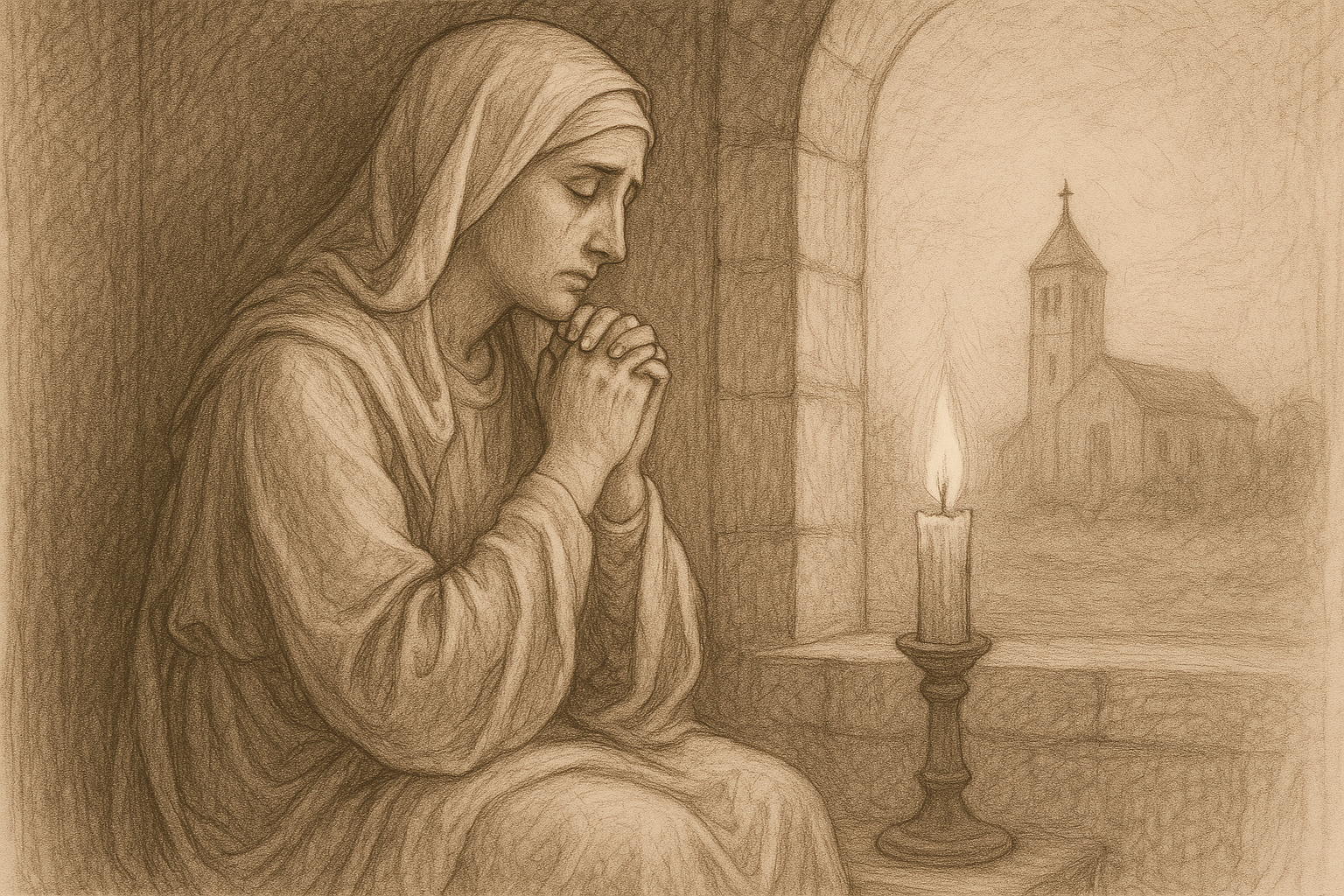
The most well known feature of Monica's witness is her prayer for Augustine. Before his conversion, he pursued success, pleasure, and intellectual distinction while drifting from Catholic truth. Monica wept for him, prayed for him, and sought wise help for him. In the Christian tradition, her tears have often been remembered as a sign of spiritual maternity. They were not despairing tears. They were the tears of a mother who believed God was stronger than her son's resistance.
Scripture repeatedly presents this kind of prayer as pleasing to God. The widow who persisted before the unjust judge in the persistent widow is a reminder that the Lord hears those who cry out day and night. St. Monica's life resembles that lesson: persistence in prayer is not manipulation, but faith. She teaches Catholics to ask again, to keep interceding, and to do so without demanding to see immediate fruit.
Many Catholics find this especially moving because so much family suffering is hidden. Parents pray for children who have left the sacraments. Spouses pray for conversion in a marriage. Grandparents pray over grandchildren who seem indifferent to the faith. Monica gives all of them a companion in heaven who understands the ache of waiting.
Her Holiness Was Ordinary in Form, Heroic in Practice
St. Monica's sanctity was not built on dramatic public acts. It was built on steadiness. The Church honors her because she remained faithful in the daily responsibilities of life and allowed grace to shape her response to hardship. This is one reason she continues to inspire Catholics who are trying to live holiness in ordinary settings.
Holiness is often imagined as extraordinary visibility, but the saints frequently show the opposite. In marriage, in family life, in prayer, and in endurance, holiness is formed by repeated acts of charity. Monica lived this in a household that did not always reward her kindness. She is a reminder that Christian witness is not measured by ease, but by faithfulness.
Her example also reflects a basic Catholic truth: grace does not remove suffering from human life, but it can transform suffering into an offering. Monica's tears were not meaningless. Joined to prayer, they became part of a story that God used to bring Augustine home.
The Church Sees in Monica a Model of Intercession
Catholics ask the saints to pray for us because the Body of Christ is alive in heaven and on earth. Monica is especially fitting for intercession because her life reveals the power of intercessory prayer in a family context. She did not try to control Augustine by force. She prayed, pleaded, endured, and trusted. That pattern is deeply Catholic.
The saints do not replace our prayer. They encourage it. Monica's witness reminds believers that no family member is beyond the reach of grace. Even when a loved one seems far away, prayer can continue with confidence. The Lord is not limited by time, and conversion often unfolds in ways no one expects.
Her life also illuminates the value of offering suffering in union with Christ. In the Gospels, Jesus invites his disciples to take up the cross and follow him. Monica's long sorrow is not identical to Christ's Passion, of course, but it is shaped by the same sacrificial love. She accepted pain without letting it become hopelessness.
When Catholic families remember St. Monica, they are reminded that love is not measured by control, but by faithful prayer, patient sacrifice, and trust in God's timing.
A Witness to the Power of Conversion
Monica's story cannot be separated from Augustine's conversion, because her endurance bore fruit in his return to the faith. That conversion became one of the most important in Church history, not because Augustine was famous in the world, but because his transformed life served the Gospel. A son once restless and divided became a doctor of the Church. A mother who suffered in silence lived to see God's mercy at work.
This is one reason her witness still matters. Catholic life is full of conversion stories, but many happen slowly. A person returns to Mass after years away. A confession opens the way to healing. A hard heart softens over time. Monica reminds the Church that conversion is often the result of years of unseen grace, prayer, and patient witness.
She also reminds Catholics not to judge a present situation as if it were the final word. Augustine's youth did not determine the end of his story. Neither does the current condition of a family member determine what God can do next. The Lord who raised Christ from the dead can also bring about spiritual renewal in ways that surprise us. That hope is at the heart of Christian prayer.
Why Modern Catholics Continue to Turn to Her
There are several reasons St. Monica remains beloved.
- She speaks to parents who pray for the conversion of children.
- She encourages spouses who carry burdens within marriage.
- She consoles those who suffer quietly and feel unseen.
- She shows that holiness can grow through ordinary domestic life.
- She proves that patient prayer is never wasted before God.
These reasons are not sentimental. They arise from real Catholic life. Many believers want a saint who understands long waiting, complicated family relationships, and the grief of watching someone resist grace. Monica does not offer slogans. She offers companionship.
Her witness also fits the Church's understanding of hope. Christian hope is not wishful thinking. It is confidence in God's promises. Monica hoped because she believed the Lord is faithful, even when the path is long. That is why she continues to be a source of calm courage for Catholics who feel weary in prayer.
The Quiet Strength of Maternal Faith
Monica's motherhood was not merely biological. It was spiritual. She loved Augustine enough to labor for his soul. That kind of love is demanding, and it mirrors the tenderness of the Church herself, who labors to bring souls to Christ through preaching, sacraments, and prayer.
Her maternal faith also offers a corrective to the modern temptation to measure success by immediate outcomes. Monica teaches that a faithful mother is not defined by short term results. She is defined by love, endurance, and surrender to God's providence. In that sense, her witness belongs not only to mothers but to all Catholics who have been entrusted with the care of another soul.
The Scriptures repeatedly praise the hidden fruitfulness of trust in God. Wait for the Lord and Those who hope in the Lord both speak to the posture Monica embodied. She waited, hoped, and prayed. The fruit came in God's time, not hers.
What St. Monica Teaches the Church Today
St. Monica remains a saint for the present because the human heart has not changed. Families still struggle. Loved ones still wander. Prayer still requires perseverance. And grace still works quietly beneath the surface.
For Catholics, Monica offers at least three lasting lessons. First, never stop praying for those you love. Second, do not underestimate the value of patient suffering offered to God. Third, remember that the saints are not distant ideals, but living members of the Church who intercede for us and teach us how to trust.
Her life also invites a gentle examination of conscience. Do I pray with perseverance, or only when I feel hopeful? Do I trust God with the timeline of conversion, or do I become discouraged when change is slow? Do I believe that family prayer, tears, and sacrifice can matter in eternity? Monica asks these questions without condemnation, but with the seriousness of a saint who knows the answer is found in faith.
In a world that prizes instant results, St. Monica remains a patient teacher. She shows that prayer can carry love through years of waiting and that God often answers in ways larger than we imagined. Her life continues to encourage the Church because it reveals a simple and enduring truth: no tear offered in faith is lost before the Lord.
Frequently Asked Questions
Why is St. Monica especially important to Catholic families?
St. Monica is especially important to Catholic families because she represents the hope of parents, spouses, and relatives who pray for conversion. Her life shows that family prayer and patient trust can remain fruitful even when change takes a long time.
What is St. Monica known for in the Church?
She is known for her deep prayer, her perseverance through suffering, and her long intercession for her son Augustine, who later became one of the great saints and doctors of the Church.
How can Catholics imitate St. Monica today?
Catholics can imitate her by praying faithfully for loved ones, offering suffering to God, practicing patience, and refusing to lose hope in the power of grace and conversion.