Saints and Witnesses
A Fire That Would Not Fade: St. Catherine of Siena and the Courage of Holiness
Her life still speaks because she loved Christ, served the Church, and refused to separate prayer from action.
Site Admin | May 5, 2026 | 94 views
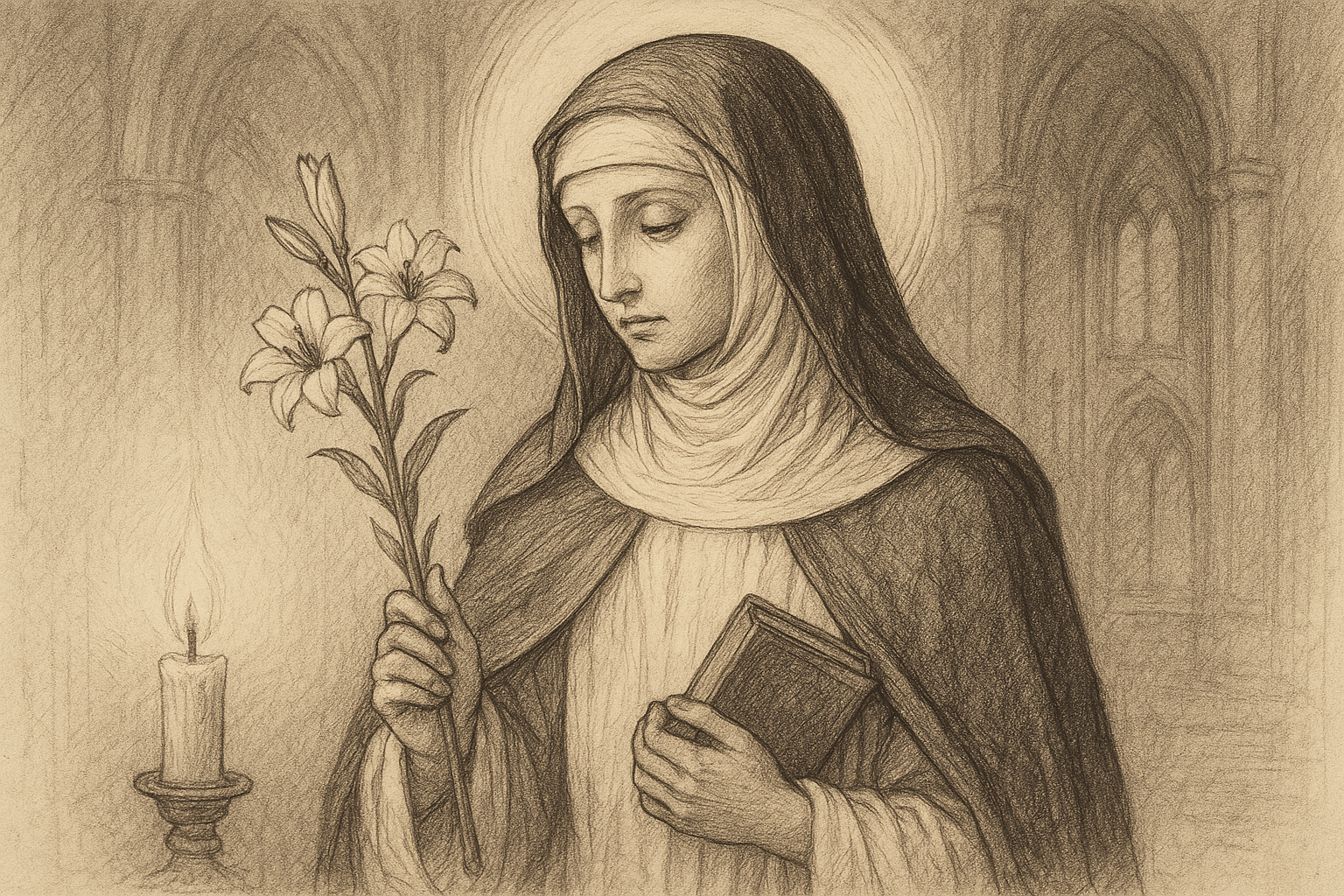
St. Catherine of Siena is remembered not only for her sanctity, but for the way her sanctity took shape in public life. She lived in the 14th century, a time marked by division, corruption, plague, and uncertainty. Yet her witness was not built on despair. It was built on a profound friendship with Christ, a fierce love for the Church, and a confidence that holiness can still speak plainly in troubled times.
That is part of why St. Catherine of Siena Catholic inspiration endures. Her life shows that prayer does not withdraw us from the world. It forms us to meet the world with truth, mercy, and courage. She was not a monk hidden from history, nor a politician chasing influence. She was a baptized Christian who let grace shape her mind, her speech, and her will.
Born into a troubled age, formed by grace
Catherine was born in Siena, in present-day Italy, in 1347. She was the daughter of a large family and showed an early desire for prayer and penance. As a young woman, she joined the Dominican Third Order, living in the world while following a Dominican spiritual path of discipline and service. Her life was shaped by contemplation, but it did not remain private for long.
The world around her was unstable. The Black Death had shaken Europe, and the Church itself was suffering serious internal tensions. In that setting, Catherine came to be known for spiritual counsel, letters, and works of mercy. She cared for the sick, comforted the suffering, and urged sinners to conversion. Her influence grew because people sensed that her words were not performance. They came from prayer.
Like many saints, Catherine did not begin with power. She began with surrender. Her sanctity was not a strategy for visibility. It was the fruit of cooperation with God's grace.
Prayer that becomes courage
One of the most compelling aspects of Catherine's witness is that she did not separate intimacy with God from responsibility toward others. In her writings and letters, she speaks often of the dignity of the soul, the beauty of divine love, and the call to repentance. She also addressed bishops, rulers, and the pope with directness that can surprise modern readers.
Her boldness was not rebellion for its own sake. It came from love. Catherine believed that when the Church was wounded, the faithful should not respond with cynicism. They should respond with prayer, truth, and sacrifice. She urged reform, but she did so as a daughter who wanted the Church healed, not humiliated.
"Be who God meant you to be and you will set the world on fire."
That saying is widely associated with Catherine and captures the energy of her life, even when quoted outside strict historical context. More importantly, her authentic writings and acts reveal the same conviction: holiness is not passive. When the soul is united to Christ, it begins to burn with charity that can reach outward.
Her love for the Church was not sentimental
Catherine lived during the Avignon papacy, when the popes resided in Avignon rather than Rome. She wrote to Pope Gregory XI and strongly urged him to return the papacy to Rome. She did not flatter him. She pleaded, reasoned, and prayed. She wanted the visible unity of the Church restored because she understood that ecclesial division wounds souls.
This is one reason she remains so important for Catholics today. She loved the Church honestly. She knew the Church is holy because Christ is holy, even though her members are often sinful and in need of reform. Catherine did not confuse the sins of churchmen with the identity of the Church herself. She could criticize without abandoning, correct without despising, and suffer without severing communion.
That balance is rare. In an age when people are often tempted either to idealize the Church unrealistically or to speak about her only with bitterness, Catherine offers a better path. She teaches reverence without naïvet or cynicism.
A saint who spoke to popes
Catherine's letters show remarkable spiritual maturity. She exhorted clergy to holiness and reminded rulers that authority is accountable before God. She was not trying to dominate them. She was trying to awaken conscience. Her voice carries weight because it is unmistakably ordered to Christ and to the salvation of souls.
For Catholics, this matters because truth in the Church is never merely administrative. It is spiritual. A saint may speak hard words, but those words should arise from charity. Catherine's example helps us see that correction is most fruitful when it is joined to humility and prayer.
Her mysticism was rooted in the everyday life of the Church
St. Catherine of Siena is often described as a mystic, and rightly so. She experienced deep interior prayer and wrote about her encounters with God in language that is rich and ardent. Her major spiritual work, The Dialogue, reflects a soul meditating on divine providence, human sin, Christ's mercy, and the way of holiness.
But her mysticism did not make her disconnected from ordinary duties. She was active among the poor and the sick. She walked with those in pain. She worked with priests, religious, laypeople, and leaders. Her contemplative life bore fruit in service.
This is essential for Catholics who admire saints from afar but struggle to translate devotion into action. Catherine reminds us that authentic prayer should deepen attention, increase patience, and sharpen charity. The more she prayed, the more she cared about real people and real suffering.
- Prayer gave her clarity.
- Penance gave her discipline.
- Charity gave her credibility.
- Love for Christ gave her strength.
Her words about truth still challenge modern Catholics
Catherine was unafraid to speak about sin. She also never spoke about sin as though it were merely a social problem. For her, sin was a rupture in love, a turning away from the Lord who created and redeemed us. That insight remains deeply relevant.
Modern Catholics live in a culture that often avoids hard moral language. At the same time, many believers feel torn between truth and gentleness, as though one must sacrifice the other. Catherine shows that this is a false choice. Truth without charity can become harsh. Charity without truth can become sentimentality. The saints unite both.
Her life also reminds Catholics that reform begins within. Catherine called others to conversion because she sought it herself. She practiced austerity, fasting, and prayer, not to impress anyone, but to belong more fully to Christ. The Church needs the same interior renewal in every age.
Why her witness still reaches beyond history
St. Catherine of Siena is not inspiring simply because she was extraordinary. She is inspiring because her extraordinary life rests on ordinary Christian foundations: baptism, prayer, repentance, the sacraments, and love of neighbor. Her greatness came from fidelity, not spectacle.
For Catholics today, her witness speaks in several concrete ways:
- It reminds us that young people can become saints and can influence the Church profoundly.
- It shows that women have long played vital roles in the life of Catholic renewal.
- It teaches that love for the Church includes both reverence and honest correction.
- It proves that holiness is not escape from history, but faithfulness within it.
Her life is especially useful for anyone who feels small in the face of a complicated Church or a noisy world. Catherine did not wait for ideal conditions. She offered herself to God where she was. That is still possible for every Catholic.
Learning to love the Church the way the saints do
One of the deepest lessons Catherine offers is that love for the Church must be purified by Christ. We do not love the Church because every member is admirable. We love her because she is the Bride of Christ and the place where grace is given. Catherine suffered because she loved both Christ and His Church too much to be indifferent.
That kind of love is demanding, but it is also freeing. It keeps us from treating the Church as an institution to consume or discard. It calls us instead to prayer, service, and truth spoken in charity. It asks us to stay, to kneel, to listen, and to work for holiness beginning with our own lives.
When Catholics turn to St. Catherine of Siena, they do not simply admire a brilliant woman from the past. They encounter a saint whose life still presses the same question upon us: will we let Christ make us brave enough to love the Church, our neighbor, and the truth at the same time?
Keep Reading on Lets Read The Bible
Frequently Asked Questions
Who was St. Catherine of Siena?
St. Catherine of Siena was a 14th-century Dominican tertiary, mystic, writer, and doctor of the Church. She is known for her prayer, works of mercy, and her fearless love for the Church.
Why is St. Catherine of Siena important to Catholics today?
She shows that holiness is possible in the middle of a troubled Church and a troubled world. Her life unites prayer, courage, repentance, and practical charity in a way that still speaks to modern Catholics.
What can Catholics learn from St. Catherine of Siena's witness?
Catholics can learn to pray deeply, speak truth with charity, love the Church honestly, and trust that ordinary fidelity can become a powerful witness to Christ.