Saints and Witnesses
St. Teresa of Avila and the Courage to Pray Honestly
A faithful look at the life, reforming spirit, and enduring prayer of one of the Church's great teachers of interior life.
Site Admin | May 6, 2026 | 108 views
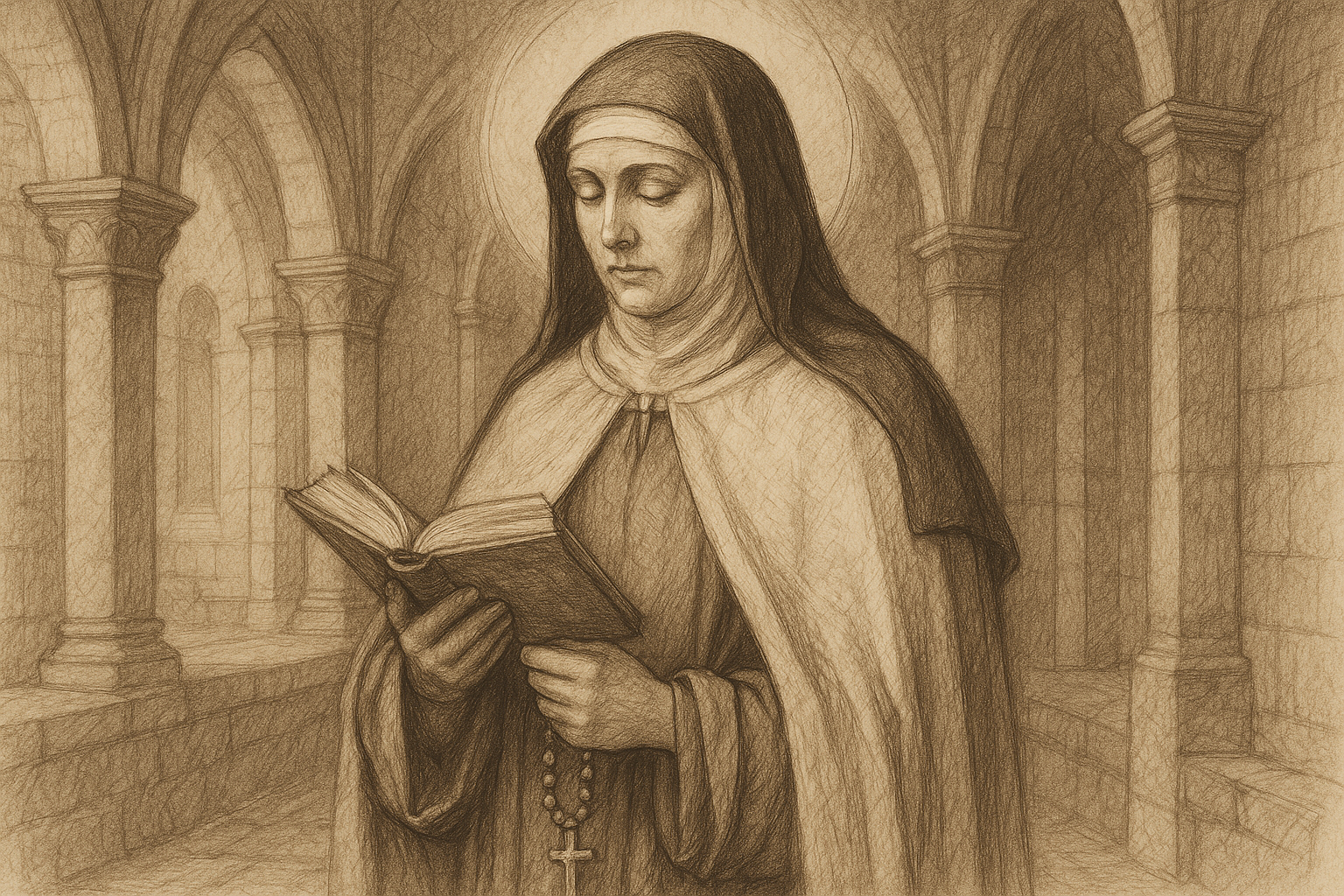
St. Teresa of Avila remains one of the Church's most beloved witnesses because she did not speak about prayer as a theory. She spoke from a life that had been tested by weakness, distraction, reform, misunderstanding, and grace. Her story is not the story of a distant mystic who floated above ordinary life. It is the story of a woman who learned, step by step, how to let God enter the center of the soul.
The St. Teresa of Avila life is often remembered for her writings, her reform of the Carmelite Order, and her place among the great doctors of the Church. Yet the deeper reason her witness endures is simpler. She teaches Catholics that prayer is not mainly about saying impressive words. It is about truth before God, patience in conversion, and a friendship with Christ that grows through fidelity.
From Castile to Carmel
Teresa Sanchez de Cepeda y Ahumada was born in 1515 in Avila, Spain. She grew up in a large family and was drawn from an early age to the stories of the saints. As a young girl, she and her brother once attempted to go off to seek martyrdom, a childlike sign of the seriousness with which she already viewed heaven. Her early religious fervor was real, though it would later be purified and deepened.
After her mother's death, Teresa entered the Carmelite monastery in Avila. Her religious life, however, did not become immediately simple or heroic. Like many sincere Christians, she experienced tension between devotion and distraction, between her desire for God and the pull of ordinary vanity and social life. She was not instantly transformed into a model of contemplative detachment. Her path to holiness unfolded over time.
Illness shaped much of her life. Severe physical suffering repeatedly limited her strength and activities. At times, she was close to death. These trials did not merely interrupt her vocation. They became part of the way God stripped away self-reliance and taught her the seriousness of eternity.
The conversion that sharpened her prayer
A major turning point in Teresa's life came through a deeper conversion. She had always believed, but at a certain stage of her life she came to see that ordinary religious observance was not enough. She needed recollection of heart. She needed prayer that was not superficial. She needed the mercy of Christ to reach areas of her life she had kept only partly surrendered.
Teresa later described prayer in memorable and practical terms. One of her best-known insights is that prayer is an intimate sharing between friends, taking time frequently to be alone with the One who loves us. That definition has endured because it is both simple and demanding. It asks not for performance but for presence.
In Scripture, this kind of prayer echoes the Lord's invitation to abide in him: Abide in me, and the exhortation to seek God with a whole heart: You will seek me and find me. Teresa understood that prayer is not a technique for control. It is a response to divine friendship.
Her interior life deepened through a greater awareness of God's mercy and the vanity of lesser aims. She became convinced that the soul must be ordered toward God alone. That conviction would soon shape not only her own habits but the renewal of an entire religious family.
Reform, resistance, and obedience
Teresa did not confine her zeal to private devotion. She became a reformer because she believed that the Carmelite life should better reflect poverty, silence, prayer, and fidelity. With the help of St. John of the Cross and others, she worked to establish the Discalced Carmelites, a reform marked by greater simplicity and stricter observance.
Reform in the Church is rarely welcomed without resistance, and Teresa's efforts were no exception. She faced misunderstanding, criticism, and administrative burdens. Yet she did not treat reform as a project of self-expression. She desired fidelity to Christ and to the Church. Her courage was not the bravado of independence. It was the steadiness of obedience.
That is one reason her witness remains so useful to Catholics today. She shows that real reform begins with conversion and continues in communion. A holy life does not require contempt for structure or tradition. Teresa worked within the Church, loved the Church, and sought renewal for the sake of Christ's body.
Prayer and reform belong together. A soul that truly meets Christ cannot remain unchanged, and a community that seeks Christ sincerely will eventually feel the call to purify its life.
Her writings and the map of the interior life
Teresa's greatest gifts to the Church include her writings, especially The Life, The Way of Perfection, and The Interior Castle. These works are not dry manuals. They are careful guides born from experience. She wrote with clarity, wit, realism, and theological depth.
In The Interior Castle, Teresa presents the soul as a castle with many dwelling places, each representing a stage in the journey toward God. The image is memorable because it captures both mystery and movement. The soul is not a blank surface. It is a living inner world, and God desires to dwell at its center.
Teresa knew that the journey inward is also a journey upward. The further a person goes in prayer, the more clearly he sees both God's greatness and his own need. Far from encouraging spiritual pride, her teaching humbles the soul. It teaches that contemplative prayer is a gift, not a trophy.
Her emphasis on humility fits well with the wider Catholic tradition. Learn from me, says the Lord, for I am meek and humble of heart. Teresa learned this meekness through suffering, obedience, and prayer. She teaches that the soul advances not by grasping, but by receiving.
A saint who knew the pressure of ordinary life
Although Teresa is famous for mystical depth, she never lost sight of practical realities. She dealt with travel, correspondence, legal questions, the founding of houses, health problems, and conflicts within religious life. She knew that sanctity does not remove a person from ordinary pressures. It changes the way those pressures are borne.
This is one reason modern Catholics find her so approachable. Many people imagine holiness as a state reserved for exceptional personalities. Teresa's life says otherwise. Her holiness was forged through exacting circumstances and repeated choices. She was contemplative, but she was also administrative. She was visionary, but she was also realistic. She knew how to dream and how to persist.
Her friendship with Christ gave order to all of it. She did not become holy by escaping responsibility. She became holy by carrying responsibility before God.
Lessons Catholics can take from her life
Teresa's witness speaks clearly to Catholics who want a prayer life that is real, not ornamental. Her example suggests several practical habits.
- Make time for silent prayer. Teresa insisted that friendship with God needs regular attention. Even short, faithful periods of silence can reshape the heart.
- Do not wait for perfect conditions. She prayed through illness, interruption, and uncertainty. God does not ask for ideal circumstances before he begins his work.
- Take humility seriously. Teresa repeatedly returned to the truth that the soul must know its dependence on God.
- Hold prayer and action together. Her reforming work shows that genuine contemplation leads to service, not passivity.
- Trust the Church. Teresa worked for renewal without breaking communion. Her obedience protected her zeal.
These lessons are especially timely for Catholics who feel spiritually scattered. Teresa does not tell us to manufacture intensity. She points us toward perseverance. Prayer deepens when we return to God honestly, even when the heart feels dry or distracted.
Her life also reminds us that sanctity is often hidden in patient repetition. The soul is formed through ordinary fidelity. A person who keeps turning back to Christ, day after day, is already on the path Teresa understood so well.
Why her witness still matters in the life of the Church
St. Teresa of Avila was named a Doctor of the Church because her teaching on prayer has remained luminous and trustworthy across centuries. Yet she remains compelling not only because she taught well, but because she lived what she taught. She knew the cost of conversion. She knew the strain of reform. She knew the beauty of divine intimacy.
For Catholics today, her life offers more than inspiration. It offers a pattern. If the soul is a castle, then prayer is the way home to the King. If friendship with Christ is real, then it must be cultivated. If holiness is possible, it must begin where we actually live, with our weaknesses, our responsibilities, and our need for mercy.
Teresa's legacy is a steady invitation to pray honestly, love the Church, and trust that God can make a dwelling in a heart that is willing to be changed.
Keep Reading on Lets Read The Bible
Frequently Asked Questions
What is St. Teresa of Avila best known for?
She is best known for her reform of the Carmelite Order, her great spiritual writings such as The Interior Castle, and her teaching on prayer as a friendship with Christ.
What was the main turning point in St. Teresa of Avila's life?
A deeper conversion led her to move from a divided spiritual life to a more wholehearted commitment to prayer, humility, and reform.
How can Catholics apply St. Teresa of Avila's teaching on prayer today?
They can begin with regular silent prayer, honest self-knowledge, humility, and steady perseverance, trusting that God works through ordinary faithfulness.