Social Teaching
A Life Not Yet Seen, a Dignity Already Given
The Church's defense of unborn children belongs to a wider calling: to protect the vulnerable and stand beside those who carry heavy burdens.
Site Admin | September 19, 2026 | 8 views
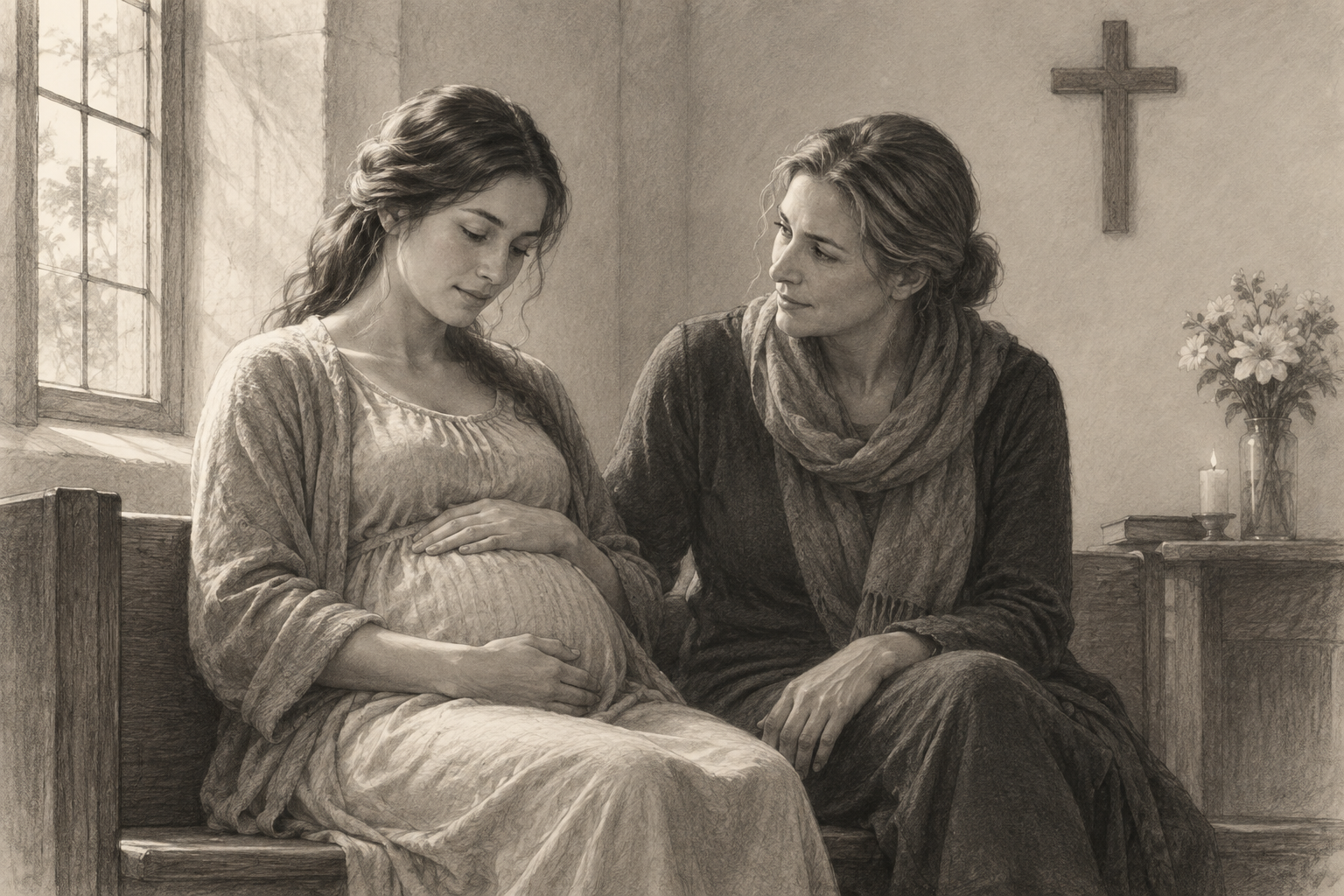
A child can be deeply loved before anyone has seen the child's face. Yet a pregnancy can also arrive amid fear, illness, financial insecurity, or the threat of abandonment. Sometimes joy and anxiety occupy the same heart. A faithful Catholic response must make room for these realities without losing sight of either the unborn child or the woman carrying that child.
The Church teaches that human life deserves respect and protection from conception. This is not a claim that pregnancy is always easy, or that difficult circumstances can be resolved with a reassuring phrase. It is a claim about who human beings are: persons whose worth does not depend on being wanted, healthy, independent, or convenient to others.
Within Catholic social teaching, the dignity of unborn life belongs to the same moral vision that calls us to feed the hungry, protect people with disabilities, welcome the stranger, and care for those approaching death. Each life makes a claim upon our love.
Dignity is received, not earned
The foundation of Catholic teaching on human dignity is the belief that every human being is created in the image of God. Genesis 1:27 locates human worth in our relationship to the Creator, not in our achievements or social standing. We do not become valuable when others recognize our value. Their recognition should answer a dignity already present.
This matters especially when a human being cannot speak, defend personal interests, or participate visibly in society. Dependence does not diminish humanity. A newborn, someone living with profound cognitive disabilities, and a person nearing death all require care without having to prove that their lives are worth sustaining.
The unborn child belongs within this circle of concern. The Catechism of the Catholic Church, paragraph 2270, teaches that human life must be respected and protected absolutely from the moment of conception. From the first moment of existence, the human being must be recognized as having the rights of a person, including the inviolable right to life.
Embryology describes fertilization as the beginning of a new human organism's development. Catholic moral teaching addresses the obligation that follows: this developing human life is not disposable material. Its earliest stage is a reason for special protection, not exclusion from the human family.
Scripture teaches us to notice hidden life
The Bible is not an embryology textbook. Its witness is theological: human life is known by God, held within his providence, and never beyond his concern. The psalmist speaks of God's intimate care in the womb in Psalm 139:13. This prayer invites reverence toward a life that remains hidden from ordinary sight.
The Visitation offers another striking image. When Mary greets Elizabeth, the child in Elizabeth's womb leaps, as recounted in Luke 1:41. The encounter belongs first to the Gospel's proclamation of Jesus and the work of the Holy Spirit. It also presents unborn life within a relationship of recognition, joy, and divine purpose.
These passages should not be treated as isolated slogans that settle every medical question. They help form a Christian imagination capable of seeing what power and visibility can obscure. The hidden child is not outside God's care, and neither is the mother whose suffering may be equally unseen.
The child and the mother are not rivals
Public arguments often frame pregnancy as a contest between two lives. Catholic teaching asks for a different starting point: both mother and child possess inherent dignity. Their needs are closely connected, and a just community should seek the good of both.
That does not remove the moral boundary. The Church teaches that direct abortion, intended either as an end or as a means, is gravely contrary to the moral law. The Catechism states this in paragraph 2271. No difficult circumstance makes the intentional killing of an innocent human being morally good.
Yet stating that principle is not the whole pastoral task. A woman may be facing coercion, domestic abuse, homelessness, a serious diagnosis, or pregnancy following sexual assault. These situations call for protection, competent medical care, and patient accompaniment. They should never be met with suspicion, humiliation, or easy assurances that everything will work out.
Fathers also bear responsibilities. So do extended families, employers, parishes, and public institutions. Respect for unborn life must never become a way of placing every burden on women while others remain spectators. To defend a child's life is also to take seriously the conditions in which that child's mother must live.
How social teaching makes protection concrete
Catholic social teaching connects moral conviction with the organization of our shared life. Several of its central principles help explain what a consistent defense of unborn children requires.
Solidarity and the common good
Solidarity means recognizing that we are responsible for one another. An unexpected pregnancy is not simply someone else's private difficulty. A community's response reveals whether its commitment to human dignity extends to people whose needs are costly or inconvenient.
The common good concerns the social conditions that enable people and communities to flourish. In this context, those conditions include access to appropriate health care, safe housing, adequate nutrition, and support for family life. Protecting unborn children involves legal protection for their lives, but it also requires attention to the pressures that can leave parents feeling trapped.
Preferential concern for the vulnerable
The preferential option for the poor directs particular attention toward those with the least power and fewest resources. Unborn children cannot advocate for themselves. Pregnant women facing poverty, abuse, or isolation may also have little effective power over their circumstances.
These vulnerabilities should draw concern together rather than force a choice between them. Assistance that protects a child while neglecting a mother's safety is inadequate. So is assistance that treats ending the child's life as the answer to the mother's deprivation.
Subsidiarity and shared responsibility
Subsidiarity respects the role of families and local communities while recognizing the duty of larger institutions to help when smaller ones cannot meet a need. A parish may provide meals or transportation. Health systems and public authorities have responsibilities that a parish food collection cannot replace.
Catholics can reasonably disagree about the design of particular support programs. Such disagreements should involve honest attention to evidence, practical outcomes, and the needs of those affected. Neither partisan loyalty nor a single act of charity exhausts the demands of justice.
When pregnancy involves grave medical difficulties
Some pregnancies involve life-threatening illness or devastating prenatal findings. These situations require careful language. Families need accurate diagnoses, qualified medical advice, and moral guidance that understands the actual treatment being proposed.
Catholic teaching distinguishes direct abortion from treatment directed at a serious maternal pathology that may have the unintended consequence of the child's death. This distinction is not permission to relabel any intervention. The moral evaluation concerns what is actually done, what is intended, and whether the harmful effect is used as the means of achieving the good effect. Intention alone does not settle the question.
Specific cases can be medically and morally complex. Consultation with qualified clinicians and a competent Catholic medical ethicist can help clarify permissible care. Catholic respect for unborn life does not mean that a pregnant woman must be denied all treatment for serious illness.
When a prenatal diagnosis suggests that a child may die before or shortly after birth, compassionate care remains possible. Perinatal palliative or hospice care, where available, can support the family, plan appropriate comfort care, and make space for grief. A brief life is not a life without dignity, and parents should not have to bear such sorrow alone.
A parish response that lasts beyond birth
Practical support should begin by listening. What does this particular woman or family need? What would make the next appointment, the next month, or the return home after delivery less frightening?
- Offer reliable transportation, meals, childcare, or help navigating available services.
- Support access to competent prenatal and postnatal care, including mental health care when needed.
- Help families obtain essential supplies and stable housing without exposing their private circumstances.
- Encourage fathers to fulfill their responsibilities and connect families with trustworthy support.
- Remain present after the birth, especially when a child has disabilities or a parent is isolated.
Help should never be conditioned on a person's willingness to attend church or disclose painful details publicly. Parish volunteers need clear safeguarding practices, appropriate boundaries, and reliable referral relationships. Good intentions do not replace professional expertise in medicine, trauma, or domestic violence.
Jesus identifies care for the vulnerable with service to himself in Matthew 25:40. Such care is often quiet: keeping a promise, answering a call, or returning when the first wave of attention has passed.
Truth spoken within the reach of mercy
An article about unborn life will be read by people whose lives have already been touched by abortion. Some carry grief; others struggle to name what happened or the pressures surrounding it. They should hear clearly that the Church's moral teaching does not place them beyond God's mercy.
The gravity of an act and a person's individual culpability are not identical questions. Fear, coercion, ignorance, and other factors can affect responsibility. Pastoral care should avoid presuming to know another person's interior life while still speaking truthfully about the act itself.
For Catholics seeking reconciliation, the Sacrament of Penance is a place to bring sin and receive God's forgiveness. A trusted priest, qualified counselor, or diocesan post-abortion ministry can also offer support. Healing should not be rushed or turned into a public testimony for someone else's purposes.
Reverence for unborn life becomes credible when it takes the form of steadfast love: protecting the child, accompanying the mother, calling others to responsibility, and welcoming those who seek mercy. The life we cannot yet see asks something of the lives already around it. Our answer should be truthful enough to defend that life and generous enough to help carry its needs.
Keep Reading on Lets Read The Bible
Frequently Asked Questions
When does Catholic teaching say human life must be protected?
The Catechism of the Catholic Church, paragraph 2270, teaches that human life must be respected and protected absolutely from conception. Human dignity does not depend on development, health, independence, or whether a pregnancy was planned.
Does Catholic teaching allow medical treatment for a pregnant woman with a serious illness?
Yes. Catholic teaching does not prohibit all treatment that carries a risk to an unborn child. It distinguishes direct abortion from treatment of a serious maternal pathology whose unintended consequence may be the child's death. The specific intervention, its intention, and how its effects occur all matter. Complex cases require qualified medical care and competent Catholic ethical guidance.
How can a parish support unborn children and their mothers?
A parish can offer practical assistance such as meals, transportation, childcare, essential supplies, and referrals for health care, housing, and professional support. Assistance should protect privacy, respect the family's dignity, and continue after birth. Mothers and fathers need dependable accompaniment, not only encouragement.