Catholic Living
When the Hidden Promises Too Much: Catholic Wisdom on the Occult and the Interior Life
The Church does not approach the occult with panic, but with sobriety, mercy, and a firm trust in Christ's victory.
Site Admin | August 17, 2026 | 96 views
The occult has long been attractive to people who feel uncertain, frightened, lonely, or eager for answers. It can promise insight into the future, hidden knowledge, protection, power, or relief from pain. At first glance, those promises can seem harmless, even practical. Yet Catholic moral teaching sees something more serious beneath the surface. The occult and spiritual danger and Catholic life are bound together because the human heart was made for truth, freedom, and communion with God, not for attempts to control spiritual realities that do not belong to us.
The Church does not speak about this with superstition. It speaks as a mother and teacher. She knows that curiosity can become attachment, that attachment can become dependence, and that dependence can gradually weaken trust in the Lord. The danger is not only that certain practices are forbidden. The deeper issue is that they can reshape the interior life in ways that are difficult to notice at first. The soul begins to look outward for power instead of upward in faith.
What the Church means by occult involvement
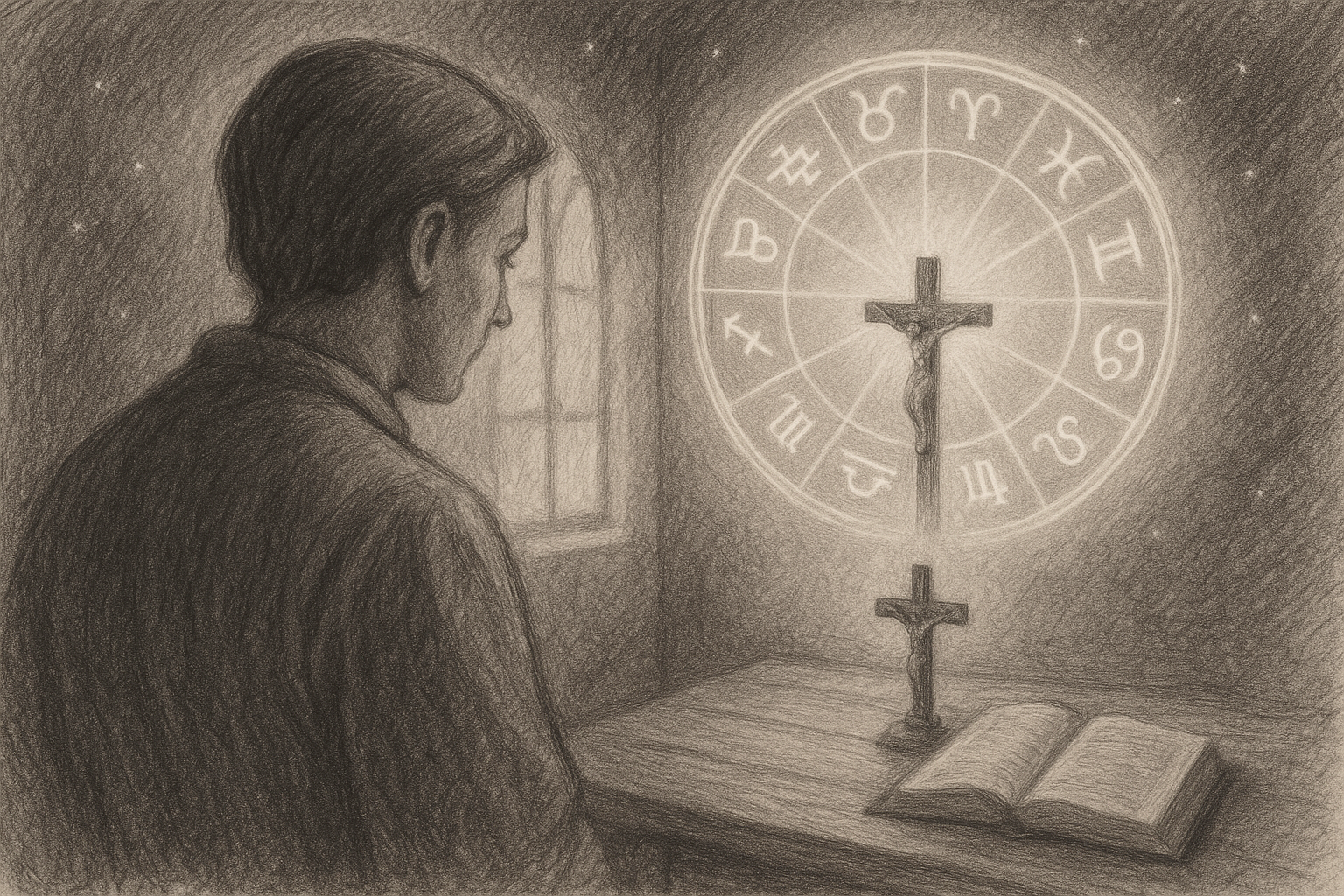
In Catholic usage, the occult refers to attempts to gain knowledge or power through hidden or forbidden spiritual means. This can include divination, séances, astrology used as guidance for life decisions, necromancy, spells, magic, and other practices that seek access to forces beyond the ordinary moral order. The issue is not simply that such things are unusual. The issue is that they place trust in methods that do not come from God and can invite serious spiritual confusion.
Scripture consistently warns God's people away from these paths. Israel was not to imitate the nations around them in seeking omens, consulting mediums, or trying to manipulate spiritual power. The reason was not narrow legalism but covenant fidelity. God alone is Lord, and His people are to seek Him in prayer, obedience, and humility. Deuteronomy 18:10 is one of the clearest passages on this point, naming practices that turn the heart away from the living God.
The New Testament continues this pattern. In Acts, those who came to faith in Christ publicly renounced magical practices and destroyed the instruments connected with them Acts 19:19. That response is important. It shows that conversion is not only a change of opinion. It can require a decisive break with objects, habits, and relationships that have become spiritually unhealthy.
Why the danger is moral, not just emotional
Some people assume the occult is only a matter of personal preference or harmless experimentation. But Catholic moral life is concerned with more than external rules. It examines what a practice does to the person. Does it increase trust in God? Does it strengthen truthfulness? Does it foster freedom and peace? Or does it feed fear, secrecy, dependency, and pride?
Occult practices often appeal to the desire to know everything in advance. That desire may come from anxiety, and anxiety is real. Still, when a person seeks certainty apart from God, the result can be a deeper captivity. The heart begins to believe that peace depends on signs, predictions, rituals, or special powers. Instead of learning to live by faith, the person learns to manage fear by control.
There is also the temptation of pride. Hidden knowledge can make a person feel chosen, superior, or protected from ordinary limits. But Catholic faith teaches that holiness does not come from secret mastery. It comes from humility, obedience, repentance, and grace. The saints are not impressive because they possessed obscure techniques. They are radiant because they belonged to Christ.
This is why the occult and spiritual danger and Catholic life cannot be separated. A Catholic moral vision is not merely about avoiding obvious sins. It is about guarding the integrity of the heart. Anything that trains the soul to distrust God's providence is spiritually serious, even if the culture treats it as entertainment or self-expression.
The false comfort of control
Many people first approach occult material during seasons of fear. A difficult diagnosis, family conflict, grief, betrayal, or uncertainty about the future can make hidden knowledge seem appealing. The same is true for loneliness. A person who feels unseen may long for any sign that the universe is responding. In that moment, the occult can feel less like rebellion and more like comfort.
But false comfort is still false. It can numb pain without healing it. Catholic faith does not deny suffering, and it does not mock the human need for reassurance. Instead, it invites the wounded heart to come into the light. The Lord does not ask us to master the future. He asks us to trust Him in the present. Jesus says, Matthew 6:34, and that instruction is not shallow advice. It is an invitation to freedom from anxious grasping.
Real peace grows slowly. It comes through prayer, honest confession, the sacraments, and the patient practice of virtue. By contrast, occult involvement often promises an immediate answer. That speed can be part of its lure. Yet anything that bypasses humility and discernment can also bypass wisdom. A quick answer is not always a true one.
Repentance begins with honest naming
If a person has been involved in occult practices, the first step is not shame but truth. Name what happened plainly before God. That may mean admitting curiosity, entertainment, consultation, dependence, or active participation. It may also mean acknowledging the emotional wound that made the practice attractive in the first place. God heals what we are willing to bring into the light.
Confession is central here. The sacrament of Penance is not a symbolic gesture. It is Christ's merciful action in the life of the Church. If a Catholic has engaged in grave matter, a good confession can be an important beginning of freedom. The priest is there not to humiliate but to reconcile. Grace does not erase the past, but it breaks its hold on the soul.
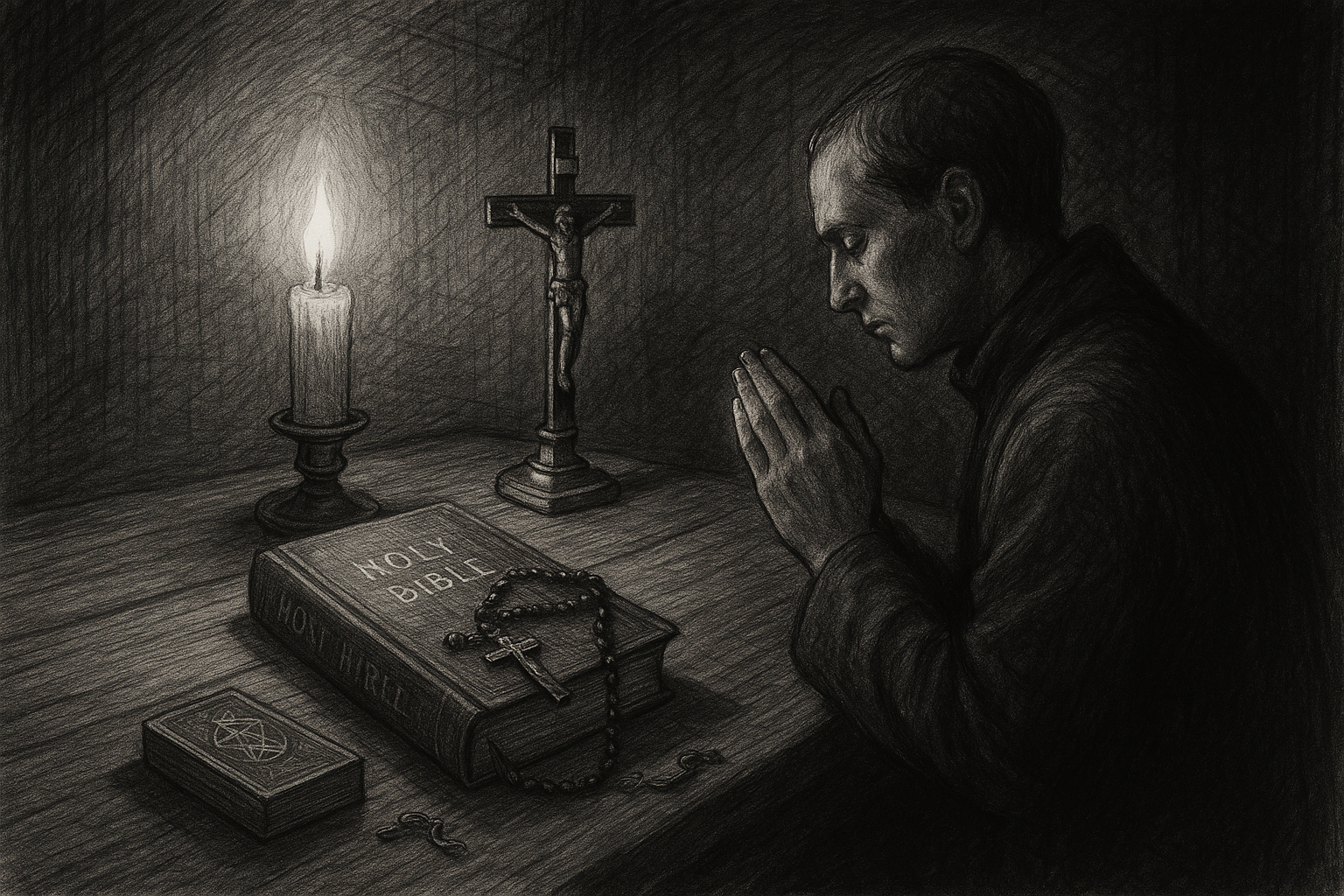
Repentance may also require concrete renunciation. A person should remove books, objects, apps, charms, ritual items, and anything else tied to the practice. This is not superstition. It is prudence. If something continually draws the mind back toward darkness, it should not remain nearby as though the soul were immune to influence. The Christian life is lived with the whole person, body and mind together.
Healing is often gradual
Some people expect that once they renounce the occult, every fear will vanish at once. Often it does not. Old habits of thought can linger. Anxiety may remain. Intrusive memories may return. A person may still be tempted to look for signs or reassurance in the same old ways. That does not mean repentance was false. It means healing is unfolding in time.
In such moments, the ordinary means of grace matter. Regular Mass, frequent confession, Eucharistic adoration, the Rosary, Scripture reading, fasting, and deliberate acts of charity all help restore spiritual order. They retrain the heart. They teach the soul to wait, to listen, and to receive instead of grasping. The Church's wisdom is often quiet, but it is enduring.
It can also help to seek trustworthy pastoral guidance. A priest, spiritual director, or mature Catholic who understands the difference between temptation, anxiety, and genuine spiritual struggle can provide steady help. If a person is dealing with severe fear, compulsive behavior, or trauma, professional mental health support may also be necessary. Catholic care is not a competition between prayer and ordinary human help. We should use both wisely.
God's mercy does not begin after we become strong. It begins where we are, even when we are confused, ashamed, or afraid.
Virtue offers a better way
One of the most hopeful truths in Catholic life is that virtue is not abstract. It is trainable. If the occult often feeds curiosity, secrecy, and control, virtue offers the opposite: prudence, temperance, trust, and courage. These habits reshape the heart from within.
Prudence helps a person distinguish what is safe from what is spiritually risky. Temperance guards the imagination and limits unhealthy consumption of frightening or sensational material. Trust turns the mind toward God's providence rather than constant self-protection. Courage allows a person to live without bargaining with spiritual darkness.
It is also helpful to cultivate healthy wonder. The Catholic faith is not gray or flat. It is full of mystery, but mystery in the Catholic sense does not mean hidden power to exploit. It means depth to receive. The sacraments, the saints, the liturgy, and the Scriptures offer more than enough wonder for a lifetime. The soul does not need counterfeit mysteries when it has Christ.
Helping children and vulnerable adults stay grounded
Families should not assume that occult themes are harmless because they are common in entertainment. Children and teenagers are often drawn to whatever seems secret, exciting, or transgressive. Adults, too, can be vulnerable when life feels chaotic. It helps to speak plainly without panic. Explain that not every game, story, or trend is spiritually neutral, and that some things should be avoided because they pull the mind toward darkness rather than truth.
At home, parents can encourage daily prayer, blessings before sleep, simple devotion to the saints, and a steady rhythm of sacramental life. A home that is spiritually ordered gives a child more than rules. It gives a pattern of peace. When the family life is centered on Christ, forbidden alternatives lose some of their glamour.
Adults need that same grounding. A person who has been wounded, isolated, or spiritually curious may need to replace old patterns with ordinary but faithful ones: a morning offering, a psalm prayed slowly, a weekly confession, a regular act of service. These things may seem small, but they reorient desire. The soul learns again what it was made for.
Hope is stronger than fear
The Christian answer to the occult is not fear of hidden forces. It is trust in the Lord who has already conquered sin and death. Christ does not compete with darkness on equal terms. His light exposes and overcomes it. That is why Catholics can speak about spiritual danger without despair. The battle is real, but the victory belongs to God.
If you have been near these practices, or if you are simply trying to understand why the Church treats them seriously, do not let fear have the final word. Bring everything into the light. Renounce what is false. Return to the sacraments. Ask for prayer. Ask for help. The Lord is not waiting to shame the repentant heart. He is ready to heal it, strengthen it, and teach it to walk in freedom.
And if you have never been involved in the occult, this is still worth receiving as a reminder that Christian life is a daily choice of trust. We do not need secret knowledge to be safe. We need fidelity. We do not need hidden power to be free. We need grace. In that grace, the soul finds a peace the world cannot imitate.
Keep Reading on Lets Read The Bible
Frequently Asked Questions
Is every interest in the supernatural considered occult from a Catholic point of view?
No. Catholic faith is full of the supernatural in prayer, miracles, sacraments, angels, saints, and divine providence. The occult is different because it seeks hidden knowledge or power through forbidden or spiritually disordered means rather than through God and His Church.
What should a Catholic do after discovering involvement with occult practices?
The best first steps are honest renunciation, a good confession if grave matter is involved, and removal of objects or media tied to the practice. It is also wise to ask a priest for guidance and to return to regular prayer and the sacraments.
Can occult involvement leave a person feeling afraid even after they stop?
Yes. Fear, habit, and anxiety can linger after the practice ends. Healing is often gradual and can include prayer, confession, spiritual direction, and, when needed, professional mental health support.