Catholic Living
Looking to the Stars Without Losing Your Way
A Catholic reflection on astrology, discernment, and the freedom that comes from trusting God more than hidden patterns
Site Admin | August 18, 2026 | 99 views
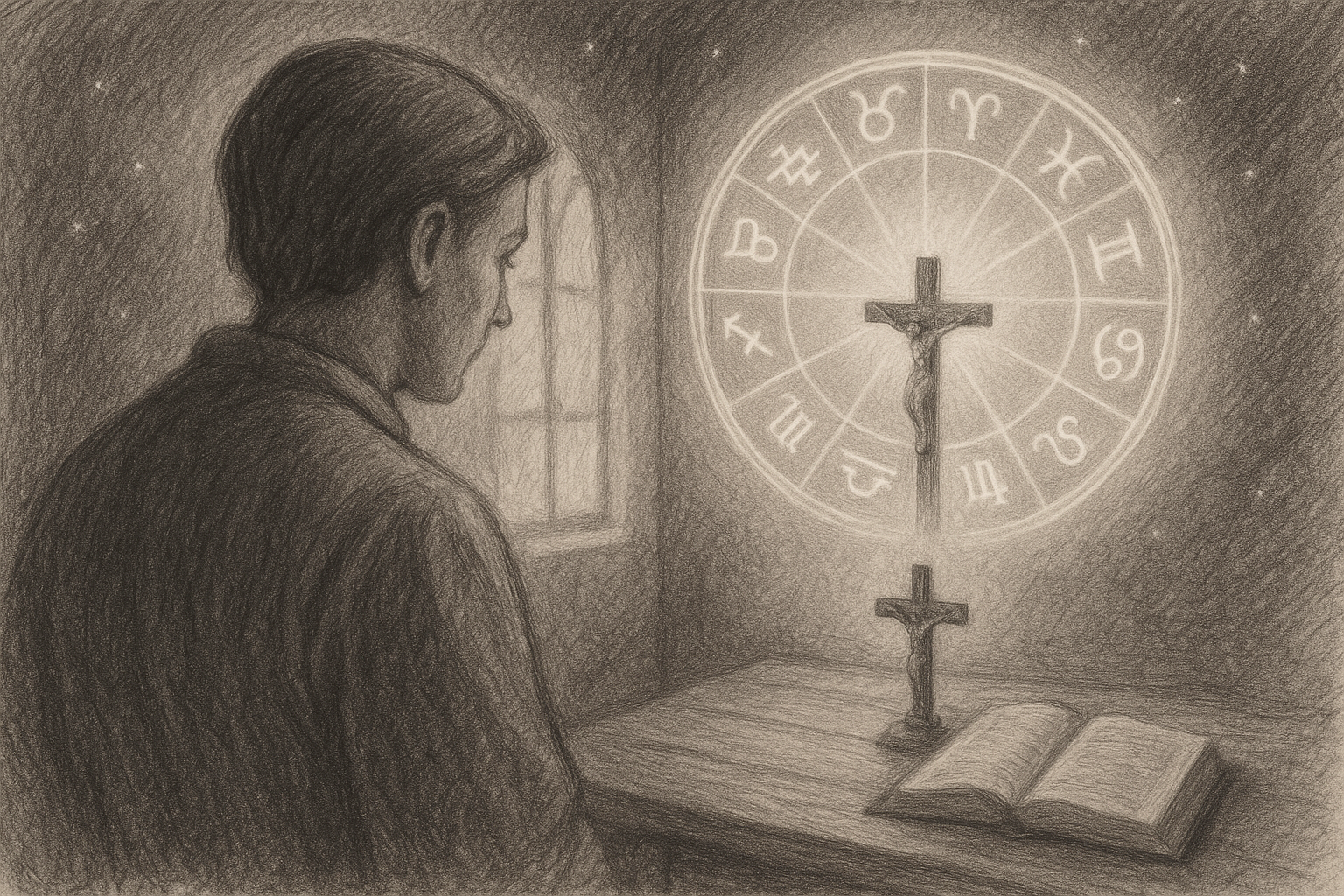
Astrology has an enduring appeal. It promises a quick reading of personality, a sense of order in a confusing world, and sometimes a comforting explanation for the choices we make or the people we meet. In moments of uncertainty, it can feel easier to ask what the stars say than to sit with the harder work of prayer, discernment, and trust. Yet astrology Catholic teaching does not treat this practice as a harmless curiosity. The Church asks a deeper question: does astrology lead us toward God and true freedom, or does it quietly train the heart to depend on something else?
That question matters because Catholic faith is not a refusal of reason, beauty, or the wonder of creation. Catholics can admire the heavens, study the cosmos, and marvel at the ordered universe God made. Scripture itself praises the stars as part of God's handiwork: The heavens proclaim the glory of God. But admiration is not the same as divination. To enjoy the sky is not to claim secret knowledge from it. The difference may seem small at first, but morally it is important.
What the Church Is Concerned About
The Church's concern is not merely that astrology can be mistaken or unscientific, though it often is. The deeper concern is spiritual. Astrology commonly suggests that hidden forces, star signs, or planetary movements govern human destiny in ways that shape our identity, relationships, and future decisions. That can weaken confidence in God's providence and blur the truth that each person is created with real freedom and responsibility.
Catholic teaching has long warned against divination, which includes attempts to uncover the future or control hidden knowledge apart from God. The Catechism teaches that all forms of divination are to be rejected, including recourse to horoscopes and astrology, because they contradict the honor, respect, and loving fear we owe to God alone. The issue is not simply whether the predictions turn out right. The issue is the posture of the soul.
When someone begins to treat a horoscope as a guide for major choices, or turns repeatedly to astrological signs for reassurance, the practice can become a substitute for prudence, counsel, and prayer. It can also create a false sense of inevitability: I am this way because my sign says so, or this relationship must fail because the chart warned me. Such thinking can narrow the horizon of grace. It can tempt a person to surrender the slow, demanding work of conversion in favor of easy explanations.
Creation Is Ordered, But It Is Not a Script
Catholics believe the universe is meaningful because it comes from God. The stars are not random. The seasons are not meaningless. Human life is not an accident. Still, meaning is not the same as destiny written in the sky. A Christian can say that creation reflects God's wisdom without saying that planetary positions disclose the future.
This distinction helps preserve both reverence and freedom. The heavens invite praise. They do not replace conscience. They can inspire humility. They do not govern the moral life. They remind us that God is vast and faithful. They do not give us license to seek hidden knowledge apart from Him.
Scripture repeatedly warns against depending on signs and omens in place of trust in the Lord. The people of God are called not to read the stars as fate, but to listen to God's word and respond in obedience. The prophet Isaiah speaks sharply to those who consult astrologers rather than the living God: Let those who study the heavens stand by and save you. The point is not ridicule for its own sake. It is a sober reminder that no created thing can take the place of the Creator.
Why Astrology Can Feel So Appealing
To speak clearly about astrology, it also helps to speak sympathetically. Many people do not begin with rebellion against God. They begin with curiosity, or with a desire to understand themselves. Horoscope language can seem warm, playful, and emotionally insightful. It often speaks in broad terms that feel personal because they touch common human experiences. At a time when many feel unseen or unanchored, a confident reading about one's traits or future can feel strangely intimate.
There is also a pastoral reality here. Some people turn to astrology during grief, anxiety, loneliness, or after disappointment in relationships. If life feels unpredictable, then a system that appears to name the chaos can be deeply seductive. In that sense, astrology can function less as an intellectual error and more as a spiritual temptation: it offers a shortcut to certainty.
The Church does not dismiss that longing. We all want clarity. We all want to know what comes next. We all want to be loved, guided, and protected. But the Catholic answer is not secret knowledge. It is trust in divine providence, the discipline of discernment, and the patient discovery of God's will in the ordinary places where grace is given.
Discernment Looks Different From Divination
Catholic discernment is not about decoding the universe for hidden messages. It is about seeking God's will with humility, prayer, reason, and the help of the Church. Discernment does not promise instant certainty. It asks for faithfulness.
When a Catholic faces a decision, the proper questions are often more demanding than astrological ones. Is this choice consistent with the Gospel? Does it draw me closer to the sacraments? Does it respect the dignity of others? Have I sought wise counsel? Have I brought this matter honestly before God?
That slower process may feel less dramatic than consulting a chart, but it is far more human. It respects the fact that we are not machines driven by cosmic energies. We are persons capable of love, repentance, and growth. We make choices, and those choices matter. Grace does not erase our freedom. It heals and strengthens it.
If any of you lacks wisdom, ask God says Scripture, and that simple command points to the heart of Christian discernment. We do not ask the stars for wisdom. We ask the Lord.
Pastoral Concerns in Everyday Life
Astrology can enter Catholic life in subtle ways. Some people read horoscopes casually and think nothing of it. Others use apps, social media posts, or compatibility charts to decide who to trust, date, or avoid. Still others begin with entertainment and gradually move into dependence. A practice that begins as a joke can, over time, become a habit of mind.
There are pastoral concerns here because repeated reliance on astrology can distort how a person understands sin, freedom, and responsibility. It can encourage blame-shifting: the sign made me do it. It can foster fatalism: nothing can change because the chart is fixed. It can even deepen fear, especially for those already anxious or superstitious. Instead of learning to pray through uncertainty, the person learns to chase reassurance.
There is also a concern for identity. Catholic teaching says that our deepest identity is not in a sign, a chart, or a personality label. It is in baptism. We belong to Christ. That identity does not flatten our temperament or erase our individuality, but it does place everything else in proper order. A zodiac label can be charming, but it should never become a lens that tells us who we are more than the Gospel does.
How Catholics Can Respond with Charity and Clarity
Not every conversation about astrology needs to become a confrontation. Many people who enjoy horoscopes are not trying to reject God. Some simply have not thought through the spiritual implications. Charity begins with listening.
If astrology comes up among friends, it is usually better to ask gentle questions than to deliver a lecture. What do you find helpful about it? Does it actually help you make better choices, or does it leave you more anxious? Do you see it as entertainment, or as something more? Such questions can open space for reflection without shame.
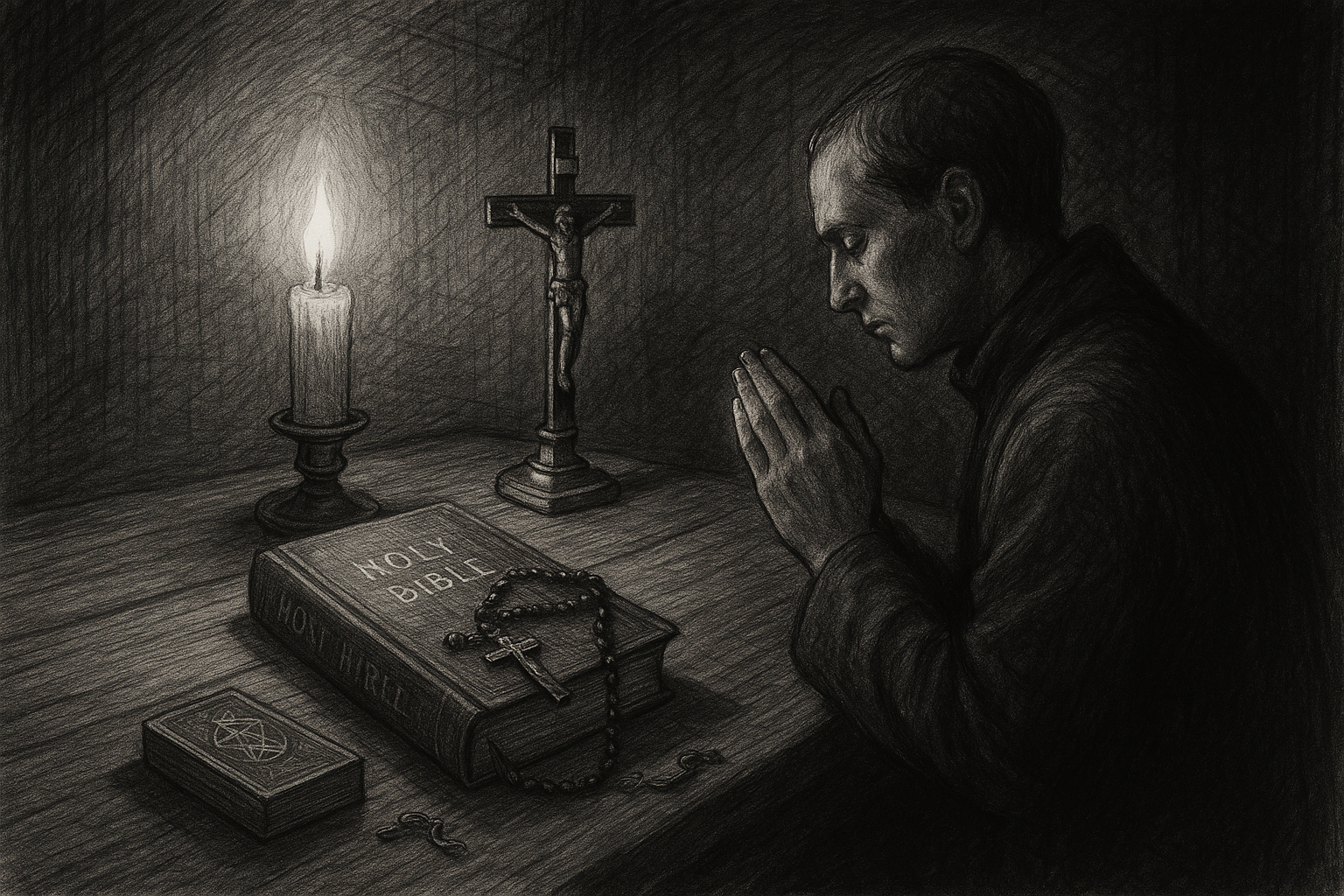
For Catholics themselves, the call is even more direct. If you have been using astrology in a way that shapes your decisions, it may be time to step back and simplify. Stop checking the horoscope before making plans. Put the app away for a while. Notice whether your peace rises when you withdraw from it. Replace that habit with a short prayer, a passage from Scripture, or a quiet examination of conscience.
Practical steps matter because habits shape the heart. If a pattern has become spiritually unhealthy, a concrete change can be a real act of conversion.
- Begin the day with a brief offering to God instead of consulting a horoscope.
- Ask a trusted priest, spiritual director, or mature Catholic friend for help if astrology has become a dependency.
- Use Scripture to ground your imagination, especially passages about providence, trust, and freedom.
- Choose one ordinary act of faith each day, such as the Rosary, the Angelus, or a simple prayer for guidance.
- If fear is driving your interest in astrology, bring that fear honestly to prayer rather than feeding it with more predictions.
Hope Is More Reliable Than Prediction
One reason astrology can be difficult to leave behind is that it seems to offer certainty in a world where certainty is scarce. But the Christian life does not rest on a forecast. It rests on a Person. God does not hand us a script of every outcome, but He does give us enough light for the next faithful step.
This is where Catholic hope becomes so important. Hope is not optimism. It is not pretending that everything will work out according to our preferences. It is trust that God is present, God is faithful, and God can bring good even out of confusion. That is a far sturdier ground than any chart.
St. Paul reminds us that nothing in creation can separate us from the love of God in Christ Jesus. That includes the fear that drives us toward hidden answers, and the temptation to think our life is ruled by forces we cannot change. In Christ, we are not trapped by fate. We are invited into communion.
So the question is not whether the stars are beautiful. They are. The question is whether we will ask them to do what only God can do. Catholic teaching, rightly understood, is not a gloomy refusal of wonder. It is a protection of wonder from distortion. It says that the night sky is meant for praise, not control. It says that the future belongs to God. And it says that the surest path forward is still the oldest one: prayer, repentance, the sacraments, and steady trust in the Lord who made the heavens and calls each person by name.
Keep Reading on Lets Read The Bible
- Scrolling With a Catholic Conscience: Faithful Discernment in the Age of Social Media
- Living Together Before Marriage: What Catholic Teaching Asks of Love
- When the Hidden Promises Too Much: Catholic Wisdom on the Occult and the Interior Life
- When the Feed Shapes the Heart: Social Media, Sin, and the Slow Work of Holiness
Frequently Asked Questions
Is reading a horoscope always a serious sin for Catholics?
The moral seriousness can vary by intent and habit. Casual exposure may be more of a curiosity than a grave fault, but actively seeking guidance from astrology, especially for decisions or identity, conflicts with Catholic teaching and can become spiritually harmful.
Can Catholics enjoy zodiac content as entertainment?
Some people treat it as harmless entertainment, but Catholics should be cautious if it begins to shape beliefs, decisions, or self-understanding. If it leads toward superstition, dependence, or trust in hidden powers, it should be avoided.
What should I do if I have relied on astrology for a long time?
Start by stopping the habit, then turn to prayer, Scripture, and if needed a priest or spiritual director. If astrology has become tied to fear or anxiety, practical support and patient formation can help you build new habits of trust.