Prayer and Devotion
Where Words Grow Quiet: Learning to Rest in the Presence of God
A practical path into attentive silence, faithful perseverance, and deeper friendship with Christ
Site Admin | November 20, 2026 | 22 views
Many Catholics know how to pray with words. We recite the Our Father, respond at Mass, pray the Rosary, offer petitions, and give thanks. Yet there are moments when words seem too small. The heart wants simply to remain before God, attentive and available.
This desire is at the center of silent prayer. It does not require a naturally quiet personality, an empty schedule, or extraordinary spiritual experiences. It begins with something much simpler: choosing to spend time with the Lord and allowing our words to become still.
Jesus himself sought places of solitude for prayer. The Gospels tell us that he rose early, went to a deserted place, and prayed there Mark 1:35. Christian silence is therefore not a retreat into isolation for its own sake. It is a way of turning toward the Father with Christ.
What silent prayer is
Silent prayer is attentive presence before God. We place ourselves in his presence, open our hearts to him, and remain there in faith. Thoughts, memories, emotions, and distractions may continue to arise, but we do not have to follow each one. We gently return our attention to the Lord.
Any silent prayer Catholic guide should make an important distinction: silence is not the same as mental blankness. Christian prayer does not ask us to erase our personality or dissolve into an impersonal spiritual force. We come before the living God who created us, knows us, and has revealed himself in Jesus Christ.
Silent prayer can include several related forms of prayer. In meditation, we prayerfully reflect on Scripture, the life of Christ, a truth of the faith, or the movements of our own heart before God. In contemplative prayer, our words and reflections become simpler as we rest in loving attention to him. The Catechism of the Catholic Church presents contemplation as a gift of communion with Christ, not a technique that we can manufacture or control.
This means that not every period of silence will feel peaceful or profound. Sometimes silent prayer includes consolation. At other times it includes restlessness, boredom, grief, or spiritual dryness. The value of the prayer does not depend on the feeling it produces. Its deepest measure is faithful love.
Why silence belongs in Catholic spiritual life
Silence creates room for listening. Much of daily life trains us to react quickly, consume information, and fill every pause. Prayer invites a different posture. Like Samuel, the believer learns to say:
Speak, Lord, for your servant is listening. 1 Samuel 3:9
This listening is not usually a search for an audible message or private revelation. More often, God forms us quietly. A passage of Scripture becomes clearer. A sin we have excused comes into view. A duty we have resisted appears more plainly. We receive patience to carry a burden or courage to make a necessary change.
Silence also reveals the state of the heart. When external noise subsides, we may notice anger, fear, vanity, or sorrow that busyness had concealed. This can be uncomfortable, but it is not a failure. We have brought our actual heart into the light of God. Prayer becomes honest when we stop pretending that we are already calm, pure, and collected.
The quiet presence of God can gradually bring order to these inner movements. The psalmist describes his soul as calmed and quieted before the Lord Psalm 131:2. Such peace is not always immediate. It is often the fruit of repeated surrender.
Silent prayer also deepens friendship with Christ. Friends do not need to speak constantly in order to remain together. In the same way, the believer can stay with Jesus without producing a stream of thoughts. His invitation to remain in him is the foundation of this prayer John 15:4.
How to begin a time of silent prayer
It is better to begin modestly and pray consistently than to attempt a demanding routine that quickly becomes discouraging. Ten or fifteen minutes each day can become a real school of attention.
- Choose a regular time. Select a part of the day when you are reasonably alert. Early morning works well for some people, while others find a quiet period in the evening or during a lunch break. Regularity helps prayer become a stable commitment rather than an occasional impulse.
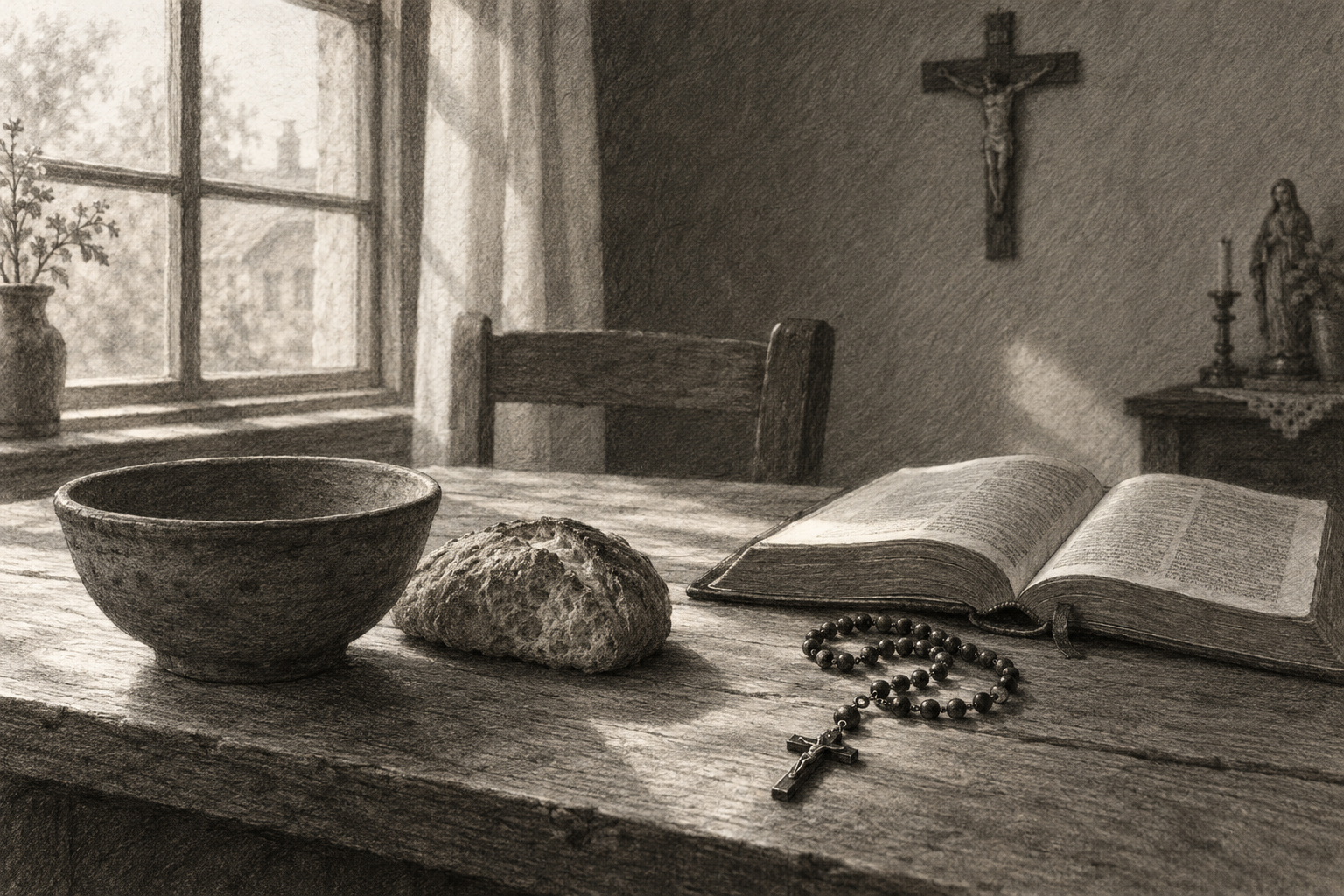
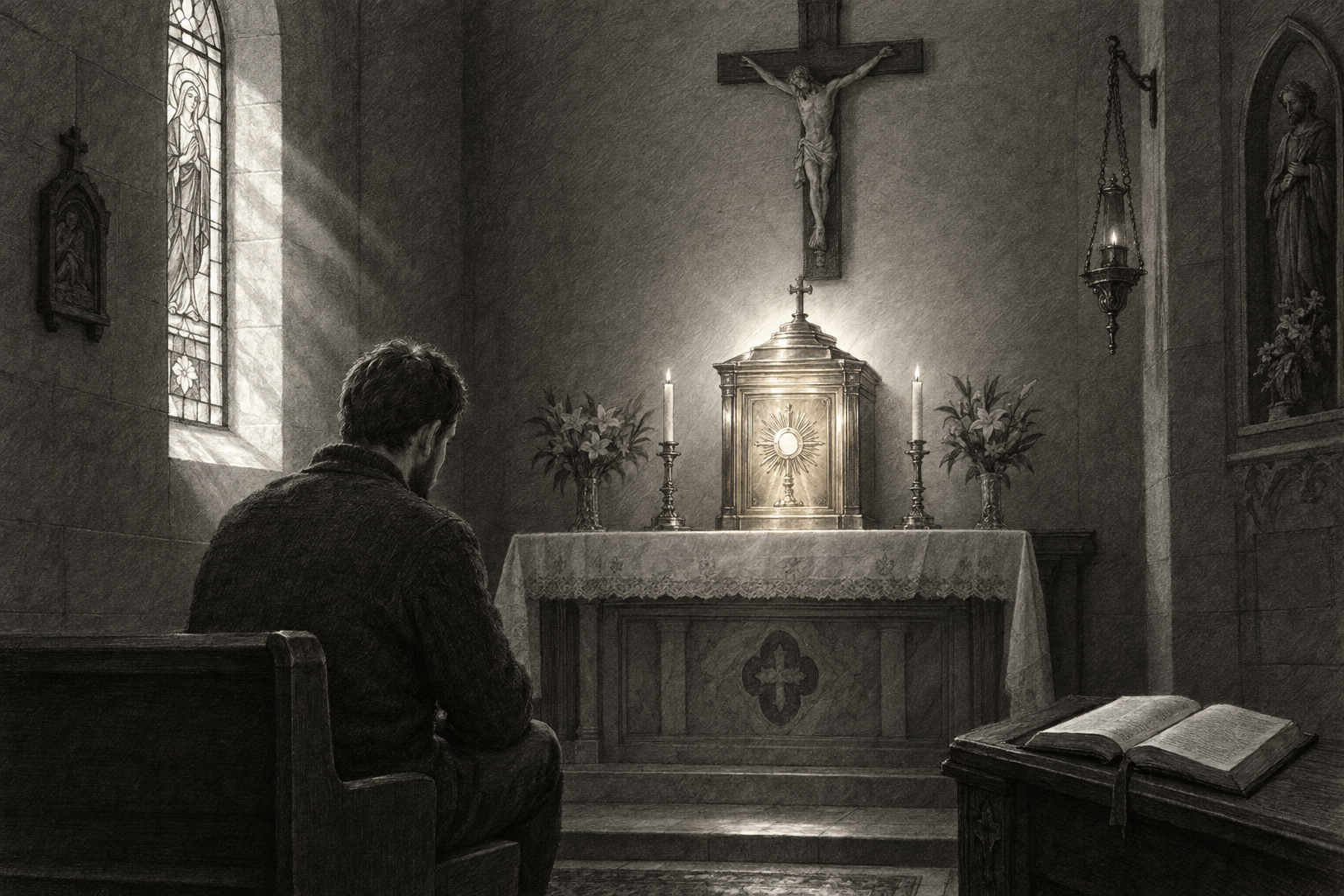
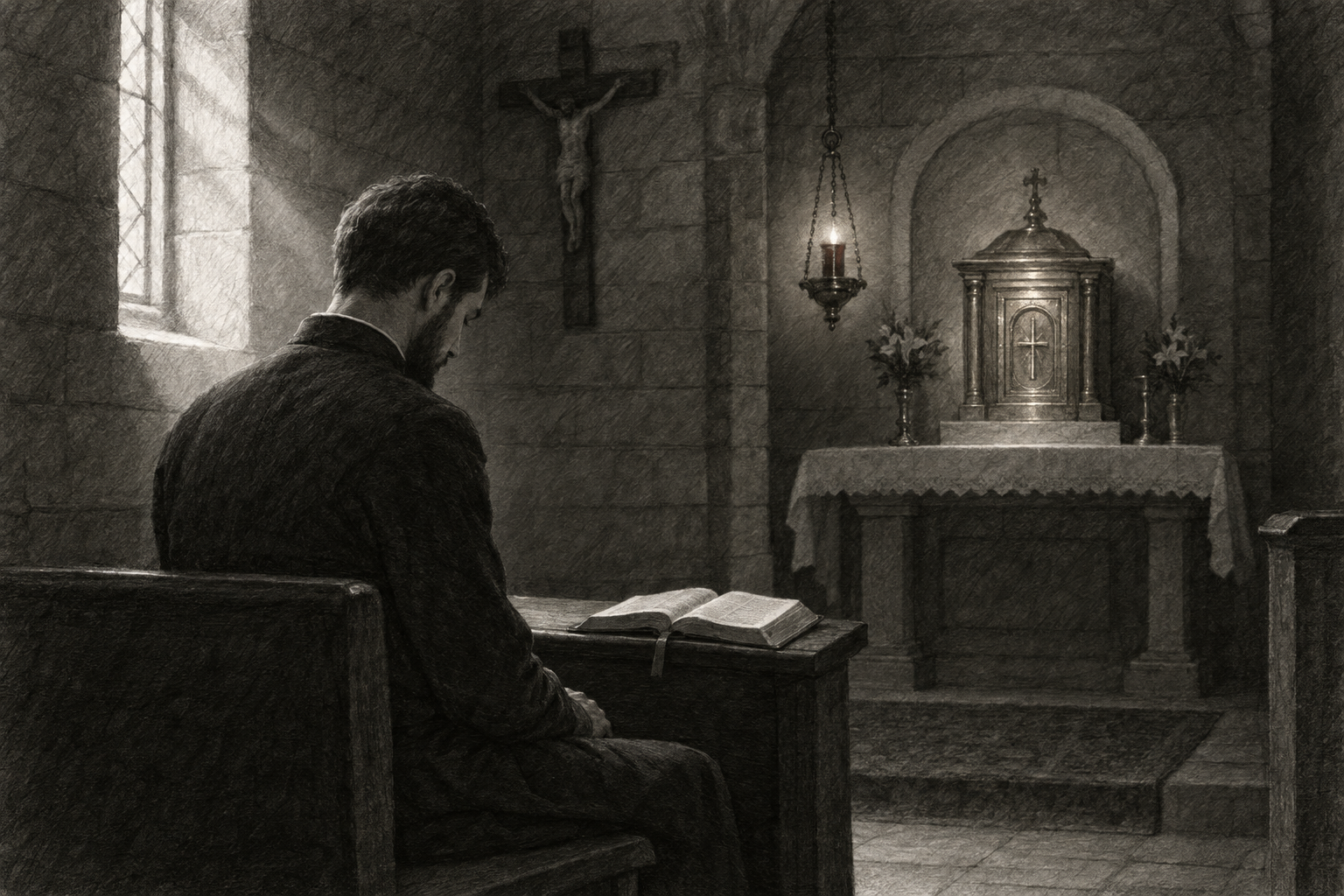
- Choose a suitable place. A church or Eucharistic adoration chapel is especially fitting, but silent prayer can also happen in a quiet room at home. Reduce obvious distractions when possible. Silence notifications, set aside unnecessary devices, and prepare the space before beginning.
- Adopt a reverent posture. You may kneel, sit upright, or use another posture that is both respectful and sustainable. Physical discomfort does not automatically make prayer holier. The body should support attention rather than become the main subject of it.
- Place yourself consciously before God. Make the Sign of the Cross. Ask the Holy Spirit for help. A short prayer such as Jesus, I am here with you can establish the direction of the heart.
- Read a short passage of Scripture. A few verses are enough. Read slowly, perhaps more than once. Notice a word, action, or phrase that draws your attention. Scripture is living and active Hebrews 4:12, so the purpose is not merely to gather information but to receive God's word in faith.
- Respond honestly. Speak to the Lord about what the passage awakens in you. This response may include gratitude, repentance, desire, confusion, or petition. There is no need to make the language impressive.
- Let the words become simpler. When you have said what needs to be said, remain quietly with God. You might repeat the name of Jesus or a brief phrase from Scripture when attention wanders. Over time, even that phrase may give way to quiet presence.
- End deliberately. Thank God for the time, even if it seemed distracted or dry. Conclude with the Our Father, a Glory Be, or another familiar prayer. Then carry one grace or resolution into the day.
A timer can be helpful because it removes the temptation to keep checking the clock. Choose a gentle sound and avoid looking at the time repeatedly. The goal is not to endure silence anxiously, but to give the period freely to God.
What to do about distractions
Distractions are one of the most common difficulties in prayer. They do not prove that we are incapable of silence. They reveal that the mind is active and often burdened.
When a distraction appears, avoid arguing with it. Notice it, release it, and return to God. If it concerns a genuine responsibility, write down a brief reminder before prayer or entrust it to the Lord. If the same fear keeps returning, it may itself become the subject of prayer.
Some distractions arise from fatigue, overstimulation, or poor preparation. Practical changes can help. Pray before opening social media, choose a more alert time, or take a few slow breaths before beginning. These are not spiritual tricks. They are ordinary ways of helping the body and mind become available for prayer.
Other distractions reveal attachments or wounds that require patience. A person may discover resentment, anxiety, or unresolved grief beneath the noise. Bring these honestly to Christ. Serious emotional or psychological distress may also call for wise pastoral care and qualified professional help. Silent prayer supports the whole Christian life, but it is not a substitute for necessary care.
Saint Paul teaches that the Spirit helps us in our weakness when we do not know how to pray as we ought Romans 8:26. Even the repeated act of returning can become prayer. Each return says, in effect, Lord, I choose you again.
Dryness is not abandonment
At first, silence may feel refreshing because it is new. Later, prayer may become dull or apparently unproductive. The believer may wonder whether God has withdrawn.
Catholic tradition treats spiritual dryness with seriousness but not panic. Sometimes dryness results from fatigue, distraction, or inconsistent habits. At other times, God may permit prayer to feel less satisfying so that our love becomes less dependent on emotion. We learn to seek the Giver rather than a particular experience.
During dryness, simplify the practice. Remain faithful to the appointed time. Use a psalm or a Gospel scene. Speak plainly to Jesus about the difficulty. If dryness persists or causes confusion, discuss it with a trustworthy priest or spiritual director.
Do not measure prayer by unusual feelings, images, or perceived messages. Private impressions must never be treated as equal to Scripture, Sacred Tradition, or the teaching of the Church. Genuine prayer ordinarily produces recognizable fruits over time: greater charity, humility, repentance, patience, and fidelity to one's duties.
How silent prayer fits with the Mass and other devotions
Silent prayer does not replace vocal prayer, the Rosary, the Divine Office, confession, or the Mass. It helps us enter these gifts more deeply. Catholic prayer is both personal and ecclesial, both spoken and silent.
The Eucharist is the center of Catholic life. Prayer before the Blessed Sacrament can be a privileged setting for silence because Christ is sacramentally present. Yet the grace of silent prayer is meant to continue beyond the chapel. It should make us more attentive at Mass, more ready to forgive, and more willing to serve.
The Rosary can also lead naturally into silence. After meditating on a mystery, a person may pause and remain with Christ. Lectio divina follows a similar movement from reading to meditation, prayer, and contemplation. These practices are not competitors. They are different ways the Church teaches her children to receive and answer God.
Mary offers a particularly beautiful model. She kept the events surrounding Christ and pondered them in her heart Luke 2:19. Her silence was not passive. It was attentive, faithful, and ready to obey.
Deepening the practice without forcing it
As silent prayer becomes established, increase the time gradually if doing so is realistic. Fifteen minutes may become twenty or thirty. A monthly holy hour or occasional retreat can provide additional space, but daily fidelity usually matters more than rare intensity.
Keep the practice rooted in Scripture and the sacramental life. Receive the Eucharist worthily, go to confession regularly, and seek to live the commandments. Prayer cannot be separated from conversion. Silence before God should make the conscience more responsive, not less.
It can also help to keep a simple prayer journal. Record a verse, a recurring petition, or a concrete resolution. Avoid trying to document every passing thought. The journal serves prayer when it helps us remember grace and recognize patterns; it becomes a distraction when self analysis replaces attention to God.
Above all, resist the urge to force contemplation. We can choose the time, prepare the place, read Scripture, and return our attention. The deeper quiet is God's gift. Our part is to remain available.
Silent prayer rarely transforms a life through one dramatic moment. More often, it works like steady rain upon the soil. The heart slowly becomes more truthful, more receptive, and more free. We learn that silence before God is not empty at all. It is the space in which love listens, waits, and discovers that Christ was already near.
Keep Reading on Lets Read The Bible
Frequently Asked Questions
How long should a beginner spend in silent prayer?
Ten to fifteen minutes a day is a realistic beginning. Consistency matters more than length. Once the practice becomes stable, the time can be increased gradually without neglecting family, work, or other duties.
Is silent prayer the same as emptying the mind?
No. Catholic silent prayer is attentive presence before the personal God revealed in Jesus Christ. Thoughts may become quieter, but the goal is loving communion with God, not mental blankness or the loss of personal identity.
Can I practice silent prayer outside a church?
Yes. A church or adoration chapel is especially fitting, but a quiet room, garden, or other suitable place can also be used. Wherever it occurs, silent prayer should remain rooted in Scripture, the sacraments, and the life of the Church.