Prayer and Devotion
Beneath the Noise, a Place for God
How the ancient Christian practice of quiet attention opens the heart to God's presence
Site Admin | November 21, 2026 | 20 views
Many Catholics know how to pray with words. We recite the Our Father, bring petitions to God, pray the Rosary, and respond at Mass. These forms of prayer are precious gifts. Yet there are also moments when words seem unable to carry everything in the heart. Grief may be too heavy, gratitude too deep, or the soul simply tired. At such times, silence can become a form of prayer.
Christian silence is not merely the absence of speech. It is attentive presence before the living God. We become still, not because nothing is happening, but because God is worthy of our undivided attention. Silent prayer teaches us to receive before we speak, to listen before we act, and to rest in the truth that God already knows us completely.
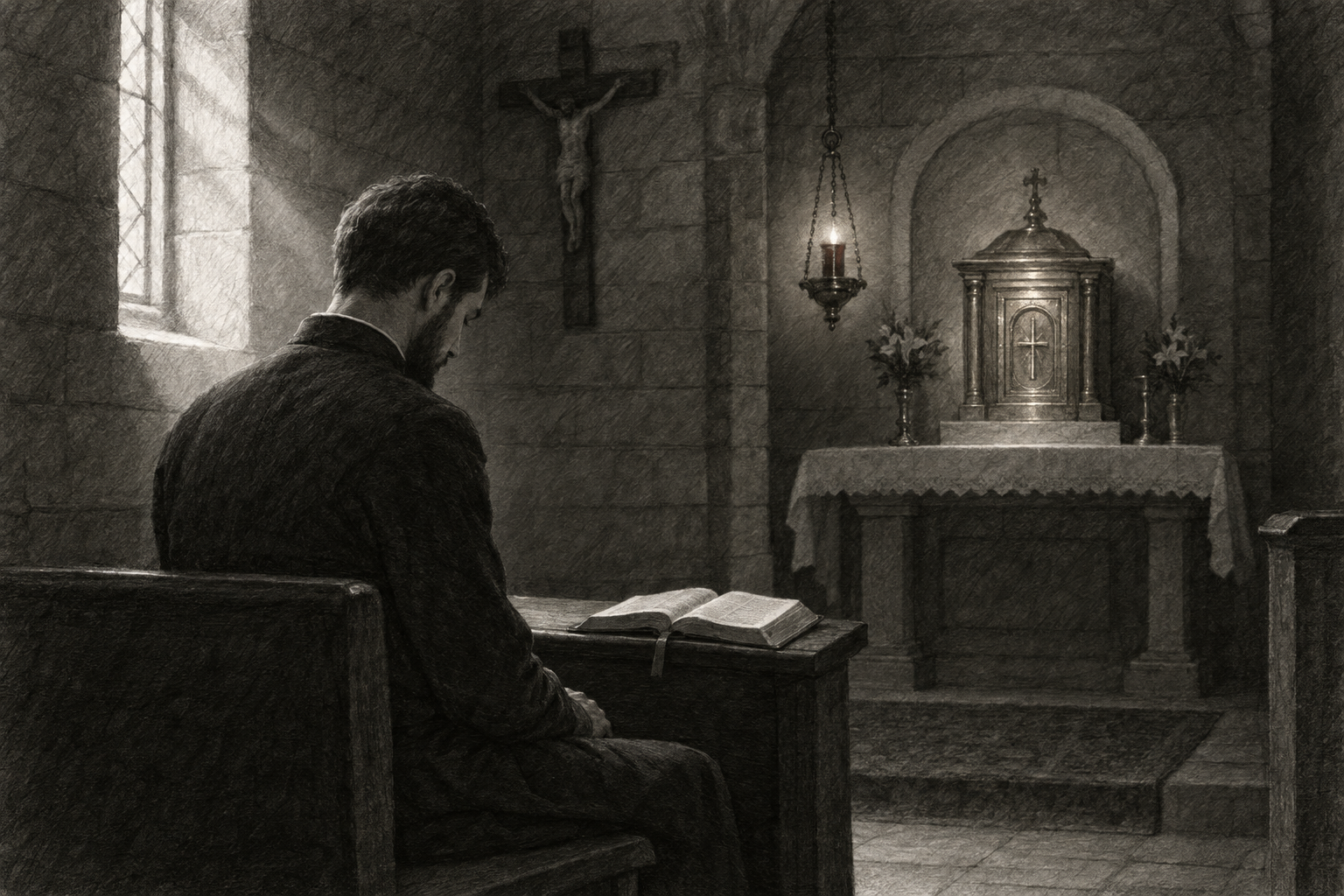
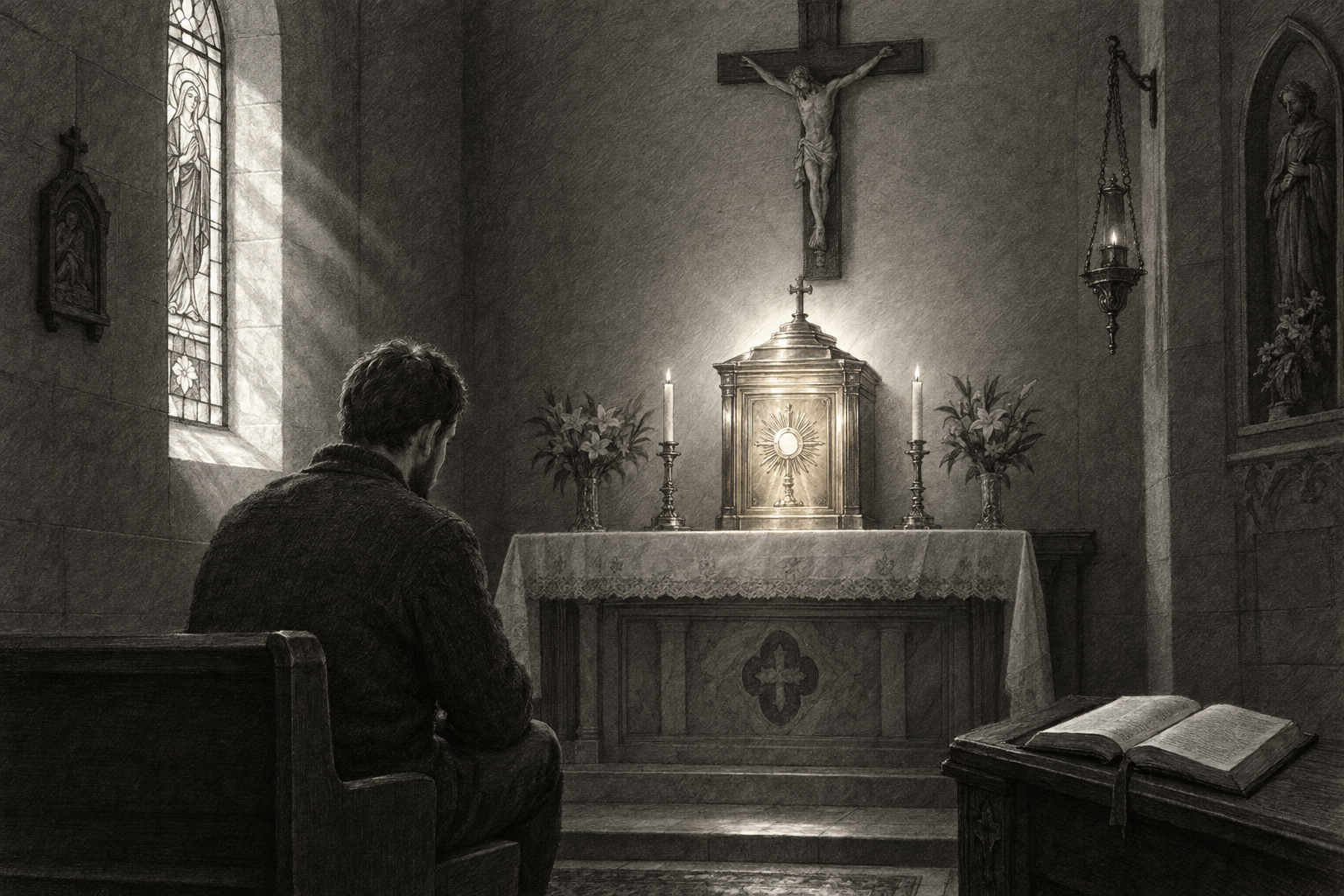
When people want silent prayer explained, they sometimes imagine a specialized practice reserved for monks, mystics, or unusually peaceful people. In fact, every Christian can make room for prayerful silence. It can take place before the tabernacle, at home before the day begins, after reading Scripture, or during a brief pause in a crowded schedule. The essential movement is simple: we turn toward God in faith and remain with him.
Silence in the biblical life of prayer
Scripture presents silence as a place of encounter, trust, and reverence. The psalmist receives the command to become still and recognize the sovereignty of God: Be still, and know that I am God. This stillness is not passivity. It is the surrender of our illusion that everything depends on our effort.
The prophet Elijah offers another important image. After wind, earthquake, and fire, he encounters the Lord in what is often translated as a still, small voice or a gentle whisper: The gentle whisper. The passage does not imply that God is absent from powerful events. It reveals that divine presence cannot be reduced to spectacle. The heart must become attentive enough to receive God as he chooses to come.
Jesus himself sought solitude for prayer. The Gospels show him rising early and going to a deserted place: Jesus prayed in a deserted place. He also instructed his disciples to enter an inner room and pray to the Father in secret: Pray to your Father in secret. These passages do not reject communal worship. Jesus prayed in the synagogue, participated in Israel's feasts, and formed a community of disciples. Solitary prayer and common worship belong together.
Mary also provides a model of inward attention. After the shepherds visit Bethlehem, she keeps what has happened and ponders it in her heart: Mary pondered these things in her heart. Her silence is full of memory, wonder, and faithful reflection. She receives the works of God before trying to master their meaning.
A practice rooted in Christian tradition
From the earliest centuries, Christians sought quiet places where they could attend more fully to God. The Desert Fathers and Mothers withdrew into the deserts of Egypt, Palestine, and Syria. Their purpose was not hatred of the world. They wanted to confront distraction, temptation, pride, and self-deception while giving themselves more completely to prayer.
Monastic life later gave enduring structure to this desire. The rhythm of the Divine Office, manual labor, sacred reading, and silence trained the whole person to remain mindful of God. In the practice of lectio divina, a Christian slowly reads Scripture, reflects upon it, responds in prayer, and rests in God's presence. Silence is not separated from the Word. It grows from listening to the Word.
The Carmelite tradition also speaks powerfully about interior prayer. Saints Teresa of Avila and John of the Cross taught that growth in prayer is growth in a loving relationship with God. Teresa's teaching is especially practical because she knew distraction, dryness, illness, and discouragement. Her witness reminds us that prayer does not become real only when it feels peaceful. Fidelity matters more than a particular sensation.
The Catechism of the Catholic Church discusses meditation and contemplative prayer in its treatment of the life of prayer. Meditation engages thought, imagination, emotion, and desire as we seek to understand and answer God's call. Contemplative prayer is a loving attention to God, centered upon Christ and receptive to his grace. The two are not rivals. Meditation may lead into silence, and silence may return us to Scripture with deeper attention.
It is also important to distinguish ordinary silent prayer from extraordinary mystical experiences. A Catholic does not need visions, locutions, or unusual feelings in order to pray deeply. God may sanctify a person through quiet, hidden perseverance. Most daily prayer is simple and unremarkable from the outside, but grace is not measured by outward drama.
What Christian silence is, and what it is not
Silent prayer is sometimes described as emptying the mind. That language can be misleading. Christian prayer is not directed toward emptiness as an end in itself. Its purpose is communion with the Father, through the Son, in the Holy Spirit. We may release distracting thoughts and unnecessary worries, but we do so in order to become more available to God.
Nor is silent prayer a relaxation method, although the body may become calmer. It is not a productivity tool designed to make us more efficient. It is an act of worship and love. We give God time because he is God, not merely because silence may improve our mood.
Silence also does not mean that we must suppress every thought. Human minds wander. Memories arise, responsibilities return, and unfinished conversations replay themselves. The goal is not to become angry with the mind. Each distraction can become an invitation to return gently to God.
Prayerful silence is not a performance of perfect concentration. It is the repeated offering of our attention to the One who never stops attending to us.
At times, silence may expose anxiety, grief, resentment, or fear. This does not necessarily mean the prayer has failed. Quiet often reveals what noise helped us avoid. We can place what emerges before Christ with honesty. If silence consistently brings overwhelming distress, it is wise to seek guidance from a trusted priest, spiritual director, or qualified mental health professional. Sound spiritual practice respects the whole person.
How to begin a daily practice
A simple structure can help silent prayer become part of ordinary Catholic life. The aim is not rigidity, but faithfulness.
- Choose a realistic time. Begin with five or ten minutes. A short period kept regularly is usually more fruitful than an ambitious plan quickly abandoned.
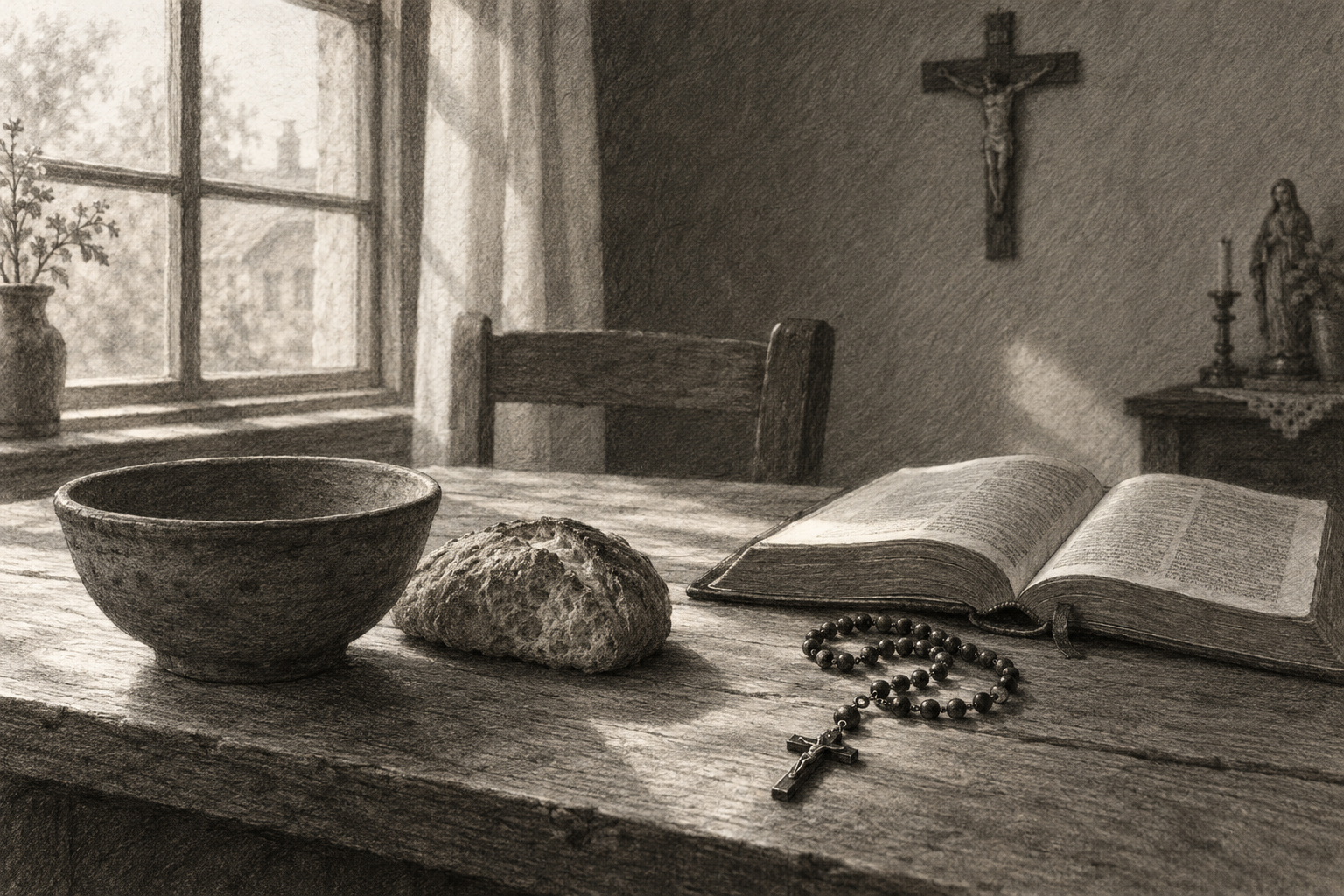
- Find a suitable place. Pray before the Blessed Sacrament when possible, or create a quiet place at home with a crucifix, Bible, or sacred image. These visible signs help direct attention toward Christ.
- Place yourself in God's presence. Make the Sign of the Cross. Remember that prayer begins with God's initiative. You are responding to the One who has already called you.
- Use a brief passage of Scripture. Read slowly and notice a word or phrase that draws your attention. Do not hurry to analyze every detail. Allow the Word to lead you into prayer.
- Remain quietly with God. You may repeat a simple phrase such as Jesus, I trust in you, or Speak, Lord, your servant is listening. When attention wanders, return without harshness.
- End with gratitude. Thank God for the time, even if it felt distracted or dry. Conclude with the Our Father, a Glory Be, or another familiar prayer.
Posture can support attention. Sit upright but not rigidly, or kneel if that is comfortable and appropriate. A prayerful posture reminds the body that this time is being offered to God. There is no need to monitor breathing in a complicated way. Simply breathe naturally and allow the body to settle.
When prayer feels dry
Many people abandon silent prayer because they expect immediate peace. Yet dryness is a normal part of the spiritual life. A prayer period may feel dull, restless, or emotionally empty. Such experiences do not prove that God is absent.
Love is often shown through steadfastness. Remaining before God without consolation can become a sincere offering of faith. We learn to seek the Giver rather than a pleasant feeling. At the same time, persistent dryness may invite practical adjustments. We might need more sleep, a shorter period of prayer, a different time of day, or a return to slower meditation on Scripture.
Even when we do not know how to pray, the Holy Spirit assists us in our weakness: The Spirit helps us in our weakness. Silent prayer can become an expression of this dependence. We do not have to manufacture the right experience. We consent to the work of grace.
Bringing silence into a noisy day
Not everyone can spend long periods in a chapel. Parents, caregivers, shift workers, students, and people living in crowded homes may have very little uninterrupted quiet. Silent prayer must therefore be adapted to real duties rather than used as an excuse to neglect them.
Small practices can open interior space for God:
- Pause for one quiet minute before checking a phone in the morning.
- Arrive early for Mass and sit attentively before the liturgy begins.
- Remain briefly after receiving Holy Communion and offer Christ undivided attention.
- Turn off music or podcasts during part of a commute.
- Read one Gospel verse slowly before beginning work.
- Make a short visit to the Blessed Sacrament when circumstances allow.
- End the day with a quiet examination of conscience in God's presence.
These moments are not substitutes for the Church's sacramental and liturgical life. They help us receive that life more deeply. Silence before Mass can prepare the heart to hear the readings. Silence after Communion can foster thanksgiving. Quiet examination can prepare us for sincere confession and renewed obedience.
Silence that bears fruit in love
The authenticity of prayer is tested in daily life. If silence makes us more impatient, self-absorbed, or indifferent to others, something needs correction. Genuine prayer should gradually make us more receptive to grace, more honest about sin, and more willing to serve.
We do not enter silence to hide permanently from the needs of the world. We enter it so that our actions may arise from communion with God rather than constant reaction. In quiet prayer, anger can be purified before it becomes speech. Fear can be entrusted to Providence. Decisions can be examined in the light of the Gospel. The needs of other people can be remembered without turning prayer into anxious problem-solving.
There will still be days when silence feels impossible. The household may be loud, the mind unsettled, or the heart wounded. On such days, the desire to pray can itself be offered to God. A single faithful minute may contain more love than a long period pursued for self-satisfaction.
God is not waiting for us to create flawless interior quiet before he draws near. He meets us in our actual lives and patiently teaches us to listen. As we return to him, day after day, silence becomes less like an empty room and more like a place of relationship. There, beneath the noise, the soul learns again that it is known, loved, and called by God.
Keep Reading on Lets Read The Bible
Frequently Asked Questions
Is silent prayer the same as meditation?
They are closely related but not identical. Catholic meditation actively reflects on Scripture, the life of Christ, or another truth of faith. Silent prayer may grow from that reflection into a simpler, loving attention to God. Both depend on grace and remain centered on communion with the Triune God.
How long should a beginner spend in silent prayer?
Five or ten minutes a day is a reasonable beginning. Consistency is more important than duration. Once the practice becomes stable, the time can be extended gradually without neglecting family, work, worship, or other responsibilities.
What should I do when distracting thoughts keep appearing?
Do not become discouraged or treat distraction as a moral failure. Notice the thought, entrust any genuine concern to God, and gently return your attention to Christ, Scripture, or a brief prayer. Returning patiently is itself part of learning to pray.