Catholic Living
When Curiosity Opens a Door: Catholic Teaching on the Occult and Spiritual Danger
A sober Catholic look at practices that promise hidden power, and why the Church treats them as a real spiritual risk.
Site Admin | August 16, 2026 | 79 views
The real issue is not curiosity alone
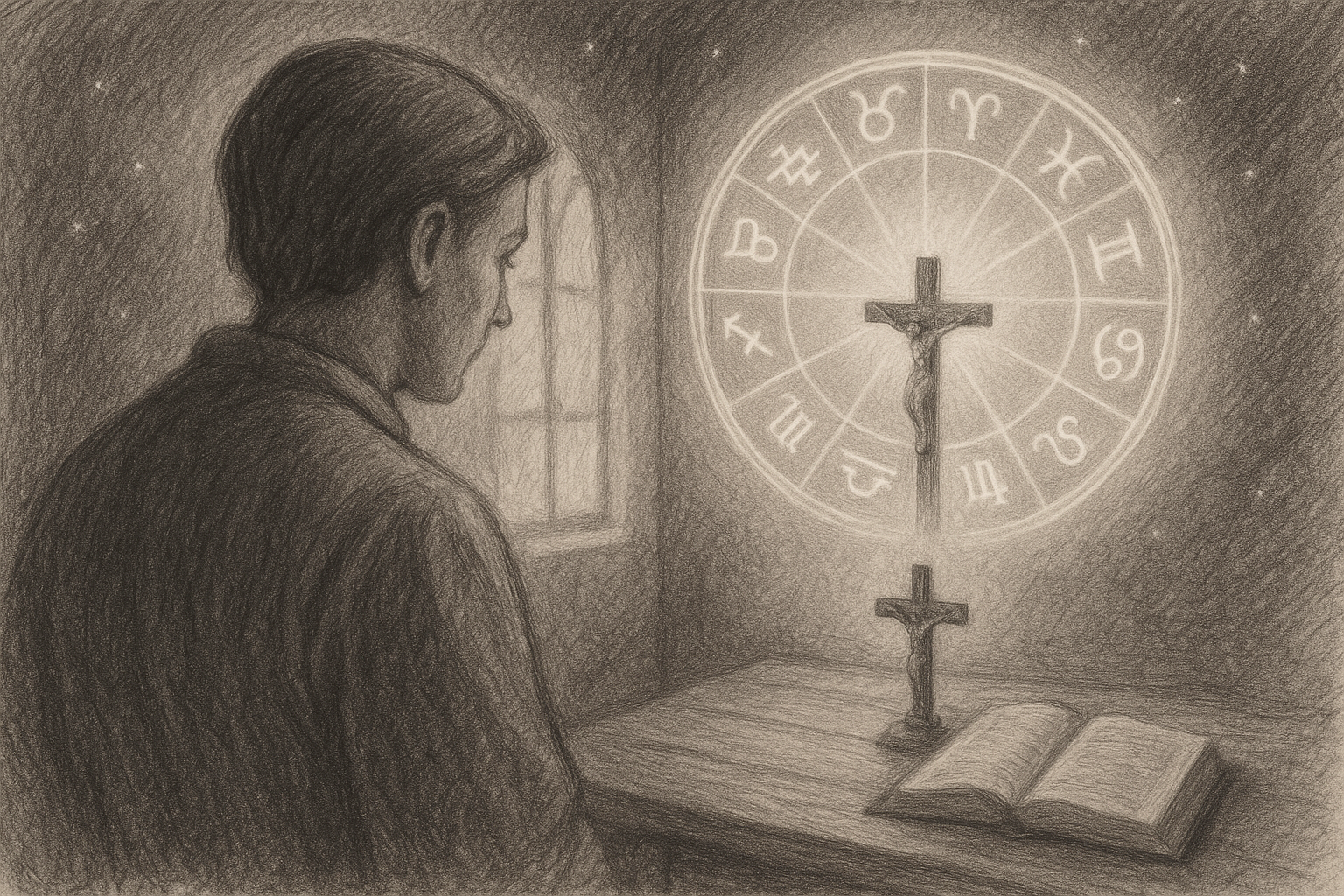
Many people first encounter the occult through a joke, a movie, a conversation, or an online trend. Tarot cards, astrology, Ouija boards, divination games, energy rituals, spells, and attempts to contact the dead are often presented as harmless tools for guidance or self-expression. The Catholic Church does not deny that these practices can look intriguing, especially when life feels uncertain. But she asks a more serious question: what is the soul reaching for when it turns to hidden powers instead of to God?
The the occult and spiritual danger Catholic teaching speaks about is not based on superstition. It is grounded in a moral and spiritual judgment about where a person seeks knowledge, control, and consolation. Catholic faith teaches that God alone is the Lord of history and the source of saving truth. When a person turns to practices that claim secret insight or control apart from God, the heart is trained to depend on something false, unstable, or even openly opposed to the First Commandment.
This is why the Church treats the issue seriously. The danger is not only whether a practice appears strange. The deeper danger is that it can draw a person away from trust in God and toward a counterfeit source of security.
What the Church actually forbids
Scripture speaks clearly against divination, sorcery, and seeking guidance from spirits. Israel was warned not to imitate the nations by consulting mediums or necromancers, because such acts violated covenant faithfulness and damaged trust in God alone. The pattern continues in the New Testament, where conversion includes turning away from magical practices and from every attempt to control spiritual reality apart from Christ.
One of the clearest summaries appears in the Catechism, which teaches that all forms of divination are to be rejected, whether through recourse to Satan or demons, conjuring the dead, or other practices falsely supposed to reveal the future. It also warns against magic, sorcery, and attempts to tame occult powers for personal benefit. This does not mean every person who has touched such things has committed the same grave sin in the same way. Moral culpability depends on knowledge, freedom, and intention. But the object itself is not neutral.
In Scripture, Saul's attempt to consult the medium at Endor is a sobering example of a heart that has already drifted far from God 1 Samuel 28:7. The passage is not there to amuse us. It shows what happens when fear replaces faith and when a person refuses the hard path of repentance. The outcome is not light. It is emptiness, confusion, and judgment.
Catholic teaching also distinguishes between harmless entertainment and actual spiritual participation. A fictional story about witches is not the same as an act of sorcery. A superstition repeated in jest is not always the same as deliberate occult practice. Still, the Church urges prudence. Repeated exposure to occult symbols, rituals, and claims can dull the conscience and make spiritual deception seem ordinary.
Why occult practices can become spiritually dangerous
The occult is often attractive because it promises what human beings deeply want: knowledge, power, certainty, relief from anxiety, or contact with what lies beyond the visible world. That desire is not evil in itself. We are made for truth, meaning, and communion with God. The problem comes when these good desires are redirected toward forbidden means.
Spiritual danger arises for several reasons. First, occult practices can foster illusion. They suggest that secret formulas or hidden energies can guarantee results, when in fact human beings remain limited and dependent. Second, they encourage control. Rather than receiving life as gift, a person tries to manipulate reality. Third, they can lead to attachment. What begins as curiosity can become dependency, fear, or obsession. Fourth, and most seriously, they can open the person to deceptive spiritual influence. Catholic tradition does not encourage fascination with darkness, but it does recognize that not every spiritual force is good simply because it is invisible.
That is why Saint Paul speaks of spiritual warfare in realistic terms. He writes that our struggle is not merely against flesh and blood but against powers and principalities Ephesians 6:12. Christians are not called to panic. They are called to vigilance. A sober faith knows that the world is not spiritually empty. It also knows that Christ is Lord over all.
The danger of the occult is therefore not only moral but relational. It can train the soul to listen to voices other than the Lord's voice. It can weaken trust in providence. It can replace prayer with technique and surrender with self-assertion. Over time, that habit of heart can become a spiritual wound.
Scripture offers both warning and hope
The Bible does not mention occult danger merely to frighten people. It warns because God wants his people free. The first commandment is not a burden imposed by a jealous deity. It is a path of truth. The Lord asks for worship because he alone can save. Anything that mimics divine power without divine goodness eventually disappoints and harms.
Consider the contrast in the Acts of the Apostles, where new believers in Ephesus publicly burn their magic books after coming to faith in Christ [[VERSE|acts|19|18-19|Acts 19:18-19]]. That scene is not just about renouncing a habit. It is about a new allegiance. The books are burned because the old life no longer fits the dignity of baptism. Grace does not merely add religious comfort to a hidden life. It changes the life itself.
At the same time, Scripture is full of mercy for those who have wandered. The Lord does not mock the fearful or the confused. He invites them back. He frees those who have been trapped in error, whether through ignorance, curiosity, or deeper sin. The Gospel is not fragile. It is strong enough to meet people who have toyed with what they do not understand.
That is an important pastoral point. Some people who seek the occult are not rebellious in the caricatured sense. They are grieving, lonely, anxious, or desperate for signs. They may have been introduced to these practices by family, culture, or friends. Catholic teaching does not begin with contempt. It begins with truth spoken in charity. We warn because we care, and we care because we believe Christ can rescue.
Discernment, not fear
A Catholic response to occult involvement should avoid two errors. The first is disbelief, as if all spiritual warnings are mere relics of old religious anxiety. The second is obsession, as if the enemy were larger than Christ. Neither extreme is faithful.
Discernment begins by naming reality honestly. Some practices are objectively incompatible with the faith. These include divination, spiritism, magical rites, and any deliberate attempt to summon or manipulate spiritual powers. Other practices may be ambiguous in themselves but still deserve caution if they cultivate superstition or open the imagination to falsehood. A Christian should ask not only,
Keep Reading on Lets Read The Bible
Frequently Asked Questions
Does Catholic teaching say every occult curiosity is a mortal sin?
No. Moral guilt depends on knowledge, freedom, and intent. But the practices themselves are still spiritually harmful and should be avoided because they conflict with trust in God.
What should a Catholic do after involvement in occult practices?
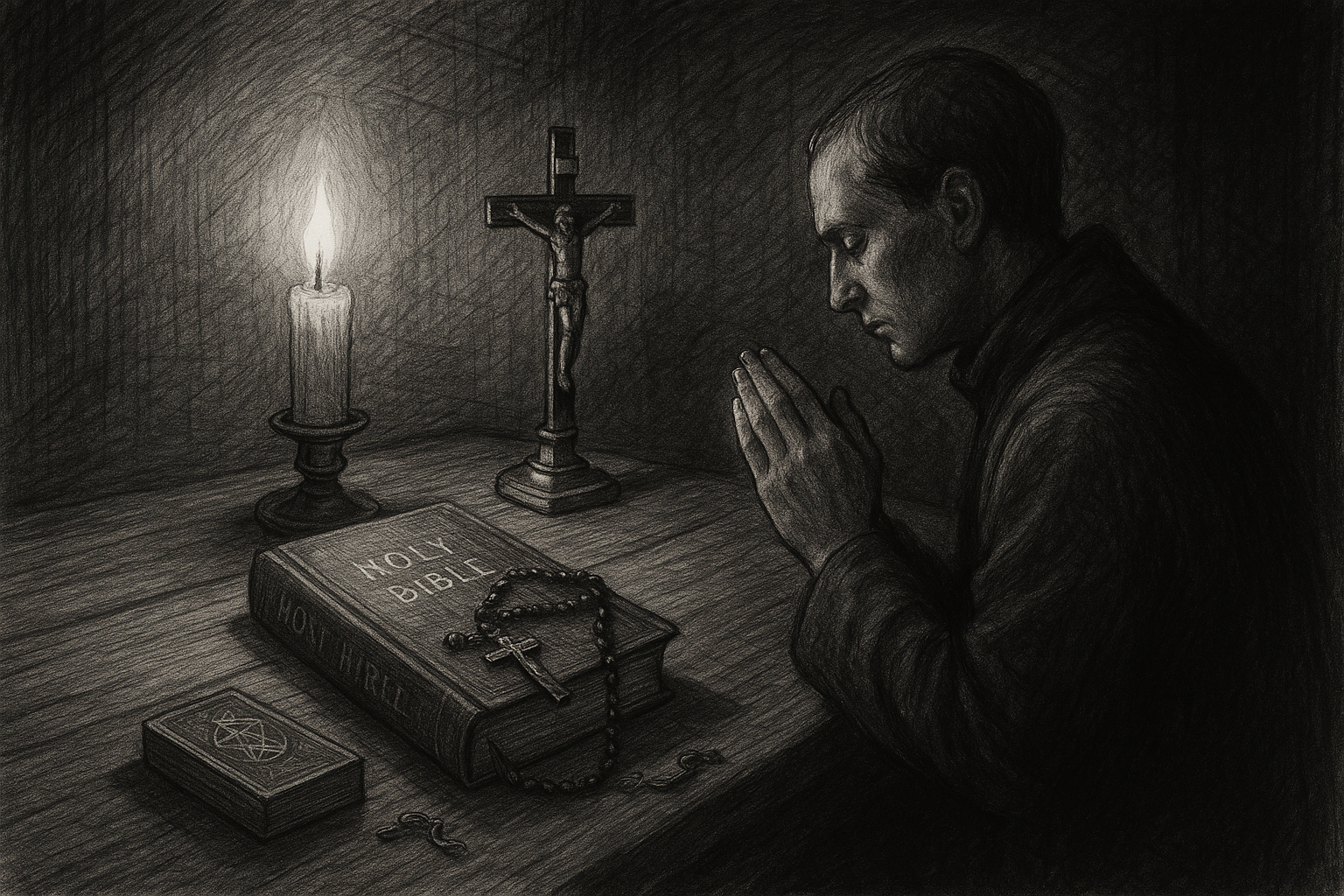
The first steps are to stop the practice, reject anything tied to it, and return to prayer. A good confession, spiritual direction if needed, and regular reception of the sacraments can help restore peace.
How can a Catholic tell the difference between superstition and harmless entertainment?
Entertainment that merely uses spooky themes is not the same as occult participation. But anything that invites real divination, spirit communication, or belief in hidden powers should be avoided, even if it is presented as a game.