Catholic Living
When Suffering Meets Mercy: The Catholic Case Against Euthanasia
A sober look at human dignity, moral responsibility, and the hope that endures at the edge of life
Site Admin | August 1, 2026 | 66 views
When mercy is confused with ending a life
Few moral questions feel as intimate as the care of a person who is suffering greatly. When pain grows heavy, when weakness deepens, or when death seems near, families can feel exhausted and afraid. In that vulnerable place, euthanasia can appear to some as a final act of mercy. The Catholic Church, however, insists that mercy must never be separated from truth. To deliberately end an innocent human life is never a work of compassion, because human life is not ours to dispose of.
That is the heart of the Church's teaching on euthanasia and Catholic life. The issue is not only about medical choices at the end of life. It is about what we believe a person is worth, whether suffering has any meaning, and whether the weak still deserve our protection when they can no longer protect themselves. Catholic moral teaching answers yes, with firmness and tenderness together.
The Church does not ask the sick to seek pain for its own sake. Nor does she deny the fear that often surrounds dying. Instead, she teaches that every person, from the beginning of life until natural death, bears a dignity that does not fade with illness, disability, age, or dependence. A person does not become less human because he is fragile. He does not become less beloved by God because he is nearing death.
The dignity that does not disappear
Scripture presents the human person as created in the image and likeness of God. That truth stands at the foundation of Catholic moral life. God created man in his image is not a poetic flourish. It means that each human being has a sacred worth that comes from God, not from productivity, strength, clarity of mind, or physical independence.
From this perspective, euthanasia is not simply a private choice. It is a moral action that says a life has become no longer worth living. The Church cannot accept that judgment, because the value of a human being is never measured only by usefulness or comfort. Even when a person can no longer speak, work, remember, or reciprocate as before, he remains someone, not something. He remains a neighbor to be loved.
This is why Catholic teaching speaks so strongly in defense of the sick and dying. The tradition is not sentimental. It is realistic about pain, fear, burden, and the limits of medicine. But realism does not require surrendering truth. The weak need protection precisely because they are vulnerable to despair, pressure, and the subtle suggestion that their lives are inconvenient.
What the Church actually forbids
The Church distinguishes carefully between legitimate care at the end of life and direct killing. It is morally permissible to refuse treatments that are extraordinary, excessively burdensome, or unlikely to provide benefit. It is also permissible to use pain relief, even if such treatment may indirectly shorten life, so long as the intention is to relieve suffering and not to cause death. Catholic moral reasoning asks about both the act and the intention.
Euthanasia is different. It is the deliberate action or omission that intends to cause death in order to eliminate suffering. That intention cannot be reconciled with the commandment not to kill. The Catechism teaches that whatever its motives and means, euthanasia is morally unacceptable because it is the intentional killing of a human person.
This distinction matters pastorally. Catholics are not called to pursue every possible medical intervention at any cost. They are called to love the person, not to worship technology. There is a profound difference between accepting the natural limits of earthly life and choosing to end life prematurely. One is surrender before God; the other is a rejection of God's sovereignty.
Suffering is real, but it is not meaningless
It would be dishonest to speak about euthanasia without acknowledging suffering. Some forms of pain are intense. Some illnesses bring fear, loss of control, and emotional torment. Family members often suffer too as they watch a beloved father, mother, spouse, or child decline. Catholic faith does not minimize any of this.
At the same time, Christianity refuses the lie that suffering has no place in the life of faith. The Cross does not tell us that pain is good in itself. It tells us that God can enter suffering and redeem it from within. In Christ, suffering does not have the last word. Love does. The Lord's own passion reveals that a life offered to the Father remains fruitful even in weakness.
This does not mean that every person must be able to explain his suffering or feel spiritually strong in the midst of it. Some days are simply dark. Yet the Church can still say that a suffering person is not a failed person. His life remains a gift. His existence continues to matter to God and to the Church, even when he can do little more than receive care.
My grace is sufficient for you is not a slogan for easy answers. It is a promise that God's strength can accompany human weakness without erasing its reality.
The temptation to measure life by burden
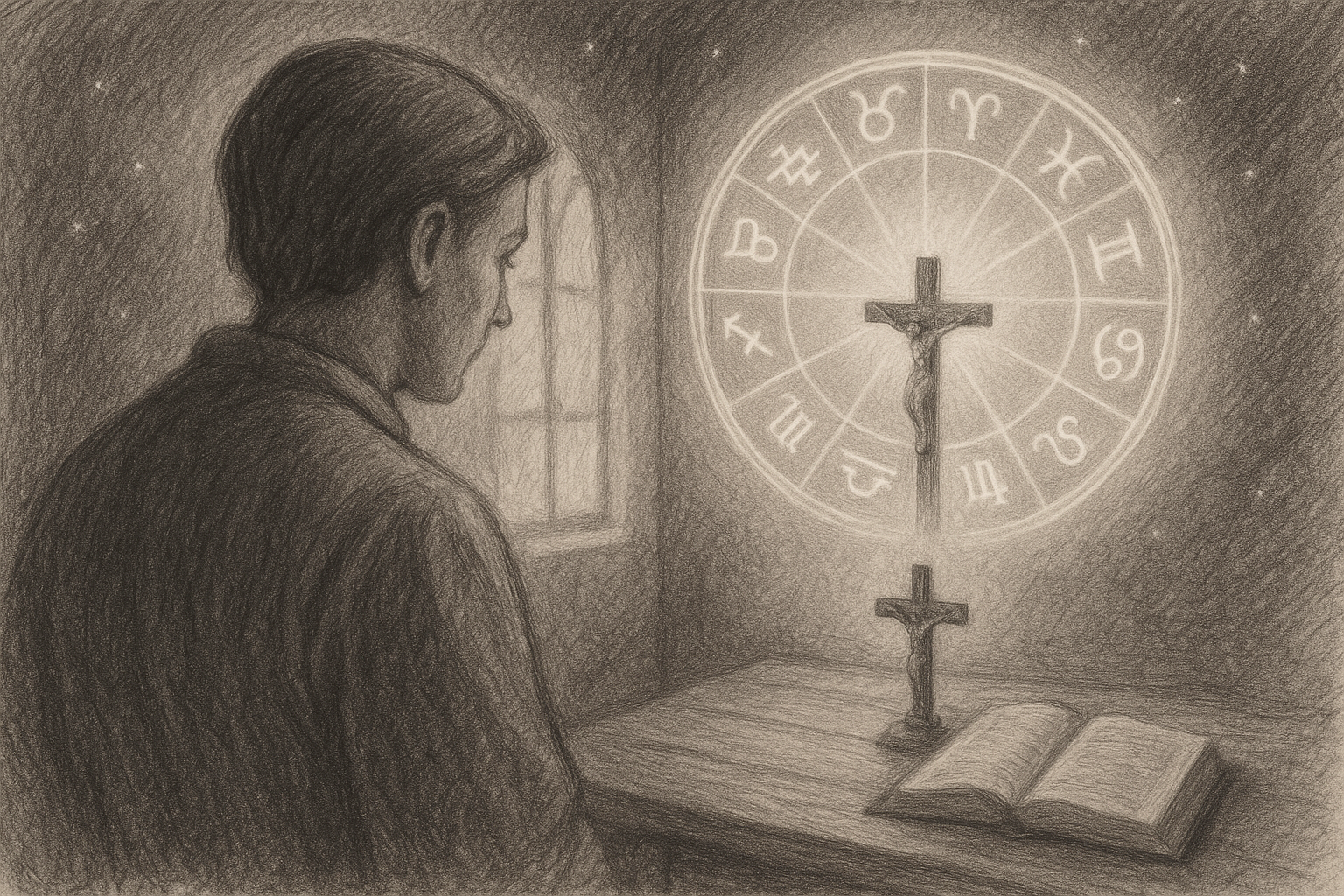
Modern culture often prizes autonomy above all else. We admire independence, efficiency, and the ability to control outcomes. Those goods have their place, but they become dangerous when they turn into the standard by which a life is judged. If a person believes that dignity depends on self-sufficiency, then illness can begin to look like failure and dependence can look like humiliation.
That mindset quietly feeds euthanasia. It teaches people to fear being a burden more than they fear moral evil. It can also pressure the elderly, the disabled, and the terminally ill to choose death for the sake of others. But Christian love does not ask the vulnerable to erase themselves so that the strong may feel less inconvenienced.
Catholic life challenges this logic in concrete ways. It asks families, parishes, caregivers, and hospitals to see dependence not as disgrace but as a call to service. Caring for the dying is one of the ways the Church witnesses to the gospel in a culture that often hides decline. The person who cannot repay kindness is still worth serving.
Mercy, properly understood
Some people who support euthanasia do so because they want mercy. That desire is understandable. Catholics should not respond with contempt. Real mercy is a holy thing. But mercy cannot mean cooperating with the destruction of the person who suffers.
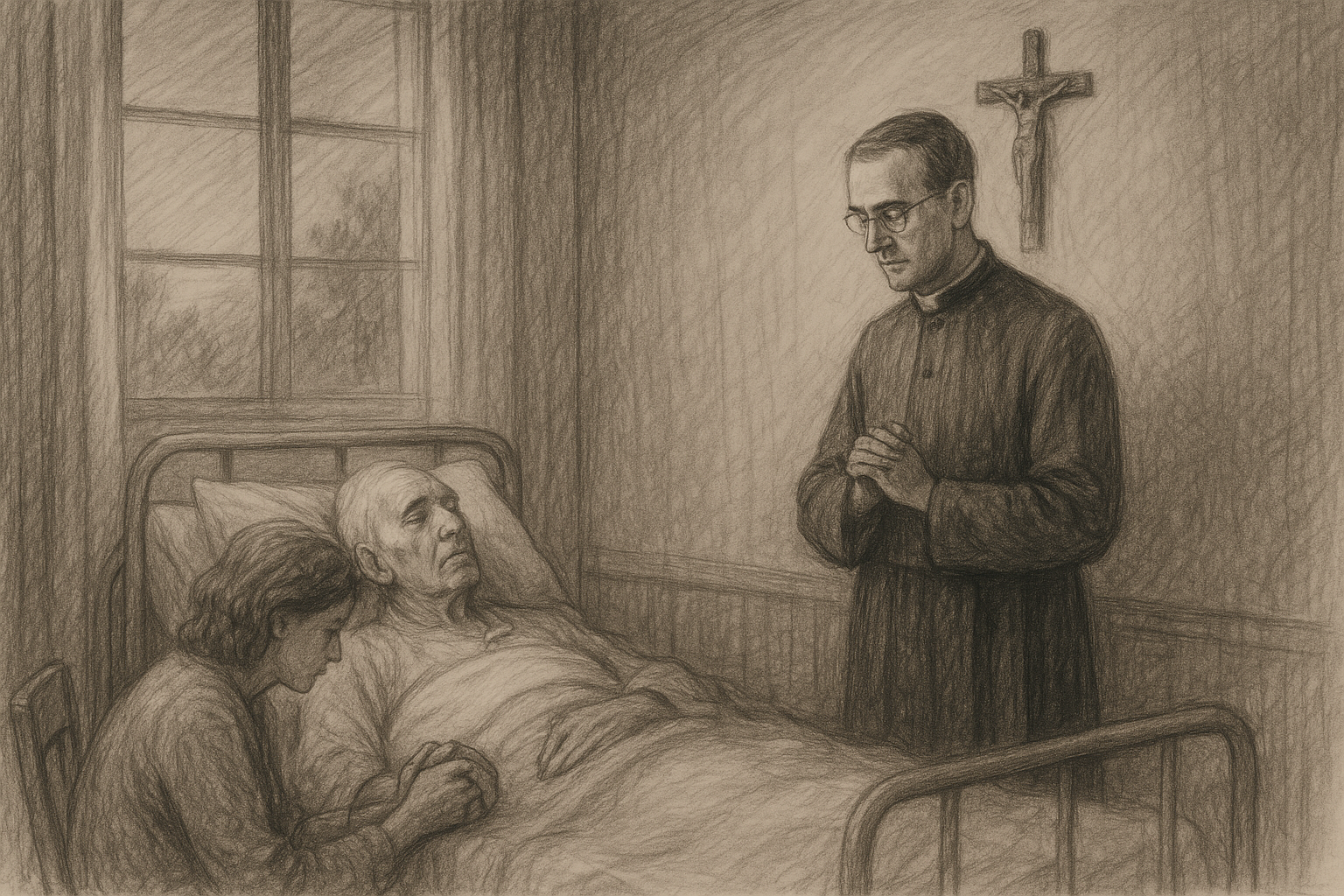
In Catholic moral language, mercy seeks the good of the other, even when that good is costly. Sometimes mercy means aggressive pain management. Sometimes it means companionship, confession, anointing of the sick, or simply staying present when words are no longer enough. Sometimes mercy means helping a family navigate hospice care with patience and prayer. Always, mercy refuses abandonment.
The gospel gives a different picture than the logic of euthanasia. Jesus does not treat the weak as expendable. He draws near to the sick, the lonely, the outcast, and the dying. The Church must do the same. Her answer to suffering is not to remove the sufferer, but to love more deeply, to comfort more attentively, and to trust that no life is beyond God's care.
Repentance, healing, and a more Catholic response
Because this issue reaches deep into conscience, many Catholics need practical help in responding to it well. Some may have supported euthanasia in the past. Others may have repeated common arguments without understanding the moral stakes. Others may be caring for a dying relative and feel torn between fear and fidelity. The Church speaks to each of them with hope.
If your conscience has been dulled by a culture that treats death as a solution, begin with honesty before God. Bring your questions into prayer. Read the Scriptures. Ask what it means to belong to the Lord in body and soul. If you have judged a suffering person as less valuable, confess that sin and ask the Lord to enlarge your heart. Repentance is not humiliation. It is the doorway back to truth.
If you are walking with someone who is dying, choose small acts of fidelity. Sit with them. Pray with them. Help arrange the sacraments if they desire them. Speak gently. Do not make them justify their existence. Offer practical care, and if you are overwhelmed, ask others for help rather than retreating into despair. Charity is often built from ordinary faithfulness.
If you are yourself ill or afraid of future suffering, tell the Lord plainly what you fear. Ask for the grace to trust Him one day at a time. The Church does not demand stoic strength from the sick. She asks for surrender, and surrender can be trembling, honest, and incomplete in feeling while still real in faith.
Virtue at the bedside
The moral life is shaped not only by arguments but by habits of love. In the face of euthanasia, several virtues become especially important.
- Hope, because death is not the end for those who belong to Christ.
- Fortitude, because fear does not have the final say.
- Charity, because the suffering person must never be treated as a problem to solve.
- Temperance, because a culture of comfort can make us impatient with weakness.
- Justice, because every person deserves protection, especially when he cannot defend himself.
These virtues are not abstract ideals. They shape how we speak, what we choose, and how we accompany the dying. They also shape public witness. Catholics should advocate for excellent palliative care, humane hospice services, and policies that protect patients from coercion. A society becomes more humane not when it offers death as an answer, but when it learns to care for suffering people with courage and skill.
Praying for a softer heart
The deepest danger of euthanasia is not only that it harms the individual, but that it can harden the imagination of an entire society. Once death is accepted as a remedy for suffering, the circle of who counts as worth protecting can narrow quickly. Catholics are called to resist that narrowing by praying for a softer heart and a clearer conscience.
Pray for doctors and nurses, that they may serve life with wisdom. Pray for families, that fear will not make them abandon love. Pray for lawmakers, that they may protect the vulnerable. Pray for the dying, that they may know peace. And pray for yourself, that you may learn to see Christ in every frail human face.
In the end, euthanasia and Catholic life is not only a question about how we die. It is a question about who we are while we live. If each person is truly made by God, redeemed by Christ, and destined for communion with Him, then no one may be treated as disposable. The Church's answer is not harshness. It is fidelity, compassion, and the steadfast refusal to let suffering have the right to define a human soul.
Keep Reading on Lets Read The Bible
Frequently Asked Questions
Does the Catholic Church allow any end-of-life decisions that may shorten life?
Yes. Catholics may refuse disproportionate or burdensome treatments, and they may use pain relief even if it may indirectly shorten life, provided the intention is to relieve suffering and not to cause death.
How is euthanasia different from hospice care?
Hospice care seeks to comfort and support the dying person without intending death. Euthanasia intends to bring about death as a solution to suffering. Catholic teaching accepts the first and rejects the second.
What should a Catholic do if a family member asks about euthanasia?
Respond with calm compassion, affirm the person's dignity, encourage good pain care and spiritual support, and avoid harsh argument. If needed, help bring in a priest, chaplain, or trusted Catholic caregiver.