Catholic Living
Despair Is Never the Last Word: A Catholic Look at Moral Hope
How the Church speaks about despair, why it wounds the moral life, and how grace can restore hope without denying real suffering.
Site Admin | August 15, 2026 | 94 views
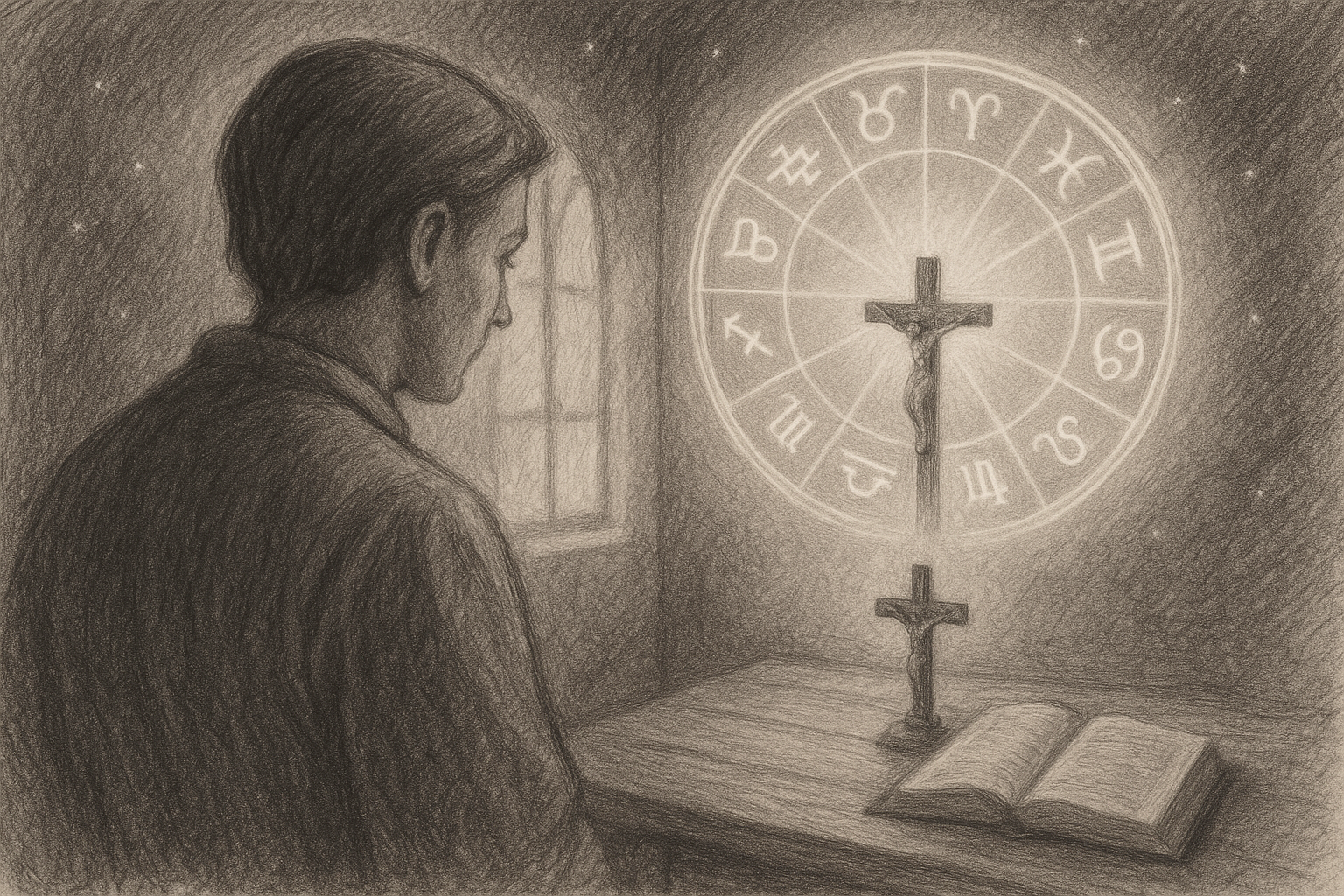
Despair is one of the most painful experiences a person can carry, because it does not only say, "I am suffering." It whispers something darker: "There is no mercy for me," or "God cannot help me," or "My sin is stronger than grace." In the Catholic moral life, despair matters because it attacks the virtue of hope, and hope is not a luxury. It is a theological virtue, given by God, by which we trust that He will keep His promises and bring us to eternal life.
That means despair is not simply a bad day or a passing sadness. It is a serious spiritual temptation, and sometimes a grave sin, when a person freely rejects trust in God's mercy and saving power. Yet the Church speaks about it with great realism and great tenderness. The goal is not to shame the wounded soul. The goal is to lead that soul back to the Father who runs to meet the prodigal son the father ran to meet him.
What despair is, and what it is not
Catholic teaching distinguishes despair from sorrow, grief, clinical depression, and honest awareness of one's weakness. A person may feel overwhelmed, exhausted, ashamed, or frightened without committing the sin of despair. Human pain is real, and the Church never asks anyone to pretend otherwise.
Despair, in the moral sense, is a refusal of hope. It can take the form of saying that God's mercy does not reach me, that repentance is useless, or that my situation can never be changed. It is a refusal to believe that the Lord can forgive, heal, and restore. Scripture repeatedly resists this lie. Saint Paul writes, "Hope does not disappoint, because the love of God has been poured into our hearts through the Holy Spirit" hope does not disappoint.
This is why despair is spiritually serious. It is not merely sadness about the present. It can become a judgment against God, as if His goodness were too small for the wound I carry. But God is never defeated by our misery. He is the Shepherd who seeks the lost sheep the lost sheep, and He is the Father who gives life to the dead and calls things into being that do not exist god gives life to the dead.
Why despair harms the moral life
The moral life depends on freedom, truth, and grace working together. When despair takes root, it damages all three.
First, despair narrows freedom. A person who believes nothing can change will stop praying, stop asking forgiveness, and stop taking the next right step. The soul becomes inwardly trapped. Even good counsel can seem pointless.
Second, despair distorts truth. It tells a person that one sin defines the whole self, or that one failure cancels every grace received. But the Gospel says otherwise. In Christ, the sinner is not reduced to sin. Zacchaeus was not left in the tree of his shame. He was called down into conversion and communion zacchaeus come down.
Third, despair weakens charity. When a person no longer expects mercy from God, it becomes harder to show mercy to others. Hopelessness often hardens into irritation, isolation, or spiritual indifference. The heart that cannot receive love struggles to give it.
Catholic moral theology sees hope as something active. Hope gives courage to repent, patience to suffer, and strength to keep seeking holiness when the path is steep. Without hope, the moral life collapses into either self-reliance or surrender.
The Church's realism about sin and mercy
The Church never minimizes sin. That is one reason her teaching on despair is so important. If despair were harmless, hope would not matter so much. But because sin wounds the human person, and because guilt can become crushing, the Church insists that no sin is greater than the mercy of Christ when a person turns back to Him.
The Gospel does not begin with human confidence. It begins with divine mercy. Jesus came "to seek and to save the lost" to seek and to save the lost. He did not come for the already perfect, but for sinners in need of healing. That is why the Church urges every soul to avoid both presumption and despair. Presumption says, "I do not need mercy." Despair says, "Mercy cannot reach me." Both are lies, though in opposite directions.
When a person falls, the proper response is repentance, not self-contempt. Repentance is honest, humble, and hopeful. It says, "I have sinned, but I am not beyond redemption." The parable of the father and the lost son reveals the heart of God toward repentance: the son returns with shame, but the father meets him with compassion and restores him to sonship [[VERSE|luke|15|11-32|the prodigal son]].
Practical steps when despair begins to take hold
Despair can feel too abstract to fight, so it helps to act concretely. The Church's wisdom is gentle but firm: begin again in small, faithful ways.
1. Tell the truth to God
Prayer does not need to be polished. A despairing heart can pray, "Lord, I do not feel hope right now. Help my unbelief." That is already an act of faith. The Psalms are full of such honest prayer. They give words to anguish without surrendering to it. "Why are you cast down, O my soul? ... Hope in God" hope in God.
2. Return to confession
If sin is feeding despair, the Sacrament of Reconciliation is a place of truth and mercy. Confession breaks secrecy. It names sin clearly, but it also places sin before Christ, who forgives. Many people who are trapped in shame need not only advice but sacramental grace.
For some, the simple act of making an appointment or examining conscience carefully is already a victory over hopelessness. The point is not to perform repentance perfectly. The point is to come home.
3. Receive ordinary help
Catholics should not imagine that spiritual struggle excludes human support. A wise priest, a trusted friend, a spiritual director, or a qualified mental health professional may all play a role in healing. If despair is connected to depression, trauma, or persistent anxiety, responsible care can be part of faithful stewardship of the self.
Grace does not cancel nature. It heals and elevates it.
4. Keep a rule of life small and steady
When a person is tempted toward despair, grand resolutions often collapse. Better to choose a few simple practices and keep them:
- Pray one Psalm each day.
- Attend Mass when possible and receive the sacraments regularly.
- Make a brief examination of conscience at night.
- Practice one concrete act of charity.
- Sleep, eat, and rest with greater discipline.
These ordinary acts may seem modest, but they rebuild the habits of hope. Virtue is usually formed through repetition, not intensity.
5. Refuse the final verdict of feelings
Feelings matter, but they do not rule the truth. A person can feel abandoned and still be held in God's hand. The cross itself teaches this. Jesus cried out in desolation, yet He entrusted Himself to the Father my god my god why have you forsaken me. His suffering reveals that even when consolation is hidden, the Father is still at work.
How hope grows again
Hope often returns more slowly than we wish. It may begin not as bright confidence but as a small willingness to pray again, to go to confession again, or to believe that tomorrow can be different from today. That small willingness matters. It is a seed.
Saint Paul says that suffering produces endurance, endurance produces character, and character produces hope [[VERSE|romans|5|3-4|suffering produces hope]]. This does not mean suffering is good in itself. It means God can work even through suffering to make a soul more patient, more humble, and more open to grace. A person who has fought despair and chosen trust often becomes gentler with others who are struggling.
Hope is not pretending everything is fine. Hope is the decision to anchor the soul in the faithfulness of God. The Letter to the Hebrews calls hope "a sure and steadfast anchor of the soul" anchor of the soul. An anchor does not remove the storm. It keeps the ship from drifting away. In the same way, hope does not erase sorrow, but it keeps sorrow from becoming hopelessness.
Despair, humility, and the mercy of God
There is a strange temptation in despair to think that it is somehow more humble than hope. A person may say, "I am just being realistic about my sin." But true humility does not stop at self-knowledge. It also accepts God's knowledge, and God knows both our poverty and His mercy.
Humility says, "I cannot save myself." Hope adds, "But God can save me." That is not pride. That is faith. The humble soul stands in the light of truth without fleeing from mercy.
When the Church warns against despair, she is defending the dignity of the human person. No one is beyond the reach of grace. No past is so broken that Christ cannot enter it. The Resurrection is not a symbol of optimism. It is the victory of God over sin and death. Because Christ is risen, the Christian never has to make peace with hopelessness.
For the believer, even the darkest hour can become a place of surrender. A soul may whisper, with trembling faith, Lord, I trust You when I cannot feel trust. That prayer is small, but heaven hears it.
If despair has been part of your life, the next faithful step may be very simple: tell the truth, ask for mercy, and do the next good thing before God. That is often how hope begins to breathe again.
Keep Reading on Lets Read The Bible
Frequently Asked Questions
Is despair always a mortal sin in Catholic teaching?
Not always. Despair is a serious sin when a person knowingly and freely rejects hope in God's mercy, but moral responsibility can be affected by fear, confusion, psychological pain, or diminished freedom. Not every experience of hopelessness is sinful.
How is despair different from depression?
Depression is a mental health condition that can affect mood, energy, and thought patterns. Despair is a spiritual and moral refusal of hope. They can overlap in experience, but they are not the same, and a person suffering from depression may need medical and pastoral help, not blame.
What should a Catholic do if despair keeps returning?
Keep turning back to prayer, confession, Scripture, and the sacraments. Seek wise support from a priest, spiritual director, or mental health professional if needed. Repeated temptations do not mean failure. They often call for steady, patient fidelity.