Catholic Living
Sunday Rest and the Moral Life: Learning to Receive Time as a Gift
Sabbath rest is not an escape from duty, but a holy pattern that helps Catholics love God, neighbor, and even their own limits with greater freedom.
Site Admin | August 7, 2026 | 66 views
Many people think of rest as a reward after a long week, or as a luxury for when the work is finally done. The Church offers something richer. Sabbath rest and Catholic life are linked by grace, because rest is not only about stopping activity. It is about ordering the heart toward God, receiving time as a gift, and learning that human life is not built on ceaseless striving.
The Fourth Commandment calls us to keep holy the Lord's Day. For Catholics, Sunday is not simply a free day on the calendar. It is the weekly celebration of the Resurrection, the day set apart for worship, family life, mercy, and renewal. This rest is not meant to weaken moral seriousness. It strengthens it. A person who never rests often becomes impatient, distracted, resentful, and spiritually thin. A person who learns holy rest becomes more able to pray, work with integrity, and love with patience.
Sunday Rest Begins with Worship
The first meaning of Sabbath rest is not leisure but worship. The Lord's Day centers on the Eucharist, where Catholics are gathered into Christ's own offering of praise and thanksgiving. When Sunday begins at Mass, the day receives its true shape. We are reminded that God is first, not as a burden but as our happiness.
Scripture presents rest as holy because it belongs to God. In the commandment given through Moses, the people are told to remember the Sabbath day and keep it holy. The command is not mere restriction. It is a call to imitate God, who rested from his work of creation and taught his people to trust him. Jesus also reveals the deeper meaning of this rest when he says,
Come to me, all you who labor and are burdened, and I will give you rest
This rest is not only physical. It is the peace that comes from being reconciled to the Father. Sunday worship reminds us that human beings are not self-made. We are creatures who receive life, forgiveness, and purpose. That truth alone can free the conscience from much anxiety.
Rest Supports Moral Clarity
Moral life depends on interior order. When the soul is constantly rushed, it becomes easier to justify impatience, sloppiness, and omission. A crowded life can dull the conscience. Holy rest gives space for reflection, which is often the first step toward conversion.
Many sins are made easier by exhaustion. We speak too quickly when we are tired. We neglect prayer when we feel pressed. We waste time because we cannot bear silence. We become irritated with those closest to us. Sunday rest interrupts these patterns. It creates a pause long enough for grace to work.
That pause matters because repentance usually begins in clarity. A Catholic who examines his conscience honestly may notice that disordered busyness has become a habit. The issue is not always laziness or overcommitment. Sometimes it is fear. We stay busy so we do not have to face the deeper questions of our life. Sabbath rest and Catholic life challenge that escape. The Lord invites us to stop, listen, and return.
The Lord's Day Is for Mercy, Not Selfishness
Some people hear Sunday rest and assume it means self-indulgence. But the Church's vision is more demanding and more humane. The day of rest is also a day of mercy. Jesus healed on the Sabbath and taught that mercy does not violate the law of God, but fulfills it. He showed that holy rest is never indifferent to need.
For Catholics, this means Sunday should include acts of charity suited to the day. A call to a lonely relative, patient attention to children, a visit to someone who is sick, or a quiet act of service can all belong to the spirit of the Lord's Day. Rest is not the same as self-absorption. It is freedom from needless labor so that love can breathe.
The Catechism teaches that Sunday should be a day of grace and rest from work, and also a day of joy, family, and works of mercy. That balance protects us from two errors. One is legalism, which measures the day only by what must not be done. The other is worldliness, which treats the day as just another opportunity for consumption. Catholic rest is neither rigid nor careless. It is ordered toward worship and love.
What Sunday Rest Looks Like in Ordinary Life
Many Catholics want to honor the Lord's Day but wonder what that actually looks like in a busy household. The answer is often simple, though not always easy. A holy Sunday is usually built from a few faithful habits repeated over time.
- Begin with Mass and arrange the day around it whenever possible.
- Protect quiet so that prayer, conversation, and gratitude can have room.
- Set aside needless shopping, work, and errands when they can reasonably be done on another day.
- Share a meal with family or friends as a sign of communion.
- Leave time for recreation that truly refreshes rather than numbs the soul.
- Make space for mercy through contact with the lonely, the sick, or those in need.
These habits are not meant to burden families with a new checklist. They are meant to protect a gift. Sunday often becomes better when it is prepared in advance. A little planning on Saturday can reduce the pressure to shop, rush, or improvise on the Lord's Day.
It may also help to think of Sunday as a day with a different tempo. The world says every moment must produce something measurable. The Church says some moments are valuable precisely because they do not. A walk, a shared meal, a nap, or a conversation without hurry may look ordinary, but they can become deeply human when received in thanksgiving.
Rest Can Reveal Unordered Loves
Sabbath rest and Catholic life also meet at the level of desire. When a person cannot rest, it may be because work has become a false source of identity. Achievement can begin to govern the conscience. We start measuring our worth by productivity, usefulness, or visible success. Then rest feels threatening, because it strips away the illusion that we are indispensable.
This is one reason Sunday can be healing. It exposes the disorder of false gods. If we become uneasy when the work stops, we may need to ask what we are really worshiping. If we feel guilty whenever we sit still, we may be confusing diligence with pride. If we cannot enjoy God, family, or silence, we may have let efficiency outrank charity.
The remedy is not laziness. The remedy is humility. Human beings are not made to carry infinite responsibility. We are made to trust Providence. Sunday rest gently teaches that lesson. It tells us that the world belongs to God, not to our anxious control.
Repentance, Healing, and Growth
For some Catholics, the invitation to Sunday rest comes with sorrow. Perhaps they have worked out of necessity for years and feel unable to change. Perhaps they have used Sunday for shopping, entertainment, or scrolling because no one ever taught them better. Perhaps they know the teaching already and feel they have failed often. The Church does not ask such people to pretend. She asks them to return.
Repentance begins with truth. Name the habits that keep Sunday from being holy. Bring them to confession if they are sinful. Ask for grace to re-order the day in small ways. If your work schedule is demanding, do what is reasonably possible and speak honestly with God about what you cannot yet fix. If family patterns have been shaped by noise and hurry, begin with one quiet meal, one act of prayer, one hour set apart.
Healing often comes through steady practice rather than dramatic change. A Catholic who has neglected Sunday rest may need to start with one concrete act of fidelity: attend Mass with care, turn off unnecessary work communications, read Scripture, take a walk with gratitude, or keep one hour free from errands. Over time, these choices can reshape the imagination. The soul begins to learn that rest is not emptiness. It is communion.
The virtue that grows here is not merely relaxation. It is trust. We trust that God is active even when we are still. We trust that love is stronger than scheduling. We trust that our lives are received before they are accomplished. That trust can soften fear, reduce resentment, and make room for joy.
When Rest Is Difficult
Some people are caring for children, the elderly, or those who are ill. Others work in jobs that make Sunday rest hard to secure. The Church understands such burdens. Moral life is not measured by pretending that every situation is ideal. It is measured by charity, prudence, and the honest effort to honor God within real limits.
When full rest is not possible, the question becomes how to preserve the spirit of the Lord's Day as much as you can. A brief period of prayer, a conscious detachment from unnecessary activity, or a deliberate act of thanksgiving may be possible even in a demanding season. God is not looking for performance. He is seeking a willing heart.
Families Can Teach Rest by Example
Children learn the meaning of Sunday not only by instruction but by atmosphere. If they see adults frantic, argumentative, or permanently online, they will assume that rest is impossible or unimportant. If they see worship, peace, and simple joy, they will begin to understand that time belongs to God.
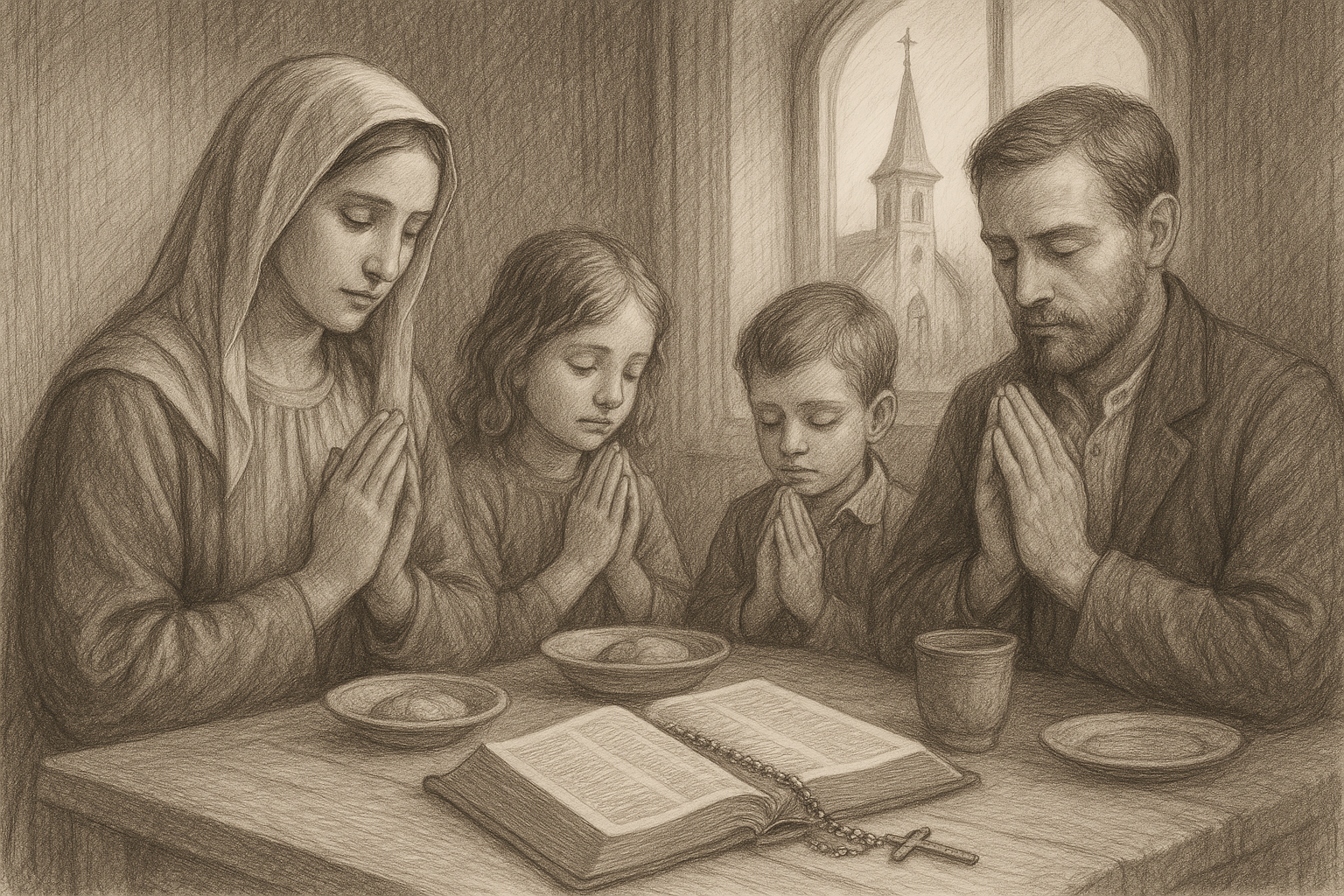
Parents do not have to create a perfect Sunday to teach this. Even small patterns matter. A meal together, a shared book, a walk, or a family prayer can give children a memory of holy time. Over years, those memories often become part of a person's moral imagination.
In this way, Sabbath rest and Catholic life shape one another. Rest protects virtue, and virtue makes rest fruitful. The Lord's Day is not a break from discipleship. It is part of discipleship itself, a weekly reminder that mercy, worship, and joy belong at the center of the Christian life.
When Sunday is kept with faith, the week is not denied but rightly ordered. The soul learns to begin again, not with anxiety, but with God.
Keep Reading on Lets Read The Bible
Frequently Asked Questions
Is Sunday rest a strict rule for Catholics or more of a spiritual ideal?
It is both a serious obligation and a spiritual gift. Catholics are called to attend Mass on Sundays and holy days of obligation and to avoid unnecessary labor that would keep the day from being set apart for worship, rest, and mercy.
What counts as necessary work on Sunday?
Work that is truly necessary for the good of others or for urgent responsibilities may still be required, such as essential care for the sick, public safety, or other unavoidable duties. The Church does not forbid every form of labor, but asks Catholics to avoid ordinary work when reasonably possible.
How can a Catholic begin returning to Sabbath rest after neglecting it?
Begin simply. Attend Mass faithfully, reduce avoidable Sunday errands, build in quiet, and choose one concrete act of prayer or mercy. If there is serious guilt or persistent disregard, bring it to confession and ask for guidance toward steadier habits.