Family and Vocation
A Father's Yes Is Spoken in Ordinary Days
Christian fatherhood grows through presence, sacrifice, repentance, and daily trust in God.
Site Admin | November 5, 2026 | 5 views
Fatherhood is rarely lived in grand gestures. More often, it takes shape in early mornings, tired evenings, necessary conversations, repeated prayers, and work that may never receive public notice. A father packs lunches, earns a living, changes plans, corrects a child, apologizes for impatience, and tries again. Through such ordinary acts, his vocation becomes visible.
This does not make fatherhood small. It shows how God often works. Grace enters daily responsibilities and slowly forms a man through the people entrusted to his care. A father may begin by thinking that his task is mainly to shape his children. In time, he often discovers that the vocation is also shaping him.
A Christian fatherhood reflection must begin with humility. No earthly father perfectly represents the love of God. Every father has limits, wounds, sins, and blind spots. Yet fatherhood remains a genuine calling, one through which a man can help his family recognize something of God's providence, authority, patience, and mercy.
Fatherhood is received before it is achieved
Christian fatherhood does not begin with personal success. It begins with reception. A man receives his life from God, receives his family as a gift, and receives the responsibility to care for people who do not belong to him as possessions. They belong first to God.
Saint Paul bends his knees before the Father from whom every family in heaven and on earth is named: [[VERSE|ephesians|3|14-15|Ephesians 3:14-15]]. Human fatherhood finds its meaning in relation to God, but God is not simply a larger version of an earthly father. The Catechism teaches that God transcends the distinction between the sexes. He is neither man nor woman, even as Scripture truly reveals him as Father.
This protects fatherhood from pride. A father is not the source of truth, goodness, or life in himself. He is a steward. His authority is real, but it is received. His children are entrusted to him, not created for his ambitions. Their gifts, personalities, and eventual vocations may differ greatly from what he imagined.
Fatherhood therefore requires reverence. A father should be able to look at his child and think, This person has been entrusted to me, but this person belongs to God. That conviction changes how he disciplines, encourages, protects, and lets go.
Authority is meant to serve life
In a Christian home, authority is not domination. It is the responsibility to seek the true good of another. Jesus teaches that greatness is found in service rather than in ruling for personal advantage: [[VERSE|mark|10|42-45|Mark 10:42-45]]. This pattern belongs inside family life as surely as it belongs anywhere else.
A father should not be afraid to lead. Children need boundaries, moral clarity, dependable expectations, and correction. But correction must be ordered toward growth rather than humiliation. Saint Paul warns fathers not to provoke their children to anger, but to raise them in the discipline and instruction of the Lord: Ephesians 6:4. He gives a similar warning against discouraging them: Colossians 3:21.
These warnings are especially important when a father is tired, anxious, or ashamed. It is easy to demand immediate obedience while neglecting the manner in which a command is given. Firmness may be necessary, but contempt never is. Discipline should communicate that wrongdoing matters and that the child remains loved.
A father's authority becomes credible when he also lives under authority. He obeys God, honors his commitments, respects his wife, receives correction, and admits when he is wrong. An apology does not weaken fatherhood. A sincere apology can restore trust and show children that repentance is not a theory reserved for other people.
Presence is more than proximity
A father can be physically present while remaining emotionally unavailable. He can also be separated from his children by work, illness, military service, marital breakdown, or other painful circumstances while still seeking responsible ways to remain involved. Presence is not measured only by hours in the same room. It includes attention, reliability, and a willingness to know another person.
Saint Joseph offers a quiet example. The Gospels record no spoken words from him, yet they show him listening to God and acting for the protection of Mary and Jesus. He receives Mary into his home after the angel's message: Matthew 1:24. He rises to take the child and his mother to safety: [[VERSE|matthew|2|13-14|Matthew 2:13-14]]. Later, Jesus lives under the care of Mary and Joseph at Nazareth: Luke 2:51.
Joseph's silence is not absence. It is attentive obedience. His example reminds fathers that love is often communicated through dependable action. Keeping a promise, listening without reaching for a phone, attending to a child's question, and remaining calm during distress can become acts of deep reassurance.
Children do not need a father who performs perfection. They need a father whose love is stable enough to be trusted. That stability is built through repeated choices. It grows when words and actions agree.
Provision includes more than income
Providing for a family is a serious duty. Work can be an expression of love, responsibility, and participation in God's creative purpose. Scripture speaks plainly about care for one's household: 1 Timothy 5:8. A father should not treat material provision as optional.
At the same time, income is not the whole of fatherhood. A man can give his family many things while withholding himself. Work may become a refuge from difficult relationships or a measure of personal worth. Even necessary labor can expand until family members receive only what remains of a father's energy.
Prudence is needed because families face different circumstances. Some fathers work long hours because there is no easy alternative. Others endure unemployment, disability, or financial uncertainty. The Christian response is not simplistic judgment. It is an honest examination of whether work is being offered in love and whether the family's spiritual and relational needs are also receiving attention.
A father provides when he earns, repairs, plans, teaches, protects, consoles, prays, and makes room for rest. He also provides when he allows others to help. Accepting support from a spouse, parish, relative, counselor, or trusted friend is not necessarily failure. It can be an act of responsibility.
The faith must be practiced where children can see it
The Catechism calls parents the first heralds of the faith to their children and identifies the home as a privileged place for learning Christian life. This does not mean parents must answer every theological question. It means the home should reveal that faith belongs to ordinary life.
Israel was instructed to keep God's words in the heart and teach them diligently to children throughout the rhythms of the day: [[VERSE|deuteronomy|6|6-7|Deuteronomy 6:6-7]]. Christian fathers share this responsibility. Religious formation cannot be handed entirely to a parish program or Catholic school, valuable as those may be.
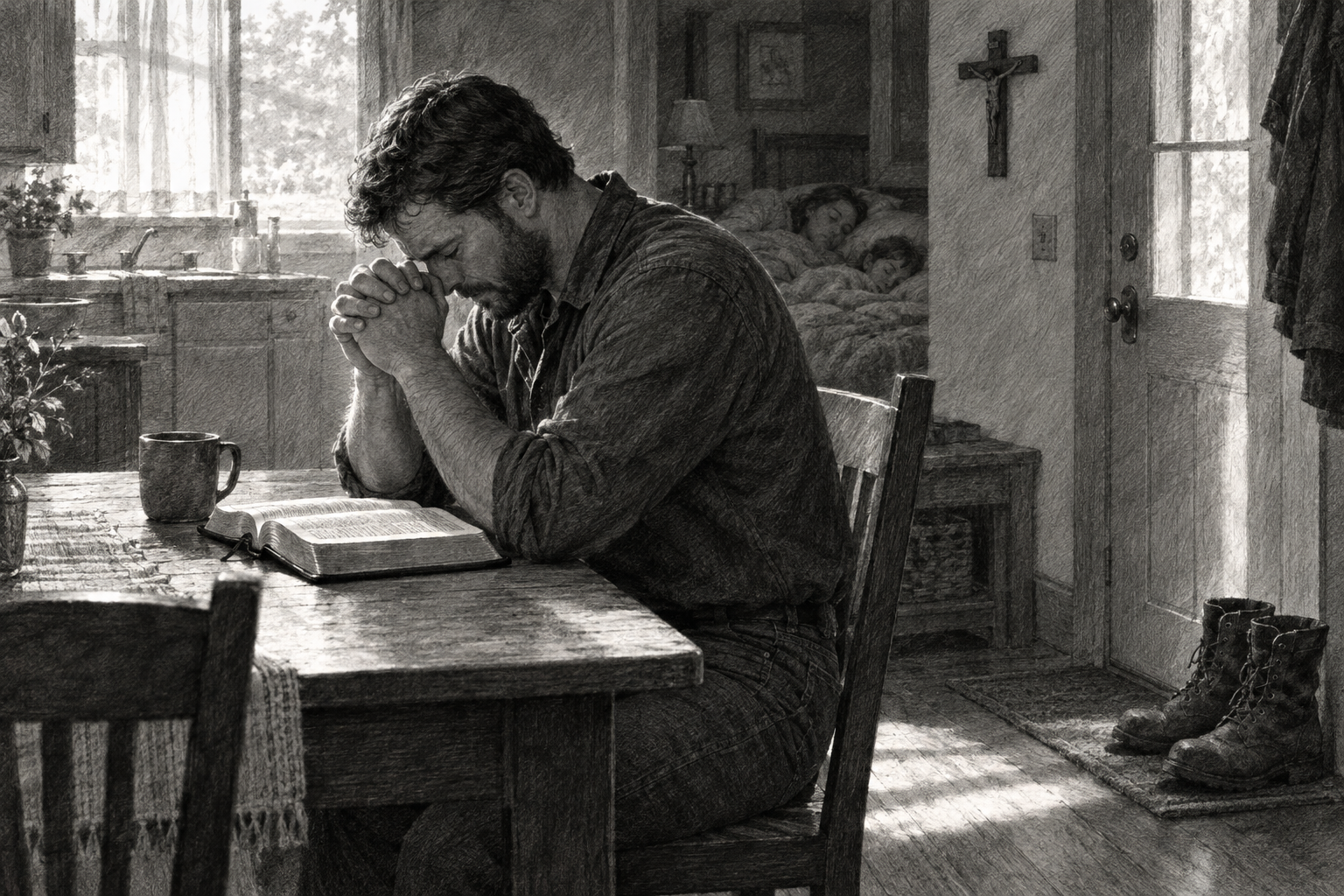
A father teaches the faith when his children see him pray, attend Mass, receive the sacraments, read Scripture, practice charity, and ask forgiveness. His example will not guarantee that every child remains faithful. Human freedom is real, and many devoted parents carry sorrow over children who have left the Church. Yet a faithful example plants seeds that God may nourish in ways hidden from view.
Simple practices for the home
- Make the Sign of the Cross before meals, including when the family is hurried.
- Read a short Gospel passage together and allow children to ask honest questions.
- Pray briefly for specific relatives, neighbors, and people who are suffering.
- Let Sunday Mass shape the family's schedule rather than fitting it in only when convenient.
- Speak naturally about confession, mercy, vocation, and the lives of the saints.
- Bless children before bed or before an important event.
- Allow children to see that their father also needs grace and forgiveness.
These practices should not become performances. Their strength comes from sincerity and perseverance. A two minute prayer offered faithfully can teach more than an ambitious routine that quickly disappears.
Wounded experiences of fatherhood need truth and mercy
For some people, the word father brings gratitude. For others, it brings grief, fear, anger, or confusion. Some fathers were absent. Some were harsh, addicted, unfaithful, manipulative, or abusive. Others loved their children but lacked the emotional or spiritual formation needed to express that love well.
Catholic reflection must not romanticize these wounds. Forgiveness does not require pretending that evil was harmless. Nor does it always require restored access or immediate reconciliation. Boundaries can be morally necessary, especially where abuse, coercion, or danger is present.
At the same time, a person's experience of an earthly father does not define the limits of God's fatherly love. The psalmist prays that even if father and mother forsake him, the Lord will receive him: Psalm 27:10. God is not another unreliable human being. He can heal distorted images of fatherhood patiently, often through prayer, the sacraments, wise pastoral care, and professional help.
Fathers who recognize that they have caused harm should resist both denial and despair. They can tell the truth, seek confession, make restitution where possible, and accept that rebuilding trust may take time. God's mercy does not erase responsibility. It makes repentance and renewed faithfulness possible.
Fatherhood can also be spiritual
Biological and adoptive fatherhood have a distinct dignity, but the fatherly vocation is not limited to men raising children in their own homes. Priests exercise spiritual fatherhood through preaching, sacramental ministry, counsel, and pastoral care. Saint Paul describes his own relationship to the Corinthians in fatherly terms because he became their father in Christ through the Gospel: 1 Corinthians 4:15.
Other men may live spiritual fatherhood as godfathers, teachers, coaches, uncles, mentors, religious brothers, or faithful friends. This does not mean assuming authority that has not been given. It means using one's strength and experience to help another person grow without demanding possession, praise, or dependence.
A parish and community need such men. Young people benefit from seeing masculine strength joined to gentleness, prayer, chastity, courage, and service. Men without children of their own should not imagine that they have nothing fatherly to offer. Their vocation may include a generous and fruitful care that reaches beyond a single household.
A daily examination for fathers
Because fatherhood is lived in changing circumstances, no short list can resolve every challenge. Still, a few questions can help a father examine his day before God:
- Did my family experience my attention today, or only my instructions?
- Was my correction guided by love, or by anger and wounded pride?
- Did I keep my word?
- Did I honor the mother of my children in speech and action?
- Did I make room for prayer, even briefly?
- Is there an apology I need to offer?
- Am I trying to control an outcome that belongs to God?
- Who needs encouragement from me tomorrow?
Such an examination is not meant to produce constant guilt. It is a way of returning fatherhood to grace. Every evening offers an opportunity to give thanks, repent, and entrust the family to God.
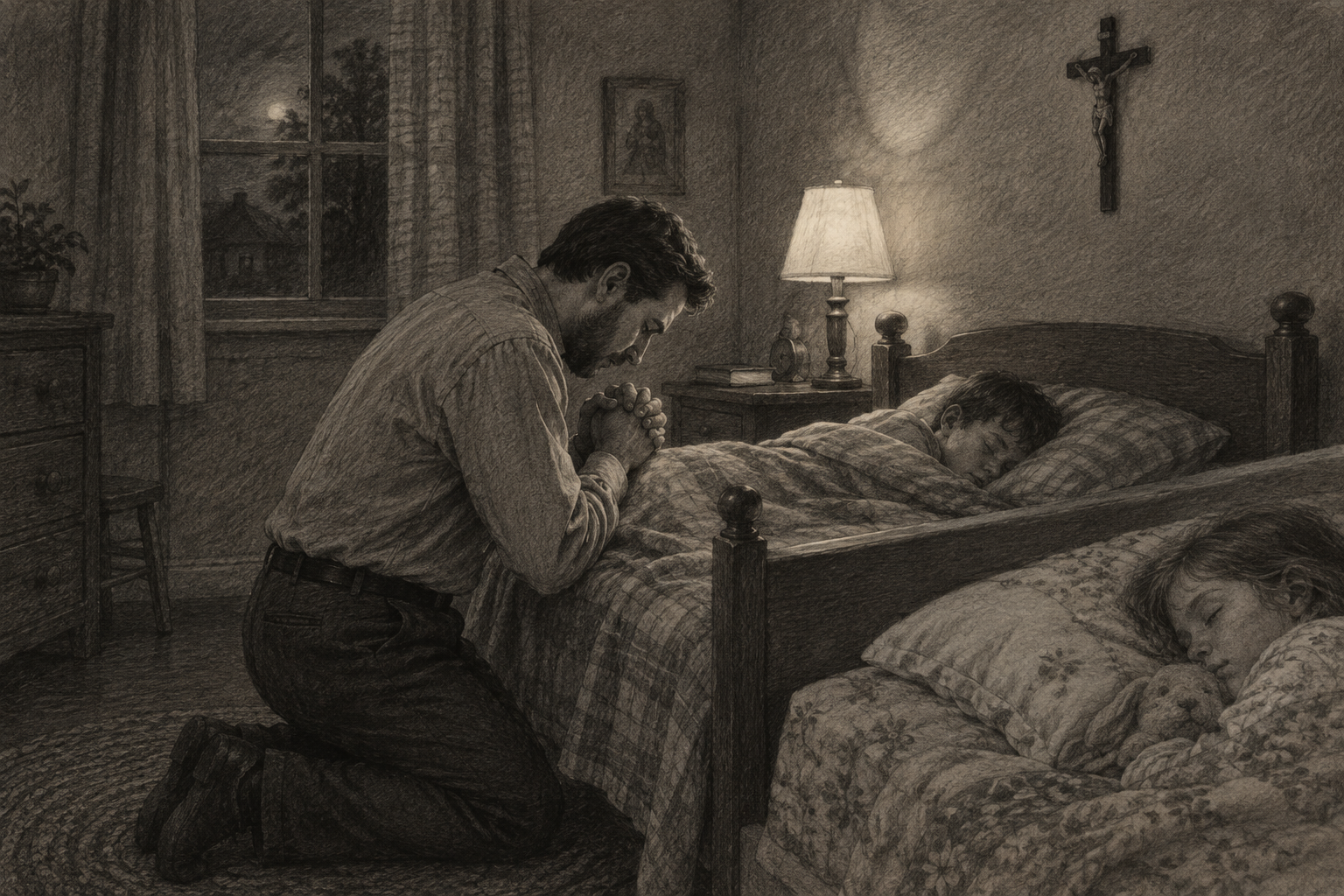
A father's yes is rarely spoken only once. It is renewed when he gets out of bed, goes to work, comes home, listens again, refuses resentment, and begins another prayer. Some days that yes will feel strong. On others, it may be little more than the decision not to walk away. God can receive both.
The vocation does not require a flawless man. It asks for a man willing to be formed in love. As he learns to serve without possessing, lead without dominating, and repent without despairing, his ordinary life can become a steady sign of the Father's care.
Keep Reading on Lets Read The Bible
Frequently Asked Questions
What is the main purpose of Christian fatherhood?
Christian fatherhood is a vocation of loving stewardship. A father is called to protect, provide, teach, discipline, encourage, and help lead his family toward God. His authority is meant to serve the true good of those entrusted to him.
How can a busy father strengthen the faith of his family?
He can begin with small, consistent practices such as attending Sunday Mass, praying before meals, reading a short Scripture passage, blessing his children, and speaking honestly about mercy and forgiveness. Sincerity and perseverance matter more than an elaborate routine.
Can a man exercise fatherhood if he does not have children?
Yes. Biological and adoptive fatherhood are distinct vocations, but men can also exercise spiritual fatherhood as priests, godfathers, teachers, mentors, relatives, and faithful friends. Saint Paul used fatherly language for his ministry to the Corinthians in [[VERSE|1-corinthians|4|15|1 Corinthians 4:15]].