Social Teaching
A Welcome Wide Enough for Mother and Child
The dignity of unborn life and Catholic life belong together in a commitment to protect children, support mothers, and make mercy tangible.
Site Admin | September 20, 2026 | 5 views
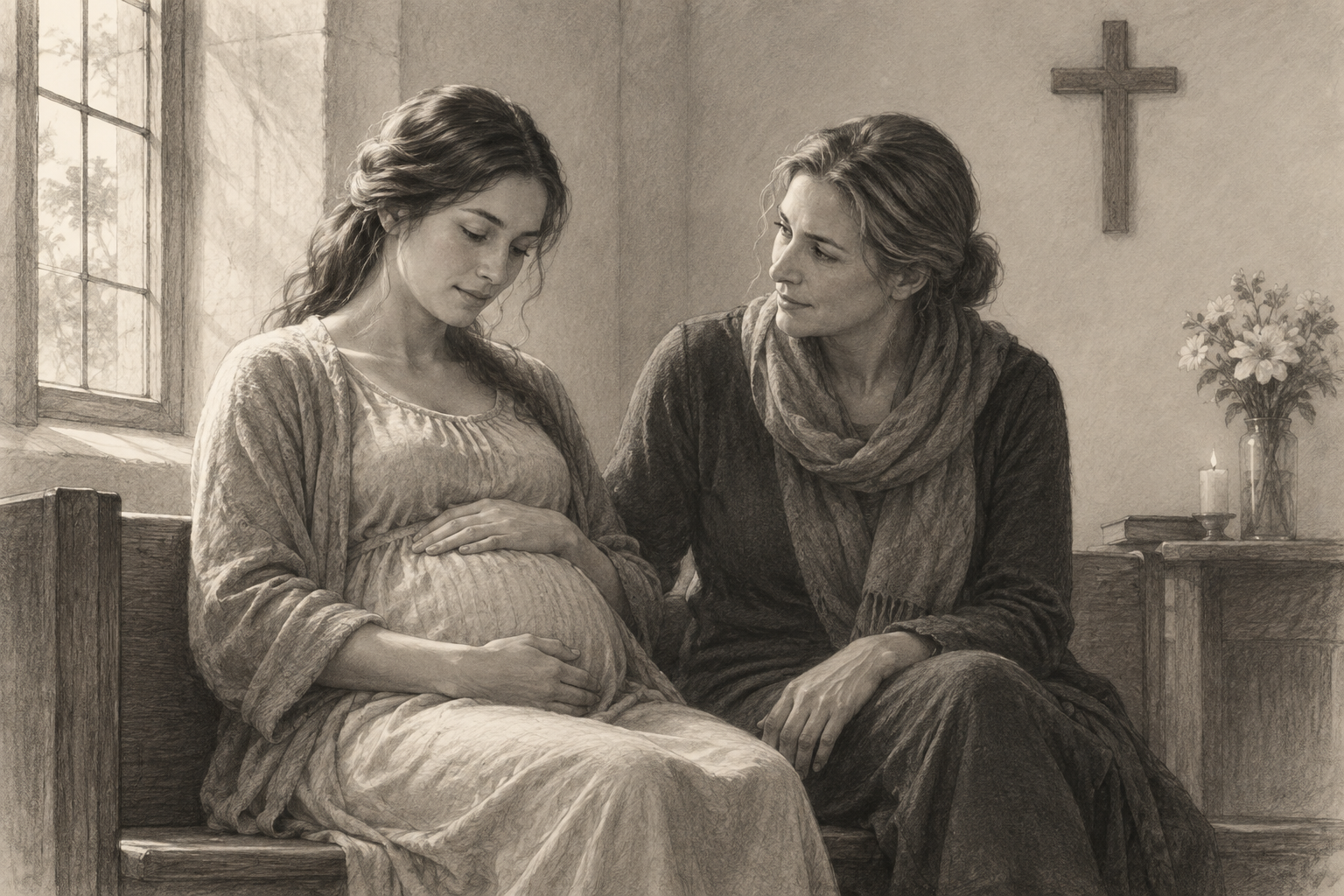
A pregnancy can be welcomed with delight, received with uncertainty, or discovered in circumstances that seem impossible. Sometimes those responses exist together in the same heart. A mother may already love her child while fearing the loss of housing, employment, education, or support. A father may feel unprepared. A family may struggle to know what to say.
Catholic teaching enters these circumstances with a conviction that is both clear and demanding: every human life deserves protection, and no person facing difficulty should be treated as disposable. The unborn child is not an obstacle to someone else's dignity. The mother is not merely the setting in which another person's dignity matters. Both must be seen, loved, and served.
This is where the Church's defense of life becomes a test of Christian discipleship. It asks not only what we believe about abortion, but whether our homes, parishes, and public commitments make room for people whose needs interrupt our plans.
Dignity comes before independence
The foundation of Catholic teaching is not that every pregnancy is easy or that every child will enjoy good health. It is that human beings possess a dignity they do not create for themselves. Scripture describes humanity as made in God's image in Genesis 1:27. Our worth therefore does not depend on being wanted, productive, strong, or able to speak for ourselves.
This matters especially when considering unborn children. Dependence does not cancel human dignity. A newborn depends entirely on others, as may a person with a profound disability or someone approaching death. The form of dependence changes, but dependence itself is not a reason to deny protection.
Human embryonic development begins at fertilization. Catholic teaching joins this biological reality to a moral judgment: human life must be respected and protected from conception. The Catechism of the Catholic Church states this principle in paragraph 2270 and teaches that, from the first moment of existence, the human being must be recognized as having the rights of a person, including the right to life.
The Church is not claiming that an embryo has all the developed abilities of an adult. It is rejecting the idea that those abilities determine whether a human life counts. Growth changes what a human being can do; it does not make dignity a prize awarded only after reaching a milestone.
Scripture teaches us to see the hidden person
The Bible does not present a modern medical account of prenatal development. It does, however, teach us how to regard human life, including life concealed from ordinary sight. In Psalm 139:13, the psalmist speaks of God's intimate involvement in his formation within his mother's womb. The passage is prayerful poetry, not embryology, but its vision is unmistakably personal.
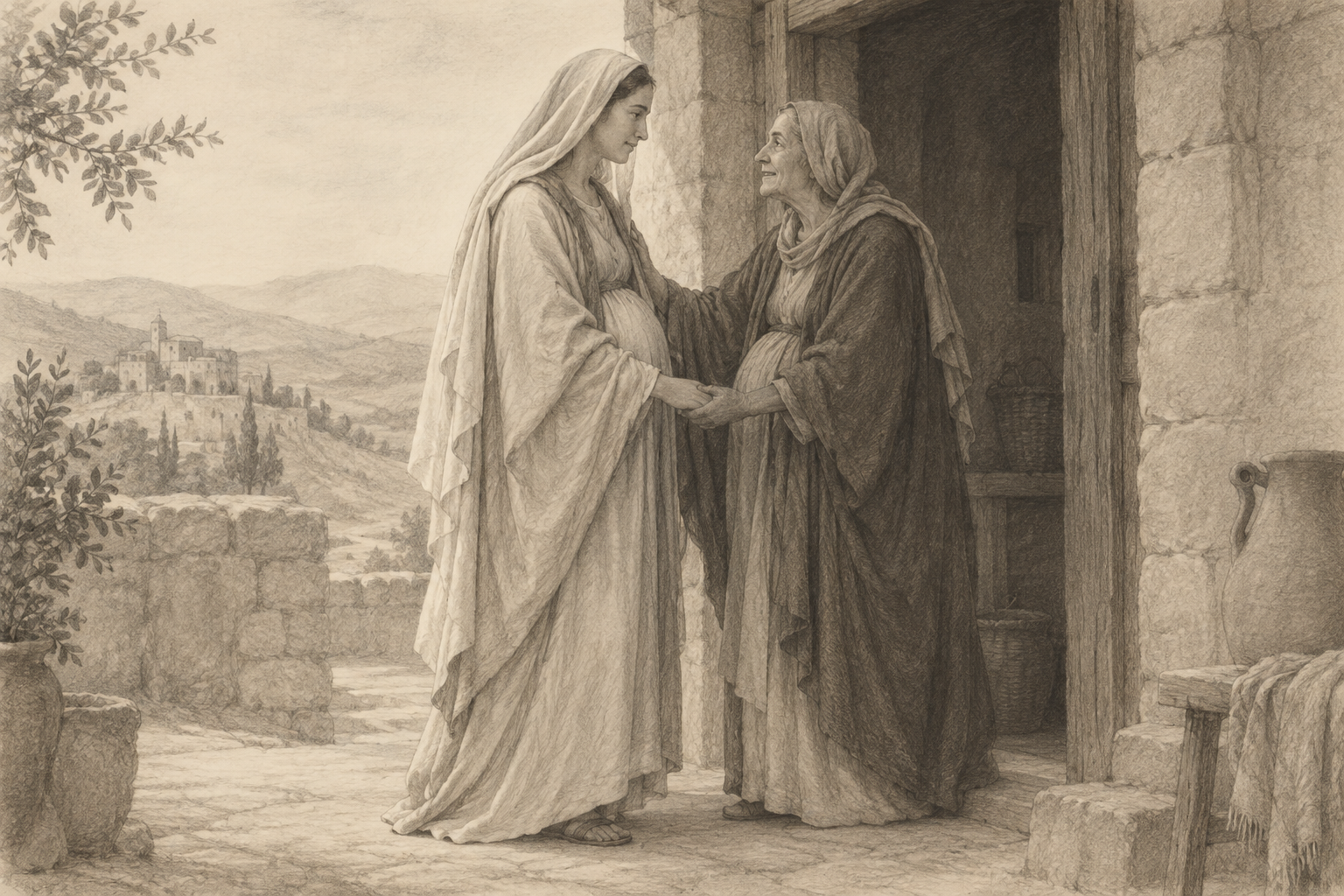
In the Visitation, Elizabeth's unborn child leaps when Mary arrives, as recounted in Luke 1:41. This event has a particular place in salvation history, involving John the Baptist and the presence of Christ. It should not be reduced to a scientific argument. Yet it draws Christian attention toward a reality that is easily overlooked: God's saving work reaches into the hidden beginnings of human life.
The Incarnation deepens this reverence. The eternal Son truly became man, entering human life in the womb of the Virgin Mary. Catholics do not regard bodily vulnerability as beneath God's concern. The Lord assumed our human condition, and his coming calls us to look with greater love upon those who cannot secure their own welcome.
A clear teaching, spoken with care
The Church teaches that direct abortion, intended either as an end or as a means, is gravely contrary to the moral law. This teaching is stated in the Catechism, paragraph 2271. Its basis is the protection owed to innocent human life, not a judgment that women facing difficult pregnancies are beyond compassion.
Moral clarity and personal compassion must remain together. Pressure from a partner, fear, violence, poverty, isolation, and misinformation can shape a person's circumstances. Such circumstances do not make direct abortion morally good, but they matter when understanding personal responsibility and deciding how to help. We should never presume to know the full story of someone else's actions or the state of that person's soul.
Precision also matters in medical discussions. Not every treatment during pregnancy that results in an unborn child's death is a direct abortion. Catholic moral teaching distinguishes deliberately ending an innocent life from treating a serious condition when the child's death is foreseen but not intended. Applying this distinction requires attention to what is actually being done, why it is being done, and whether the relevant moral conditions are met.
These are not questions to settle through slogans or a comment thread. Urgent symptoms require prompt medical assessment. Families facing difficult treatment decisions should seek qualified medical care and, when possible, guidance from someone competent in Catholic medical ethics. Care following a miscarriage must not be confused with the deliberate ending of an ongoing pregnancy.
The mother must never disappear from view
A defense of unborn life becomes incomplete in practice when the child is discussed while the mother is ignored. Her health, safety, freedom from violence, and material needs are real moral concerns. Pregnancy does not suspend her dignity.
Consider what support can mean for someone with no reliable transportation, a demanding job, and children already at home. A general promise to pray may be sincere, but it does not get her to an appointment. Advice to be courageous may be well intended, but it does not remove a threat of eviction. Christian charity asks what love requires in the circumstances before us.
The Letter of James challenges believers who offer comforting words while leaving a neighbor without bodily necessities in James 2:16. That challenge belongs in every Catholic conversation about life. Prayer and practical assistance are not competitors. Prayer should make us more attentive to the needs we are able to meet.
Fathers also have responsibilities that must not be overlooked. Supporting a mother and child is not an optional gesture of generosity. Men should be encouraged and expected to act with fidelity, provide appropriate support, and reject abandonment or coercion. The burden of welcoming a child should not be placed on a woman alone.
Make protection a shared responsibility
Catholic social teaching holds together personal responsibility and solidarity. A family has its own duties, but families also need conditions in which they can fulfill them. Protecting life therefore calls for more than private goodwill. It includes attention to healthcare, safe housing, fair employment practices, and support for parents.
Catholics may disagree about the best design of particular programs or laws. Such disagreements require evidence, prudence, and honest discussion. They do not remove the obligation to protect unborn children or the obligation to help people facing serious hardship. A child's right to life and a mother's need for support should not be treated as rival causes.
A parish need not solve every problem to become a trustworthy place of help. It can begin with a few concrete commitments:
- Know where to refer people. Keep current information about trustworthy pregnancy support, licensed healthcare, housing assistance, food resources, and protection from domestic violence.
- Ask before assuming. Listen privately and respectfully. The most urgent need may be transport, childcare, safety, or someone willing to accompany a person to an appointment.
- Offer sustained assistance. Diapers and baby clothes help, but so do meals after delivery, respite for exhausted parents, and consistent friendship.
- Protect confidentiality. A person's pregnancy, medical history, or family conflict must not become parish gossip or material for public storytelling.
- Do not make help conditional on agreement. Serve people with honesty about Catholic beliefs, but without humiliation, manipulation, or demands that they first prove themselves worthy.
Adoption can be a loving path in some circumstances, but it should never be presented casually as though it removes the physical and emotional demands of pregnancy. Women considering it deserve accurate information, freedom from pressure, and support for an informed decision.
Mercy belongs at the center
Some readers approach this subject with personal grief. They may have had an abortion, pressured someone toward one, or remained silent when help was needed. Others may carry pain connected with miscarriage or stillbirth. These experiences are not morally identical, and they should not be collapsed into a single story. Each person deserves attentive care.
For anyone burdened by involvement in abortion, the Church's message is not that the door has closed. God's mercy is real. A Catholic can bring this history honestly to a priest in the Sacrament of Reconciliation. Repentance and sacramental forgiveness are not a denial of what happened; they are an encounter with Christ, who forgives and calls the sinner into renewed life.
Pastoral support and qualified counseling may also help a person work through grief, pressure, trauma, or regret. No one should be required to display a particular emotional response or share a personal history publicly. Healing calls for patience, not a script imposed by others.
A welcome that continues after birth
Respect for unborn life belongs within a consistent recognition of human dignity. The same fundamental dignity remains when a child is born with a disability, when a family becomes poor, when a person is imprisoned, and when an elderly neighbor needs daily care. These situations raise distinct moral questions, but none allows us to stop seeing the person.
Christ identifies himself with those in need in Matthew 25:40. That teaching invites an examination of conscience more searching than whether we have expressed the right opinion. Have we listened? Have we shared what we can? Have we made it easier for someone vulnerable to ask for help?
A faithful response may begin with something small: a confidential conversation, a regular gift, a ride, a meal, or a promise that is actually kept. The child before birth needs protection. The mother needs respect and dependable support. Catholic life becomes more credible when both can find, among us, a welcome that lasts.
Keep Reading on Lets Read The Bible
Frequently Asked Questions
When does the Catholic Church teach that human life deserves protection?
The Church teaches that human life must be respected and protected from conception. The Catechism, paragraph 2270, grounds this protection in the dignity of the human being, not in independence, health, wantedness, or developed abilities.
How can Catholics support someone facing a difficult pregnancy?
Begin by listening without judgment and asking what help is needed. Practical support may include transportation, childcare, meals, housing assistance, access to qualified healthcare, or help finding protection from violence. Respect confidentiality and continue offering support after birth.
Can someone who has had an abortion receive God's forgiveness?
Yes. Abortion is not beyond God's mercy. A Catholic who has been involved in abortion can approach a priest for the Sacrament of Reconciliation. Compassionate pastoral care and qualified counseling can also provide support without requiring public disclosure of a private history.