Doctrine and Questions
Grace You Can Receive: How the Sacraments Share Christ's Life
Sacramental grace is not a religious slogan but God's real help given through signs Christ established for the life of the Church.
Site Admin | July 5, 2026 | 121 views
Many Catholics speak about grace, but not always with the same clarity. We know we need it. We ask for it in prayer. We hear that the sacraments give it. Yet the phrase sacramental grace Catholic teaching can still sound abstract until it is tied to the way Christ actually works in the Church.
At its heart, sacramental grace means this: God truly gives His life, help, and healing through the sacraments Jesus instituted. The sacraments are not empty symbols. They are outward signs that do what they signify because Christ is the one acting in them. Through them, the Lord reaches real people in real need.
This is one of the most beautiful features of Catholic faith. God does not save us from far away. He comes near, uses visible signs, and touches our lives at specific moments. He does not only tell us about mercy. He applies it.
Grace is God's gift, not human achievement
Before sacramental grace makes sense, grace itself must be understood. In Catholic teaching, grace is a free gift from God, not something we earn by our own strength. It is His help, His favor, and, in the deepest sense, His own life shared with us.
Scripture speaks this way constantly. Saint Paul says, for by grace you have been saved through faith (Ephesians 2:8). He also reminds us that God's love has been poured into our hearts through the Holy Spirit (Romans 5:5). Grace is not a reward for spiritual performance. It is the gift that makes spiritual life possible.
Catholic teaching also distinguishes between sanctifying grace and actual grace. Sanctifying grace is the stable gift of God's life in the soul, received especially in baptism and restored through confession when lost by mortal sin. Actual grace is God's timely assistance, the help He gives for a particular act of faith, repentance, courage, or charity. Sacramental grace belongs to this larger world of divine gift. It is a grace attached to a sacrament and suited to the sacrament's purpose.
What sacramental grace is
Sacramental grace is the grace given by Christ through the sacraments for the spiritual effect proper to each sacrament. That may sound technical, but the idea is simple. Each sacrament gives not only sanctifying grace in general, but also a special help related to its own mission.
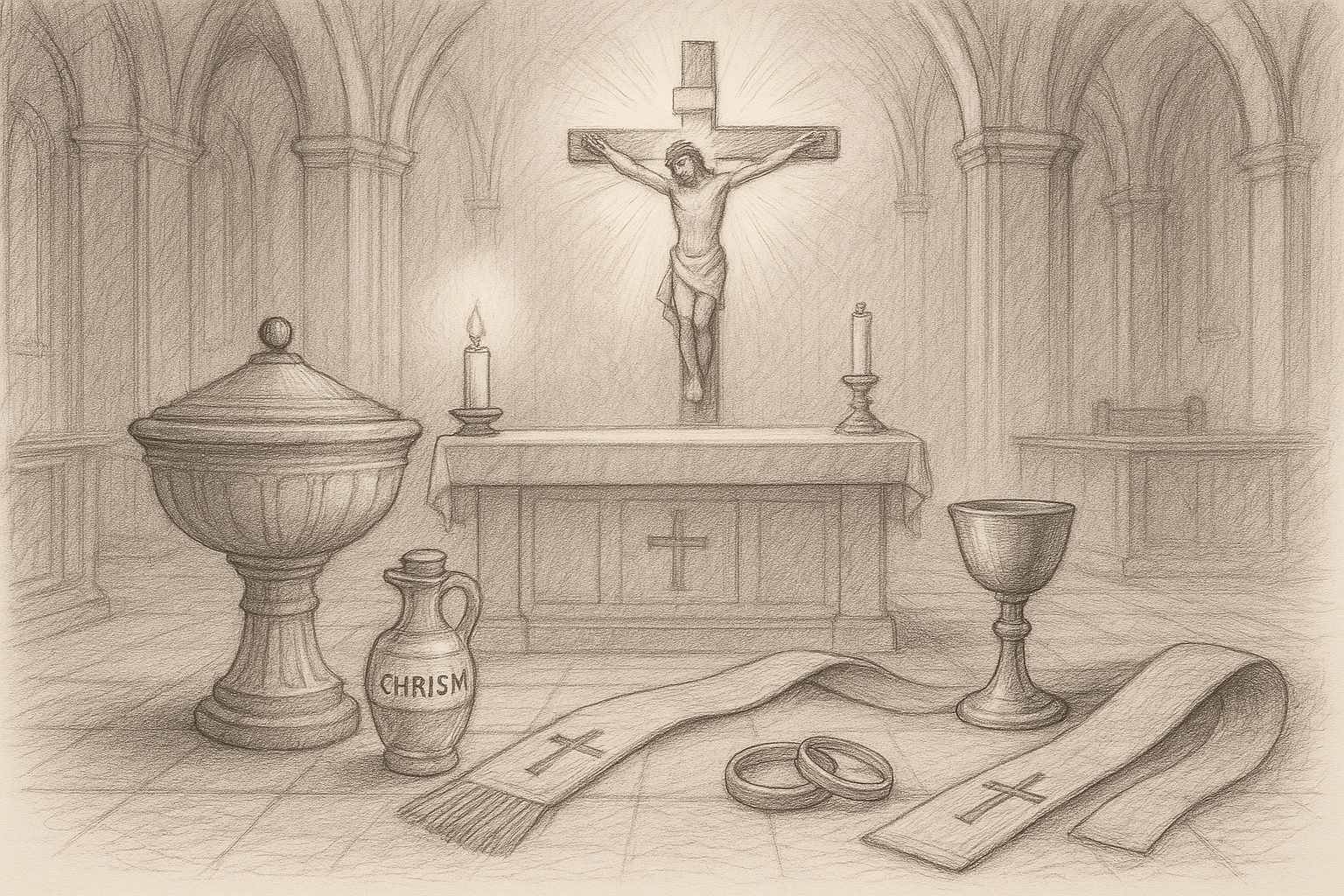
Baptism forgives sins and makes a person a new creation in Christ. Confirmation strengthens the baptized with the Holy Spirit for witness. The Eucharist nourishes the soul with the Body and Blood of the Lord. Reconciliation restores those who have fallen. Anointing of the Sick brings healing, comfort, and strength in suffering. Holy Orders gives grace for sacred ministry. Matrimony gives grace for faithful, fruitful married life.
In other words, God does not give one vague spiritual blessing and leave us to sort out the rest. He gives fitting graces for the journey He has laid out.
That is why the Church says the sacraments are not mere reminders of faith. They are actions of Christ in His Church. The grace they give comes from Him, not from human emotion, ritual beauty, or personal intensity. Those things may matter, but they are not the source.
Christ is the one who acts in the sacraments
The deepest reason sacramental grace is real is that Christ is alive and active. He is not a teacher whose work ended with His earthly ministry. He remains the Head of His Body, the Church, and continues to sanctify His people through the sacraments.
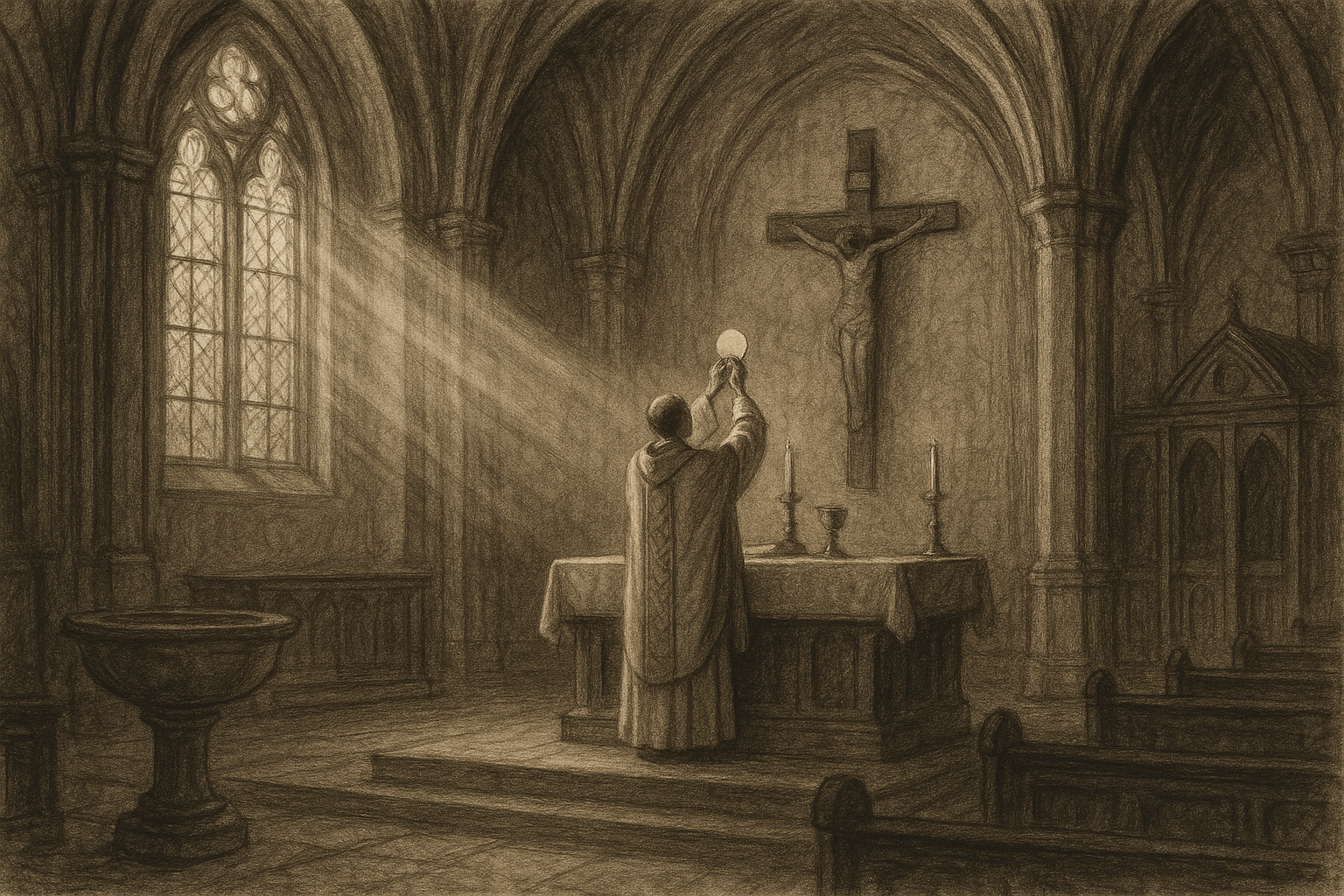
When the apostles baptize, Christ baptizes. When the priest absolves sins, Christ forgives. When the Eucharist is consecrated, Christ gives His Body and Blood. The minister serves, but the Lord acts.
He took bread, gave thanks, broke it, and gave it to them, saying, This is my body, which is given for you. Do this in remembrance of me (Luke 22:19).
That command is more than a memorial instruction. It establishes a continuing sacramental life in the Church. The apostles were not sent simply to recall Jesus' words in a purely mental way. They were sent to carry out His saving work sacramentally.
Saint Paul says something similar about baptism: Do you not know that all of us who have been baptized into Christ Jesus were baptized into his death? (Romans 6:3). Baptism is not a symbol added after salvation. It is a real participation in Christ's death and resurrection. Sacramental grace follows from that same pattern. God uses material signs to communicate invisible life.
Why God uses signs at all
Some people struggle with the idea that grace would come through water, words, oil, bread, wine, or touch. Yet this fits the whole biblical story. God has always used signs suited to human nature.
He used the sign of the Passover lamb to mark the saving night of Israel. He used the bronze serpent in the desert as a means of healing. He used the laying on of hands, anointing, washing, and covenant meals in the life of His people. In the fullness of time, the Word became flesh. If God was willing to save through the Incarnation, it should not surprise us that He continues to save through visible sacramental signs.
The human person is body and soul. We learn through senses. We remember through actions. We live in a world of tangible realities. Sacraments meet us there. They do not bypass our humanity. They redeem it.
This is one reason Catholic sacramental life feels concrete rather than abstract. When a child is baptized, a penitent is absolved, a couple exchanges vows, or a dying person is anointed, grace is not floating in the background. Christ is present and working in a manner suited to that moment.
Sacramental grace does not replace faith
A common misunderstanding is that Catholics believe the sacraments work automatically, as if the rite itself were magic. That is not Catholic teaching. God is not manipulated by technique. Sacraments are effective because Christ is faithful to His promise, not because the Church controls divine power.
At the same time, the sacraments are not bare reminders that depend entirely on the user's feelings. Their power comes from Christ. The Church receives, guards, and administers what He established.
Still, faith matters deeply. A person can receive a sacrament without full fruit if the heart is closed. The sacraments are always objectively real, but their fruitfulness can be hindered by lack of faith, lack of repentance, or resistance to grace. This is especially important in Reconciliation and the Eucharist, where personal disposition matters greatly.
Saint James speaks in a way that helps us here: Be doers of the word, and not hearers only (James 1:22). Sacramental grace is not meant to leave us passive. It calls us into conversion, obedience, and love.
The sacraments heal and strengthen at the same time
Sacramental grace is often both medicinal and strengthening. It heals what is wounded and fortifies what is weak. This is part of its beauty. God does not only pardon sin in the abstract. He restores the sinner. He does not only command holiness. He gives the help needed to grow in it.
Consider Confession. The sacrament does more than erase guilt. It also strengthens the soul against future sin. It gives peace, humility, and renewed desire for holiness. Consider the Eucharist. It is not only worship, though it is certainly worship. It also nourishes charity and unites the faithful more closely to Christ and to one another.
Consider Anointing of the Sick. It is not a denial of suffering or a mechanical promise of physical recovery. Rather, it gives grace for endurance, trust, and spiritual healing, and sometimes bodily healing if God so wills. The sacrament meets the sick person where human strength is failing and reminds the faithful that Christ is near even in weakness.
In each case, sacramental grace is ordered toward communion with God. The sacraments do not distract from Christ. They bring us to Him.
How this teaching answers common objections
Some Christians worry that sacramental life makes salvation look too material or too dependent on the Church. But the opposite is true. The sacraments show that salvation is not our private religious project. It is God's work in a visible covenant community.
Others ask whether grace cannot be received directly from God without sacraments. Of course God is free, and He can act outside the sacraments. The Church has always taught that God is not bound by the sacraments, even though we are bound to them as Christ's ordinary means of grace. Yet that freedom of God does not diminish the sacraments. It highlights them as His chosen instruments.
Still others suspect that sacramental grace reduces the importance of conversion or personal holiness. In truth, it does the opposite. The sacraments are ordered to conversion, holiness, and final perseverance. They are not substitutes for discipleship. They are nourishment for discipleship.
When Saint John writes, If we confess our sins, he is faithful and just, and will forgive our sins (1 John 1:9), the promise is deeply pastoral. God gives what He commands. He opens the way back. He supplies the help to continue.
Living from sacramental grace
A Catholic who understands sacramental grace will not approach the sacraments casually. He or she will prepare with prayer, repentance, reverence, and gratitude. The sacraments are ordinary in the Church's life, but never trivial.
At baptism, we should remember that we belong to Christ. At Mass, we should recognize that we are receiving not a mere sign, but the Lord Himself, who feeds His people. In Confession, we should trust that mercy is truly offered, not symbolically suggested. In marriage, holy orders, illness, and suffering, we should believe that Christ continues to supply grace for the path He calls each person to walk.
That is why sacramental grace Catholic teaching is not a narrow topic for theologians alone. It touches daily Catholic life. It reminds us that holiness is not built on willpower alone. It grows where Christ has planted His gifts and where the faithful receive them with humility.
God does not ask us to manufacture divine life. He gives it. He does not leave us to reach heaven unaided. He meets us in the sacraments and shares His own strength, one grace at a time, until our whole life is drawn toward Him.
Keep Reading on Lets Read The Bible
Frequently Asked Questions
What is sacramental grace in Catholic teaching?
Sacramental grace is the special grace God gives through each sacrament for its particular purpose. It includes the help needed to live the sacrament's meaning, such as forgiveness, strengthening, healing, or deeper union with Christ.
Do the sacraments work automatically?
No. The sacraments are effective because Christ acts through them, not because of human power. But a person's disposition matters, and faith, repentance, and openness to grace affect how fully the sacrament bears fruit.
Is sacramental grace only for Catholics who feel spiritually strong?
No. The sacraments are especially for people who need God's help, which is all of us. They are given to strengthen the weak, heal the wounded, forgive sinners, and nourish those who seek to follow Christ more faithfully.