Doctrine and Questions
When Christ Comes Near in the Eucharist
A clear Catholic look at the Real Presence, Scripture, and the faith of the Church
Site Admin | June 3, 2026 | 105 views
The Real Presence in the Eucharist Catholic teaching stands at the center of Catholic worship. It is not a side doctrine, and it is not a devotional extra for especially pious people. It is the Church's sober and joyful confession that Jesus Christ truly gives himself to us in the Eucharist. When Catholics come forward to receive Holy Communion, they do not believe they are receiving a mere reminder of Christ or a symbol of Christian fellowship. They believe they are receiving the Lord himself.
That claim can sound startling, even impossible, at first hearing. Yet from the beginning, Christians have wrestled with the words and actions of Jesus at the Last Supper and with the Scriptures that point to a mystery deeper than ordinary bread and wine. Catholic teaching does not ask anyone to pretend that the Eucharist is easy to explain. It asks us to receive what Christ says, trust the Church's witness, and approach the altar with faith, reverence, and gratitude.
Jesus speaks with unusual clarity
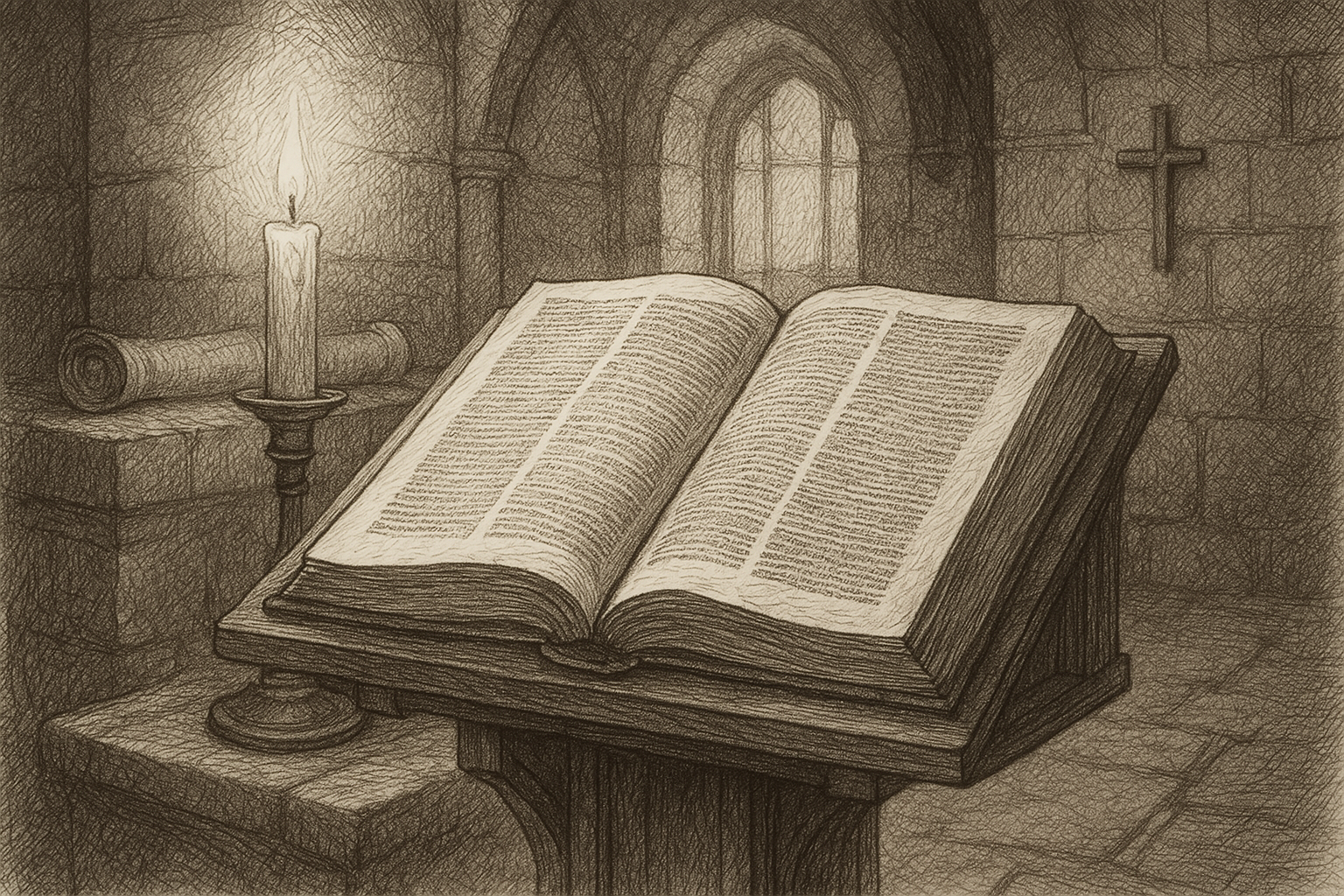
The most direct biblical foundation for the Real Presence comes from the Lord's own words. At the Last Supper, Jesus took bread, blessed it, broke it, and gave it to his disciples, saying, This is my body. He did the same with the chalice: [[VERSE|matthew|26|27-28|This is my blood of the covenant]]. In the Gospels and in Saint Paul's account, the wording is strikingly plain. Jesus does not say only that the bread is a reminder of him. He identifies the gift with his body and blood.
Saint Paul passes on the same tradition to the Corinthians and adds a warning that is difficult to soften: [[VERSE|1-corinthians|11|27-29|Whoever eats the bread or drinks the cup unworthily is guilty]]. If the Eucharist were only a symbol, this warning would be unusually severe. Paul treats the sacred meal as something holy enough to require discernment, self-examination, and reverence. He also speaks of participation in the body and blood of Christ in a way that goes beyond mere remembrance.
The sixth chapter of John's Gospel deepens the picture. Jesus multiplies the loaves, then speaks of the bread from heaven. He says, I am the living bread. He goes further and speaks of giving his flesh for the life of the world. Many listeners find the saying difficult, and some leave. Jesus does not call them back to say they misunderstood a metaphor. Instead, he continues to press the point with even stronger language. Catholics have long heard in this chapter a promise that prepares for the Eucharist and reveals how seriously Christ intends to feed his people with himself.
What the Church means by Real Presence
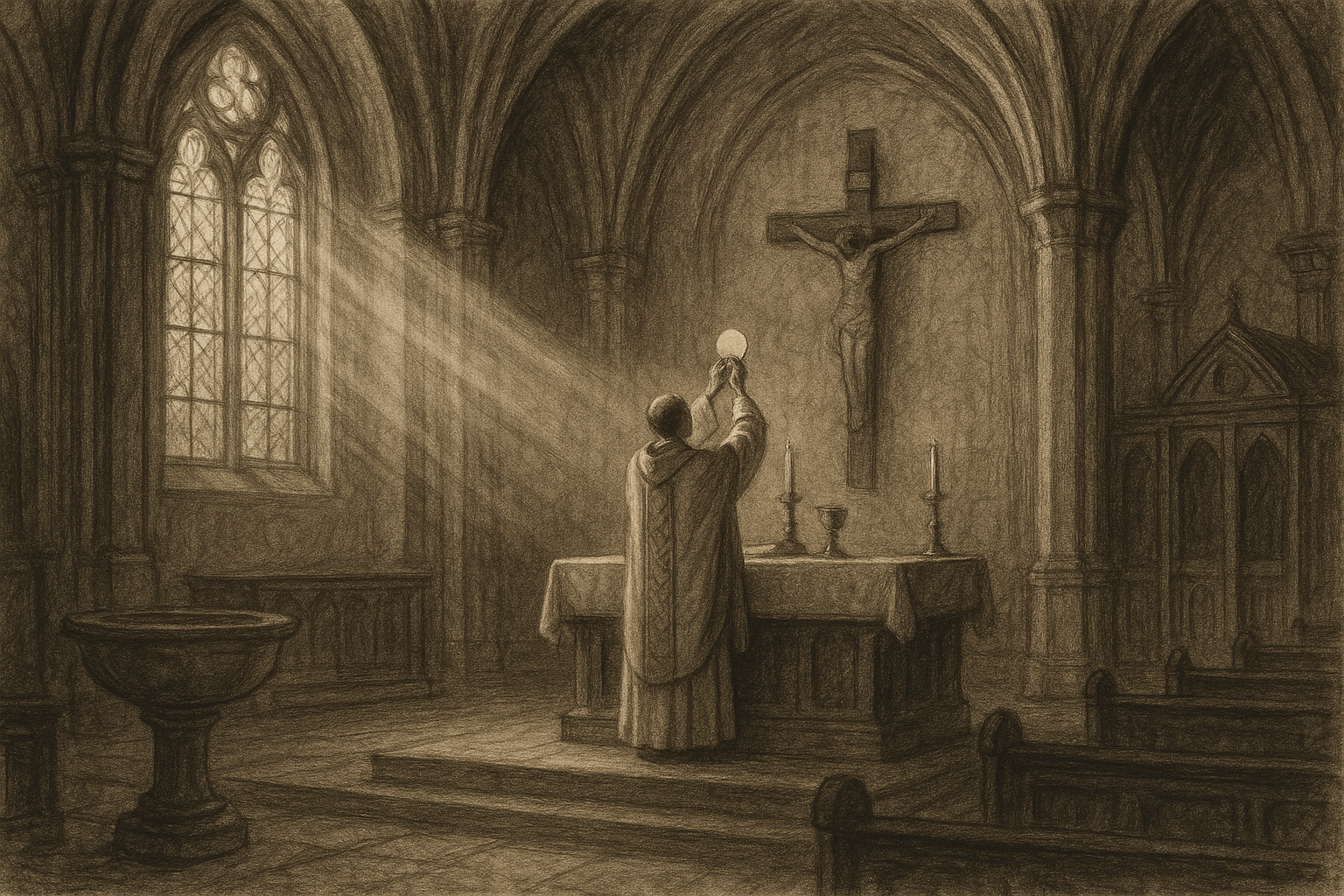
When the Church speaks of the Real Presence, she is not claiming that the Eucharist becomes Christ in a crude or physical way, as though Jesus were reduced to ordinary matter. The Church uses careful language because the mystery is true, but not ordinary. At Mass, by the power of the Holy Spirit and through the words of consecration spoken by the priest in the person of Christ, the bread and wine become the Body and Blood of the Lord. The outward appearances remain bread and wine, but the reality beneath those appearances is changed.
Catholic tradition calls this change transubstantiation. The word is not a Scripture verse, and it is not a magic formula. It is a theological term meant to protect the truth that the Eucharist is not merely symbolic while also acknowledging that what we see and taste does not fully reveal what is there. The Church has always believed that Christ is truly present, but she also knows that human language strains to name divine mystery.
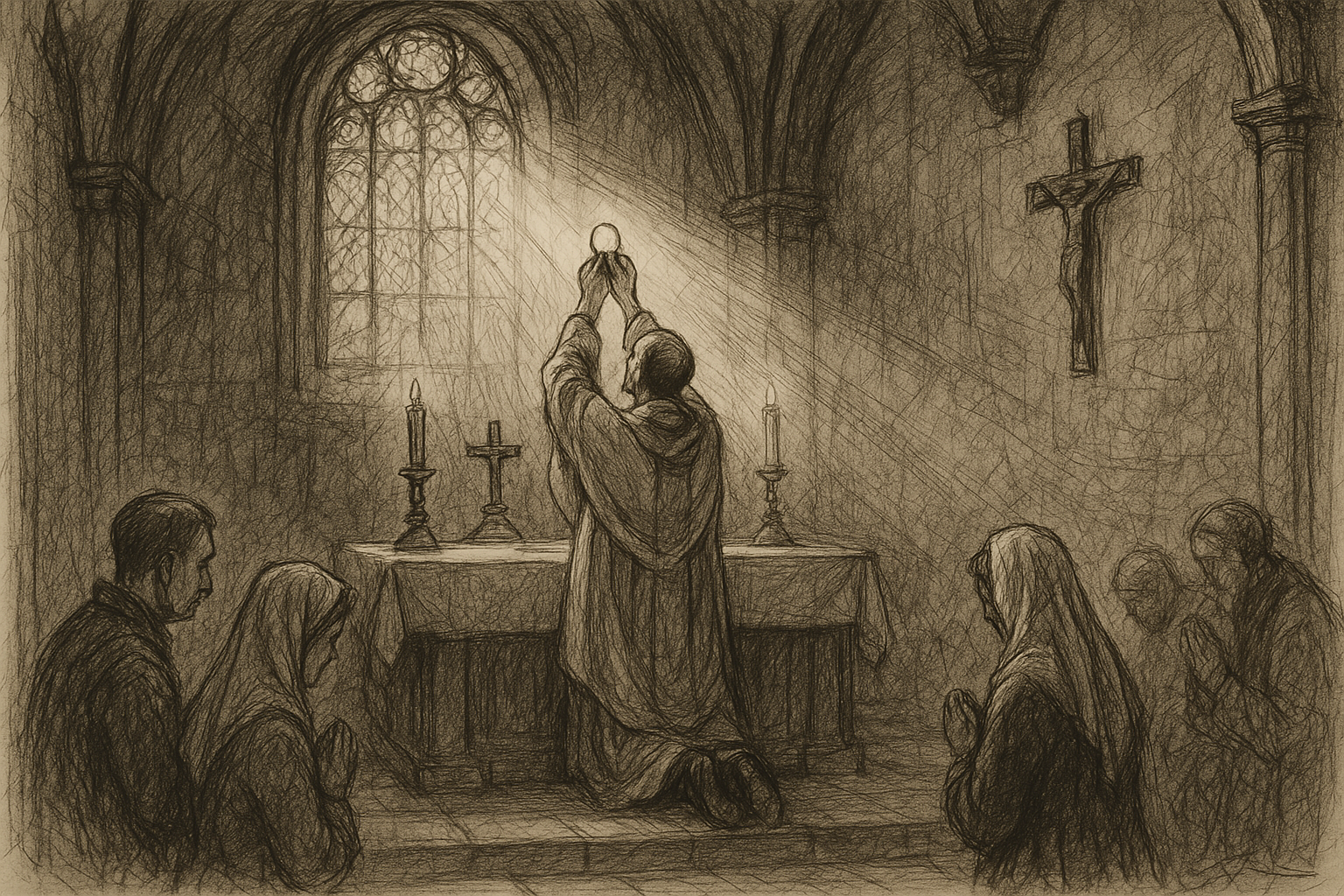
This is why Catholics kneel, why the tabernacle is treated with reverence, and why the Blessed Sacrament is adored. These gestures are not performances. They are bodily acts of faith. If the Lord is truly present, then worship is the fitting response.
Why symbol is not enough
Some Christians use the word symbol to speak of the Eucharist, and the word can be used in more than one way. A symbol can point to a reality and also participate in it. Still, Catholic teaching says that the Eucharist is more than a sign that merely refers to Christ. It is a sacramental sign that truly contains what it signifies.
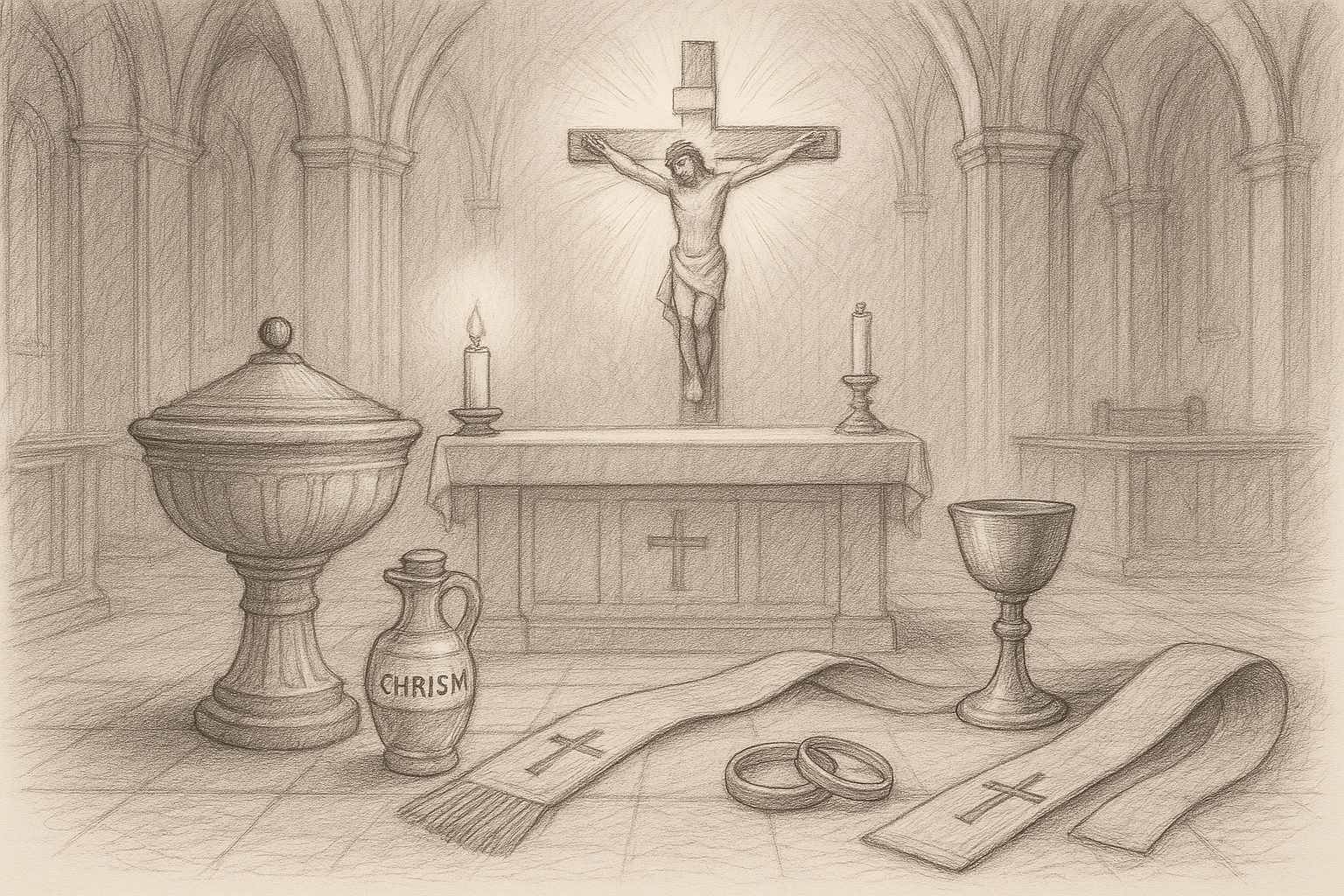
That difference matters. A wedding ring can symbolize marriage, but it does not bring the spouses into communion. A national flag can symbolize a country, but it does not contain the life of the nation. The Eucharist is unlike those examples because Christ gives himself through the sacrament. The sign is not detached from the reality. The sign is the means by which the reality is given.
The Church's insistence on the Real Presence guards the heart of Christian faith. Christianity is not first a philosophy, an ethical system, or a memory of a teacher who has gone away. It is communion with the risen Jesus. In the Eucharist, that communion becomes intimate, personal, and sacrificial in a way that no merely symbolic understanding can fully preserve.
The Mass and the sacrifice of Christ
Another common misunderstanding is that Catholic belief in the Eucharist somehow repeats the sacrifice of Calvary. The Church does not teach that Christ is sacrificed again and again. Rather, she teaches that the one sacrifice of Christ is made present sacramentally. The Cross and the Eucharist are inseparable. At Mass, the Church enters into that one saving offering and receives its fruits.
This is why the language of sacrifice appears so often in the liturgy and in the New Testament. Jesus is the Lamb of God, and the Eucharist is the sacramental way in which his once-for-all sacrifice reaches the faithful across time and place. Catholics do not think of the Mass as a replacement for the Cross. They think of it as the living participation in the Cross made possible by the risen Lord.
That also explains why the Eucharist is not simply private nourishment. It is personal, but never isolated. Those who receive Christ are drawn into his self-gift and into the life of his Body, the Church. Communion with Christ is never separated from communion with his people.
Questions people often ask
How can the Eucharist be Jesus if it still looks like bread and wine? Catholic teaching says the change is real even though the appearances remain. God is not limited by what the senses can detect. The Eucharist is a sacrament, and sacraments are visible signs that carry invisible grace. What the eyes see is not the full reality.
Does this mean Catholics worship bread? No. Catholics worship Christ. If the Eucharist is truly his Body and Blood, then adoration given to the Blessed Sacrament is adoration given to Jesus himself. The worship is directed to the Lord, not to bread as bread.
Is there scriptural support beyond the Last Supper? Yes. The Bread of Life discourse in John 6, Saint Paul's teaching in 1 Corinthians 10 and 11, and the broader biblical pattern of covenant, sacrifice, and sacred meal all support the Catholic understanding. The Church reads these texts together, not in isolation.
The witness of the early Church
From very early on, Christians spoke of the Eucharist in realist terms. They prayed as if the sacrament were holy in a unique way, and they warned against receiving it carelessly. This matters because it shows that the Catholic understanding is not a late invention. The earliest Christian communities recognized that the Eucharist was something more than a communal meal with religious meaning attached to it.
Early Christian reverence for the Eucharist also helps explain why the Church developed careful doctrinal language over time. She was not adding novelty. She was defending the faith she had received. As challenges arose, the Church clarified her teaching so that believers would not mistake reverence for poetry or mystery for vagueness.
How Catholics are meant to approach the Eucharist
Belief in the Real Presence shapes more than theology. It shapes how Catholics prepare for Mass, how they receive Communion, and how they live their weekday lives. Because the Eucharist is holy, Catholics are encouraged to come with a clean conscience, having made sacramental confession when seriously needed. Because the Eucharist is gift, they come in humility rather than entitlement. Because the Eucharist is Christ, they come in love.
That love is not abstract. It changes how people pray before Mass, how they make a thanksgiving after Communion, and how they carry Christ into the world. The Eucharist does not end at the dismissal. It sends believers outward, nourished by the Lord who has given himself for them.
For many Catholics, the deepest way to understand the Real Presence is not by argument alone but by adoration. Reason can clear away confusion and show that the doctrine is coherent and rooted in revelation. Yet faith also learns in silence before the tabernacle, where words become simple and the heart says what the mind cannot fully finish. If Christ truly comes near in the Eucharist, then the fitting response is not curiosity alone, but worship, trust, and a renewed desire to belong to him.
Keep Reading on Lets Read The Bible
Frequently Asked Questions
What does the Catholic Church mean by the Real Presence in the Eucharist?
The Catholic Church teaches that Jesus Christ is truly present in the Eucharist, body, blood, soul, and divinity. The appearances of bread and wine remain, but their deepest reality is changed by God.
Is the Eucharist only a symbol for Catholics?
No. Catholics believe the Eucharist is more than a symbol. It is a sacrament in which Christ truly gives himself to the faithful.
Why do Catholics kneel or adore the Eucharist?
Catholics kneel and adore because they believe the Blessed Sacrament is truly Jesus Christ present among his people. The worship is directed to him, not to bread and wine as ordinary food.