Saints and Witnesses
The Parish Priest Who Made Holiness Look Possible
St. John Vianney shows that ordinary priestly faithfulness can become an extraordinary sign of God's grace.
Site Admin | May 29, 2026 | 96 views
A saint who never stopped being ordinary
St. John Vianney does not fit the usual picture of a public hero. He was born in 1786 in Dardilly, near Lyon in France, into a peasant family shaped by hard work, faith, and the turmoil of the French Revolution. He struggled with his studies, especially Latin, and by many human standards he seemed poorly suited for priesthood. Yet the Church eventually recognized in him something more important than natural ease: a soul made ready by grace.
That is one reason his life continues to speak so clearly. John Vianney did not become holy by standing apart from ordinary life. He became holy by entering it fully and offering himself to God within it. His story is not about escape from weakness. It is about sanctification through weakness, perseverance, and unwavering trust in the Lord who chooses what the world often overlooks.
Ordained in 1815, John Vianney was assigned to the small village of Ars, where he would spend the rest of his life. Ars was not a center of power or culture. It was a quiet rural parish that, in the eyes of the world, seemed almost forgettable. But the saint who arrived there believed that no parish is forgettable to God. He treated that small place as sacred ground, and in time the whole Church would see that holiness can transform even the most hidden corner of the world.
The priesthood as a life poured out
St. John Vianney became known as the Cure of Ars, the parish priest who gave himself completely to his people. His ministry was simple in structure and demanding in practice. He preached plainly, taught catechism, heard confessions for long hours, and spent himself in prayer and penance. He was not a writer of great theological systems, but he was a living witness to the truth that a priest's greatest work is to help souls meet Jesus Christ.
His witness matters because it restores the center. The priesthood is not chiefly about charisma, leadership style, or public recognition. It is about service at the altar, fidelity to the sacraments, and a heart conformed to the Good Shepherd. John Vianney understood that a priest is given to the people not to entertain them but to sanctify them. He took his responsibility seriously because he believed that every soul entrusted to him mattered before God.
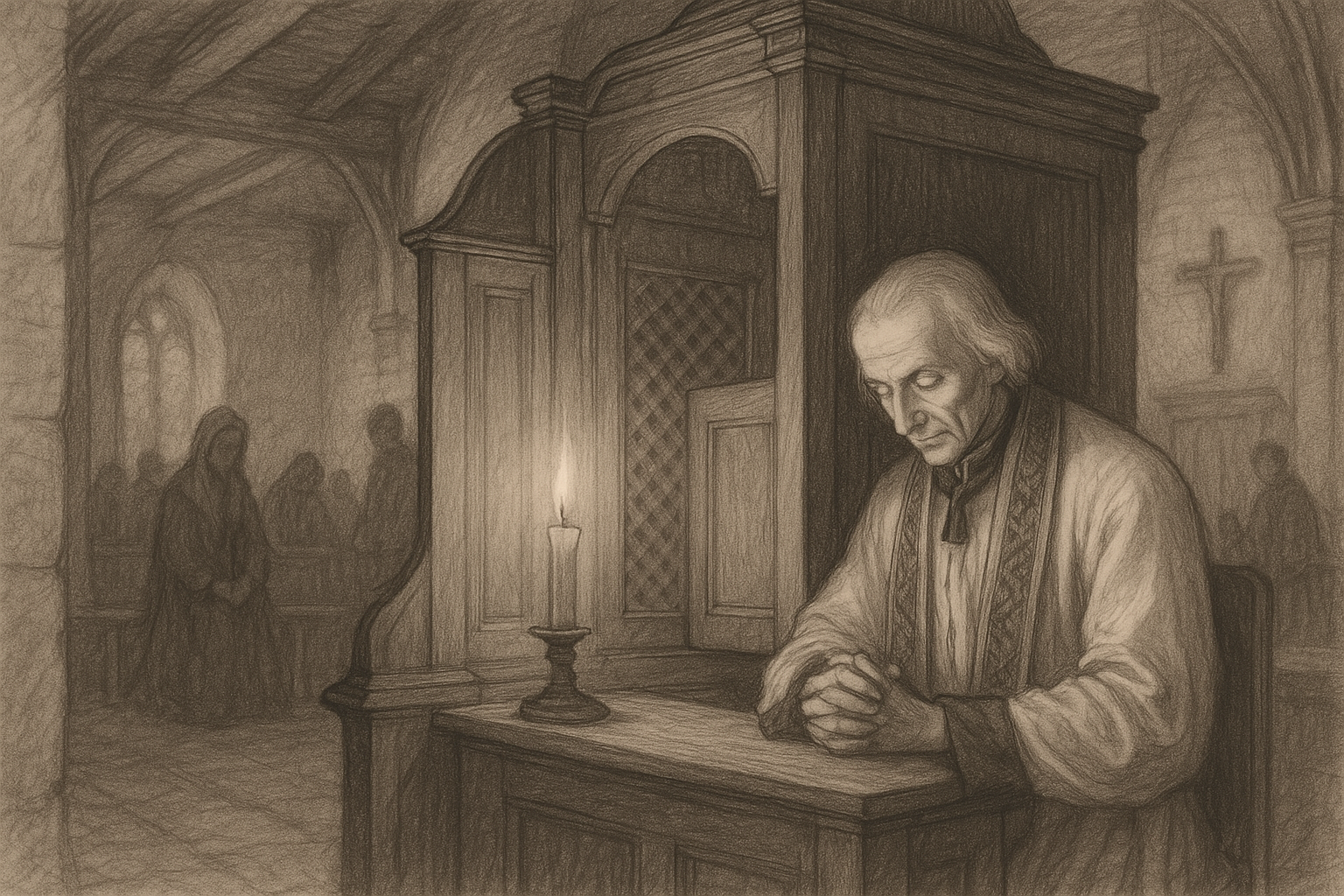
That conviction shaped his long hours in the confessional. People came from far away to confess to him, often after hearing of his holiness and wisdom. He listened, questioned, encouraged, corrected, and absolved with seriousness and compassion. In a world that can treat sin lightly or reduce mercy to sentiment, his ministry reminds Catholics that mercy is costly because it is real. Forgiveness is never cheap. It comes through the Cross of Christ, made present in the sacramental life of the Church.
The Lord's call to shepherd souls is never a small thing. In John Vianney's life, even hidden fidelity became a public sign that God still works through simple means.
Weakness that becomes a doorway for grace
One of the most striking elements of St. John Vianney Catholic inspiration is his early struggle with learning. He was not a naturally gifted student, and the path to ordination was slow and difficult. At one point, he studied under the guidance of mentors who doubted whether he could continue. His limitations were not imaginary. They were real enough to make his eventual priesthood a sign of grace rather than achievement.
This is encouraging because many Catholics quietly worry that they are too weak, too inconsistent, too underqualified, or too hidden to matter much in the life of the Church. John Vianney answers that fear without sentimentality. God does not call only the naturally impressive. He gives strength to those who know they need Him. The saint's life shows that perseverance matters, and that the Holy Spirit can do astonishing things through a willing but fragile instrument.
His witness also corrects a common misunderstanding of holiness. Holiness is not perfection of talent. It is charity lived with humility and endurance. It grows in prayer, sacrifice, repentance, and fidelity to daily duty. John Vianney did not become holy because his life was easy. He became holy because he kept offering what little he had, and God made it fruitful.
Prayer, penance, and the care of souls
The Cure of Ars was known for a disciplined life. He prayed intensely, fasted severely, and kept a demanding schedule that left little room for comfort. Modern readers may be tempted to focus only on his austerity, but that would miss the heart of his holiness. His penance was not an end in itself. It was an expression of love. He wanted to be free for God and available for his people.
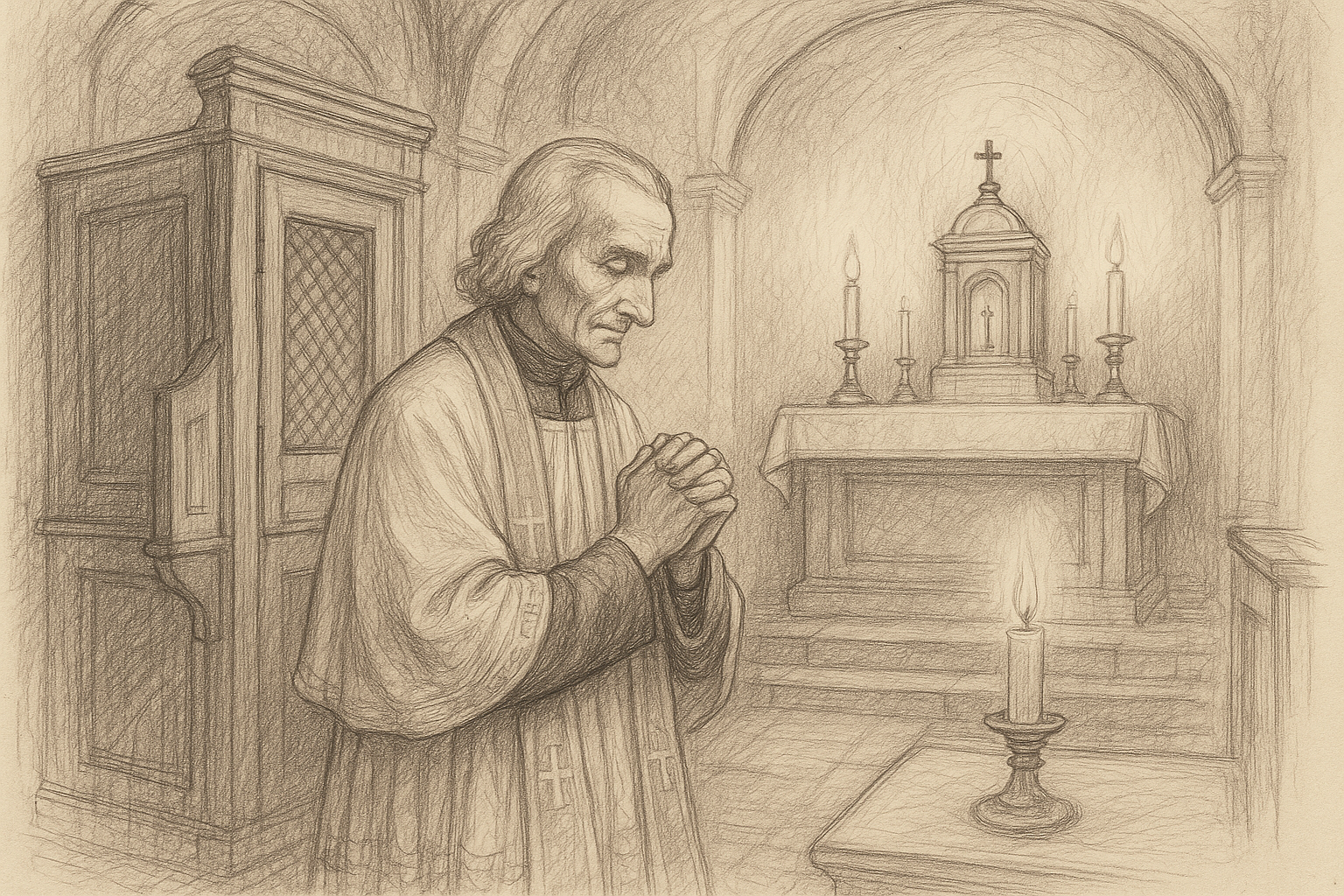
In Catholic life, penance has meaning because it joins us to Christ's own self-offering. It is not spiritual theater. It is a way of turning the whole person toward God. John Vianney lived this reality in a striking way. He prayed because he knew that ministry without prayer becomes shallow. He fasted because he knew that the body too must learn obedience. He stayed close to the tabernacle because he knew that priests cannot give what they do not first receive.
That is why his witness still pierces the conscience. He reminds Catholics that the exterior work of the Church must be rooted in interior communion with Christ. A parish may have programs, music, committees, and activity, but without prayer it risks losing its soul. John Vianney's life points back to the hidden sources from which authentic renewal flows.
His love for the Eucharist and confession
Two great treasures of Catholic life shine brightly in St. John Vianney's witness: the Eucharist and the sacrament of Penance. He loved the Mass deeply and knew that the altar is the center of priestly life. He also devoted extraordinary time to hearing confessions because he believed that souls need mercy, not vague reassurance. These are not separate devotions. They belong together. The Eucharist is the sacrifice of Christ given to the Church, and confession prepares hearts to receive that gift worthily.
This connection remains vital today. Many Catholics long for renewal but are unsure where to begin. John Vianney points to a clear path. Return to Mass with reverence. Return to confession with honesty. Ask for grace, and then cooperate with it. The saint's ministry in Ars was not built on novelty. It was built on sacramental life lived seriously and consistently.
His example is especially helpful in an age that often avoids moral clarity. He did not deny the reality of sin. He named it, but always as one who hoped in mercy. He trusted that conversion is possible because Christ really saves. That trust made him firm without becoming harsh. He knew how to warn, but he also knew how to welcome the sinner who wanted to come home.
Why his witness still reaches modern Catholics
Many saints inspire admiration. St. John Vianney inspires identification. Catholics see in him someone who was not polished, not naturally brilliant, and not socially powerful. He was, in many ways, one of us. He had to labor, learn, repent, and continue. That is why his holiness feels accessible. He proves that sanctity is not reserved for the spectacular.
His life is also a corrective to spiritual discouragement. Some people assume that if their parish seems small or their work unnoticed, it cannot matter much. Ars shows the opposite. A faithful priest, a praying parish, and a community open to grace can become a light far beyond what anyone expected. God often works by deepening what is hidden before He makes it visible.
For lay Catholics, John Vianney offers another message as well. Holiness is not only for clergy or religious. His priestly witness invites everyone to examine the ordinary places of life where charity can be offered: the home, the workplace, the confessional line, the pew, the kitchen table, the sickbed, the quiet moment before prayer. The saint of Ars lived as though every detail mattered to God, and that is a powerful lesson for every baptized person.
Three concrete lessons from the Cure of Ars
St. John Vianney's witness can be received in practical ways. His life is not merely something to admire; it is something to imitate according to one's state in life.
- Take confession seriously. Approach the sacrament honestly, frequently, and without excuses. Mercy is a gift meant to heal real sins.
- Guard time for prayer. Even simple daily prayer can anchor a Catholic life in Christ and keep service from becoming empty busyness.
- Do the small duties faithfully. Hidden obedience, patient endurance, and quiet charity are often the soil in which holiness grows.
These are not dramatic steps, but they are real ones. John Vianney changed the spiritual climate of a village by living them with consistency. The same pattern can renew a family, a parish, or a soul that has grown tired in the faith.
A saint for priests and for all the faithful
Because he was a parish priest, John Vianney is especially dear to clergy. He remains a patron and model for priests who carry the daily weight of preaching, confession, administration, and pastoral care. Yet his life is not only for priests. It belongs to the whole Church because it reveals what grace can do with a surrendered human life.
The saints are not decorative figures from the past. They are witnesses that Christ is alive and that His Gospel still takes flesh in real people, in real history, through real sacrifices. St. John Vianney shows that a small parish, a weak student, and a hidden priest can become a sign of God's mercy for generations. That is not only encouraging. It is deeply Catholic. The Church believes that holiness is possible here and now, in ordinary conditions, when a soul yields itself to the Lord.
So the enduring St. John Vianney Catholic inspiration is not simply that he was admired or successful. It is that he loved God enough to become available. He gave the Church a priestly heart shaped by prayer, penance, Eucharistic devotion, and fearless care for souls. In a noisy age, that kind of witness still speaks with unusual clarity.
Keep Reading on Lets Read The Bible
Frequently Asked Questions
Who was St. John Vianney?
St. John Vianney was a French priest born in 1786 and best known as the Cure of Ars. He became famous for his holiness, long hours in the confessional, and devoted pastoral care for the people of his parish.
Why is St. John Vianney important to Catholics today?
He shows that holiness grows through ordinary fidelity, prayer, confession, and sacrifice. His life encourages Catholics who feel weak or unnoticed to trust that God can work powerfully through simple faithfulness.
What is St. John Vianney especially known for?
He is especially known for his devotion to the sacrament of Penance, his love for the Eucharist, his priestly humility, and his tireless care for souls in the village of Ars.