Catholic Living
When Anxiety Enters the Moral Life: A Catholic Path to Trust and Clear Judgment
Fear can cloud the conscience, but grace still teaches the heart to choose well, repent honestly, and rest in God.
Site Admin | August 13, 2026 | 101 views
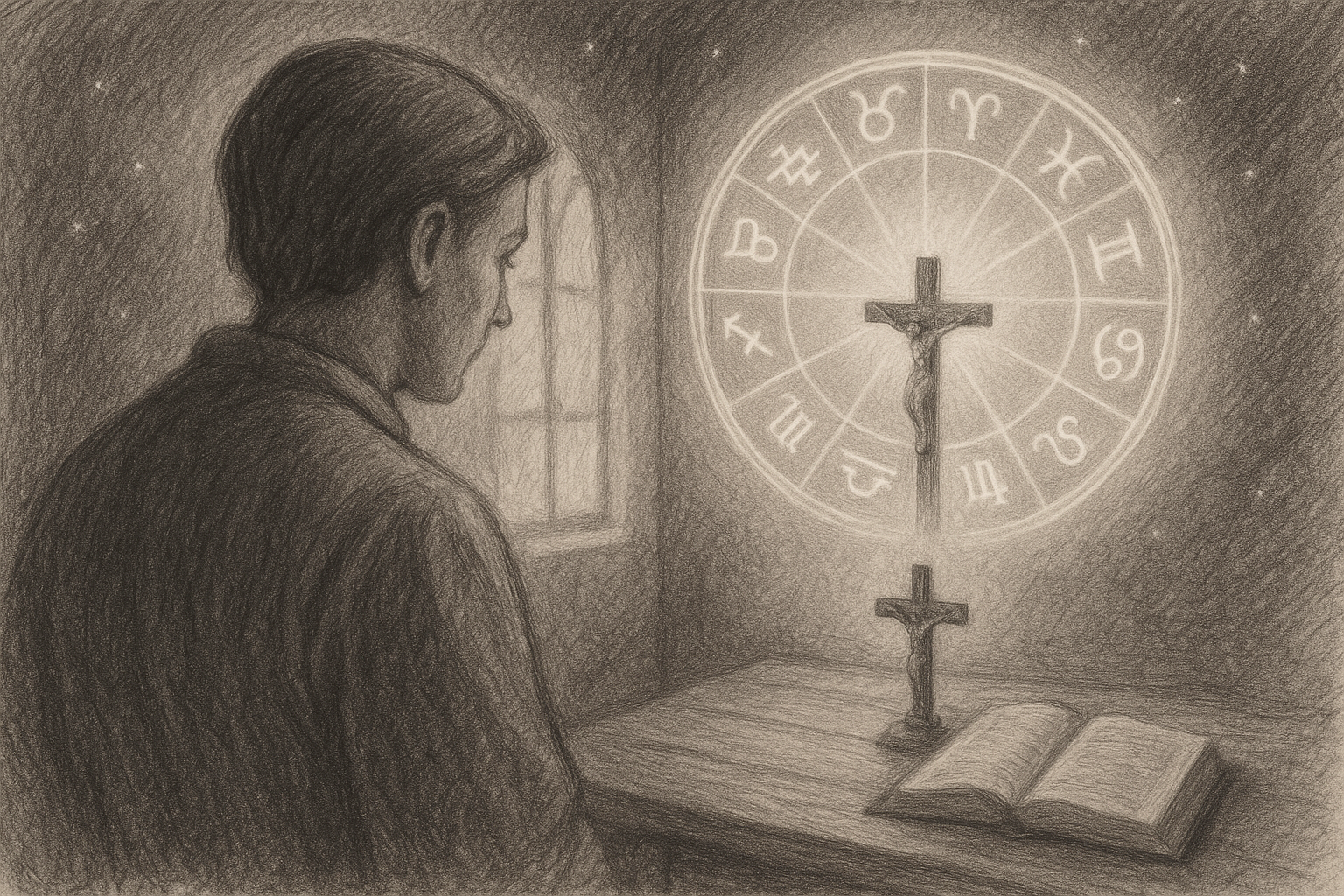
Anxiety and fear are not only private feelings. In ordinary Catholic life, they can shape the way a person prays, decides, speaks, and loves. A worried heart may become cautious and careful, which can be wise. But it may also become evasive, restless, suspicious, or quick to choose comfort over truth. For that reason, anxiety and fear and Catholic life belong together as a real moral concern, not because fear is a sin in itself, but because it can influence the state of the heart and the quality of our choices.
The Church does not treat fear as a moral failure in every case. Scripture is full of people who tremble, hesitate, and ask God for help. The Psalmist prays, "When I am afraid, I put my trust in you" Psalm 56:3. That is not a rebuke. It is an act of faith. Fear becomes spiritually important when it begins to govern the soul instead of informing it. Then a person may avoid a duty, deceive a neighbor, delay repentance, or cling to control because surrender feels too costly.
Fear can clarify, but it can also distort
Some fear is useful. It warns us about real danger and helps us move with prudence. A parent who fears harm to a child, a worker who fears negligence, or a sinner who fears offending God may all be responding in a healthy way. Scripture even says, "The fear of the Lord is the beginning of wisdom" Proverbs 9:10. This holy fear is not panic. It is reverence, humility, and a sober recognition that God is God and we are not.
But fear can also shrink the moral horizon. When anxiety becomes constant, the person may stop seeing clearly. He may begin to assume the worst, to postpone difficult conversations, or to justify what he knows is wrong because it feels easier in the moment. Fear can also make a person overly dependent on approval. Then conscience is no longer guided by truth but by the desire to avoid embarrassment, rejection, or conflict.
That is why the moral life must include attention to interior movements. A Catholic does not only ask, What did I do? He also asks, What was ruling my heart when I did it? Fear can reduce freedom without removing it entirely. It may lessen guilt in some cases, but it does not automatically erase responsibility. Moral honesty requires both compassion and clarity.
The Lord meets fearful hearts without humiliating them
Christ does not approach anxious people with contempt. He speaks gently to those who tremble. When the disciples were afraid in the boat, He said, "Why are you afraid, O men of little faith?" and then He calmed the storm Matthew 8:26. His question is not mockery. It is medicine. He exposes the gap between fear and trust, then shows His power to bridge it.
Many Catholics carry burdens they do not speak about. Some fear failure, some fear the future, some fear sickness, poverty, loneliness, or conflict. Others fear their own weakness, which can be even more painful. In all of this, the Christian response is not denial. It is to bring the truth into the light. The Lord already sees what weighs on us, and He does not ask us to pretend we are calm when we are not. He asks us to come to Him.
"Do not be anxious about your life" Matthew 6:25 is not a command to feel nothing. It is a summons to seek the Father first, and to let trust become more fundamental than fear.
This matters morally because anxiety often pushes the soul toward immediate relief. A person may choose a shortcut, a lie, a hidden habit, or a resentful word because it promises a moment of peace. But peace built on evasion is fragile. It leaves the heart divided. True peace comes when the soul turns toward God honestly, even while still trembling.
How anxiety affects conscience
Conscience is meant to judge actions in the light of truth. Anxiety can interfere with that work in several ways. First, it can make a person overly scrupulous, seeing sin everywhere and mercy nowhere. Second, it can make a person lax, because the mind becomes so fatigued that it avoids moral reflection altogether. Third, it can create compulsive reassurance seeking, where the person cannot rest unless every uncertainty is removed. In each case, fear has begun to shape conscience rather than serve it.
Catholic moral life asks for a stable conscience, formed by Scripture, the Church, prayer, and virtue. That does not mean the Christian never feels fear. It means fear is not the final judge. A well-formed conscience listens to reason and revelation even when emotions are loud. It says, with the Apostle, "God did not give us a spirit of timidity but a spirit of power and love and self-control" 2 Timothy 1:7.
When a person is caught in anxiety, he may not need a complicated analysis first. He may need to slow down, pray, and ask whether fear is distorting his judgment. Is he avoiding a duty because it is morally hard? Is he speaking harshly because he feels cornered? Is he withholding forgiveness because reconciliation feels vulnerable? These questions are not accusations. They are invitations to truth.
Repentance begins when fear stops hiding
Fear often hides sin. It can also hide wounds that need healing. In either case, the first step is honesty before God. A Catholic conscience grows when it learns to say, This is what I fear, this is how I have reacted, and this is where I need mercy. That kind of prayer is already a beginning of conversion.
Sometimes anxiety leads to sins of omission. A person does not pray because he feels unworthy. He does not apologize because he is afraid of being rejected. He does not go to Confession because he imagines he must first become calm or certain. Yet the sacrament is for the repentant, not the self-sufficient. The Lord calls sinners as they are.
In practical terms, repentance in anxious seasons may look simple:
- making an honest examination of conscience without exaggeration or denial
- naming the fear that has shaped a choice
- asking forgiveness from God and, when needed, from the person harmed
- returning to Confession with trust rather than embarrassment
- accepting that growth may be gradual
Here humility is not despair. It is the willingness to be taught by God. Fear says, I must control everything. Humility says, I can bring my weakness to Christ.
Practical habits that support virtue
The moral life needs habits, especially when the inner life is unsettled. A Catholic who struggles with anxiety and fear and Catholic life in the same breath can benefit from ordinary practices that steady the soul.
Begin the day with surrender
A short morning offering can reorient the heart before the world begins to press in. Offer the day to God, including whatever may cause worry. This is not magical thinking. It is an act of ordered love. The mind learns, day by day, that the day belongs to God before it belongs to your fears.
Practice one clear act of obedience
Anxiety often multiplies uncertainty. One concrete act of obedience can interrupt that cycle. It may be a truthful conversation, a prompt apology, a scheduled prayer time, a return to Sunday Mass, or a disciplined refusal to revisit the same worry again and again. Virtue grows through concrete acts, not vague intentions.
Fast from unnecessary alarms
Some fear is fed by constant stimulation. Endless news, restless scrolling, and repeated checking can keep the nervous system awake and the imagination inflamed. A Christian does not need to ignore the world, but he should guard his attention. Peace often begins with custody of the eyes and ears.
Seek help without shame
Sometimes fear becomes intense enough that a person needs support from a priest, confessor, trusted friend, or qualified mental health professional. Seeking help is not a failure of faith. It can be an act of prudence. Grace does not cancel nature. God often heals through ordinary means.
These habits do not eliminate all anxiety, and they should not be treated as a test of holiness. Their purpose is to make room for freer acts of love. The less fear dominates the imagination, the more available the soul becomes for patience, courage, and mercy.
Trust is not passive, and courage is not pretending
Catholic trust is not the same as denial. It does not say that danger is unreal or that pain does not matter. It says that God is greater than what frightens us. Jesus asked His disciples to look beyond the storm and toward the Father who cares for them. That is why trust and fear are moral realities, not merely emotional ones. They reveal what we believe about God when life feels unstable.
Courage, too, is often misunderstood. Courage is not the absence of fear. It is the firm choice to do the good even while fear remains present. A mother who speaks truth in a difficult family matter, a father who admits fault, a young person who resists temptation, or a sick person who offers suffering to the Lord may all act courageously while still feeling afraid.
This is one reason the saints are such realistic teachers. They do not imagine the Christian life as effortless. They know that sanctity is often forged in the place where fear and love meet. In that place, the soul learns that it is safer in God than in its own control.
When fear rises again, as it often will, return to prayer without drama. Say the psalm. Make the sign of the cross. Ask for light. Choose the next right thing. The Christian does not need to solve the whole future before taking the next faithful step. God gives grace for today, and often that is enough to begin again.
Keep Reading on Lets Read The Bible
Frequently Asked Questions
Is anxiety itself a sin in Catholic teaching?
No. Anxiety itself is not automatically a sin. It becomes morally important when it leads a person to distrust God, avoid duty, act unjustly, or choose evil for the sake of relief.
How can fear affect a person's conscience?
Fear can make conscience either overly scrupulous or too lax. It can also push someone to seek comfort instead of truth, which is why prayer, Confession, and careful moral formation matter.
What is one practical Catholic step for someone who feels overwhelmed by fear?
Begin with a short prayer of surrender, make one honest examination of conscience, and take one concrete faithful action, such as going to Confession, speaking truthfully, or asking for help.