Catholic Living
Mercy, Suffering, and the Last Word on Human Dignity
A Catholic look at euthanasia, the fear that often surrounds it, and the Church's call to protect life with compassion and truth.
Site Admin | July 31, 2026 | 64 views
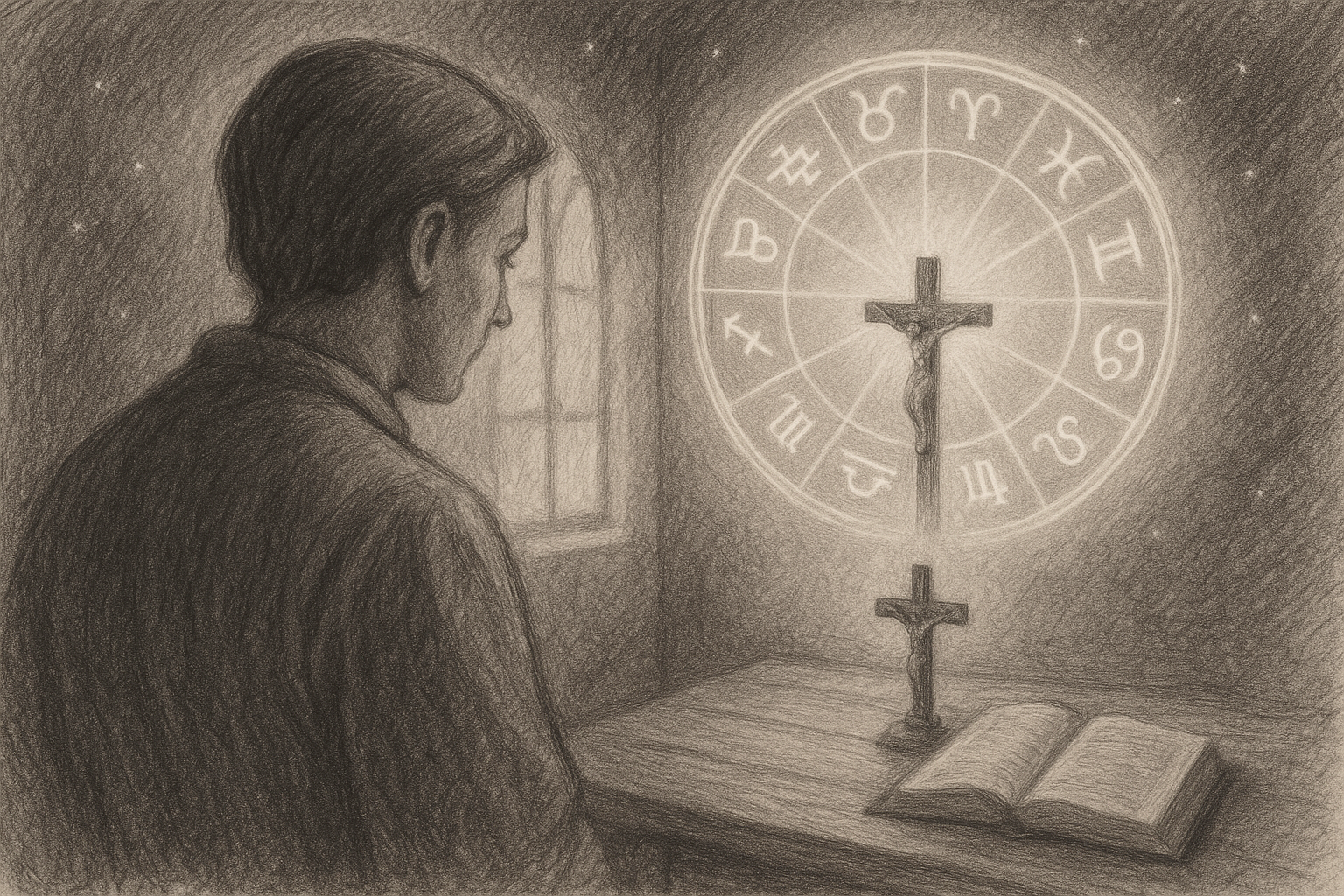
Euthanasia is one of the most painful moral questions many families will ever face. It often enters the conversation quietly, under the weight of fear, illness, exhaustion, and the sense that a person is becoming a burden. For some, it can sound like a final act of kindness. For others, it feels like a line that should never be crossed, but they cannot always say why.
Catholic teaching is clear, but it is not harsh. The Church rejects euthanasia because human life is not a possession we may discard when it becomes difficult. At the same time, the Church recognizes the reality of suffering and does not ask believers to pretend that pain is simple or that death is easy. Instead, she calls us to protect life, relieve suffering, and stand near the sick with mercy that does not give up on them.
What the Church means by euthanasia
In Catholic moral teaching, euthanasia means an act or omission that of itself and by intention causes death so as to eliminate suffering. The key moral issue is not simply that death occurs, but that death is chosen as the means or the goal. This is different from refusing burdensome treatment, and it is different from providing ordinary care, pain relief, or comfort when death is already approaching.
The Church teaches that human life is sacred because it comes from God. We do not own life absolutely. We receive it as a gift, and we are stewards of it, not masters over it. Scripture presents this dignity from the beginning: God created the human person in his image. That image is not erased by age, disability, dependency, or terminal illness.
The commandment, You shall not kill, is not merely a rule against violence. It also protects the vulnerable from becoming victims of despair, pressure, or a false idea that their lives are worth less when they are weak. Catholic teaching sees euthanasia as a rejection of the truth that every person remains loved by God until natural death.
Why euthanasia can seem merciful
To speak honestly about euthanasia, we have to understand why it can seem attractive. Many people fear unbearable pain, loss of independence, humiliation, depression, or being left alone. Others fear becoming financially or emotionally heavy for their families. Some have watched loved ones endure prolonged decline and do not want that same path for themselves.
These fears should not be dismissed. They are real, and they deserve patient listening. A Catholic response begins not with argument, but with compassion. A person who asks about euthanasia is often asking a deeper question: Will I still matter when I can no longer do what I used to do?
The Church answers with a resounding yes. A person does not lose dignity because he is suffering. He does not become less human because he is dependent. He does not become disposable because the end of life is near. In that sense, the Church's refusal of euthanasia is not a refusal of mercy. It is a refusal to confuse mercy with killing.
The difference between killing and allowing natural death
Catholic teaching makes important distinctions that often get overlooked in public debate. The Church does not require every possible medical treatment to be used at all costs. If a treatment is excessively burdensome, offers little hope of benefit, or imposes grave hardship, a person may legitimately refuse it. This is not euthanasia. It is acceptance of the limits of medicine and human life.
Likewise, when death is near, it is morally permissible to use pain medication even if it may indirectly shorten life, provided the intention is to relieve pain and not to cause death. The moral principle here is that the goal matters. Relief of suffering is good. Directly intending death is not.
There is also a difference between ordinary care and extraordinary interventions. Food, water, hygiene, warmth, companionship, and basic comfort are forms of care that should not be withdrawn simply because a person is weak or dying, unless they can no longer provide benefit or become gravely burdensome in a particular case. These questions require careful, case-by-case discernment, often with medical and spiritual guidance.
As St. John Paul II taught, the dignity of the person remains intact in every condition, and the duty to respect life does not disappear when health declines.
What Catholic teaching actually asks of us
At its heart, euthanasia Catholic teaching asks us to choose a different path: one of accompaniment, truth, and reverence for life. That means we do not measure a person's worth by productivity, independence, or comfort. It also means we do not confuse prolonging biological life with making every possible intervention regardless of cost.
The Church asks for prudent care, honest medical judgment, and moral clarity. She supports palliative care, hospice care, pain management, spiritual support, and the presence of family and friends. She also reminds us that prayer, the sacraments, and the consolation of Christian hope matter deeply at the end of life.
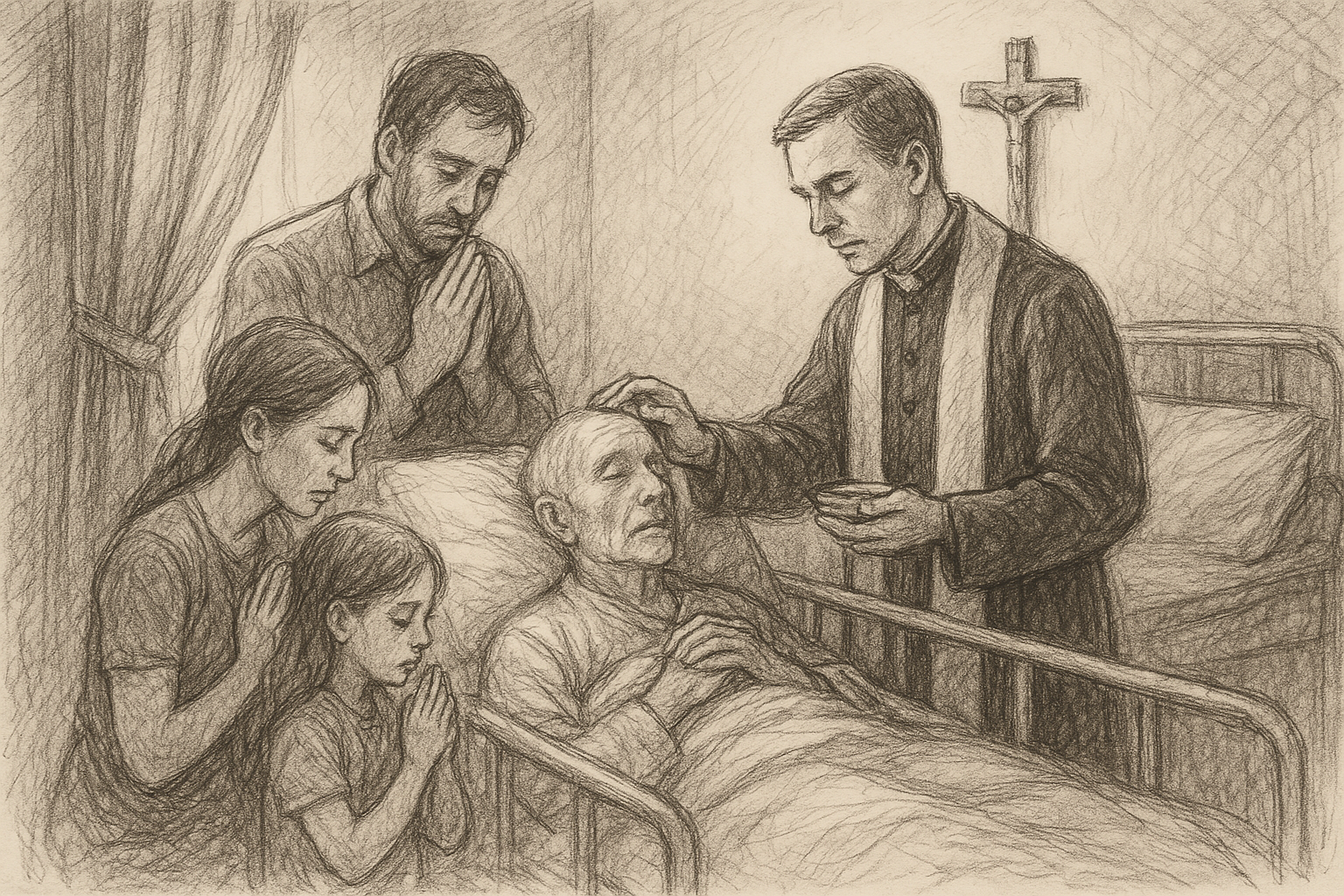
The anointing of the sick, when appropriate, is not a sentimental extra. It is a sacramental grace for the suffering Christian, a sign that Christ enters the place of weakness and death itself. The Church does not deny that dying is hard. She brings Christ into that hardness.
In the Psalms, the believer cries out with trust: Even though I walk through the valley of the shadow of death, I fear no evil. That is not denial. It is faith that the Lord remains present when human strength fails.
The pastoral burden on families
Families often carry the emotional weight of end-of-life decisions. They may be exhausted from caregiving, divided in opinion, or haunted by guilt. Some worry that choosing comfort care means giving up. Others fear that insisting on more treatment means prolonging suffering. These situations can be spiritually and emotionally draining.
Catholic pastoral care does not begin by condemning people who are afraid. It begins by helping them see that love is still possible in the final stages of life. Sitting with a dying parent, listening to a spouse, asking for a priest, and making decisions with a formed conscience are all acts of charity. The final weeks or days of a life can become a time of deep purification for a family, even when they are filled with tears.
There is also an urgent need to protect the elderly, the disabled, and the terminally ill from subtle pressure. A person may begin to feel that he is a burden simply because others are tired. Catholic teaching resists any culture that teaches the vulnerable to step aside so others can be relieved. Love does not say,
Keep Reading on Lets Read The Bible
Frequently Asked Questions
Does the Catholic Church allow pain medication if it may shorten life?
Yes, if the intention is to relieve pain and not to cause death. Catholic moral teaching recognizes that some medicines may have serious side effects, and it is permissible to use them when the goal is compassionate symptom relief.
Is refusing aggressive treatment the same as euthanasia?
No. A person may morally refuse treatments that are excessively burdensome, unlikely to help, or disproportionate to the expected benefit. Euthanasia is different because it involves intending death as the means or goal.
How should Catholics respond when a loved one is afraid of dying or of becoming a burden?
With patience, presence, and truth. Listen carefully, encourage hospice or palliative care when appropriate, pray with the person, and ask for pastoral support. Remind them that their dignity does not depend on independence or usefulness.