Saints and Witnesses
St. Josephine Bakhita and the Strange Freedom of a Saintly Life
Her story begins in suffering, but it ends in a freedom the world could not give and could not take away.
Site Admin | May 31, 2026 | 115 views
Some saint stories feel distant, as if they belong to another world. St. Josephine Bakhita is not one of them. Her life is close enough to cut the heart open, because it begins in violence, loss, and terror, and then moves, by the mercy of God, into peace. That movement is part of what makes her such a powerful example of St. Josephine Bakhita Catholic inspiration. She shows that holiness is not a decoration for easy lives. It is the fruit of grace at work in a wounded human life.
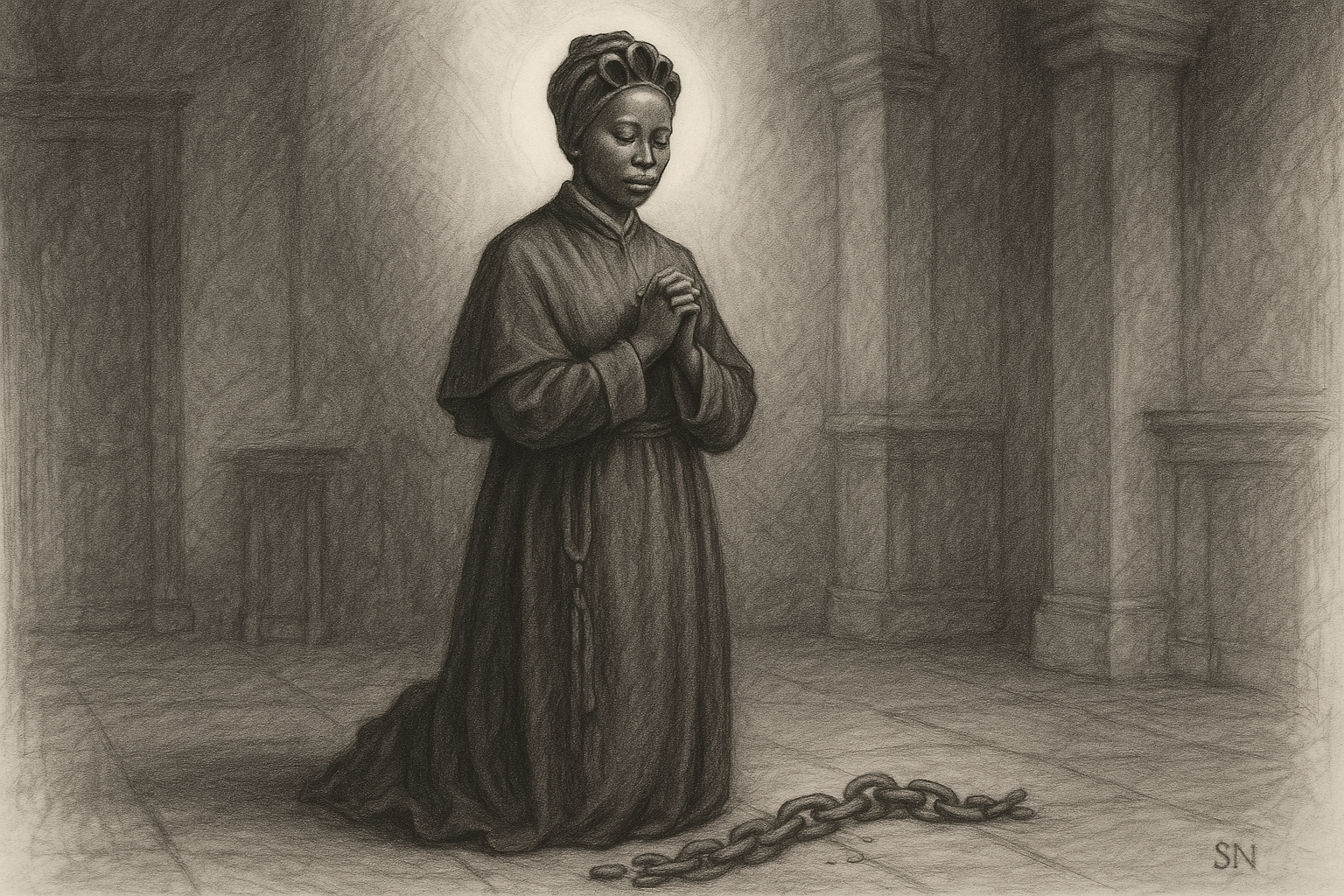
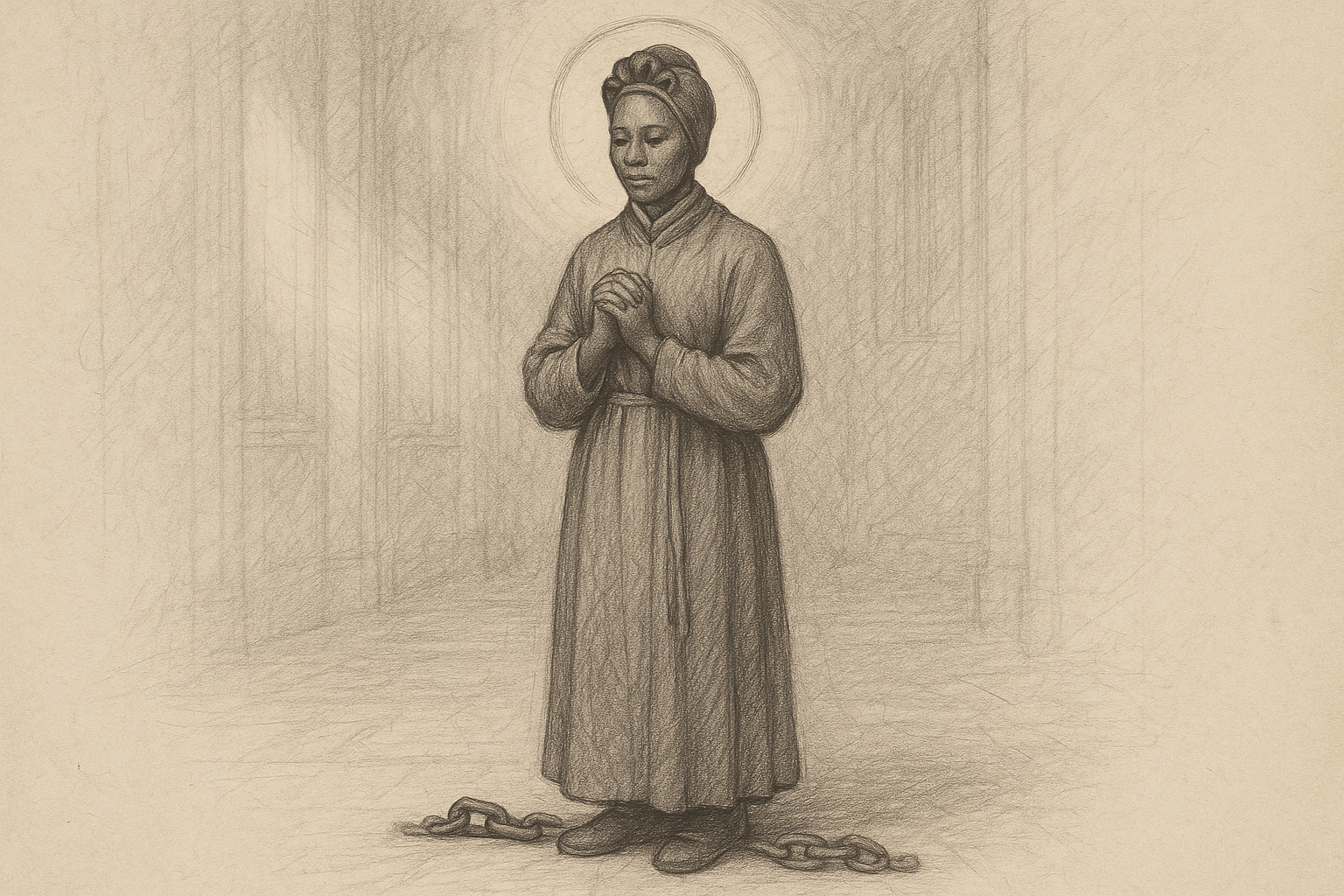
Bakhita was born around 1869 in the Darfur region of present-day Sudan. As a child, she was kidnapped and sold into slavery. Her early years were marked by repeated transfers from one master to another, physical suffering, and profound humiliation. Even her name, Bakhita, meaning fortunate or lucky, was given in a context of captivity that mocked the word itself. Yet the Church remembers her not simply because she suffered, but because Christ met her there and changed the meaning of her life from the inside.
Her story became known more widely through the witness of the Church in Italy, where she eventually lived, was baptized, and entered religious life with the Canossian Sisters. In 2000, St. John Paul II canonized her, presenting her as a daughter of Africa and a witness of hope for the whole Church. Her canonization was not a sentimental act. It was a recognition that the grace of God can raise up a saint from the ruins of human cruelty.
A life marked by suffering, then by grace
It is important to face Bakhita's early life honestly. Christian devotion should never soften the reality of evil. Slavery is a sin against human dignity, and the violence done to children leaves deep wounds. Bakhita endured suffering that cannot be made small by pious language. If we rush too quickly to the happy ending, we miss the force of the Gospel in her life.
And yet her story does not remain trapped in tragedy. After years in captivity, she eventually came into the care of an Italian family connected with the service of an embassy. In Italy, she encountered the Catholic faith more fully and came to know that she was not defined by the names and claims of her captors. She was loved by God. That discovery changed everything.
The Catechism teaches that man is created in the image of God and is meant for communion with Him. Bakhita's life is a hard and luminous witness to that truth. Human beings can be treated as property by others, but before God they remain persons. That is not a slogan. It is a reality paid for by Christ's own suffering, death, and resurrection. In Bakhita's life, the healing power of that reality began to become visible.
Those words from the Gospel of John illuminate her witness. Bakhita's freedom was not merely the removal of chains, though that mattered deeply. Her freedom came from belonging to Christ. It was spiritual before it was anything else, and because it was spiritual, it could not be taken away by force.
What her conversion reveals about the heart of the Church
St. Josephine Bakhita is often remembered for her gentleness, but gentleness should not be confused with passivity. Her sanctity included courage, perseverance, and a refusal to let hatred have the last word. When she came to know the Catholic faith, she wanted baptism, and later she wanted to give her life entirely to God. That response is deeply Catholic. Grace does not erase nature. It heals it, strengthens it, and gives it a new direction.
Her conversion also reminds Catholics that the Church is not a club for the polished. The Church is a home for the redeemed. Christ does not wait for the wounded to become flawless before calling them. He calls them in their wounds and begins his work there. In Bakhita's case, that meant a long interior movement from fear to trust, from possession by others to belonging to God.
She reportedly came to speak of the Lord with deep gratitude, even through memories that had every human reason to harden her heart. That is one reason her witness is so compelling. She does not teach us that suffering is good. She teaches us that God is good, and that His goodness can reach into places where human goodness failed entirely.
There is also an important lesson here about memory. Christian hope does not require denial. Bakhita's past remained part of her story. The saints do not become holy by forgetting. They become holy by letting God redeem what cannot be undone. This is a mercy many Catholics need to hear. Some carry childhood trauma, betrayal, poverty, family fracture, war, or shame. Bakhita does not offer a tidy answer, but she does offer a true one: Christ can make a home in the soul even after human life has been shattered.
Why her witness still speaks so clearly
Modern Catholics often hear the name of freedom used in political or personal terms. Those dimensions matter, but Bakhita points to a deeper liberty. She shows that a person can be outwardly constrained and inwardly free. She also shows that worldly success is not the measure of a fruitful life. Her holiness was not built on influence, visibility, or power. It was built on fidelity.
That is why her witness still matters in ordinary Catholic life. A mother trying to forgive, a father trying to remain faithful, a young person fighting despair, an elderly person carrying loneliness, a convert learning the faith slowly, a parishioner struggling with old wounds, all can find something in Bakhita's example. She does not tell us to minimize pain. She tells us to bring it to Christ and allow Him to define the final word.
Her story also puts sharp pressure on any Christian complacency about human dignity. Catholics cannot venerate St. Josephine Bakhita honestly while ignoring the dignity of the poor, the migrant, the trafficked, the abused, or the forgotten. The saint's life is not only inspiring. It is morally demanding. To honor her means to ask whether our words and actions protect the vulnerable or leave them exposed.
In that sense, she is not only a witness of hope but also a witness of conscience. She reminds the Church that the Gospel is not abstract. The same Lord who frees the soul also commands us to recognize the face of Christ in those who suffer.
Hope that does not depend on perfect circumstances
Hope is often misunderstood as optimism, but Christian hope is sturdier than optimism. Optimism expects things to improve. Hope clings to God even when improvement is slow or invisible. St. Josephine Bakhita lived that kind of hope. She did not build her peace on the assumption that the world would become fair. She built it on the presence of Christ.
This is one of the deepest reasons her witness remains so compelling. Many believers wait for life to become manageable before they think holiness is possible. Bakhita reverses that logic. Holiness is possible precisely because Christ is present in the midst of what is unmanageable. Prayer, the sacraments, fidelity, and mercy are not rewards for those who already have life under control. They are the means by which God leads His people through what they cannot control.
The Psalms give voice to this kind of trust. The Lord is my light and my salvation; whom shall I fear? is not the cry of a person untouched by danger. It is the cry of someone who knows where light comes from. Bakhita's life echoes that same confidence. The darkness was real, but it was not ultimate.
There is also a special tenderness in the way she loved the Lord. Catholic devotion has always recognized that saints often reveal Christ through their own particular temperament and history. Bakhita's holiness was marked by humility, gratitude, and peace. She became a living proof that sanctity is not uniform. The Lord writes straight with many kinds of lives.
A saint for people who feel trapped
Many Catholics know what it is to feel trapped, even if not in the same way Bakhita was trapped physically. Addiction can trap. Anxiety can trap. A difficult family history can trap. A bitter memory can trap. Sin can trap. The enemy of our souls loves to tell us that the door is closed and the future is fixed.
St. Josephine Bakhita answers that lie with the quiet authority of a life surrendered to Christ. She does not say that escape is easy. She says that God is faithful. That is enough to begin again. For some readers, the most important thing to notice about her is not what she escaped, but whom she trusted after she was freed. Many people long for change, but fewer long for God Himself. Bakhita invites us to desire both freedom and communion, and to see that the second is the greater gift.
Her witness also helps Catholics understand suffering without romanticizing it. The Church does not praise abuse. It praises the God who brings life from death. That distinction matters. We do not need to pretend that suffering is sacred in itself. We need to believe that Christ can sanctify those who suffer, strengthen them in perseverance, and draw them into deeper union with Him.
When Catholics pray to St. Josephine Bakhita, they are not asking for a magic formula. They are asking for the grace to trust Christ in the places where trust has become difficult. They are asking for the courage to affirm human dignity where it has been denied. They are asking for the hope that comes from knowing the Lord can redeem even the most painful story and make it bear fruit for others.
That is why her witness remains so fresh. She speaks to the Church not as a distant icon on a stained-glass window, but as a sister who has walked through deep darkness and found that Christ was already there, waiting with mercy. In a world still marked by exploitation, fear, and spiritual fatigue, her life continues to say that the soul belongs to God, and in Him alone is freedom made whole.
Keep Reading on Lets Read The Bible
Frequently Asked Questions
Who was St. Josephine Bakhita in Catholic history?
St. Josephine Bakhita was a Sudanese woman who was enslaved as a child, later came to the Catholic faith in Italy, entered religious life, and was canonized by St. John Paul II in 2000. Her life is remembered as a witness to the dignity of the human person and the freedom Christ gives.
Why is St. Josephine Bakhita important for Catholics today?
She speaks powerfully to Catholics who face trauma, fear, injustice, or despair. Her witness shows that holiness can grow out of suffering and that Christian hope rests on Christ, not on easy circumstances.
What is a good prayer intention when asking for St. Josephine Bakhita's intercession?
Many Catholics ask her intercession for healing from trauma, protection from human trafficking, courage in suffering, and the grace to forgive without denying the reality of evil.