Saints and Witnesses
St. Josephine Bakhita and the Quiet Triumph of Hope
From captivity to consecrated life, her story shows how grace can heal what cruelty tries to erase.
Site Admin | May 30, 2026 | 96 views
St. Josephine Bakhita life is one of the most moving saint stories in the modern Church. It is not moving because it is pleasant or easy to read. It is moving because it passes through real suffering and still ends in peace, freedom, and radiant faith. Her witness reminds Catholics that God does not abandon the wounded, and that even the deepest scars can become places where grace is revealed.
From violence to captivity
Josephine Bakhita was born around 1869 in Darfur, in what is now Sudan. As a young girl, she was taken from her family by slave traders. The trauma was so severe that she would later struggle even to remember the name given to her at birth. The name Bakhita, which means fortunate or lucky, was imposed on her after her kidnapping, though the circumstances of her life at that point were anything but fortunate.
She was sold multiple times and endured harsh treatment. Her suffering was not abstract or distant. It was personal, bodily, and lasting. Yet the Church remembers her not only because she suffered, but because she met suffering without surrendering her soul to hatred. That did not happen all at once. It was the fruit of years, and of grace at work in hidden ways.
The turning point of baptism
Josephine eventually came into the household of an Italian family connected with the consular service in Sudan. When the family later returned to Italy, she traveled with them and came into contact with Christian faith in a new and decisive way. In Italy, she encountered the Canossian Sisters, who treated her with dignity and compassion. Their witness opened a door she had never known was there.
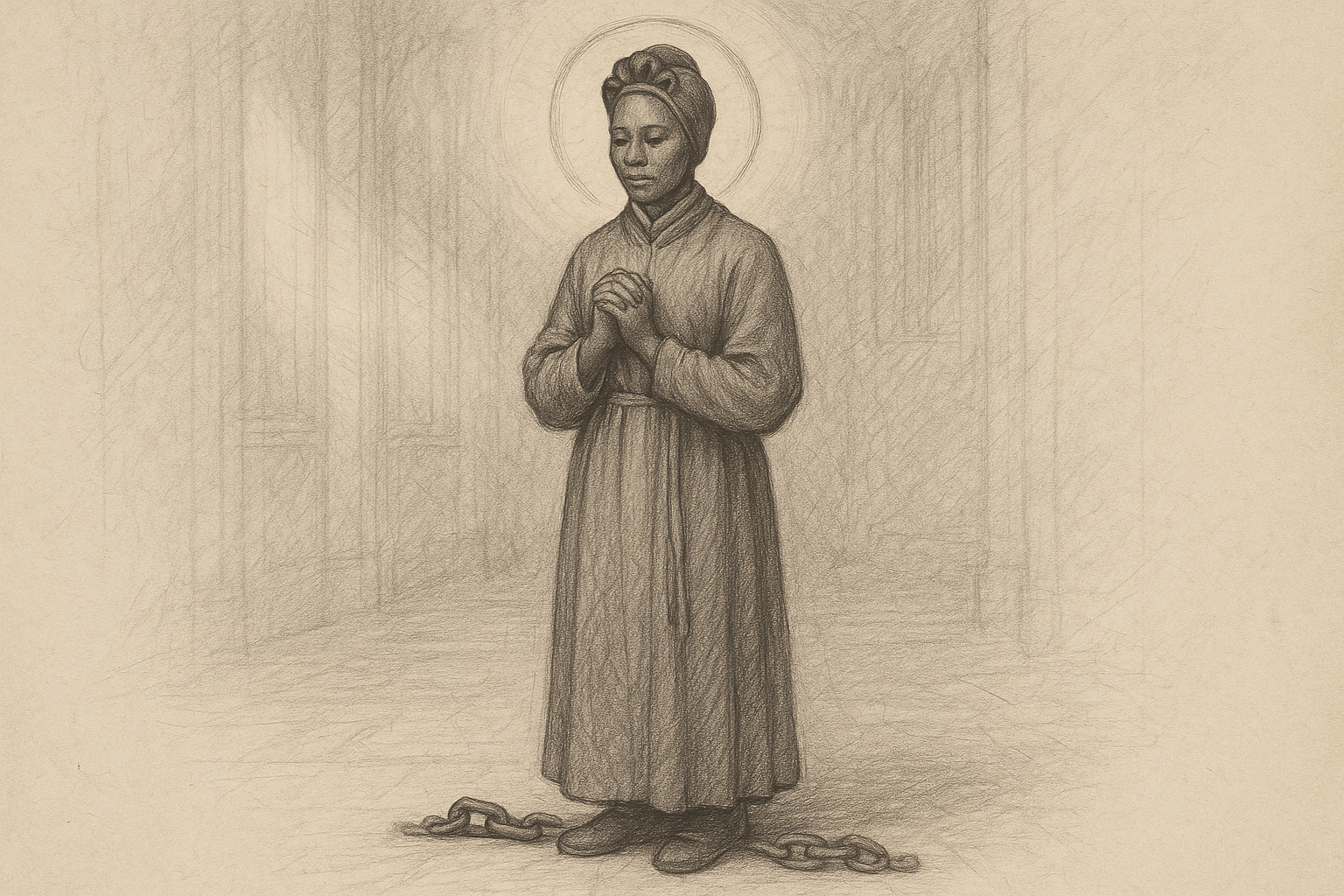
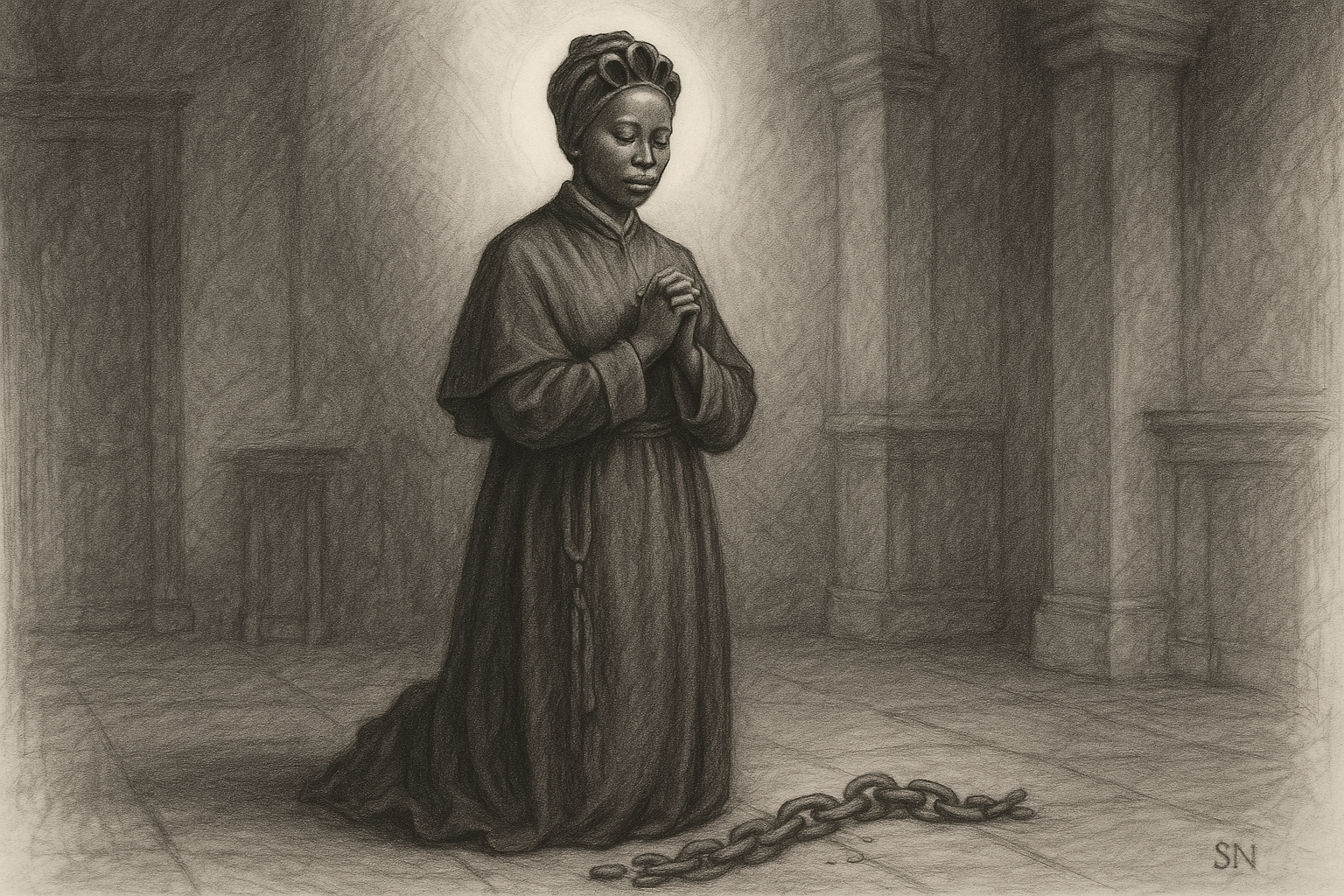
When Josephine learned the truth of the Gospel, she embraced it with a profound personal yes. She asked for baptism and received the name Josephine. This was not merely a change of label. It was a new belonging. In baptism she found not a human master, but a Father. She found not possession, but sonship and daughterhood in Christ. For a woman who had been treated as property, this was a revolutionary gift.
That freedom did not erase her past, but it gave her a new center. Her life became marked by gratitude, prayer, and a quiet steadiness that others noticed. She had every reason to be bitter. Instead, she became gentle. She had every reason to turn inward. Instead, she became open to God and to those around her.
A vocation shaped by mercy
Josephine entered religious life with the Canossian Sisters in Venice and was eventually professed as a sister. She spent many years serving in ordinary but important ways: at the door, in the kitchen, in caring for people who came to the house. These tasks may seem small, but holiness often grows in such hidden places. In them, she lived the obedience, humility, and charity that make religious life fruitful.
Her sisters remembered her as peaceful and dependable. She also became known for her reverence and for a deep affection toward those who suffered. Having known fear and degradation, she treated others with unusual tenderness. She did not become saintly by forgetting pain. She became saintly by allowing God to redeem it.
There is something striking here for Catholics today. We often look for holiness in dramatic moments, yet St. Josephine Bakhita life shows that fidelity in the hidden duties of each day can be a real path to sanctity. The saint is not always the one who is seen. Often, the saint is the one who serves quietly and trusts God deeply.
How grace worked through memory and healing
One of the most powerful aspects of her witness is the way she lived with memory. She did not deny what happened to her. The wounds of slavery remained part of her story. But she also refused to let those wounds define the whole truth about her. Her life suggests a sober and Catholic understanding of healing. Grace does not always remove the memory of evil immediately. Sometimes grace gives a person the strength to carry memory without despair.
That matters because many people today carry forms of suffering that are not easily seen. Family wounds, abuse, fear, shame, loss, or long grief can weigh heavily. St. Josephine Bakhita does not offer a sentimental answer. She offers a believable one. In Christ, the wounded can become witnesses. The past is not denied, but it is no longer sovereign.
The Lord is near to the brokenhearted, and saves the crushed in spirit.
Her witness also guards Catholics against a shallow view of forgiveness. Forgiveness is not pretending evil was small. It is placing evil under the judgment and mercy of God. Josephine did not celebrate what was done to her. Instead, she lived as one who had been loved by God more deeply than she had been hurt by men.
The Church's remembrance of her witness
St. Josephine Bakhita died in 1947 in Italy. The Church later recognized what many had already seen in her quiet holiness, and she was canonized in 2000. Her feast day is observed on February 8. She is especially associated with prayers for victims of trafficking and for all who are denied freedom and dignity.
Her example has particular force in a world where exploitation still exists. The forms may differ, but the moral reality remains grave. People are still bought, sold, manipulated, abused, and trapped. Catholics should not read her story as only a saint's biography. We should read it as a call to mercy, prayer, vigilance, and action on behalf of the vulnerable.
At the same time, her life is not reduced to activism. She is a saint first. She points us to Christ, not to herself. Her beauty lies in the fact that she became transparent to grace. She lived not by resentment, but by prayer. Not by self-protection alone, but by trust. Not by the memory of what men took from her, but by the gift God gave her in Christ.
What Catholics can learn from her life
Several lessons rise naturally from St. Josephine Bakhita life.
- Human dignity is never lost. Even when others treat a person as disposable, God sees his image in that person.
- Grace can enter the deepest wounds. No pain is beyond God's care, even when healing is slow.
- Hidden service matters. Simple tasks done with love can be a true offering to God.
- Freedom in Christ is real. Baptism is not symbolic only. It changes the deepest identity of a person.
- Forgiveness is not weakness. It is a strong act of trust in God's justice and mercy.
These lessons are especially relevant for Catholics trying to live faithfully in an anxious age. Many people struggle with the temptation to define themselves by what was done to them, or by what they fear may happen next. Josephine Bakhita answers that temptation with calm confidence. She teaches that a person can be deeply marked by suffering and still belong to peace.
Her witness for prayer and daily life
It is worth pausing over the fact that St. Josephine Bakhita was not famous for teaching, writing, or public influence. Her sanctity was more ordinary than that, and therefore more accessible. She prayed. She served. She endured. She belonged to Christ. That is already enough to challenge many of our assumptions about what a fruitful Catholic life must look like.
For parents, her life offers a reminder that children need not only instruction but also examples of patient faith. For those who suffer, she is a companion who understands what captivity can feel like, whether literal or interior. For the Church, she stands as a witness that God's mercy reaches into history's darkest corners and does not come away empty-handed.
Her story is also a good place to begin a prayerful examination of conscience. Do we honor the dignity of others in the way we speak and act? Do we notice the hidden suffering around us? Do we believe that Christ can heal what seems permanently broken? St. Josephine Bakhita life invites these questions without accusation, but with seriousness.
The Lord has sent me to bind up the brokenhearted, to proclaim liberty to the captives.
Her sanctity is not a tale of escape from reality. It is a tale of reality met by grace. She knew fear. She knew loss. She knew what it meant to have life taken out of her hands. Yet she came to know something greater: that in Christ, her life was given back to her, and not only given back, but transformed. That is why her memory remains a source of hope for the Church today.
Keep Reading on Lets Read The Bible
Frequently Asked Questions
Who was St. Josephine Bakhita?
St. Josephine Bakhita was a Sudanese-born woman who was enslaved as a child, later lived in Italy, entered the Catholic Church, and became a Canossian sister. She is remembered for her holiness, humility, and witness to freedom in Christ.
What makes St. Josephine Bakhita important for Catholics today?
Her life speaks powerfully to anyone who has suffered abuse, loss, or exploitation. She shows that God can bring dignity, healing, and hope out of deep wounds, and she reminds Catholics to defend the vulnerable.
What is St. Josephine Bakhita the patron saint of?
She is especially invoked for victims of human trafficking, slavery, and other forms of exploitation. Her witness also encourages prayer for all who long for freedom and healing.