Doctrine and Questions
Three Persons, One God: A Clear Catholic Account of the Trinity
The Church does not claim to solve the mystery of God, but to confess it faithfully and live from it with trust.
Site Admin | June 2, 2026 | 105 views
The heart of Catholic faith
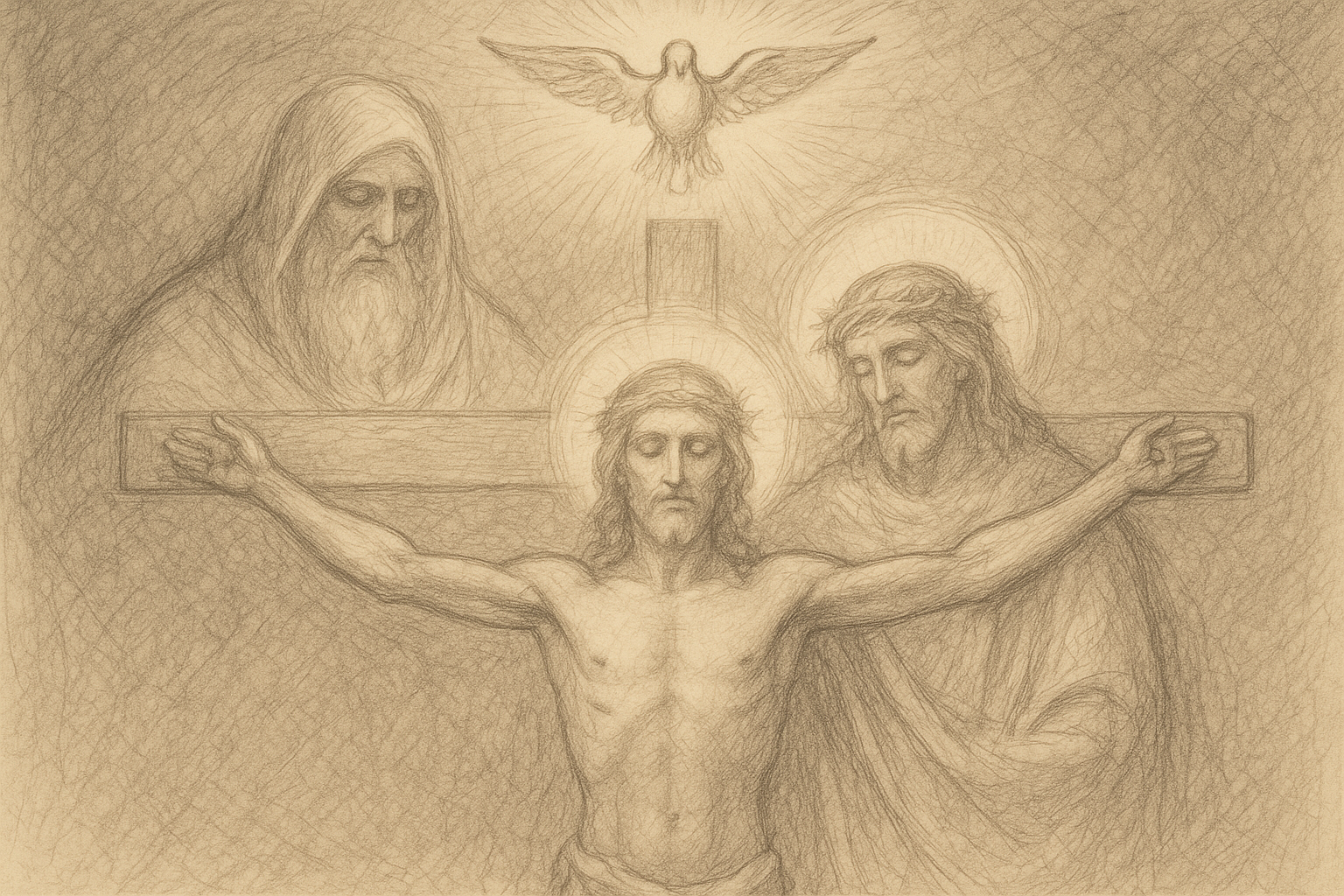
When Catholics speak of the Trinity, we are not talking about a theory added to the faith later, as if it were an optional piece of doctrine. We are speaking about the living God Himself: Father, Son, and Holy Spirit, one divine nature, three divine Persons. The Church teaches this not because human reason could arrive there on its own, but because God has revealed Himself that way. The Trinity is not a decorative idea. It is the center of Christian belief, worship, and prayer.
For many people, the Trinity explained in simple terms can still feel mysterious. That is because the doctrine names a truth beyond what the mind can fully contain. Yet mystery in the Catholic sense does not mean confusion. It means a reality so rich that we never exhaust it. We do not invent God from our imagination. We receive what He has made known.
At the most basic level, Catholics confess that there is one God, not three gods. The Father is God, the Son is God, and the Holy Spirit is God. Yet the Father is not the Son, the Son is not the Holy Spirit, and the Holy Spirit is not the Father. This is not a contradiction, because the Church is not saying there are three separate divine beings. She is saying there is one divine Being who exists eternally as three Persons.
How Scripture reveals the Trinity
The Bible does not present a single paragraph that lays out the doctrine in technical language. Instead, the revelation unfolds across salvation history. The Old Testament insists on the oneness of God with clarity and force, as in the great confession of Israel: Hear, O Israel: The Lord is our God, the Lord alone. That truth remains fully intact in the New Covenant.
At the same time, the New Testament reveals distinctions within the one divine life. At the Baptism of Jesus, the Son stands in the Jordan, the Father speaks from heaven, and the Holy Spirit descends like a dove: the Spirit of God descending like a dove and This is my beloved Son, with whom I am well pleased. Here the three are manifest together, not as a poetic image but as a real revelation.
Jesus also speaks of the Father and the Spirit in ways that go beyond any merely human prophet. He promises to send the Holy Spirit from the Father: the Spirit of truth who proceeds from the Father, and He commissions the apostles to baptize in the name of the Father, and of the Son, and of the Holy Spirit. Notice that the word is name, singular, not names. The Church has always heard in that command a concise expression of Trinitarian faith.
St. Paul also blesses the Church in Trinitarian language: The grace of the Lord Jesus Christ and the love of God and the fellowship of the Holy Spirit be with all of you. This is not a later theological overlay. It reflects the prayer life of the first Christians, who encountered God as Father, Son, and Holy Spirit.
What the Church means by one nature and three Persons
Catholic teaching uses careful language because sloppy language easily leads to error. When the Church says one nature, she means one divine essence, one being, one Godhead. When she says three Persons, she means three real, distinct relations in God, not three masks, roles, or temporary appearances.
This matters because the Trinity is not modalism, the idea that God is sometimes Father, sometimes Son, sometimes Spirit, as though He were one Person changing costumes. Nor is it tritheism, the idea that Father, Son, and Spirit are three separate gods cooperating side by side. Catholic faith rejects both errors. The Trinity is communion without division and distinction without separation.
Human language reaches its limit here, so the Church often uses analogies with caution. Water can be ice, liquid, or vapor, but those are not three persons. The sun gives light and heat, but that does not describe three divine Persons either. Analogies can point, but they can also mislead if taken too far. Better to let Scripture and the Church's teaching guide our speech than to force God into a tidy comparison.
The safest way to speak is to repeat what the Church already confesses: the Father is God, the Son is God, and the Holy Spirit is God. The Father is not the Son, the Son is not the Spirit, and the Spirit is not the Father. Yet there is only one God. That is the Christian confession.
The Trinity in the life of Christ
The Son reveals the Father because He comes from the Father and shares the Father's divine life. Jesus says, Whoever has seen me has seen the Father. He is not saying that the Father and the Son are the same Person. He is saying that the Son makes the Father known perfectly because He is eternally united to Him in divinity.
Christ's own mission makes the doctrine concrete. He is sent by the Father, conceived by the Holy Spirit, born of the Virgin Mary, preached to the poor, crucified, risen, and ascended. In all of this, the Trinity is not an abstract formula but the shape of salvation itself. The Father sends the Son in love. The Son offers Himself in obedience. The Holy Spirit raises Jesus from the dead and applies the fruits of redemption to the Church.
That means the Trinity is not only something Catholics believe about God. It is the way God has chosen to save us. We are baptized into this divine life. We are forgiven by this divine mercy. We are sanctified by this divine presence. Grace is not merely a spiritual boost. It is participation in the life of the Triune God.
Why this doctrine matters in ordinary Catholic life
At first glance, the Trinity might seem remote from daily concerns such as work, family, anxiety, suffering, or the struggle to pray. But in truth, the doctrine reaches into all of them. If God is eternally communion, then love is not an afterthought in the universe. Love belongs to the very being of God. That gives human love its dignity and its purpose.
For a Catholic home, this means that self-gift is not weakness. It reflects God. For marriage, it means fidelity is not merely a moral rule but an image of covenant love. For parenting, it means authority and tenderness need not oppose one another. For friendship, it means we are made not for isolation but for communion.
The Trinity also shapes prayer. When we pray to the Father through the Son in the Holy Spirit, we are entering the very pattern of Christian life. We do not pray to an impersonal force. We address the Father who knows us, through the Son who redeems us, in the Spirit who dwells within us. The Sign of the Cross is therefore not a throwaway gesture. It is a confession on the body itself.
Even suffering looks different in Trinitarian light. The Father does not stand far off from human pain. The Son enters it. The Spirit sustains the Church through it. Catholics do not claim to explain every sorrow, but we do believe that God has entered the depths of human suffering and brings from it the hope of resurrection.
How Catholics should speak of the mystery
Because the Trinity is holy ground, Catholics should speak with both confidence and humility. Confidence, because the Church truly knows what God has revealed. Humility, because no created mind can master the infinite God. We should avoid casual jokes, overly clever analogies, and attempts to reduce the doctrine to a neat diagram. The mystery deserves reverence.
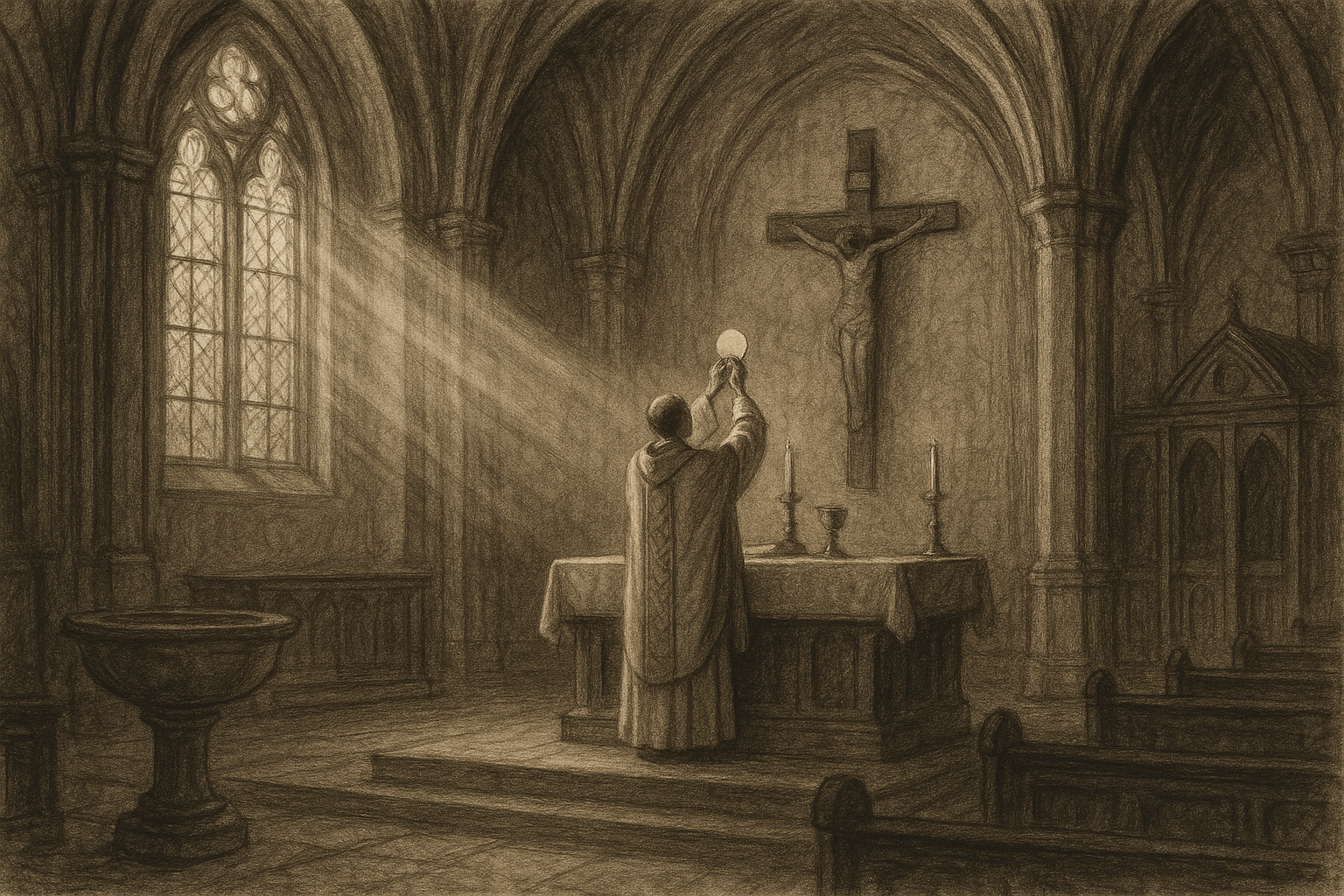
A healthy Catholic approach begins with adoration. Before trying to explain, we kneel. Before trying to analyze, we pray. The doctrine is not only to be understood as far as possible. It is to be lived. The Church's worship is deeply Trinitarian for this reason. Every Mass is offered to the Father, through the Son, in the Holy Spirit. The entire liturgical life of the Church is shaped by that movement.
When Catholics memorize the Creed, we are not reciting an old text mechanically. We are placing our minds and hearts inside the Church's living memory. in the name of the Father, and of the Son, and of the Holy Spirit is not merely formulaic language. It is the baptismal doorway into Christian identity.
And when we say, at the end of prayer,
Keep Reading on Lets Read The Bible
Frequently Asked Questions
What is the Trinity in simple Catholic terms?
The Trinity is the one true God who exists eternally as three distinct Persons: Father, Son, and Holy Spirit. Catholics do not believe in three gods, but in one divine nature shared fully by the three Persons.
Where is the Trinity found in the Bible?
The Bible reveals the Trinity across many passages. A key moment is Jesus' baptism in Matthew 3, where the Father speaks, the Son is baptized, and the Holy Spirit descends. Jesus also commands baptism in the singular name of the Father, Son, and Holy Spirit in Matthew 28:19.
Why does the Trinity matter for Catholic prayer?
Because Christians pray to the Father, through the Son, in the Holy Spirit. The Trinity shapes how Catholics worship, how they make the Sign of the Cross, and how they understand grace, salvation, and communion with God.