Doctrine and Questions
Seven Signs, One Lord: A Clear Look at the Church's Sacraments
How the seven sacraments reveal Christ's saving work and bring His grace into ordinary human life
Site Admin | July 7, 2026 | 115 views
The seven sacraments hold a central place in the life of the Church because they are not human inventions added later to make religion more solemn. They belong to the very way Christ continues His saving work among His people. In Catholic teaching, the sacraments are visible signs instituted by Christ and entrusted to the Church, through which divine life is given to us. They speak to body and soul at once, because God made us as whole persons and chose to meet us in ways we can see, hear, touch, and receive.
That simple truth already corrects one common misunderstanding. Catholics do not treat the sacraments as magic rituals, as if the words themselves worked automatically without faith, conversion, or the action of God. Nor do Catholics see them as empty symbols that merely remind us of something absent. The Church believes they are effective signs of grace because Christ is the one acting through them. The sacraments do what they signify precisely because the Lord remains present and active in His Church.
Christ as the source of the sacraments
The sacraments make sense only when seen in relation to Jesus Christ. He did not come merely to teach moral lessons or offer a spiritual example. He came to save. In the Gospels, His saving work is not abstract. He heals with a touch, forgives sins with authority, blesses children, shares meals, washes feet, and rises from the dead in a glorified body. The Catholic understanding of the sacraments grows naturally from that pattern. Christ continues to act through material signs because His redemption is meant to reach the whole human person.
At the Last Supper, Jesus gave the Church the Eucharist and linked it with sacrifice and remembrance: This is my body, which is given for you. After the Resurrection, He sent the apostles to continue His mission, saying, As the Father has sent me, even so I send you. He also gave them authority to forgive sins: If you forgive the sins of any, they are forgiven. These are not peripheral details. They point to a Church in which Christ's own ministry is extended through sacramental action.
Scripture also shows that salvation is not merely inward or invisible. God uses signs. He used water in the flood and in the crossing of the sea. He used oil to set apart kings and priests. He used bread from heaven to feed Israel. In the New Testament, Jesus takes up this pattern and gives it a fuller meaning. The Church did not invent the sacramental life by borrowing religious symbols from surrounding cultures. She received it from the Lord who works through creation to bring about grace.
The seven sacraments and what each one gives
Catholic teaching groups the sacraments into three broad movements of Christian life: initiation, healing, and service. That is a helpful way to remember them, but the sacraments are more than a sequence of rites. They mark the stages by which Christ draws a person into communion with Himself and strengthens that communion over a lifetime.
Baptism
Baptism is the doorway into Christian life. Through water and the Trinitarian name, a person is cleansed from sin, reborn, and incorporated into Christ and His Church. Jesus speaks plainly about this new birth in His conversation with Nicodemus: Unless one is born of water and the Spirit. After the Resurrection, He commands the apostles to baptize all nations: Baptizing them in the name of the Father and of the Son and of the Holy Spirit.
Baptism is not simply a public sign that someone has already made an interior decision. It is God's action first. It grants grace, removes sin, and begins the Christian life. This is why the Church baptizes infants as well as adults. The sacrament is a gift before it is a personal achievement.
Confirmation
Confirmation strengthens and seals the grace of Baptism. Through anointing with chrism and the laying on of hands, the Holy Spirit deepens the baptized person's bond with Christ and equips the faithful for witness. In Acts, the apostles lay hands on believers so that they may receive the Holy Spirit: Then they laid their hands on them and they received the Holy Spirit. This shows the Church's early sacramental pattern of apostolic prayer and blessing.
Confirmation is not a graduation from faith, as if a young Catholic were finishing religious training. It is a strengthening for mission. The Spirit who came upon the apostles at Pentecost continues to empower the baptized to live and speak as disciples.
The Eucharist
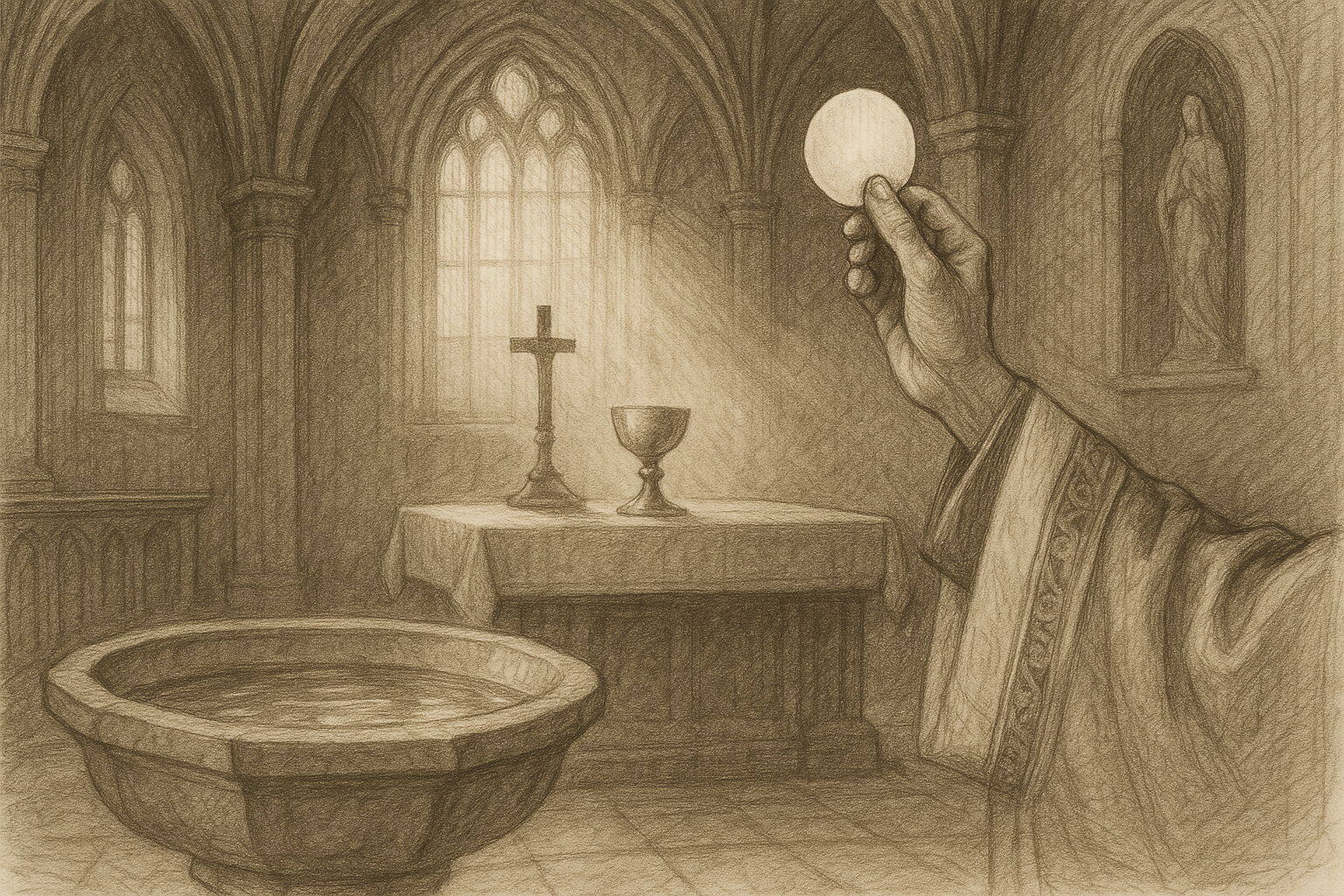
The Eucharist stands at the heart of Catholic life because it is the sacrament in which Christ gives us His true Body and Blood under the appearances of bread and wine. At the institution of the sacrament, Jesus did not say only that the bread represented Him. He said, This is my body, which is given for you, and St. Paul teaches that the cup and the bread are a real participation in Christ's sacrifice and life: The cup of blessing that we bless, is it not a participation in the blood of Christ.
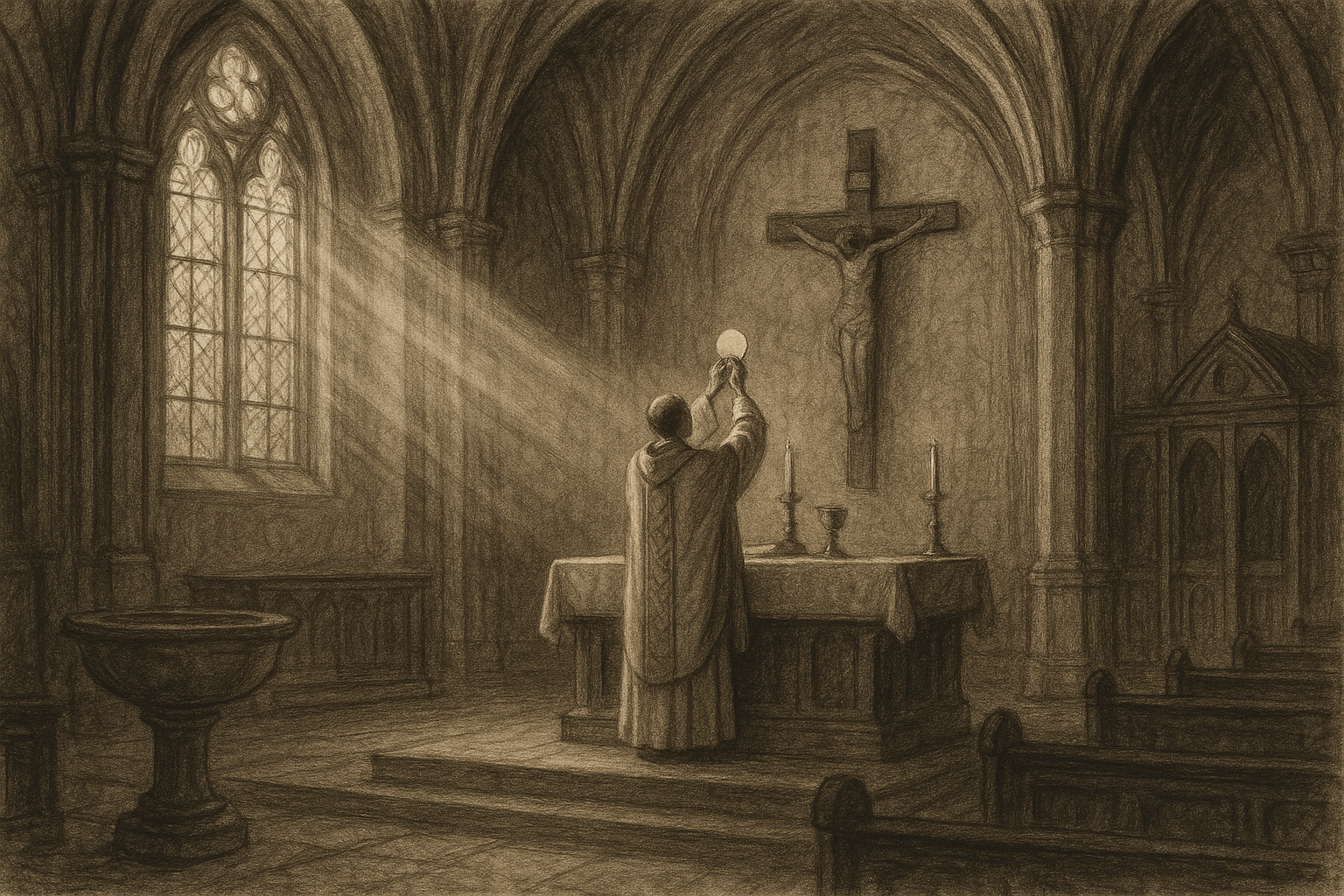
The Eucharist is both sacrifice and banquet. It makes present sacramentally the one sacrifice of Christ on Calvary and feeds the faithful with His risen life. That is why Catholics approach the altar with reverence, fasting, confession when needed, and thanksgiving. The Eucharist is not merely a symbol of Christian togetherness. It is Christ Himself given to His Church as food for the journey.
Penance and Reconciliation
Christ gave the Church the sacrament of Penance so that sins committed after Baptism would not leave the Christian abandoned. The risen Lord breathed on the apostles and said, If you forgive the sins of any, they are forgiven them. This is one of the clearest biblical foundations for sacramental confession.
In confession, the faithful name their sins honestly, express contrition, receive absolution from a priest, and are reconciled with God and the Church. This is not humiliation for its own sake. It is healing. Sin damages communion, and Christ restores what sin has wounded. Catholics should see confession less as a courtroom they dread and more as a hospital where the soul is treated with mercy and truth.
Anointing of the Sick
The Anointing of the Sick brings Christ's comfort, strength, and healing presence to those who are seriously ill, weakened by age, or facing surgery or grave infirmity. The Letter of James gives a clear witness: Let them pray over him, anointing him with oil in the name of the Lord. The sacrament joins prayer, oil, and the Church's intercession to the suffering member of Christ's Body.
It is a mistake to think this sacrament is only for someone in the final hours of life. It can be received whenever serious illness or serious frailty calls for special grace. Sometimes God grants physical healing; always He gives spiritual strength, forgiveness of sins when needed, and peace in suffering. The sacrament reminds the sick that they are not forgotten and that suffering, united to Christ, can bear fruit in charity and hope.
Holy Orders
Holy Orders configures men to Christ the Head and Shepherd so that they may serve the Church as deacons, priests, and bishops according to their proper roles. The apostolic Church already recognizes an ordained ministry through the laying on of hands. St. Paul reminds Timothy of the gift he received by that sacred act: I remind you to rekindle the gift of God that is within you through the laying on of my hands.
This sacrament does not make a man personally better than other Christians. It sets him apart for service. Bishops preserve apostolic teaching, priests preach, celebrate the Eucharist, and forgive sins in the name of Christ, while deacons assist in service and proclamation. Holy Orders exists for the building up of the whole Church.
Matrimony
Matrimony is the sacrament by which a baptized man and a baptized woman enter a covenant ordered to the good of the spouses and the generation and education of children. Jesus raises marriage to a new dignity when He teaches, What therefore God has joined together, let not man put asunder. St. Paul also sees marriage in relation to Christ and the Church, calling it a great mystery: This mystery is a profound one, and I am saying that it refers to Christ and the church.
Catholics do not believe matrimony is merely a legal arrangement blessed by religion. It is a covenant rooted in God''s own fidelity. In marriage, spouses are called to live a visible sign of faithful love, patience, sacrifice, and mutual gift. The sacrament strengthens that vocation with grace, because Christian marriage is demanding and holy.
Why matter, matter, and sign belong together
One reason the sacraments are so fitting is that human beings are bodily creatures. We speak with words, eat with mouths, kneel with knees, and remember through gestures. God knows this because He created us. Grace does not bypass nature as if matter were a problem to escape. Rather, God lifts up what He made and uses it to sanctify us.
This is deeply biblical. Water saves Noah's family as judgment passes over the earth. Oil consecrates. Bread sustains. Hands are laid on. Words are spoken aloud. In the Incarnation itself, the eternal Son assumes flesh. If God has taken on a human body in Christ, then it should not surprise us that He continues to work through bodily signs in the Church.
That also helps explain why the sacraments are not interchangeable. Each has its own matter, form, and grace. Baptism is not Eucharist. Confession is not Confirmation. Marriage is not Holy Orders. Christ gives distinct gifts because He knows the different needs of our pilgrimage. He brings us to new birth, seals us with the Spirit, feeds us, heals us, sends ministers, and blesses family life.
Common misunderstandings to avoid
Some people assume Catholics believe the sacraments save automatically, no matter what a person believes or how he lives. That is not the Church's teaching. Sacraments are real encounters with grace, but a fruitful reception normally requires faith, repentance, and a disposition open to God. The sacrament is a gift, not a mechanical process.
Others imagine that only the inward feeling matters and the external rite is secondary. But Jesus did not leave us with feelings alone. He gave a Church, apostles, a table, water, oil, bread, wine, and hands raised in prayer. External signs are not obstacles to grace. They are part of how grace is given.
Another misunderstanding is the claim that the sacraments compete with faith. In fact, they nourish faith. A Catholic does not come to Mass, confession, or baptismal remembrance because he trusts less in God. He comes because God has chosen to meet him there. The sacraments train the heart to receive what it cannot produce on its own.
Living from the sacraments
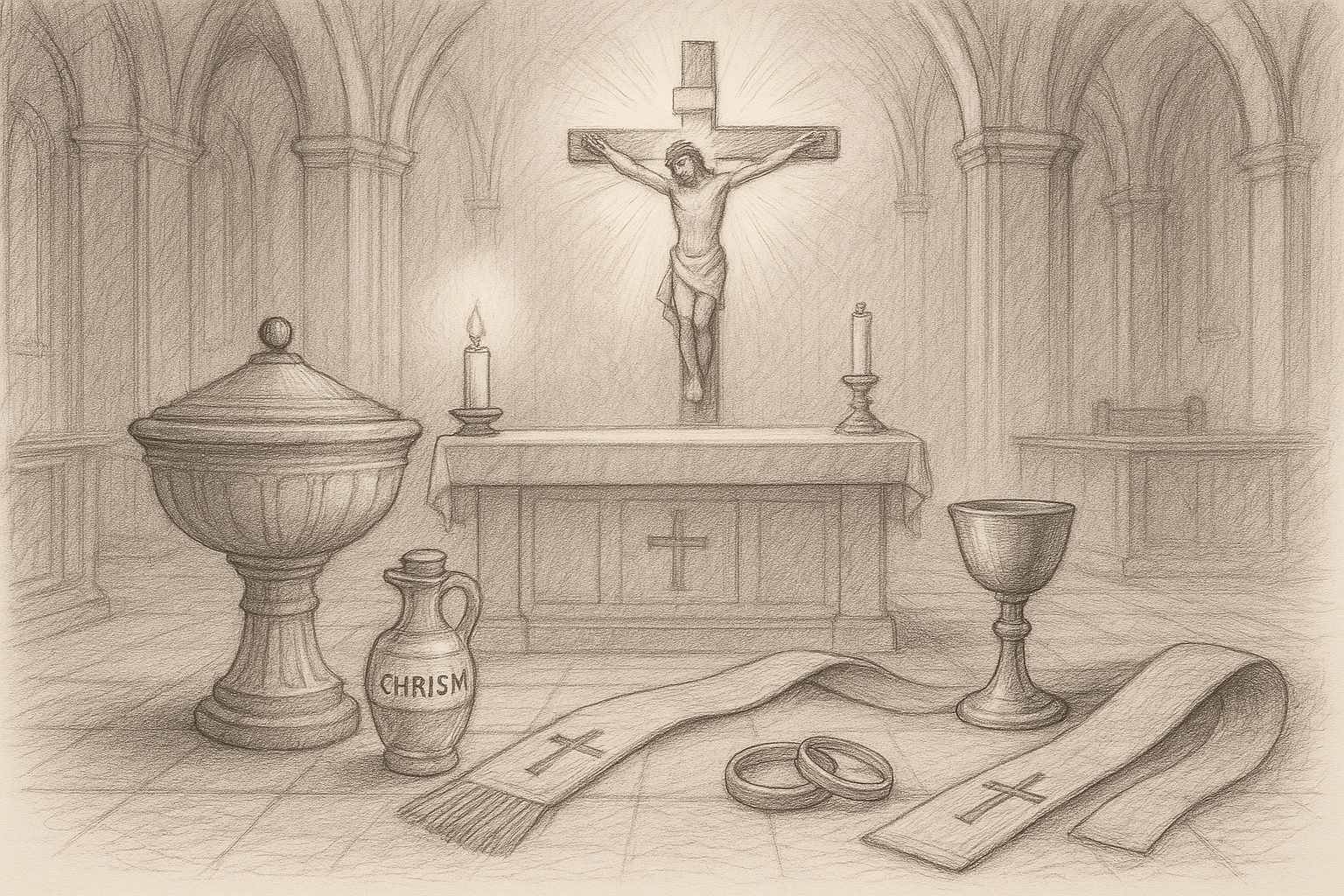
The seven sacraments Catholic teaching presents are not isolated religious events. They shape an entire life. Baptism gives the beginning. Confirmation strengthens the witness. The Eucharist feeds the soul. Penance restores what sin has broken. Anointing brings consolation in weakness. Holy Orders serves the Church's holiness. Matrimony sanctifies love and family life. Together they show that Christ does not remain at a distance from ordinary human existence. He enters it, redeems it, and fills it with grace.
For Catholics, the sacramental life is not about adding sacred moments to an otherwise ordinary life. It is about discovering that ordinary life can become the place where Christ acts most tenderly and most powerfully. Water, oil, bread, wine, hands, vows, and absolution are not small things when God chooses them. Through them, the risen Lord keeps drawing His people into communion with Himself, one grace at a time.
Keep Reading on Lets Read The Bible
Frequently Asked Questions
What are the seven sacraments in Catholic teaching?
They are Baptism, Confirmation, the Eucharist, Penance and Reconciliation, Anointing of the Sick, Holy Orders, and Matrimony.
Did Jesus really institute the sacraments?
Yes. Catholic teaching holds that Christ instituted the sacraments, either directly or through apostolic practice rooted in His authority and mission, and the Church preserves them faithfully.
Are the sacraments just symbols?
No. They are visible signs that truly convey grace because Christ acts through them. They are symbolic in the sense that signs matter, but they are not mere reminders.