Social Teaching
The Neighbor We Refuse to Reduce
Race, justice, and the daily Catholic vocation to recognize the image of God in every person
Site Admin | September 30, 2026 | 5 views
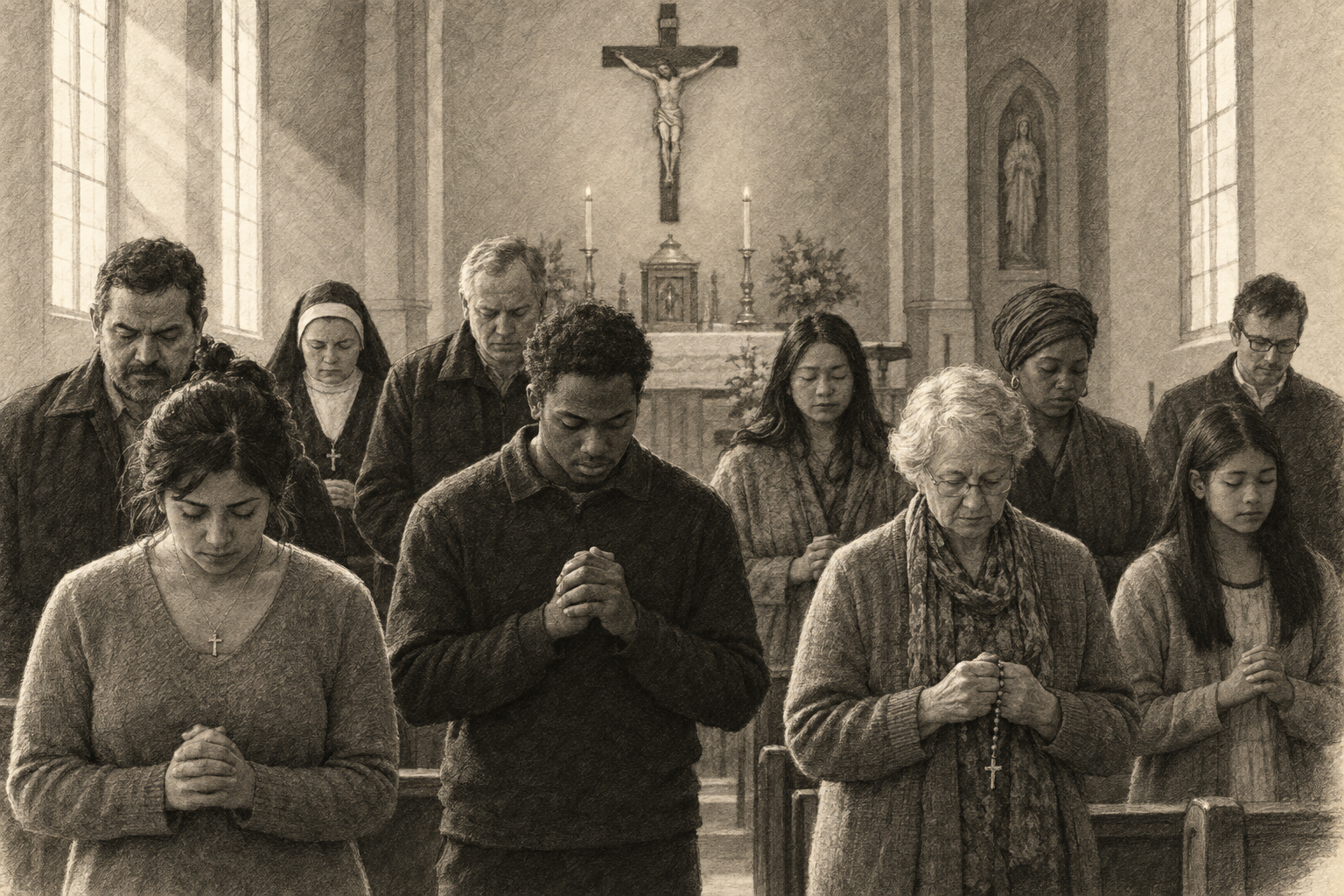
Racism is not only a subject for public debate. It is a question about how we see the human person, how we treat our neighbor, and whether our common life reflects the truth revealed by God. Any serious reflection on racism and human dignity and Catholic life must begin there.
The Church does not approach this subject by sorting people into rival camps or reducing them to political labels. She begins with creation, sin, redemption, and the commandment to love. Every person has been created by God and is called to communion with him. Every person is also wounded by sin and in need of grace. These truths prevent us from treating anyone as less than human, but they also prevent us from pretending that prejudice and injustice are unreal.
Catholics are called to face racism without hatred, defensiveness, or despair. We can speak honestly about sin while refusing to deny the possibility of repentance. We can work for justice without forgetting mercy. We can honor cultural and ethnic differences without turning them into measures of human worth.
Dignity comes before every human category
The first chapter of Genesis declares that the human person is made in the image of God: Genesis 1:27. This dignity is received, not earned. It does not depend on ancestry, appearance, nationality, wealth, intelligence, health, social standing, or usefulness. No government grants it, and no prejudice can erase it.
Human dignity is also more than an abstract idea. God did not create an anonymous mass. He created persons who have bodies, families, histories, languages, and communities. Catholic teaching does not require us to ignore these differences. It requires us to see them without using them as excuses for contempt or domination.
The Incarnation deepens this vision. The Son of God assumed a real human nature and entered a particular people and history. In Christ, human life is not treated as disposable material. It is taken up, loved, healed, and offered to the Father. When we demean another person, we offend both the Creator whose image that person bears and the Redeemer who came for the salvation of all.
The Christian answer to racism begins with a person, not a category: this neighbor is created by God, loved by Christ, and called to eternal life.
Racism is a wound against truth and communion
Racism can appear as an explicit belief that one racial group is superior to another. It can also appear through contemptuous speech, unfair treatment, habitual suspicion, exclusion, or indifference to unjust conditions. Not every disagreement, misunderstanding, or unequal outcome is necessarily an act of racism. Careful moral judgment requires attention to facts, intentions, actions, and circumstances. Yet this needed care must never become an excuse to dismiss real prejudice.
The Catechism of the Catholic Church teaches in no. 1935 that discrimination based on race, color, social condition, language, or religion must be overcome as incompatible with God's design. The Second Vatican Council likewise condemns discrimination that violates fundamental personal rights. This teaching rests on the equal dignity of persons, not on changing political fashion.
Racism opposes truth because it assigns moral or personal worth according to a racial classification. It opposes justice because it can deny people fair treatment and participation in the goods of society. It opposes charity because it refuses the neighborly love commanded by Christ. It also damages communion by training people to regard one another first with fear, resentment, or suspicion.
For Christians, the answer cannot be a different form of racial hostility. One prejudice is not healed by reversing its direction. No person should be treated as personally guilty merely because of ancestry or skin color. Moral responsibility belongs to persons and must be judged truthfully. At the same time, people may inherit customs, habits, or social arrangements that require honest examination and reform.
Personal sin and social consequences
Catholic moral teaching recognizes that sin is personal, but personal sins do not remain private. Repeated acts of injustice can shape institutions, expectations, neighborhoods, workplaces, schools, and patterns of opportunity. The Catechism describes structures of sin as social situations and institutions that are contrary to divine goodness and arise from personal sins, especially in no. 1869.
This distinction helps Catholics avoid two errors. The first is to speak only about individual attitudes, as if laws, policies, and institutional habits never matter. The second is to speak about systems as if no individual had moral agency or responsibility. Catholic teaching holds both dimensions together. Persons make choices, and those choices can produce conditions that influence the choices and opportunities of others.
Examination of conscience is therefore necessary. We might ask:
- Do I make assumptions about a person's character or abilities based on race or ethnicity?
- Do I tolerate jokes, slurs, or stereotypes that humiliate others?
- Do I become defensive before I have listened carefully to another person's experience?
- Have I repeated claims that I did not verify because they confirmed my fears?
- Do I ignore injustice when acknowledging it might cost me comfort, influence, or approval?
- Have I allowed anger about racism to harden into contempt for whole groups of people?
These questions are not tools for public accusation. They belong first in prayer, honest conversation, and the sacrament of Penance. Repentance is not vague regret. It includes naming sin, seeking forgiveness, repairing harm where possible, and forming new habits with the help of grace.
The Good Samaritan refuses distance
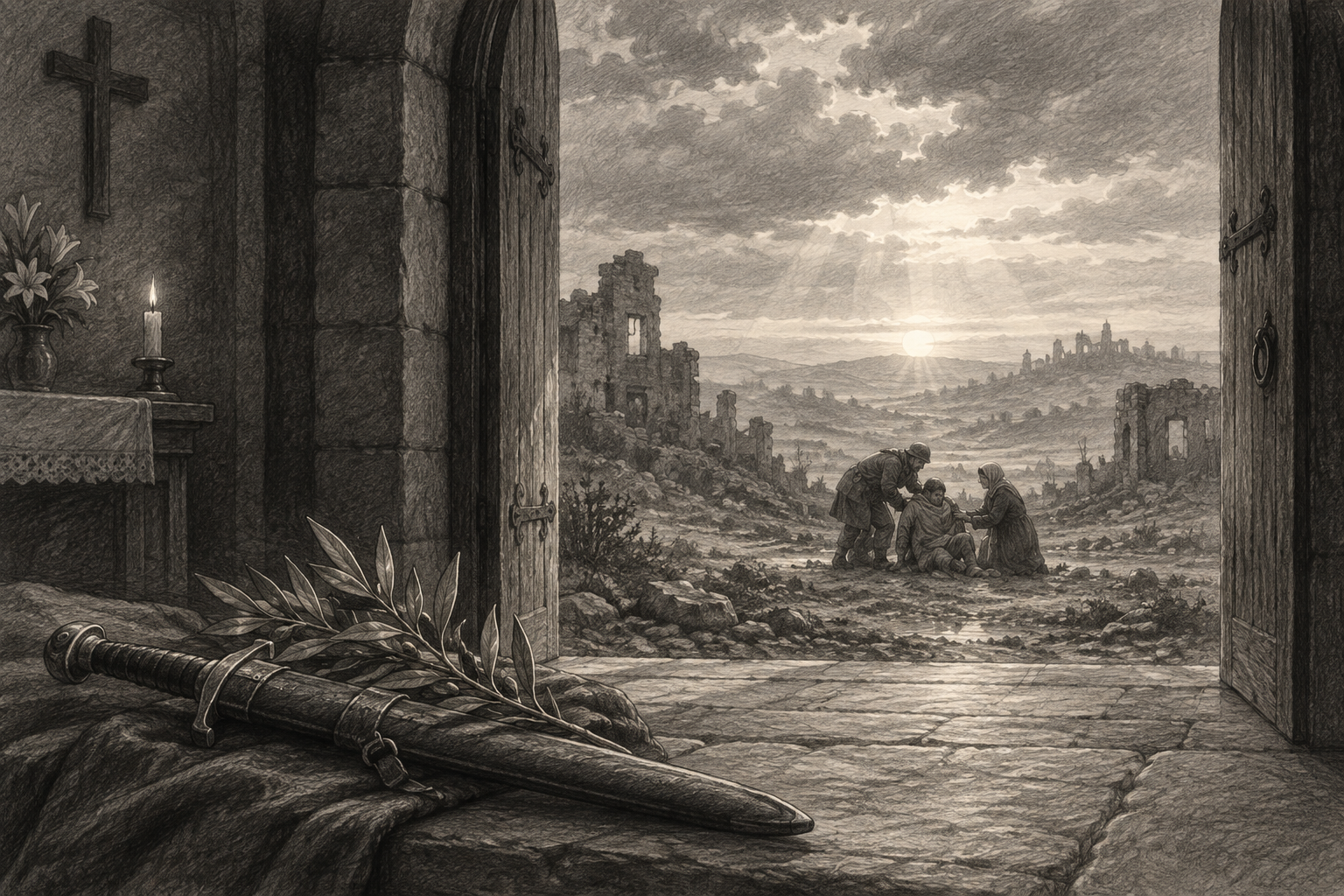
When Jesus tells the parable of the Good Samaritan, he overturns the listener's attempt to limit the definition of neighbor. The Samaritan sees the wounded man and is moved with compassion: Luke 10:33. He does not conduct an inquiry into whether the sufferer belongs to the correct group. He draws near, treats the wounds, and accepts personal cost.
This parable does not offer a detailed social policy. It reveals the moral posture without which no policy can be truly just. The neighbor is not merely the person for whom we feel natural affection. The neighbor is the person whose dignity places a claim upon our love.
Drawing near also means listening. Listening is not automatic agreement with every interpretation or proposed solution. It is the willingness to receive another person's testimony without immediate dismissal. Catholics should care about accurate evidence, but we should seek facts in order to serve truth, not to avoid compassion.
St. James warns Christian communities against partiality, especially when outward status determines how people are received: James 2:1. His warning reaches beyond economic class. A parish cannot proclaim one Lord while quietly assigning different levels of welcome, credibility, or belonging to people according to appearance or origin.
Charity and justice belong together
Charity is not mere politeness, and justice is not mere punishment. Charity seeks the true good of the other in God. Justice gives each person what is due. When separated, both can be distorted. Appeals to charity can become sentimental if they ignore unfair treatment. Appeals to justice can become vindictive if they forget conversion, mercy, and the equal dignity of the wrongdoer.
Catholic action should therefore be both compassionate and disciplined. Practical responses may include:
- Guarding speech. Refuse racial slurs, demeaning humor, careless generalizations, and online claims that have not been verified.
- Building real relationships. Friendship across cultural and racial lines cannot be manufactured as a display, but it can grow when Catholics share meals, service, prayer, and ordinary parish life.
- Listening to concrete experiences. Ask respectful questions and resist the urge to make one person represent an entire group.
- Reviewing parish practices. Parish leaders can examine whether hospitality, leadership opportunities, religious formation, and pastoral care are offered fairly.
- Supporting just institutions. Catholics may advocate for laws and practices that protect equal dignity and remedy genuine discrimination, using prudence to evaluate particular proposals.
- Correcting with humility. When a friend or relative speaks with contempt, a calm and truthful response may be more fruitful than public humiliation.
- Repairing harm. If we have treated someone unjustly, we should apologize plainly and make restitution when possible.
Prudence matters. Catholics of good will may disagree about the best remedy for a particular social problem. Such disagreement does not remove the duty to reject racial contempt or to pursue justice. It should lead us to examine evidence carefully, speak without caricature, and remember that political movements are not the Church. The Gospel judges every ideology, including the ones we find most comfortable.
A communion broader than tribe
At Pentecost, the Holy Spirit does not erase the languages of the gathered peoples. Instead, the mighty works of God are heard across those differences: Acts 2:6. The Church is catholic because Christ gathers people from every nation into one body without demanding that human cultures become identical.
This gives Catholic life a distinctive pattern. Unity is not uniformity, and diversity is not division. Cultural traditions can enrich parish life when they are ordered toward communion rather than rivalry. No ethnic community should be treated as a decorative addition, and no community should imagine that the parish belongs exclusively to itself.
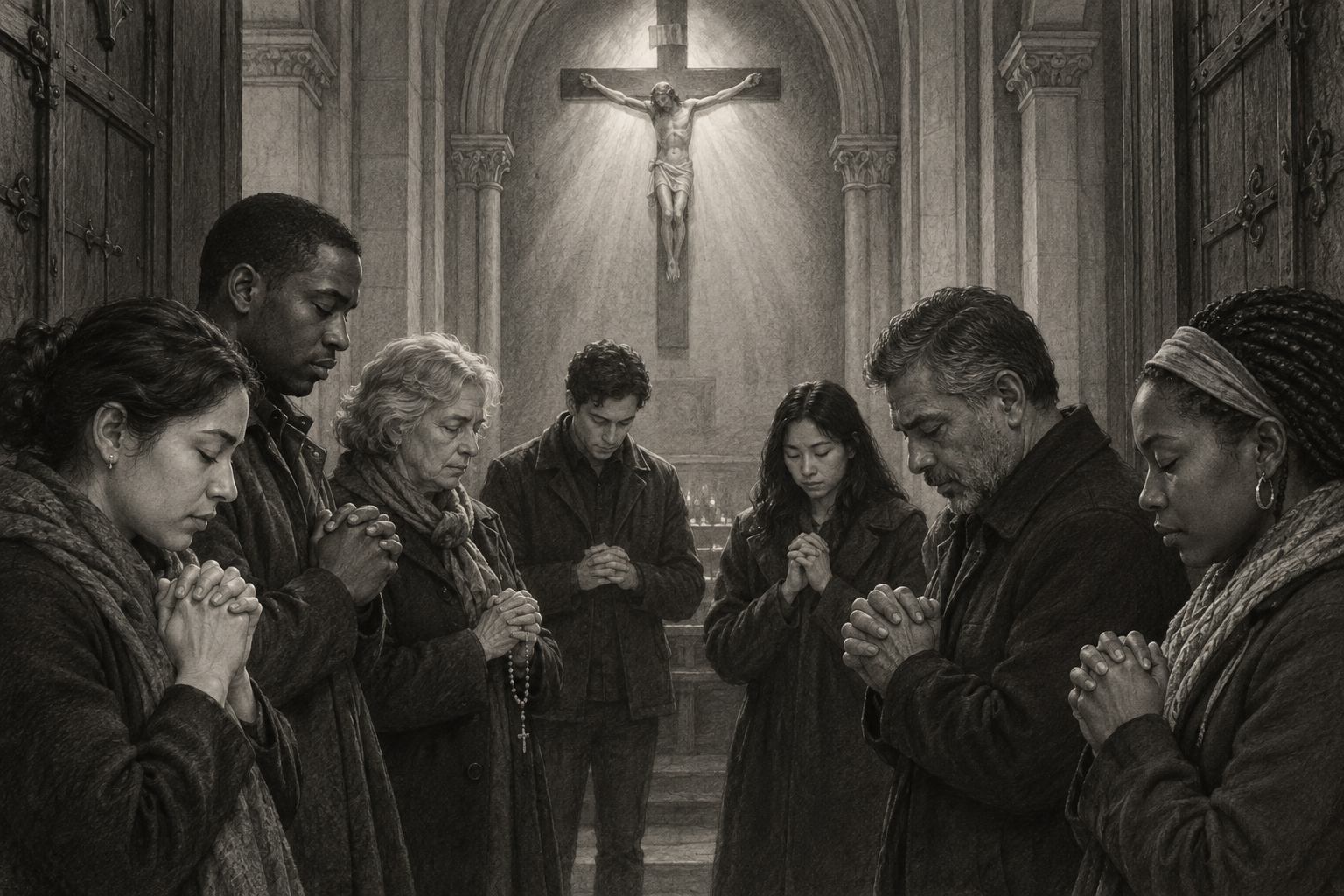
The Eucharist exposes the contradiction of racism with particular force. Those who receive the one Body of Christ are being formed into one body. We cannot reverently approach the altar while deliberately despising people whom Christ calls to the same table. Eucharistic communion does not make every social conflict disappear, but it gives Christians both the standard and the grace for reconciliation.
The final vision of Scripture is not a colorless humanity. It is a multitude from every nation, tribe, people, and language standing before God: Revelation 7:9. Their differences are not weapons, and their unity is not achieved by domination. All worship the Lamb.
That promised communion begins to shape us now whenever we refuse to reduce a neighbor to a racial label, tell the truth about injustice, repent of prejudice, defend the mistreated, and make room for reconciliation. Such work is often quiet and patient. It may begin in a conversation, a confession, a parish meeting, a friendship, or a decision not to remain silent. In each case, the Christian task is the same: to recognize the dignity God has already given and to live as though that gift is real.
Keep Reading on Lets Read The Bible
Frequently Asked Questions
Does the Catholic Church teach that racism is a sin?
Yes. Racism contradicts the equal dignity of human persons and can violate charity and justice. Its moral seriousness depends on the thoughts, words, actions, intentions, and harm involved, but racial contempt and unjust discrimination are incompatible with Catholic teaching.
Can Catholics disagree about policies intended to address racism?
Yes. Catholics may prudently disagree about particular laws, programs, or strategies. They may not use that disagreement to excuse racial hatred, deny equal human dignity, or ignore clear injustice. Proposals should be evaluated according to truth, the common good, solidarity, subsidiarity, and respect for every person.
How can a Catholic parish respond to racism?
A parish can preach clearly about human dignity, examine its practices for unfair exclusion, welcome cultural communities into parish life, encourage respectful listening, address demeaning speech, and provide opportunities for prayer, formation, service, and reconciliation. These efforts should strengthen communion rather than create new forms of hostility.