Social Teaching
When Mercy Takes a Name: Meeting Christ in the Poor
Care for the poor is not an optional interest for a few generous Catholics. It belongs to the shape of Christian discipleship itself.
Site Admin | September 22, 2026 | 4 views
Care for the poor is sometimes treated as one concern among many, perhaps suited to charitable organizations, religious communities, or people with unusual amounts of time. Catholic faith places it much closer to the center of discipleship. The poor are not a special interest group within the Church. They are our neighbors, our brothers and sisters, and members of the human family whose dignity comes from God.
This conviction does not reduce the Gospel to a social program. Nor does it permit Christians to separate prayer from responsibility. Jesus announces good news to the poor in Luke 4:18, and he teaches his disciples to recognize him in those who are hungry, thirsty, sick, imprisoned, or without adequate clothing. In caring for the least, the disciple encounters Christ himself: Matthew 25:40.
Care for the poor and Catholic life therefore belong together. The question is not whether every Catholic must run a large ministry or solve every social problem. The question is whether our lives are being opened by grace to see, love, and serve people whom the world often overlooks.
The poor are persons before they are a cause
Poverty can be described through statistics, policies, and economic conditions. Those tools matter, especially when communities are trying to understand why families lack food, housing, health care, education, or stable work. But a Christian must never allow an abstraction to replace the person.
A man asking for help is not merely an example of homelessness. A mother struggling to feed her children is not a talking point. An elderly neighbor choosing between groceries and medicine is not a problem to be managed from a safe distance. Each is a person made in the image of God, possessing a dignity that cannot be earned, lost, or measured by usefulness.
This is why genuine charity requires attention. Before deciding what another person needs, we should be willing to listen. Before congratulating ourselves for giving, we should remember that the recipient is not beneath us. We meet as people who are equally dependent upon God's mercy, even if our immediate circumstances are very different.
The Good Samaritan first draws near to the wounded man. His assistance is practical, but it begins with seeing and being moved with compassion: Luke 10:33. Christian mercy likewise refuses to look away.
Christ has bound himself to the least
Jesus' words about the hungry and the stranger are not sentimental encouragement. They have the force of judgment. Our response to vulnerable people reveals something real about our response to him. This teaching should unsettle complacency, but it should also fill ordinary acts of service with hope. A meal delivered, a rent payment quietly covered, or an hour spent listening can become an encounter with the Lord.
Christ does not love the poor from a distance. In the Incarnation, the Son of God accepts dependence, obscurity, and material simplicity. St. Paul speaks of Christ becoming poor for our sake so that we might become rich through his poverty: 2 Corinthians 8:9. The riches offered here are not possessions but communion with God.
To follow such a Savior is to allow his self-giving love to reshape our habits. Concern for the poor cannot be confined to occasional emotion. It must reach our schedules, spending, voting, parish life, business decisions, and willingness to share what we would rather keep.
Charity and justice belong together
Immediate acts of mercy are indispensable. A hungry person needs food, not a lecture on economic reform. A family facing eviction may need emergency assistance today. Catholics have long expressed this responsibility through the corporal works of mercy, including feeding the hungry, clothing the naked, sheltering those without a home, visiting the sick and imprisoned, and burying the dead.
Yet Christian responsibility does not stop after an immediate need is met. Justice asks why the need arose and whether people are being denied fair opportunities, safe conditions, honest wages, or equal protection. Charity attends to the person before us. Justice examines the relationships and institutions that shape that person's life. Neither makes the other unnecessary.
The Letter of James warns against offering pious wishes to a brother or sister who lacks food and clothing while withholding what the body needs: James 2:15 and James 2:16. Faith must bear visible fruit. At the same time, Catholic social teaching does not dictate one technical solution to every economic question. People of good will may prudently disagree about particular policies while remaining bound by the same moral duty to defend human dignity and seek the common good.
Two principles help keep this work balanced. Solidarity teaches that we are responsible for one another and cannot dismiss another person's suffering as someone else's concern. Subsidiarity teaches that needs should be addressed at the most local and personal level capable of responding well, while larger institutions provide support when families, neighborhoods, parishes, or local groups cannot meet the need alone.
Mercy must be joined to truth
Helping responsibly requires more than good intentions. Some needs are complex. Addiction, mental illness, disability, abuse, unemployment, family breakdown, and unaffordable housing cannot always be addressed through a single gift. At times, direct cash assistance may be appropriate. In other situations, food, transportation, professional care, or help from an experienced local organization may serve the person better.
Prudence is not an excuse for indifference. It is the virtue that helps love choose fitting means. Reasonable boundaries can protect both the giver and the recipient, but suspicion must not become a shield against generosity. Catholics should resist two opposite errors: romanticizing poverty as though suffering were harmless, and blaming poor people as though material success always proved virtue.
Truthful charity also respects freedom. The goal is not to make people dependent upon the giver or to use assistance as a tool of control. Whenever possible, help should strengthen families, restore participation, and honor the abilities of the person receiving it.
Making care for the poor part of ordinary life
Most Catholics will not establish a shelter or devote every working hour to social ministry. All Catholics, however, can form habits that keep mercy from becoming an occasional afterthought.
- Set aside a regular portion for almsgiving. Planned generosity is usually more dependable than waiting for an emotional appeal. The amount will differ according to one's responsibilities and means.
- Support trustworthy local work. Parish food pantries, pregnancy support ministries, shelters, refugee services, St. Vincent de Paul conferences, and other reputable efforts often understand local needs and can offer sustained assistance.
- Learn names and listen. Personal attention protects charity from becoming impersonal. A respectful conversation can reveal needs that are not immediately visible.
- Examine consumption. Purchases, unused possessions, food waste, and the constant pursuit of upgrades deserve honest scrutiny. Simplicity can free resources for generosity.
- Offer skills as well as money. Tutoring, transportation, budgeting help, home repairs, legal knowledge, child care, and job preparation may be valuable forms of service.
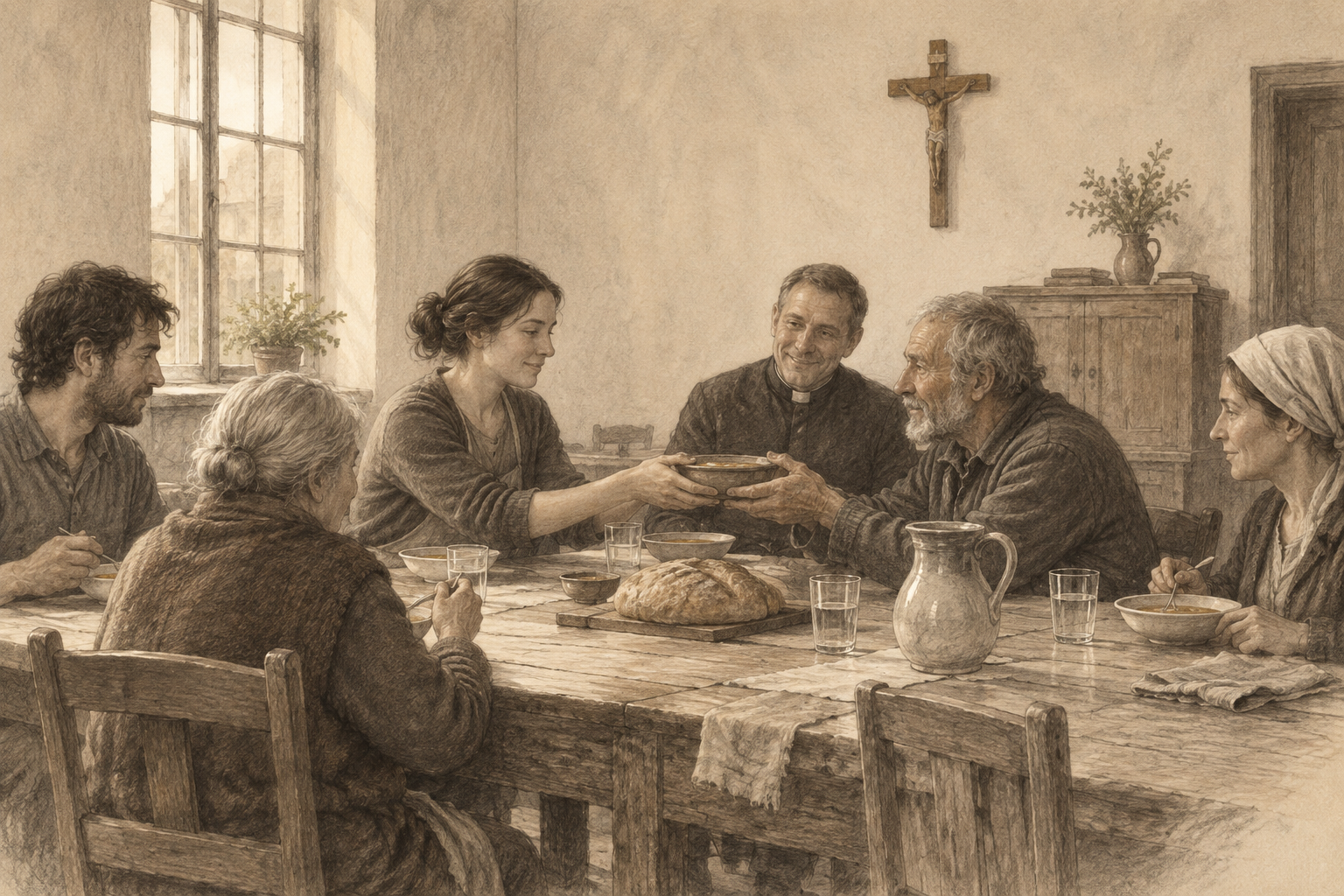
- Practice hospitality. Loneliness often accompanies poverty. Welcoming someone into parish life or sharing a meal can restore a sense of belonging that a financial gift alone cannot provide.
- Advocate without contempt. Catholics can support just laws and sound institutions while refusing language that humiliates either poor people or those who disagree about policy.
Families can participate together. Parents might invite children to choose food for a parish collection, contribute from their own allowance, or help prepare a meal. These small practices teach that possessions are gifts entrusted to us, not private fortresses against the needs of others.
The parish as a school of communion
A parish should be a place where poor people are not merely served but welcomed as members. This requires more than collecting donations. Are parish events accessible to families with limited means? Are requests for help handled discreetly? Do volunteers receive formation in listening, safeguarding, and local resources? Can people who have received assistance also share their gifts and take part in parish life?
The early Christian community took material needs seriously, seeking to ensure that no member was abandoned: Acts 4:34. That example does not supply a detailed modern economic plan. It does reveal that communion with Christ changes how believers hold and share material goods.
The Eucharist deepens this responsibility. At Mass, Catholics receive the Body of Christ and are drawn into one body. We cannot reverently approach the altar while deliberately despising members of Christ who suffer. Worship and mercy are not rivals. Worship teaches us whom we serve, and service tests whether our worship is entering our lives.
Giving that also receives
Care for the poor is often described as something the fortunate do for the unfortunate. That description misses part of the mystery. A person who gives food or money may indeed possess something another needs. Yet the giver also has needs: freedom from selfishness, release from fear, a more truthful view of possessions, and deeper communion with Christ.
This does not mean poverty exists for the spiritual benefit of comfortable people. Material deprivation is not a stage set for someone else's moral growth. It means that human relationships are never entirely one way. People who endure hardship may offer courage, wisdom, faith, friendship, and a witness to dependence on God. To receive those gifts, the person offering help must approach with humility.
Prayer belongs within this relationship. We should pray for people in need, for those serving them, and for leaders whose decisions affect vulnerable communities. We should also ask God to expose the evasions within our own hearts. Almsgiving can become a form of repentance when it loosens our grip on possessions and redirects our attention toward our neighbor.
A faithful response begins nearby
The scale of poverty can make personal action seem insignificant. No one household or parish can answer every need. Christian responsibility, however, is not measured by our ability to control the whole world. We are asked to be faithful with the people, resources, opportunities, and duties God has placed before us.
That may mean responding to a request at the parish office, checking on an isolated neighbor, supporting a family through a difficult month, or learning more carefully about the conditions in one's own town. It may also mean accepting that generosity costs something. Mercy that never affects our comfort may not yet have reached very deeply.
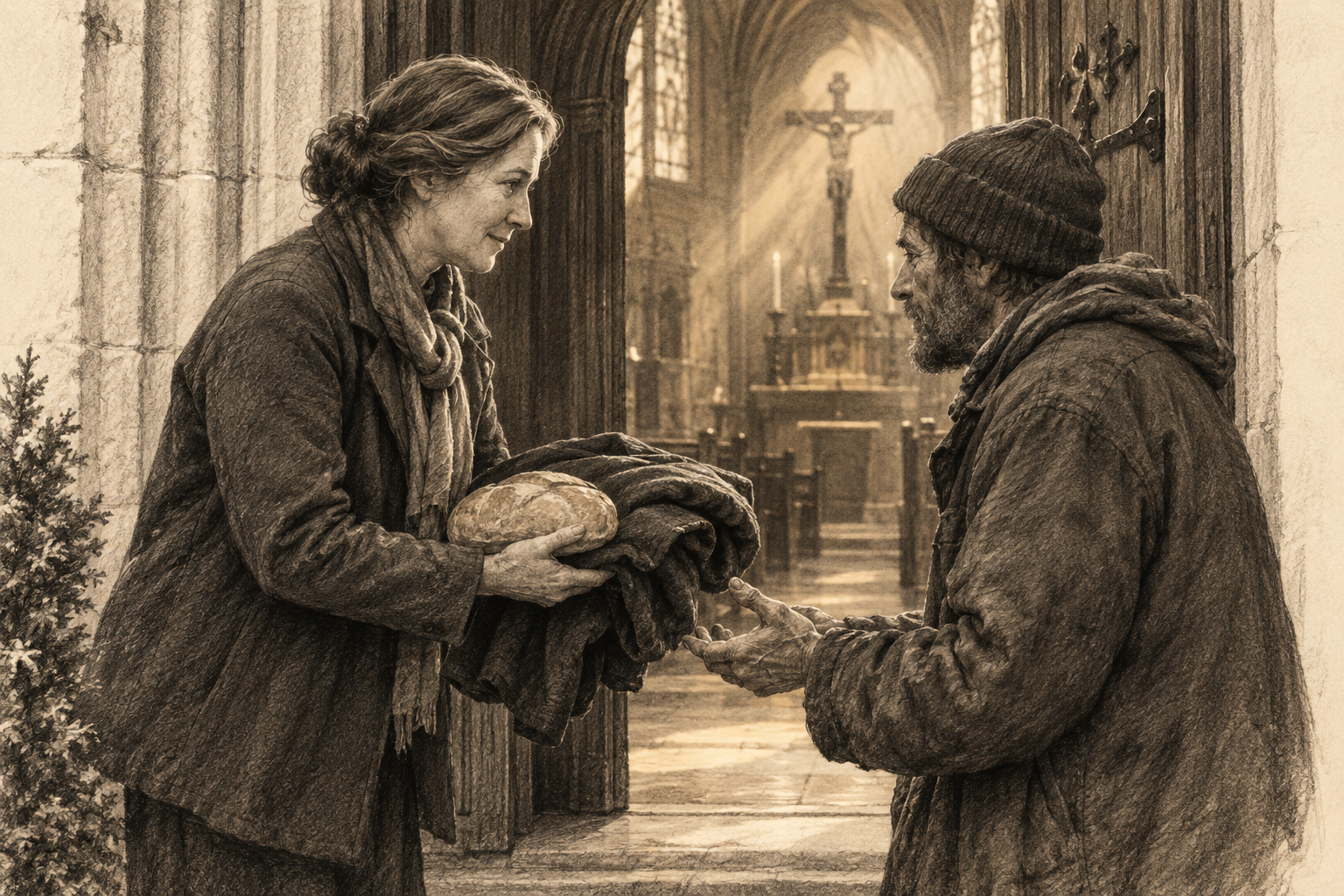
Care for the poor and Catholic life meet wherever a disciple chooses not to pass by. In that choice, charity becomes concrete, justice gains a human face, and the neighbor once treated as invisible is welcomed as someone loved by God. Christ waits for us there, not as an idea, but in the person at the door.
Keep Reading on Lets Read The Bible
Frequently Asked Questions
Is care for the poor required of every Catholic?
Yes. Not every Catholic is called to the same ministry or able to give the same amount, but concern for people in need belongs to Christian discipleship. Catholics can respond through almsgiving, personal service, prayer, responsible advocacy, parish support, hospitality, and daily choices shaped by solidarity.
How can Catholics help without encouraging dependency?
Help should respect both immediate need and long-term human dignity. Depending on the situation, that may include direct assistance, referrals to experienced organizations, job support, transportation, professional care, or sustained accompaniment. Prudence and reasonable boundaries are important, but they should guide generosity rather than become excuses for indifference.
What is the difference between charity and justice?
Charity responds in love to the person and need directly before us. Justice considers whether social relationships, laws, workplaces, and institutions respect human dignity and the common good. Catholics need both. Immediate aid cannot be postponed while larger reforms are debated, and personal generosity does not remove the duty to address unjust conditions.