Doctrine and Questions
Calling the Priest Father: A Catholic Name with a Biblical Heart
Why this form of address is more than custom, and how Scripture and Catholic teaching give it its meaning.
Site Admin | June 24, 2025 | 102 views
A familiar title with an older meaning
For many people, the first time they hear a Catholic call a priest Father, it can sound surprising. Some assume the title must be a claim to divine authority or a denial that God alone is Father. In truth, the Catholic use of the word is neither new nor strange when seen in the light of Scripture and the Church's understanding of ministry.
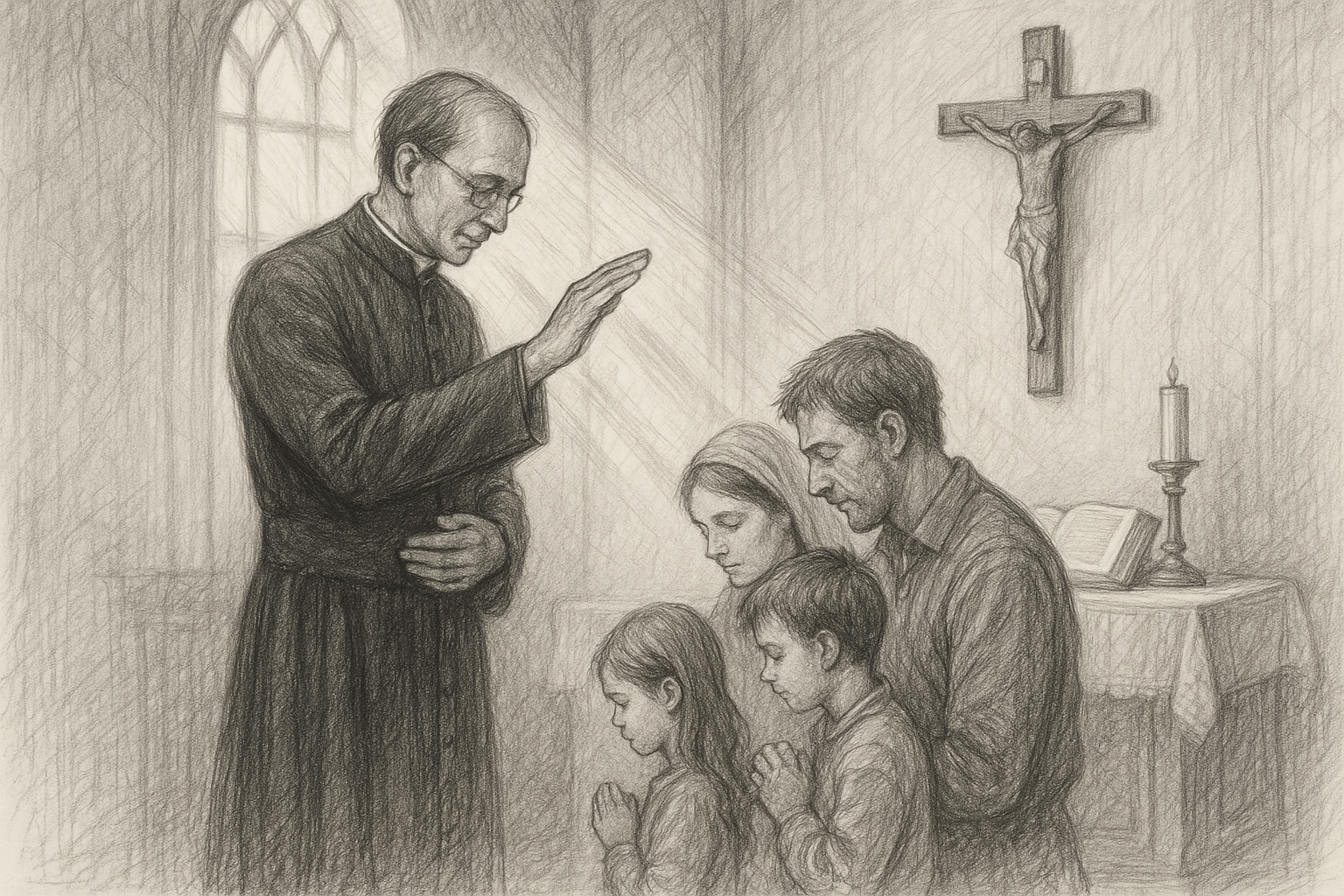
The title Father is not meant to compete with God. It expresses a real spiritual relationship. A priest does not give life by nature, as a biological father does, but he is called to care for souls, preach the Gospel, forgive sins in Christ's name, and nourish the faithful through the sacraments. In that sense, he fathers believers in a spiritual way.
This is why Catholics call priests Father Catholic teaching. The title reflects both reverence and responsibility. It reminds the priest that he is entrusted with care for a family of faith, and it reminds the faithful that the Church is not only an institution but also a household formed by grace.
Scripture already uses fatherly language for spiritual leaders
Catholic practice begins with Scripture, where spiritual fatherhood appears naturally. Saint Paul speaks this way with striking warmth and clarity. He tells the Corinthians, For though you have countless guides in Christ, you do not have many fathers. He then adds, For I became your father in Christ Jesus through the gospel.
That line matters. Paul is not pretending to be God the Father. He is describing the fruit of his apostolic labor. Through preaching, instruction, and pastoral care, he has brought people to new life in Christ, and so he speaks of himself as a father to them. The relationship is real, yet entirely ordered to God.
Elsewhere, Paul speaks with similar affection to the Thessalonians, saying, [[VERSE|1-thessalonians|2|11-12|We exhorted each one of you and encouraged you and charged you]] as a father does with his children. Here too the model is not domination but tender guidance. Spiritual fatherhood is marked by teaching, correction, encouragement, and self-giving love.
Even in the Old Testament, spiritual fatherhood appears. Elisha calls Elijah his father, and Joseph receives a fatherly role toward Pharaoh's household. In Israel, the use of father language often signified authority joined to care. Christianity does not erase that pattern. It fulfills and purifies it in Christ.
Jesus warned against vanity, not against the word itself
Some point to Jesus' words in Matthew: Call no man your father on earth, for you have one Father, who is in heaven. At first glance, that verse can seem to settle the matter. Yet Scripture must be read as a whole, and Jesus is not forbidding every use of the word father in every sense.
If He were, then Saint Paul would be contradicting Christ when he calls himself a father in the faith. The same Bible that records Jesus' teaching also preserves Paul's use of fatherly language. The Church therefore reads Matthew 23 as a rebuke of pride and false spiritual status, not as a literal ban on the term itself.
In the verses before and after that saying, Jesus condemns the scribes and Pharisees for loving places of honor and titles that exalted them above others. His point is that no human being may claim the kind of authority that belongs to God alone, or seek titles for vanity. All fatherhood on earth is secondary and received. It points beyond itself to the one Father from whom every family in heaven and on earth is named.
So when Catholics call a priest Father, they are not denying Matthew 23. They are applying Scripture in a way consistent with the whole of the New Testament. The priest is a father only because God is Father first, and because Christ shares His own pastoral care through ordained ministry.
The priest acts in the person of Christ the Head
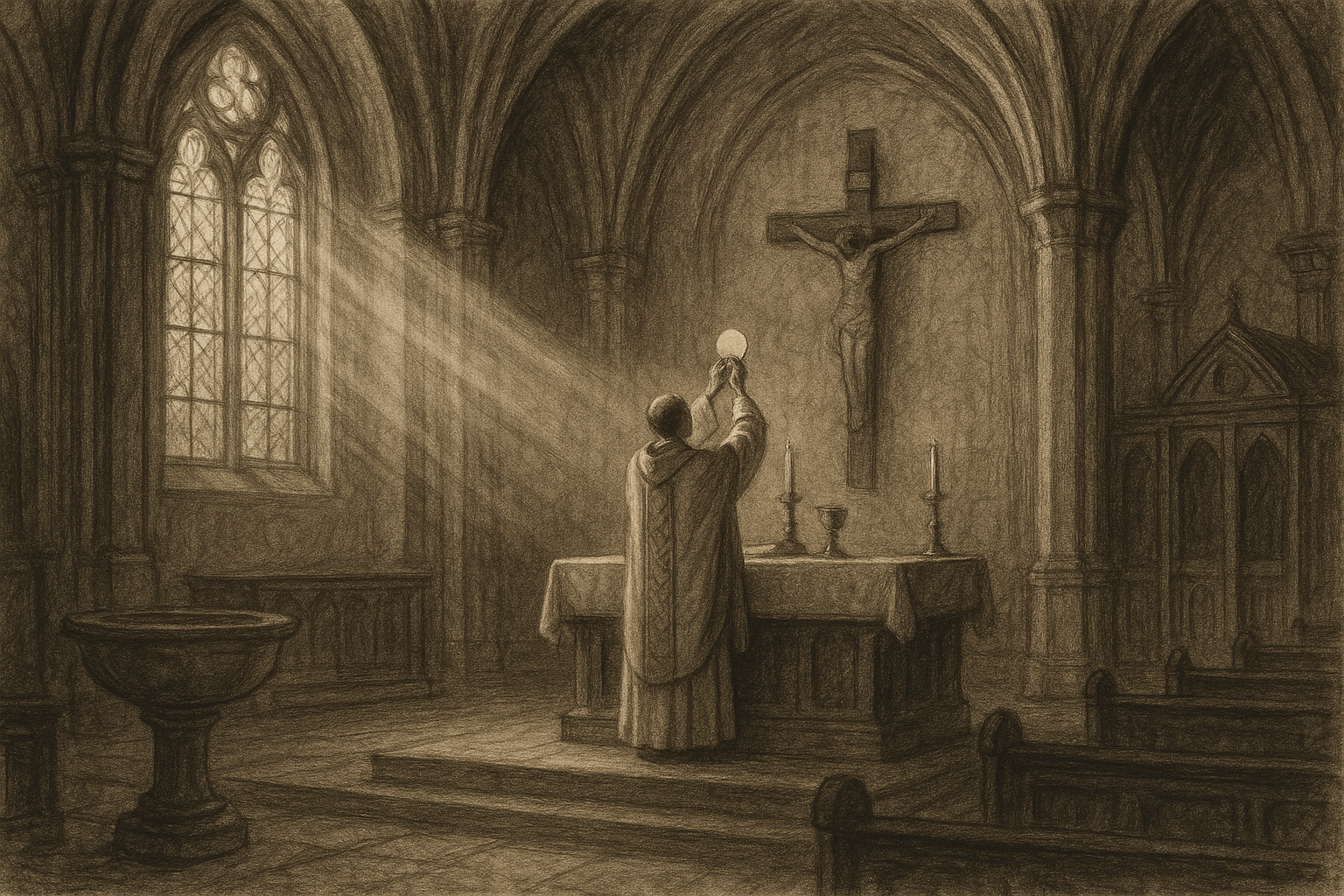
Catholic teaching on ordained ministry helps explain the title more deeply. A priest is ordained not simply to perform religious tasks, but to serve as a sacramental instrument of Christ. In the Eucharist, in absolution, and in preaching, he acts by the grace of Christ and in service to the Church.
This does not mean the priest becomes Christ in an absolute sense. Rather, the priest is configured to Christ so that Christ may work through him. The priest serves the People of God as a shepherd, teacher, and father. The title Father therefore expresses the sacramental and pastoral role he has received.
Think of a natural father. He does not create himself. He receives life and a vocation. His authority is authentic, but it is always meant for the good of others. In a similar way, the priest receives an office ordered toward the salvation of souls. The title Father is a reminder that his ministry is meant to generate life in Christ, not personal prestige.
Spiritual fatherhood is service, not ownership
One reason the title can be misunderstood is that modern ears often hear authority as control. But Catholic fatherhood is not ownership of people. It is a form of service that bears responsibility, sacrifice, and tenderness.
A good father teaches children to walk, warns them against danger, provides for them, listens to them, and stays with them in weakness. Likewise, a priest is called to be present in confession, at the altar, in counsel, at the bedside of the sick, and in the ordinary rhythms of parish life. He is expected to father souls with patience and truth.
This is also why Catholics should not use the title lightly or sentimentally. To call a priest Father is to name a real vocation. It should move the priest toward humility and fidelity. It should move the faithful toward trust, gratitude, and prayer. A father who loves well does not draw attention to himself. He helps others belong to Christ.
When Catholics say Father, they are not placing a man above God. They are recognizing a grace-filled role through which God continues to care for His people.
The Church is a family, not a collection of isolated believers
The title Father also fits the Church's larger vision of itself. Christians are not meant to live as spiritual loners. Through Baptism, believers are adopted into God's family. They learn to pray, to worship, and to endure together. In that family, different people have different offices, but all serve the same Lord.
That is why the Church's language is so full of family terms. We speak of brothers and sisters, sons and daughters, mothers and fathers. These are not decorative words. They express a reality. Grace creates communion, and communion requires forms of care that mirror the home.
When a parishioner calls the priest Father, the term can become a daily reminder that the Church is meant to be personal. It is not a machine for religious services. It is a living body in which people are known, guided, corrected, forgiven, and fed.
Of course, no priest is a perfect father. Every priest is a sinner in need of mercy. But even imperfect fatherhood can still be real. The sacraments do not depend on the priest's holiness as though he were the source of grace. They depend on Christ. That truth protects the faithful from illusion while preserving the dignity of the priestly office.
What Catholics are not saying
It may help to say plainly what the title Father does not mean.
- It does not mean the priest is equal to God the Father.
- It does not mean the priest replaces Scripture or personal prayer.
- It does not mean every priest always acts well or deserves blind trust.
- It does not mean Catholics worship priests or give them divine honor.
Instead, the title means that the priest has a real pastoral relationship to the faithful. He is called to teach, sanctify, and govern in a spirit of charity. Like all fatherhood, his authority must be exercised for the good of those entrusted to him.
It is also worth noting that Catholics do not reserve fatherhood language only for clergy. The Bible itself uses the term more broadly, and the Church speaks of spiritual fathers in a wider sense as well. But among ordained priests, the title has become a stable and fitting form of address because it captures their role so well.
Why the title still speaks clearly today
In an age suspicious of authority, the word Father can sound old fashioned. Yet that may be one reason it remains valuable. It reminds us that the deepest forms of leadership are not about power for its own sake, but about life given for others.
When a priest celebrates the sacraments, hears confession, anoints the sick, buries the dead, or teaches the faith, he is acting within a network of spiritual care that is beautifully biblical. The title Father gathers all of that into one word. It says that the priest's role is familial, sacramental, and ordered to salvation.
For Catholics, then, the word is not a custom borrowed at random. It is a sign of continuity with Scripture, with apostolic practice, and with the Church's living understanding of grace. It is also a humble reminder that all earthly fatherhood, whether in the home or in the Church, is meant to reflect the one Father who gives life and keeps His children close.
So when a Catholic says Father, the word should be heard in the full Christian sense. It is a title of service, not status; of care, not control; of spiritual generation, not rivalry with God. And when it is used well, it quietly points every heart toward the Father from whom all true fatherhood comes.
Keep Reading on Lets Read The Bible
Frequently Asked Questions
Do Catholics think priests are the same as God the Father?
No. Catholics reserve divine fatherhood to God alone. Calling a priest Father refers to spiritual fatherhood, not divinity.
Is there biblical support for calling clergy father?
Yes. Saint Paul speaks of himself as a father in the faith in [[VERSE|1-corinthians|4|15|1 Corinthians 4:15]], and he describes his pastoral care in fatherly terms in [[VERSE|1-thessalonians|2|11-12|1 Thessalonians 2:11-12]].
How does Matthew 23:9 fit with the Catholic practice?
Catholics read Matthew 23:9 as a warning against pride and false titles, not as a prohibition of every use of the word father. The New Testament itself uses the term for spiritual relationships.