Doctrine and Questions
Grace You Can Receive: A Catholic Look at the Sacraments and the Life of God
The Church teaches that God does not only speak about grace, He gives it through signs Christ established for our salvation.
Site Admin | July 18, 2025 | 86 views
Many Catholics know the word grace, but it can still feel abstract. We know it is a gift from God, something we cannot earn, and something we desperately need. Yet the Church goes further and teaches that God gives grace in particular ways through the sacraments. This is what Catholics mean by sacramental grace Catholic teaching: a real gift from Christ that comes through visible signs He chose for the life of the Church.
This is not a theory invented by later Christians. It flows from the Gospel itself. Jesus heals with touch, sends the Spirit through His breath, forgives sins through His authority, and feeds His people with His own Body and Blood. From the beginning, the Church has understood that the Lord who saved us did not leave us only memories or ideas. He remains active, present, and generous.
What sacramental grace means
At the simplest level, sacramental grace is the grace given by God through the sacraments. It is not magic, and it is not a human effort to reach heaven by ourselves. Rather, it is Christ acting through the Church He founded. The sacraments are outward signs that truly confer inward grace because God has bound His saving work to them.
The Catechism teaches that the sacraments are efficacious signs of grace, instituted by Christ and entrusted to the Church. That means they do something. They do not merely symbolize what believers hope for. They actually communicate divine life, strengthen the soul, and help the Christian grow in holiness.
This matters because grace is not just a general feeling of comfort. In Catholic life, grace is God's own help, His life shared with us, enabling us to believe, repent, love, and persevere. Sacramental grace is that same divine help given in a sacramental way, according to the gift Christ established.
Scripture shows God using signs to give His saving power
God has always chosen to work through signs and instruments. In the Old Testament, He uses water, oil, sacrifice, and spoken blessing. In the New Testament, Jesus continues this pattern in a fuller way.
Consider the healing of the man born blind. Jesus makes clay, applies it to the man's eyes, and sends him to wash in the pool of Siloam ([[VERSE|john|9|6-7|John 9:6-7]]). The physical sign is not a mere illustration. It becomes the means by which healing comes. Or think of the woman who touches the hem of His garment and is healed ([[VERSE|mark|5|27-30|Mark 5:27-30]]). Power goes out from Jesus. The Lord does not disdain bodily signs. He uses them.
After the Resurrection, Christ gives the apostles authority to forgive sins ([[VERSE|john|20|22-23|John 20:22-23]]). He commands them to baptize all nations ([[VERSE|matthew|28|19-20|Matthew 28:19-20]]). At the Last Supper, He identifies bread and wine with His Body and Blood and tells the apostles to continue the meal in remembrance of Him ([[VERSE|luke|22|19-20|Luke 22:19-20]]). In these passages, the Church sees the outline of sacramental life.
St. Paul speaks in the same direction when he writes that baptism unites us to Christ's death and resurrection ([[VERSE|romans|6|3-4|Romans 6:3-4]]) and that the Eucharist is a true participation in the Body and Blood of Christ (1 Corinthians 10:16). Paul also warns that receiving the Eucharist unworthily brings judgment ([[VERSE|1-corinthians|11|27-29|1 Corinthians 11:27-29]]), which would make little sense if the sacrament were only symbolic in a weak or purely mental sense.
Why the Church insists the sacraments are more than symbols
People sometimes hear Catholic language about signs and assume Catholics are saying the sacraments are only reminders. But in biblical thought, a sign can truly convey what it signifies. The rainbow is a sign of God's covenant, yet it is not empty. Circumcision was a sign of covenant belonging. The Passover meal was a sign of liberation, yet it also made Israel part of that saving memory.
The sacraments belong to this deeper biblical pattern. They are visible acts filled with divine promise. When a person is baptized, he is not merely announcing faith. He is being made a new creature in Christ. When a sinner is absolved in Confession, the words of the priest are not just encouragement. They are Christ's own mercy spoken through the ministry He established. When bread and wine are consecrated at Mass, Catholics believe Christ truly gives Himself as food.
This is why sacramental grace cannot be reduced to personal emotion. A person may feel deeply moved at Mass and receive little sacramental fruit if he is distracted or spiritually closed. Another may feel little and yet receive abundant grace if he comes with faith and humility. The sacrament works because Christ works in it, not because our feelings make it real.
The sacraments do not replace faith, they nourish it
A common misunderstanding is that Catholics place ritual above faith. In fact, the Church teaches that faith is necessary. Without faith, the sacraments are not received fruitfully. But faith itself is strengthened through sacramental life.
St. James writes that faith without works is dead (James 2:17). Catholic teaching on sacramental grace belongs in the same world of thought. God saves us by grace, and that grace bears fruit in a life shaped by worship, repentance, obedience, and love. The sacraments do not compete with interior conversion. They serve it.
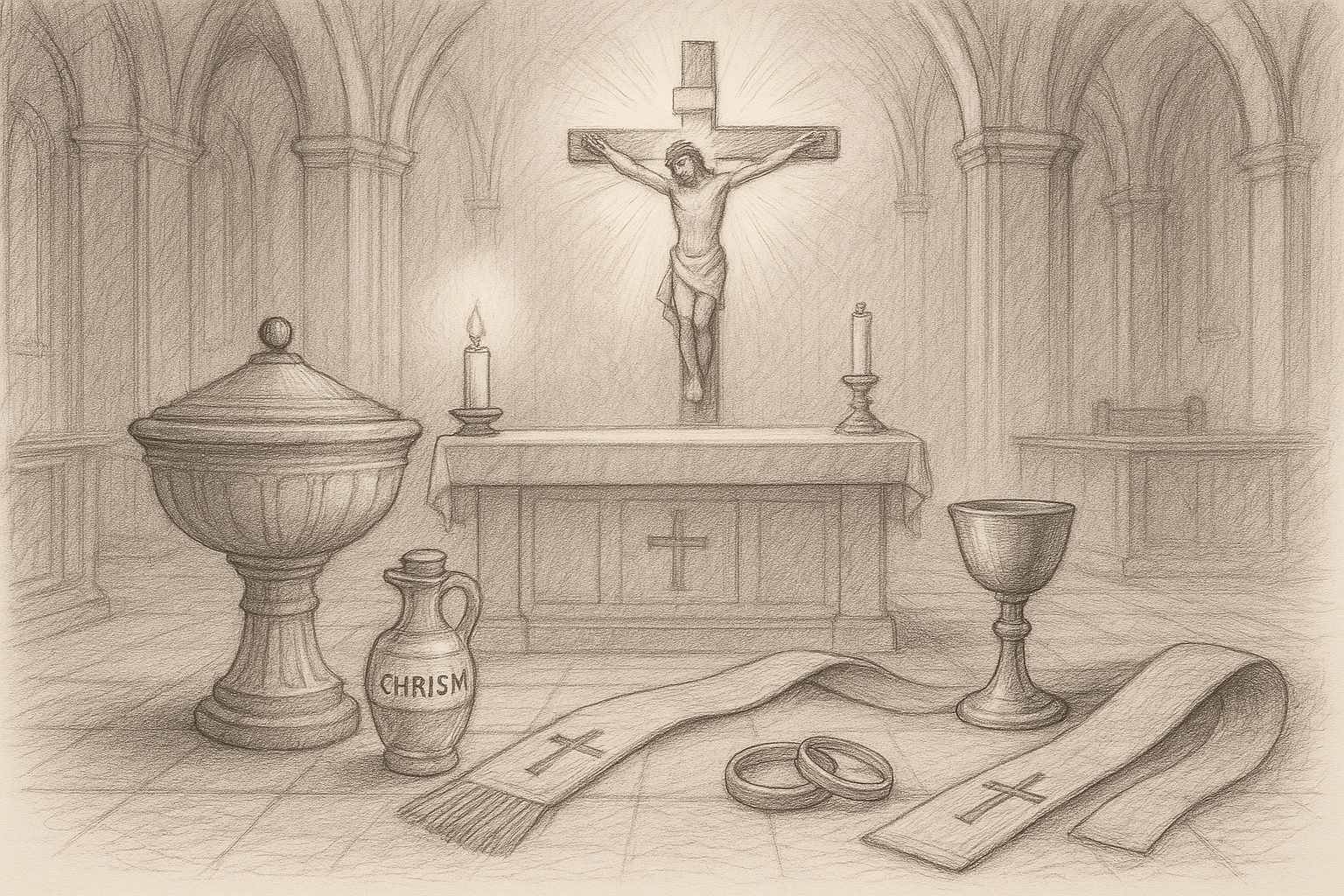
Take Baptism, for example. It is not only the beginning of Christian life but also a real washing away of sin and rebirth in Christ. That grace is a gift. Yet the baptized person must continue to live as a disciple. Confirmation strengthens the baptized for witness. The Eucharist feeds the soul. Penance restores the sinner. Anointing brings Christ's healing presence. Holy Orders and Matrimony confer grace for mission and faithful love. Each sacrament gives what the Christian needs for a particular part of the journey.
In this sense, sacramental grace is beautifully practical. God does not merely tell us to be holy and then leave us to manage on our own. He provides the very helps needed for holiness.
The sacraments work because Christ is faithful
The deepest reason the Church trusts the sacraments is not institutional habit. It is the faithfulness of Jesus Christ. He promised to remain with His Church always (Matthew 28:20). He sent the Holy Spirit to guide her into all truth (John 16:13). He established a Church with teaching authority and sacramental life.
When the Church speaks of sacramental grace, she is speaking about Christ's continuing action. The sacraments are not separate from Him. They are His work. This keeps Catholic life from becoming either sentimental or self-reliant. The Christian does not have to manufacture holiness. He receives it from the Lord.
This also guards against despair. A believer may look at his weaknesses, repeated failures, or spiritual dryness and conclude that little can change. But sacramental grace reminds us that God is not waiting for perfect conditions. He meets us in concrete places: the baptismal font, the confessional, the altar, the hands of the bishop, the promises of marriage, the oil of healing.
How to receive sacramental grace well
The Church encourages the faithful to approach the sacraments with reverence, preparation, and trust. Grace is always gift, but we can be more or less open to receiving it.
- Approach with faith. Believe that Christ is acting, not just the Church performing a ceremony.
- Examine your conscience. Especially before Confession and Holy Communion, honest self-knowledge matters.
- Receive with humility. The sacraments are for sinners who need mercy, not for the spiritually self-sufficient.
- Cooperate afterward. Grace is meant to bear fruit in prayer, obedience, and charity.
It helps to remember that grace perfects nature rather than destroying it. God does not bypass the human person. He heals, elevates, and sanctifies. That is why the sacramental life touches the whole person: body, mind, memory, conscience, and will.
Many saints understood this with great simplicity. They did not see the sacraments as the lesser part of Christianity. They saw them as the ordinary way Christ keeps His promise to be near. Their holiness was not self-made. It grew from repeated contact with divine mercy.
Common misunderstandings about sacramental grace
One misunderstanding is that Catholics believe the sacrament works automatically no matter what. The Church does not teach that. A sacrament is valid if it is truly celebrated according to Christ's institution, but fruitful reception depends on the disposition of the person receiving it. A hard heart can resist grace. A repentant heart can be transformed by it.
Another misunderstanding is that grace comes only from private prayer or personal devotion. Private prayer is precious and necessary, but Christ also gave the Church public means of grace. Scripture and sacramental life belong together. The Christian life is not either Bible or sacrament, either prayer or worship. It is a living whole.
A third misunderstanding is that sacramental grace makes moral effort unnecessary. In truth, grace is what makes real conversion possible. The sacraments do not excuse sin. They empower repentance. They do not replace the moral life. They animate it.
Finally, some think the sacraments are only for very religious people. But the sacraments are precisely for ordinary sinners who need God. The Church does not offer them as rewards for the already holy. She offers them as medicine, food, cleansing, strengthening, and encounter with the living Lord.
Grace is not an idea, but a divine gift given through Christ
In the end, sacramental grace Catholic teaching tells us something simple and astounding: God wants to meet His people through Christ's own chosen signs. He does not save us by distance. He saves us by nearness. He enters our human condition and gives us tangible means of communion with Him.
That is why Catholics kneel at the altar, make the sign of the cross, seek absolution, and bring children to Baptism. These are not empty customs. They are places where grace touches the world. And if we approach them with faith, the Lord who began a good work in us will continue to complete it in His time.
Keep Reading on Lets Read The Bible
Frequently Asked Questions
What is sacramental grace in Catholic teaching?
Sacramental grace is the divine help and life given by God through the sacraments. The Church teaches that Christ instituted the sacraments as real means of grace, not as empty symbols.
Do the sacraments work automatically?
No. The sacraments are valid because Christ acts through them, but their fruit in a person's life depends on the person's disposition, especially faith, repentance, and openness to God's gift.
Which sacraments give sacramental grace?
All seven sacraments confer grace in ways proper to each one: Baptism, Confirmation, the Eucharist, Penance, Anointing of the Sick, Holy Orders, and Matrimony. Each sacrament gives grace for a specific purpose in Christian life.