Doctrine and Questions
Mary, Mother of God, and the First Great Confession About Jesus
A clear look at a Marian title that protects the truth about Christ
Site Admin | July 10, 2025 | 70 views
The title that makes some people pause
Among Catholics, few phrases are more familiar and more misunderstood than Mother of God. At first hearing, the title can sound impossible. How can any creature be called the mother of God? Does the Church mean that Mary existed before the Lord, or that she somehow gave divinity to Christ?
The answer is no. Catholic teaching is careful here. The Church does not say that Mary is the source of Christ's divine nature. She is not the origin of the Son of God. Rather, she is truly the mother of Jesus, and Jesus is truly God. That is why the title matters. It protects something central to the Christian faith: the Son whom Mary bore is one divine Person, the eternal Word made flesh.
To say Mary is Mother of God is not to elevate Mary above her place. It is to speak correctly about who Jesus is. The title is Marian, but its deepest purpose is Christological.
What the Church means by Mother of God
Catholic teaching follows the logic of the Incarnation. The Son of God did not merely inhabit a human being. He truly became man. As Scripture says, the Word became flesh and dwelt among us John 1:14. The one born of Mary is not a separate human person joined to God later on. He is the eternal Son, one divine Person with two natures, divine and human.
Because of that, Mary gave birth to the Person of Jesus Christ, not to one nature in isolation. We do not say that a mother gives birth to a nature. Mothers give birth to persons. If the Person she bore is God the Son, then Mary is rightly called Mother of God.
This is the heart of the Church's teaching. The title does not explain away mystery. It protects mystery from distortion. If someone says Mary is only the mother of Christ's human nature, the unity of Christ is broken apart. If someone says Mary is the mother of his divinity in a crude sense, the faith becomes confused. The Church's language keeps both truths together: Jesus is truly God, and Mary is truly his mother.
Scripture points us in that direction
The Bible does not give Mary the exact phrase Mother of God, but it gives the substance of the belief. Elizabeth greets her with words that already sound like worshipful recognition: And why is this granted me, that the mother of my Lord should come to me? Luke 1:43. In biblical language, Lord is not a casual title. In Luke's Gospel, it carries deep divine meaning.
Mary is also shown in direct relation to the mystery of the Incarnation. The angel announces that the child to be conceived in her womb will be called holy, the Son of God Luke 1:35. The child is not merely a prophet or a gifted man. He is God's own Son, entering human history through Mary's yes of faith.
St. Paul presents the same mystery in compact form when he writes that God's Son was born of a woman Galatians 4:4. That brief phrase is easy to overlook, but it is full of meaning. The Son who existed from all eternity truly entered our human family through a woman. Mary is not incidental to the Gospel. She is woven into the very way God chose to save us.
Even at the Visitation, the unborn John the Baptist leaps in Elizabeth's womb Luke 1:41, as if creation itself is beginning to recognize the presence of its Lord. The Gospel does not separate Mary from Christ. It presents her as the mother who bears him, receives him, and points others toward him.
Why the Church defended this title so strongly
The title Mother of God was not invented to decorate Marian devotion. It was defended to safeguard the truth of Christ against error. In the early centuries, some Christians spoke in ways that divided Jesus into two almost separate subjects, as though the divine Son and the man Jesus were loosely connected. The Church recognized that such language threatened the Gospel itself.
If Jesus is split into two persons, then salvation is no longer clear. Who died on the cross? Who rose from the dead? Who truly redeemed us? The Church answered by confessing that the one born of Mary is one divine Person, the Son of God. Therefore the woman who bore him may be called Mother of God.
This is why the title belongs at the center of sound Christology. It is not an extra devotion added later for emotional reasons. It is a doctrinal boundary marker. It says that the one Jesus Christ is fully God and fully man, without confusion and without division.
That is also why Catholics do not use the title carelessly. It is not meant to imply that Mary is divine, nor that she is equal to God. The Church honors her because of who her Son is. All Marian honor is ultimately Christ-centered.
How Catholic devotion speaks about Mary without losing sight of Jesus
Catholic devotion to Mary is often misunderstood by people who assume that any strong Marian language must be a distraction from Christ. In reality, authentic Marian devotion does the opposite. Mary continually directs attention to her Son. At Cana, she simply says, Do whatever he tells you John 2:5. That is the grammar of Marian faith.
Mary's greatness is inseparable from her humility. She calls God her Savior in the Magnificat Luke 1:47. She does not place herself at the center. She rejoices that God has looked upon her lowliness Luke 1:48. The Church honors her not because she replaces Christ, but because God's grace shines in her in a unique way.
When Catholics call Mary Mother of God, they are not adding a rival object of faith. They are acknowledging the astonishing way God entered human life. The woman chosen to bear the Savior is herself a sign of God's initiative. Her maternity is holy because the child is holy.
It is also worth remembering that Catholic teaching on Mary always remains ordered to Jesus. She is the first disciple because she believed the word of the Lord Luke 1:45. Her role is maternal, but never independent. She receives, carries, and presents the Son to the world.
Common misunderstandings, answered plainly
Does calling Mary Mother of God mean she is older than God? No. Mary is a creature. God the Son is eternal. The title refers to the birth of Jesus in time. It means the one she gave birth to is truly God, not that she existed before him.
Does the title mean Mary is the source of Jesus' divinity? No. The divine nature of the Son comes from the Father from all eternity. Mary provides the human nature of Christ by the power of the Holy Spirit. Her motherhood concerns the Person of Jesus, not the origin of his divine nature.
Is Mother of God just a poetic devotional phrase? No. It is a doctrinal statement. Catholic teaching uses it to defend the truth that Jesus is one divine Person. It belongs to the faith of the Church, not only to private devotion.
Does the title diminish Jesus by making his mother central? It should do the opposite. The title is one more way of saying that Jesus is truly God among us. The Church honors Mary precisely because she is so closely united to the mystery of her Son.
Mary and the mystery of the Incarnation
There is a quiet beauty in the Church's Marian teaching. God did not save us from a distance. He entered the human story through a woman's yes. Mary is the place where divine promise and human obedience meet. Her faith is not passive. It is active surrender. She receives what God asks and trusts what he has said.
This is why Catholics have always seen in Mary a model of discipleship. Her greatness does not come from self-assertion but from receptivity to grace. She stands before the mystery of Christ and says, Behold, I am the handmaid of the Lord Luke 1:38. Those words are among the purest expressions of faith in all Scripture.
Yet Mary is not only an example. She is also a sign. In her maternity, the Church sees what happens when God truly enters our flesh: human life becomes a dwelling place for divine mercy. The Mother of God is therefore not an obstacle to faith. She is one of the clearest witnesses that the Word really became man.
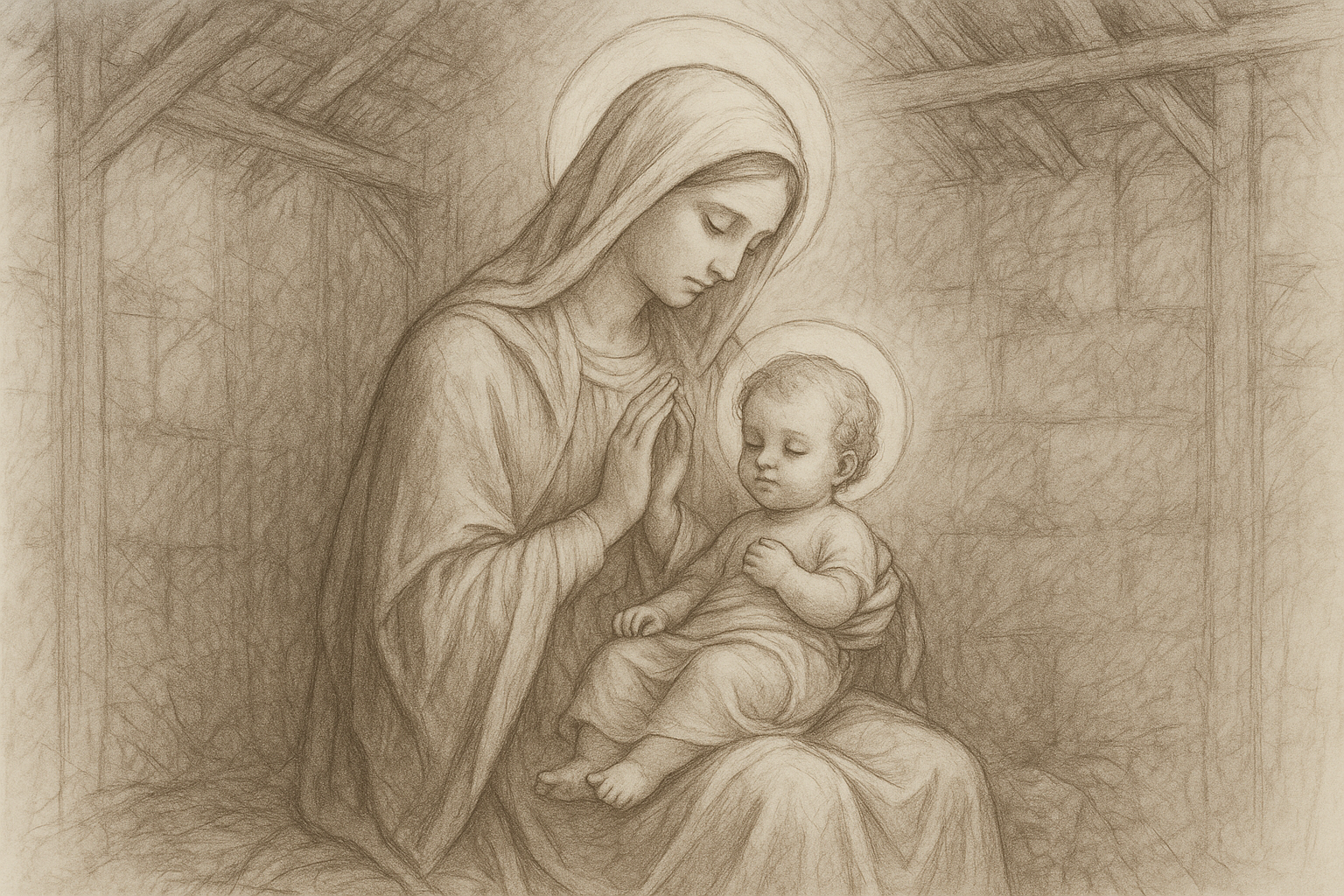
When Catholics kneel before a Nativity scene, pray the Rosary, or sing the Hail Mary, they are not turning away from Christ. They are remembering that the Savior came into the world through the obedience of a woman whom God himself had chosen and prepared. The title Mother of God protects that memory and keeps it true.
What this means for Catholic faith today
In a world that often reduces Jesus to a teacher, a symbol, or a moral example, the title Mother of God keeps the fullness of the Gospel intact. It says Jesus is not merely remarkable. He is the eternal Son made visible in human flesh. It says the Nativity is not sentiment alone. It is the arrival of God among us.
For Catholics, this title also invites trust. If God could enter the world so humbly, he can enter our ordinary lives as well. If Mary could receive him in faith, we can also receive his word with confidence. Her motherhood points to the nearness of God and the tenderness of his saving plan.
That is why the Church continues to honor Mary with this ancient title. It is a confession about Jesus before it is anything else. And because it is true about Jesus, it is also beautifully true about the woman who bore him.
The Mother of God stands at the threshold of the mystery, not to replace the Lord, but to give him to the world. In her, the Church sees the humility of faith and the greatness of God's promise joined together in one quiet, unwavering yes.
Keep Reading on Lets Read The Bible
Frequently Asked Questions
Why do Catholics call Mary Mother of God if God has no beginning?
Catholics mean that Mary is the mother of Jesus, and Jesus is truly God. The title refers to the Person she bore in time, not to the beginning of God's divine nature, which is eternal.
Is Mother of God a biblical title?
The exact phrase is not found in Scripture, but the meaning is there. Elizabeth calls Mary the mother of my Lord, and the Gospels teach that Jesus is the Son of God who was born of her.
Does this title mean Catholics worship Mary?
No. Catholics worship God alone. Mary is honored because of her unique relationship to Christ, but she is never treated as divine.