Doctrine and Questions
Bread That Is More Than Bread: Reading the Eucharist with Catholic Faith
A clear look at the Real Presence, from Scripture and the living belief of the Church
Site Admin | June 16, 2025 | 81 views
The heart of the Catholic confession
The phrase the Real Presence in the Eucharist Catholic teaching names one of the central mysteries of Catholic faith. At Mass, Catholics do not believe they are receiving only a reminder of Jesus or a sacred sign pointing to Him from afar. They believe they are receiving Jesus Himself, truly present under the appearances of bread and wine.
This teaching is not a later embellishment added for drama. It grows from the words of Christ, the witness of the New Testament, and the steady faith of the Church through the centuries. Catholics kneel before the Eucharist because they believe the Lord who said, This is my body and This is my blood continues to keep His promise.
That belief can sound surprising in a world that often treats religious symbols as mere reminders. Yet the Catholic claim is more concrete than symbolism. It says that when the Church celebrates the Eucharist in obedience to Christ, the sacramental signs remain, but the reality they contain is Christ Himself.
What Jesus said at the Last Supper
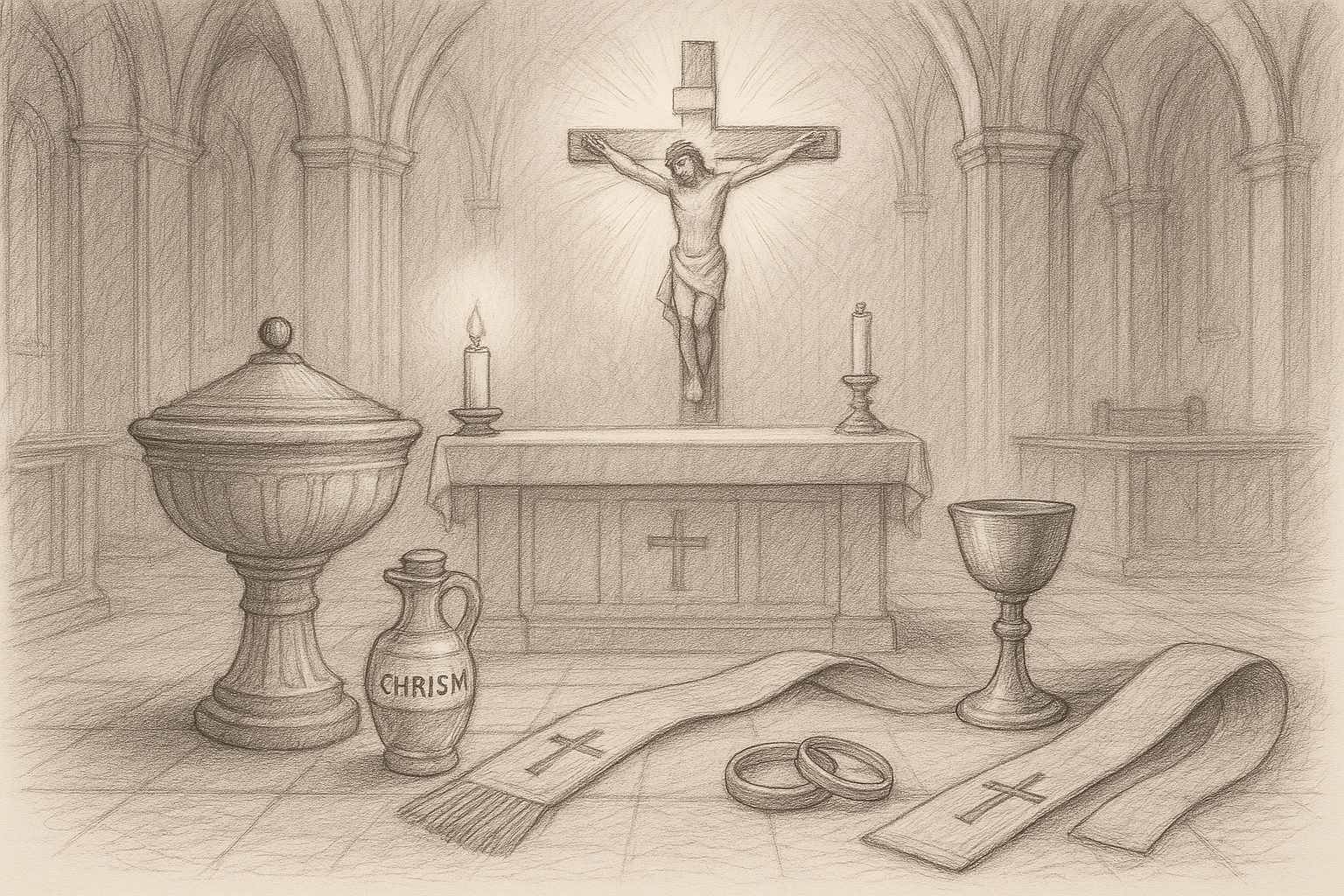
The foundation begins at the Last Supper. The Gospels tell us that Jesus took bread, blessed it, broke it, and gave it to His disciples, saying, This is my body This is my body. Over the cup He said, This is my blood of the covenant This is my blood of the covenant.
Catholics read those words plainly. The Lord does not say, This represents my body, but This is my body. He also commands the apostles, Do this in remembrance of me Do this in remembrance of me. In biblical language, remembrance is not merely mental recall. It is a liturgical making-present of God's saving work.
That pattern is already visible in the Old Testament. The Passover was not simply a history lesson about Israel's escape from Egypt. It was a sacred meal through which God's people participated in the saving event He had done for them. Christ, the true Lamb, fulfills that pattern in a new and far greater way.
John 6 and the language of real eating
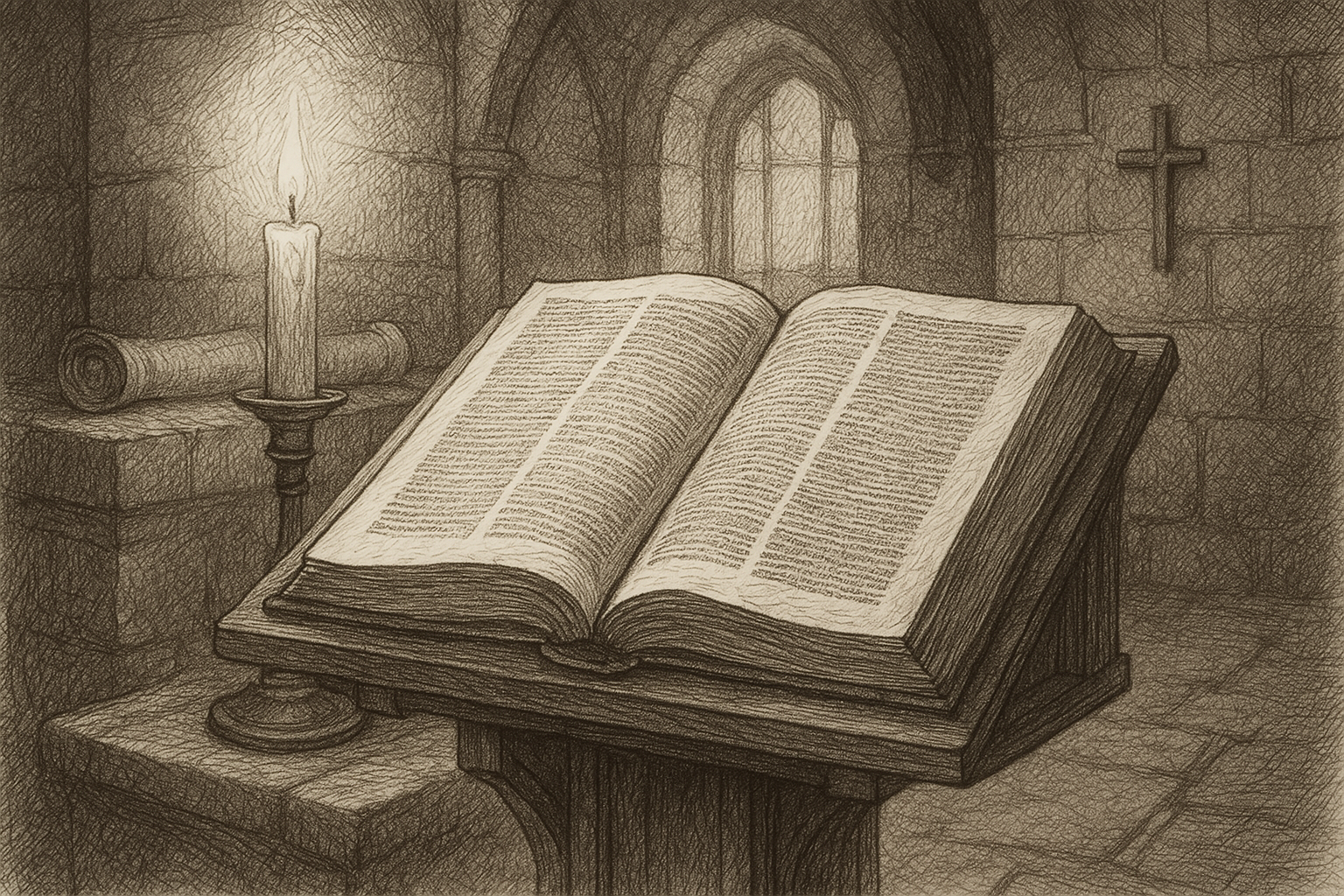
Many Catholics turn to John 6 when explaining Eucharistic faith. After the multiplication of the loaves, Jesus speaks of Himself as the bread come down from heaven and says, The bread that I will give for the life of the world is my flesh The bread that I will give for the life of the world is my flesh.
The reaction of the crowd matters. They do not respond as if Jesus were offering a poetic image. Instead, they ask, How can this man give us his flesh to eat? How can this man give us his flesh to eat?. Rather than softening the claim, Jesus intensifies it: Unless you eat the flesh of the Son of Man and drink his blood, you have no life in you Unless you eat the flesh of the Son of Man and drink his blood.
He later says, My flesh is true food, and my blood is true drink My flesh is true food, and my blood is true drink. Many disciples find this saying hard and leave Him Many disciples turned back. Jesus does not chase them down to explain that He only meant a symbol. He allows the seriousness of the saying to stand.
Catholics do not read John 6 as if every line were a direct explanation of the Mass, but the chapter strongly prepares the Church to understand the Eucharist as more than a sign. It is food from heaven, given by the Lord for the life of the world.
What the Church means by Real Presence
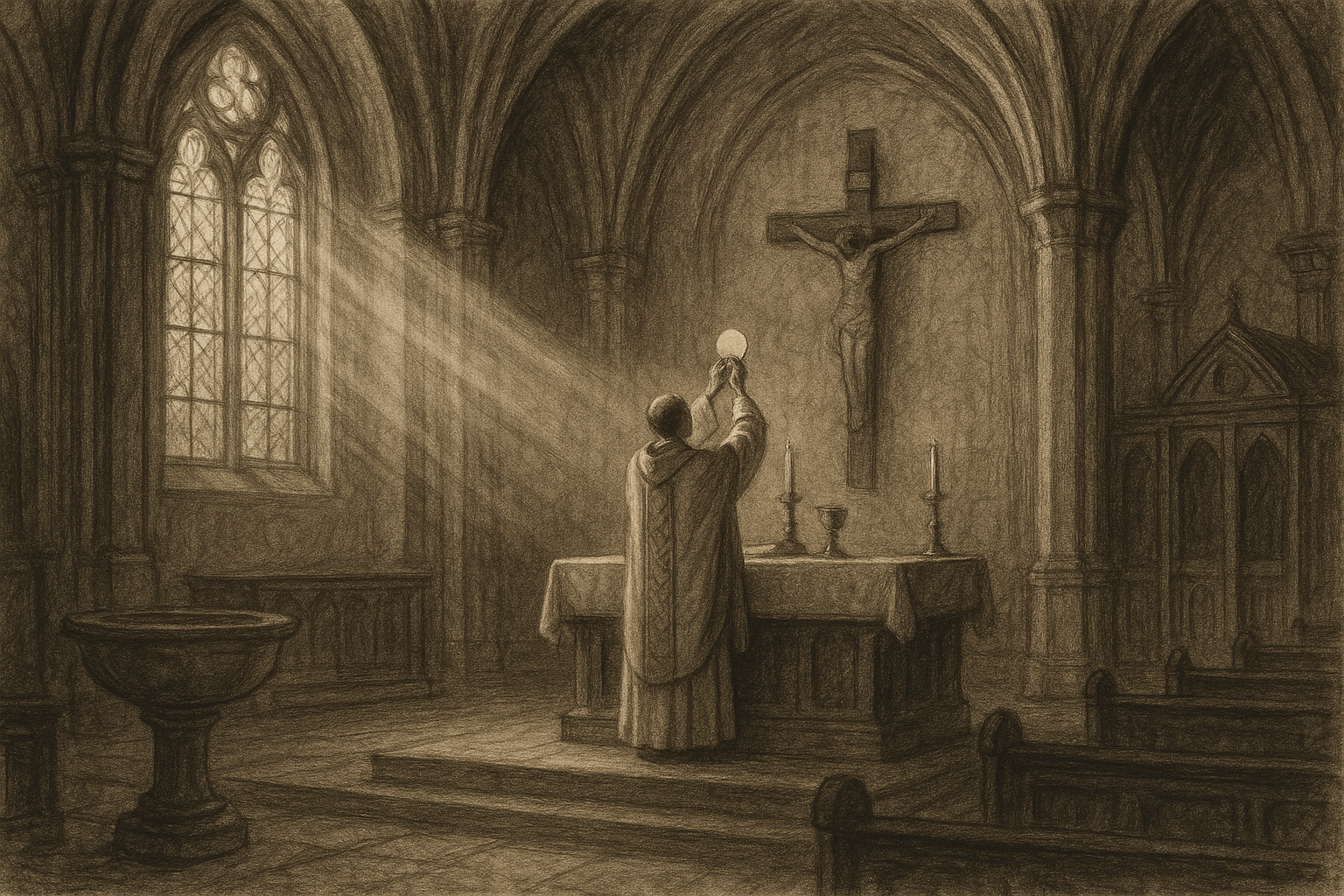
When Catholics speak of the Real Presence, they mean that Jesus is present in the Eucharist in a unique and substantial way. The bread and wine truly become Christ's Body and Blood, while the outward appearances remain bread and wine. The Church often uses the word transubstantiation to describe this change.
That word can sound technical, but the idea is simple enough. Something deep has changed even though what the senses detect has not. The Eucharist still looks, tastes, and feels like bread and wine. Yet the Church believes its inner reality has been transformed by the power of Christ's word and the Holy Spirit.
This is why Catholics reserve the Blessed Sacrament in a tabernacle, adore Christ in Eucharistic worship, and bring Holy Communion to the sick. If the Eucharist were merely symbolic, these acts would be excessive. If Christ is truly present, they are fitting acts of reverence.
Paul's warning about receiving the Lord unworthily
Saint Paul also gives a serious witness. In First Corinthians, he warns that whoever eats the bread or drinks the cup of the Lord unworthily will be answerable for the body and blood of the Lord Answerable for the body and blood of the Lord. He adds that anyone who eats and drinks without discerning the body eats and drinks judgment upon himself Without discerning the body.
Those words make strong sense if the Eucharist is truly Christ's Body and Blood. Paul is not describing a casual devotional object. He is speaking about holy communion with the risen Lord, received with faith, repentance, and reverence.
For Catholics, this is also why the Church asks the faithful to prepare for Communion through confession when they are conscious of grave sin. The point is not fear for its own sake. It is love. We do not approach the King of glory lightly.
How this differs from a mere symbol
Many Christians who are not Catholic still love the Lord deeply and treasure the Lord's Supper. Catholics can respect that sincerity. But the Catholic understanding goes further. A symbol points to something absent. The Eucharist, by contrast, is the sacramental presence of One who is truly there.
That does not mean the Eucharist stops being sacramental. The Catholic Church does not say that Jesus is present in a crude, physical way like ordinary matter in a container. Rather, He is present sacramentally, in a mode that is real, holy, and mysterious.
It is also not a matter of human imagination making Jesus present by devotion. The Church teaches that Christ acts through the sacrament He instituted. His promise, His word, and His power make the gift what it is.
Why the Eucharist is worshiped
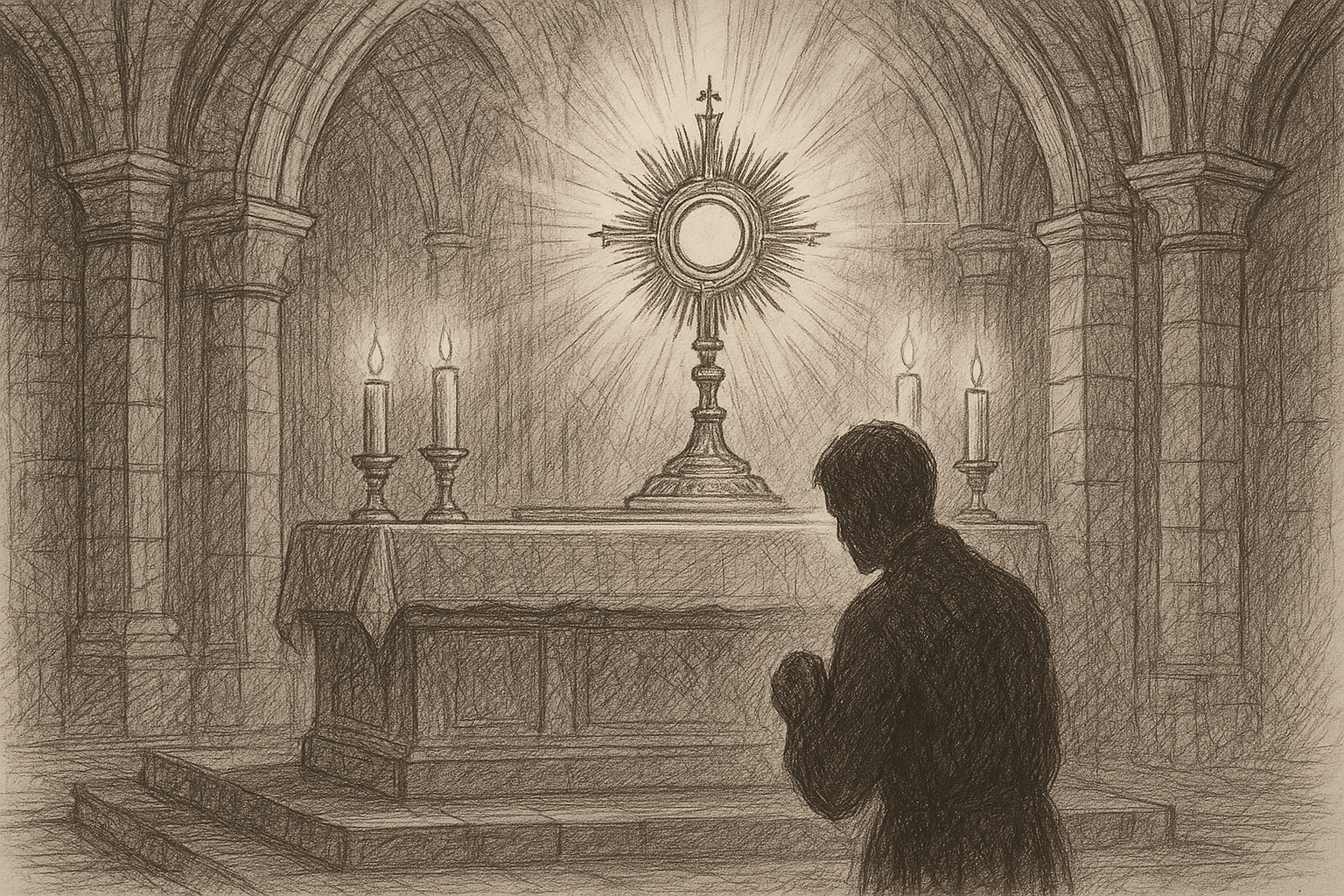
Catholics adore the Eucharist because Catholics adore Jesus Christ. If Christ is truly present, then Eucharistic adoration is not misplaced devotion but rightful worship.
Throughout the Gospel accounts, the faithful respond to Jesus with kneeling, falling before Him, and glorifying God in His presence. The same posture continues in the Church's life before the Blessed Sacrament. In adoration, Catholics are not treating bread as if it were God. They are honoring the Lord who remains with His Church in the gift He established.
This also explains the deep silence many people experience in Eucharistic prayer. The Church is not filling the moment with noise because the moment is already full. Christ is there.
Common questions and honest clarifications
People often ask whether belief in the Real Presence ignores reason. The Catholic answer is no. Reason can tell us that if God exists, He can act beyond ordinary expectations. The Eucharist is not a claim that bread becomes something by human effort or magical technique. It is a claim that Christ fulfills His own words in a sacramental manner.
Another question is whether the Eucharist is only a memory of the Passion. It certainly is a memorial of Christ's saving death, but in the biblical sense of memorial it makes that sacrifice present sacramentally. Catholics do not believe Christ is sacrificed again. They believe the one sacrifice of Calvary is made present to the Church in an unbloody manner.
Some also ask why the elements still look like bread and wine if they are no longer bread and wine in their deepest reality. The answer is that God does not need to alter the appearance to change the substance. The hiddenness of the sacrament protects the gift from becoming a spectacle and invites faith.
Living the mystery with reverence
Belief in the Real Presence shapes Catholic life in practical ways. It affects how we dress for Mass, how we silence ourselves before Communion, how we examine our conscience, and how we pray after receiving the sacrament. These are not empty customs. They are signs that the Church knows she stands before a holy mystery.
At the same time, Eucharistic faith should not become cold or merely formal. The Lord who gives Himself in the sacrament is the same Lord who fed the hungry, forgave sinners, and welcomed the weary. To receive Him well is to let His presence reshape our own lives into charity, humility, and gratitude.
That is why the Eucharist remains at the center of Catholic worship. It is not an idea to admire from a distance. It is the living gift of Christ to His Church, the sacrament in which the Savior remains near, feeds His people, and calls them to deeper communion with Him.
When Catholics step forward to the altar, they are not approaching a sign alone. They are meeting the Lord who keeps His promise and gives Himself as food for the journey.
Keep Reading on Lets Read The Bible
Frequently Asked Questions
What does the Catholic Church mean by the Real Presence in the Eucharist?
The Church teaches that Jesus Christ is truly present in the Eucharist, body, blood, soul, and divinity. The appearances of bread and wine remain, but their deepest reality is changed into Christ Himself.
Where is the Real Presence in the Eucharist taught in Scripture?
Catholics look especially to the Last Supper accounts in the Gospels, John 6, and Saint Paul's teaching in 1 Corinthians 11. These passages show Jesus speaking of His body and blood in a way that the Church has always taken seriously and literally in sacramental faith.
Why do Catholics kneel or adore the Eucharist if it looks like bread and wine?
Because Catholics believe the Eucharist is truly Jesus Christ present sacramentally. The outward appearance stays the same, but the Lord Himself is there, so adoration is directed to Him, not to bread as bread.