Doctrine and Questions
More Than a Religious Symbol: Why the Crucifix Remains at the Center of Catholic Life
A crucifix is not decoration in Catholic life. It is a constant reminder of Christ's saving love, the cost of sin, and the hope of redemption.
Site Admin | June 16, 2026 | 37 views
Visitors to a Catholic home, school, hospital, or church often notice the same thing right away: a crucifix. To some people, it may seem like an unusual religious object to keep in so many places. Why not use a plain cross instead? Why show Christ crucified rather than leave the symbol empty?
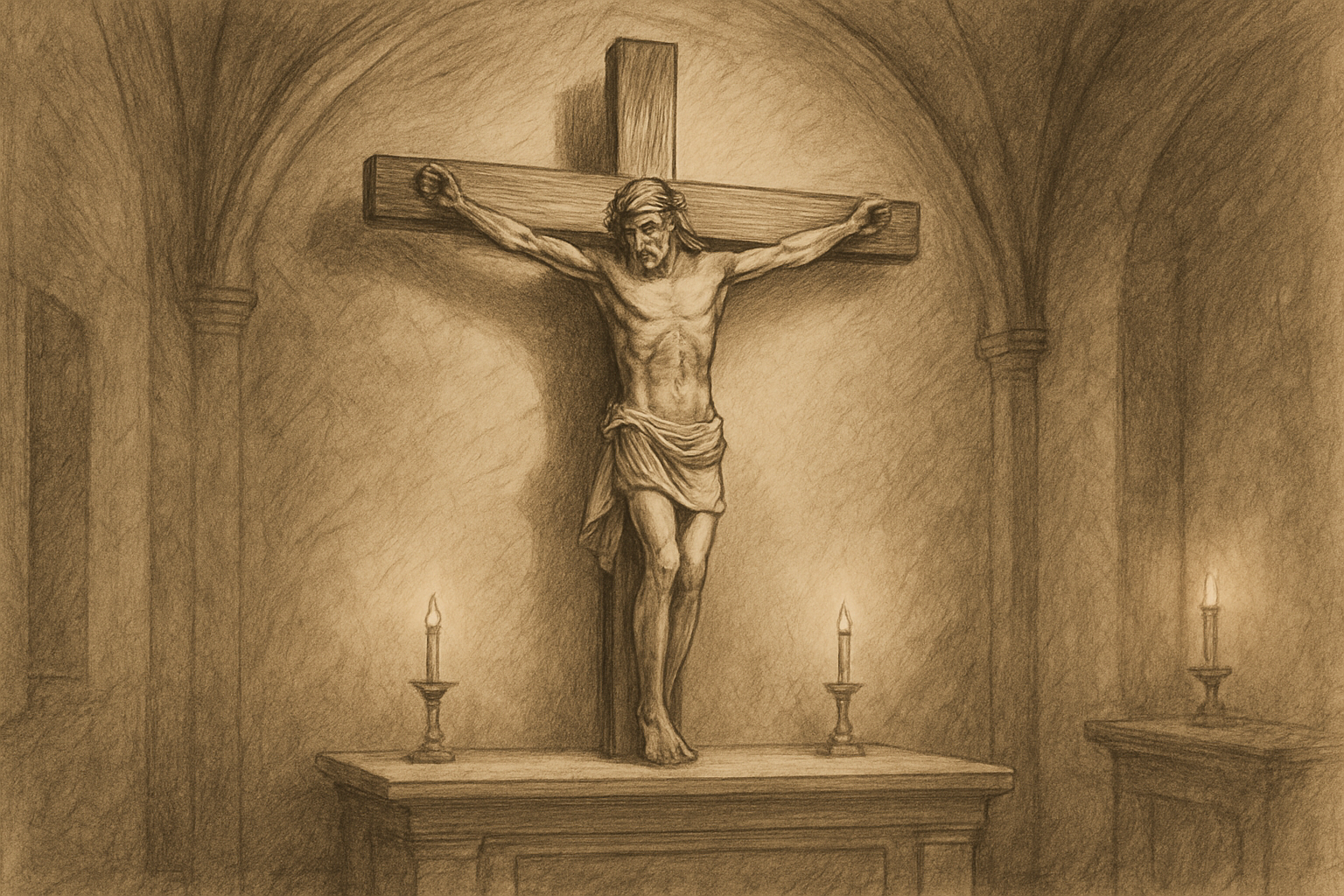
The answer reaches to the heart of Catholic faith. The crucifix is not kept as a decoration or a reminder of suffering for its own sake. It is kept because it visibly proclaims the central truth of the Gospel: Jesus Christ truly suffered, died, and offered Himself for our salvation. In other words, it helps answer why Catholics keep crucifixes explained in the most direct way possible. The crucifix holds together love, sacrifice, redemption, and hope in a single sacred image.
The crucifix keeps the Passion before our eyes
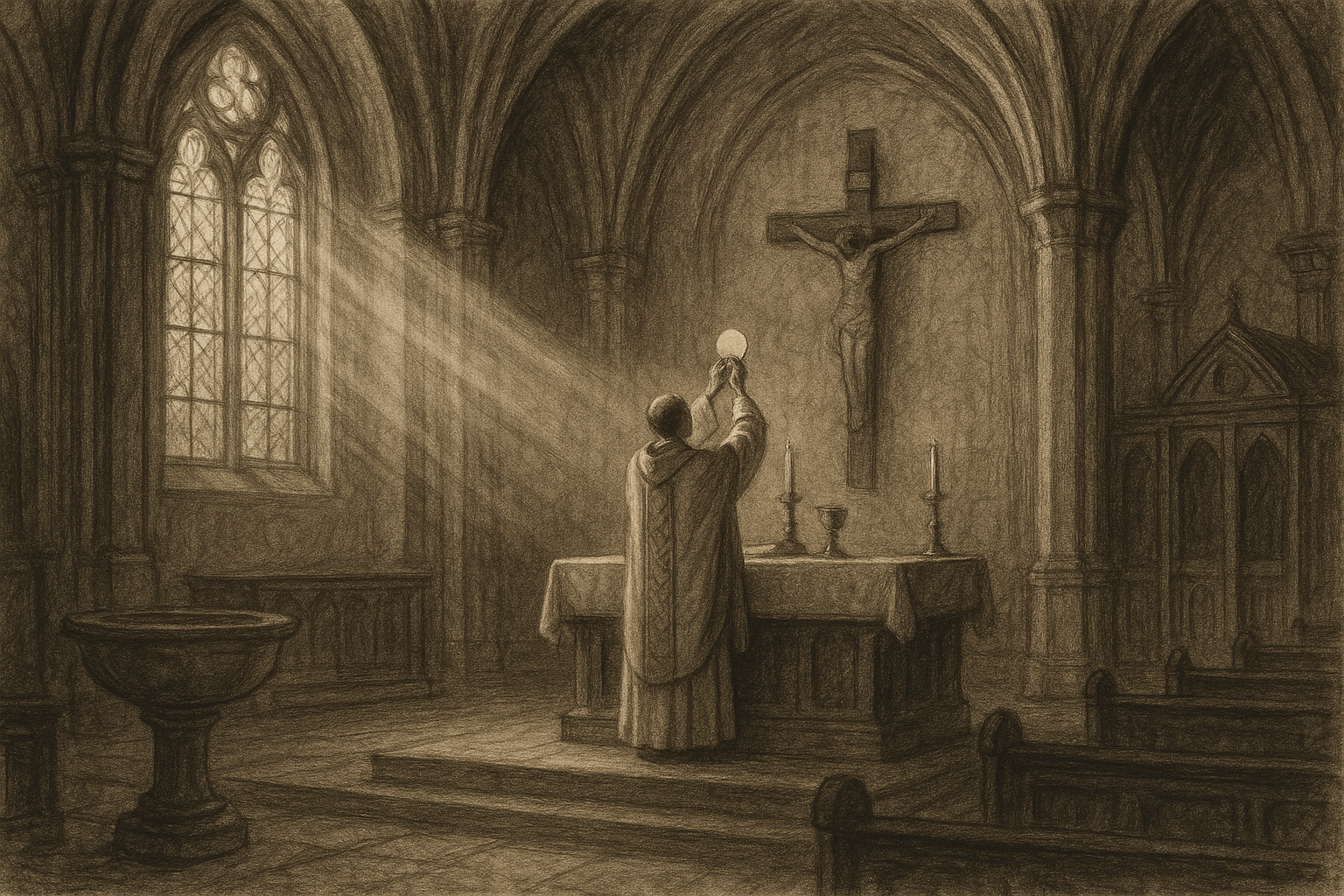
Catholics do not treat the Passion of Christ as a distant event confined to the past. The Church proclaims it every time the Mass is celebrated, because the sacrifice of Calvary is made present sacramentally in the liturgy. A crucifix helps the faithful remember that the Eucharist is inseparable from the Cross. The Body given in the Eucharist is the Body given up on Good Friday.
Scripture itself places the Cross at the center of Christian life. Saint Paul tells the Corinthians, "For I decided to know nothing among you except Jesus Christ and him crucified" 1 Corinthians 2:2. That is not a narrow message. It is the apostolic heart of the faith. The crucifix simply gives that truth visible form.
When Catholics look at the crucifix, they are not invited to dwell in despair. They are invited to remember what love costs. The image teaches that the Son of God did not save us by words alone, but by self-offering. His wounds are not erased. They are glorified, because they reveal mercy given to the end.
The Bible presents the Cross as victory, not defeat
At first glance, a crucifix can seem like an image of shame. In the Roman world, crucifixion was a form of public humiliation. But the New Testament transforms that meaning. What appeared to be defeat became victory. What looked like the end became the beginning of new life.
Saint John writes with striking clarity: "And I, when I am lifted up from the earth, will draw all men to myself" John 12:32. The Cross is not only an execution instrument in Christian memory. It is the throne from which Christ reigns in sacrificial love. Catholics keep crucifixes because they confess that the Crucified Lord is also the victorious King.
Saint Paul describes this mystery in another way: "We preach Christ crucified" 1 Corinthians 1:23. The apostle does not say Christians preach merely a moral code or a spiritual feeling. They preach a person, and that person gives Himself up for sinners. The crucifix protects that proclamation from becoming vague. It keeps the faith anchored in the real events of salvation history.
Why a crucifix and not just a cross?
Christians of many traditions use the cross as a sign of faith, and Catholics respect that. But the crucifix includes more than the shape of the Cross. It shows the body of Christ, and that detail matters. The crucifix says that the Son of God truly became man, truly suffered, and truly died.
That bodily reality is essential to Catholic belief. Christianity is not an idea floating above history. It is the Incarnation: God entered human life. The crucifix insists that salvation is not abstract. It came through flesh, blood, obedience, and sacrifice. The image answers a human tendency to soften the cost of redemption. It reminds us that love became visible and wounded for our sake.
There is also a pastoral reason. Many people know suffering personally. Grief, illness, betrayal, fear, and loneliness can make faith feel distant. A crucifix quietly says that Christ has entered that darkness. He does not merely observe human pain from afar. He bears it. As the Letter to the Hebrews teaches, we do not have a high priest unable to sympathize with our weaknesses Hebrews 4:15.
The crucifix teaches the meaning of love
In a world that often defines love as sentiment, the crucifix offers a harder and holier definition. Jesus says, "Greater love has no man than this, that a man lay down his life for his friends" John 15:13. Catholics keep crucifixes because they want that definition of love to shape their homes, consciences, and relationships.
The crucifix is especially important because it does not leave love vague or self-chosen. It shows love as gift, obedience, and self-emptying. Christ did not cling to status. He accepted the Cross out of love for the Father and for us. Saint Paul captures this movement when he writes that Christ "humbled himself and became obedient unto death, even death on a cross" Philippians 2:8.
That is one reason Catholics keep crucifixes in places of prayer. The image forms the heart. It teaches patience, sacrifice, forgiveness, and trust. It asks whether our own lives are shaped by the same self-giving love or by comfort alone. A crucifix in the home can gently call a family back to what matters most when daily life grows rushed or distracted.
The Church has always used sacred images to teach the faith
Catholic devotion to the crucifix also belongs to the Church's broader use of sacred art. The Church does not worship images. It honors them because they point beyond themselves to Christ and the mysteries of faith. From the earliest centuries, Christians used visible signs to teach and confess what they believed.
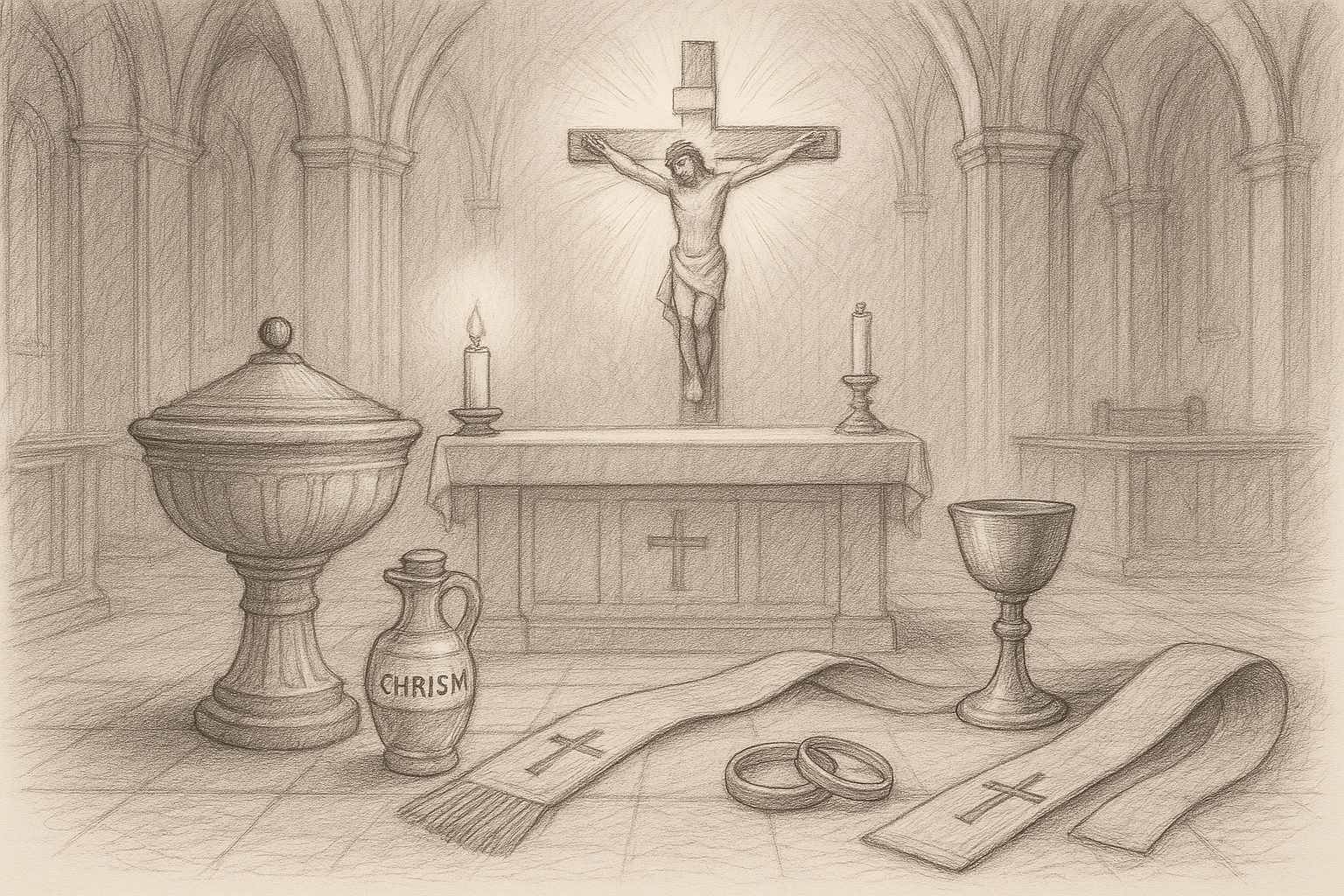
This is especially important in a faith that is both biblical and sacramental. God uses material things to communicate grace. Water, bread, wine, oil, touch, and spoken words all become instruments of His saving work. Sacred images fit naturally within that pattern. They do not replace Scripture or the sacraments. They support the believer's memory, devotion, and reverence.
The crucifix is therefore not a superstition. It is a confession in wood and metal. It says the Gospel can be seen as well as heard. It reminds us that the Christian story is not merely about inspiration, but about redemption accomplished in history.
How the crucifix shapes ordinary Catholic life
The value of the crucifix becomes clearest in ordinary life. In a bedroom, it can begin and end the day in prayer. In a classroom, it can remind students that wisdom begins in reverence. In a hospital room, it can bring comfort to the sick and dying. In a church, it directs attention to the sacrifice of the altar and the One who offers Himself there.
Many Catholics also find that the crucifix helps them pray more honestly. It is easier to remain vague before a pleasant image than before the wounded body of Christ. The crucifix does not let prayer drift into sentimentality. It invites repentance, gratitude, and trust. It teaches us to ask what our sins cost, but also what God's mercy has already given.
It is worth noting that Catholics do not keep crucifixes because they enjoy suffering. Quite the opposite. They keep them because Christ's suffering has been transformed by love. The crucifix is a sign that suffering need not be meaningless when united to Him. This is one reason it speaks so powerfully to people in difficult seasons of life. It tells them that God has not remained absent from pain.
The crucifix keeps Easter from being reduced to a feeling
Some people prefer to focus only on the Resurrection, and of course the Resurrection is essential. But Easter makes sense only because Good Friday was real. The crucifix protects that unity. It keeps Christians from turning the Resurrection into a vague symbol of optimism detached from sacrifice.
The empty tomb and the crucifix belong together. The risen Christ is the same Jesus who was nailed to the Cross. His wounds are not erased from history. They are the marks of victorious love. This is why Catholics do not hide the crucifix as though it were embarrassing. They display it because it reveals what kind of God they worship: one who saves by giving Himself completely.
When a Catholic bows before a crucifix or prays while looking at one, the gesture is not meant as mere custom. It is a recognition that everything begins and ends in Christ. The Cross is the measure of sin, the sign of mercy, and the path into life. For that reason, the crucifix remains one of the most beloved and enduring signs in Catholic homes and churches. It keeps the mystery of salvation visible, and it keeps the heart turned toward the One who loved us to the end.
Keep Reading on Lets Read The Bible
Frequently Asked Questions
Do Catholics worship the crucifix?
No. Catholics do not worship the crucifix as an object. They honor it as a sacred image that points to Jesus Christ and to the saving mystery of His Cross.
Why do Catholics use a crucifix instead of an empty cross?
The crucifix shows Christ on the Cross, which emphasizes the reality of the Incarnation, the Passion, and the sacrificial love by which He saved us. It makes the Gospel more concrete and personal.
Is it appropriate to keep a crucifix in a Catholic home?
Yes. Many Catholics keep a crucifix in the home as a reminder of prayer, sacrifice, and Christ's presence in daily life. It can also be a helpful sign for family prayer and spiritual formation.