Saints and Witnesses
Padre Pio and the Hidden Cost of Holy Fidelity
A life marked by suffering, confession, prayer, and steadfast service to souls
Site Admin | May 12, 2026 | 109 views
St. Padre Pio's life can seem almost impossible at first glance. A Capuchin friar from southern Italy, he became known across the world for his prayer, his fidelity to the sacraments, his painful sufferings, and the marked devotion he inspired in ordinary Catholics. Yet the heart of his witness was not spectacle. It was holiness lived in a very steady way, day after day, through confession, sacrifice, obedience, and love for Christ.
Born Francesco Forgione in 1887 in Pietrelcina, Italy, he entered the Capuchin Order as a young man and received the name Pio. From early on, he desired to give himself completely to God. He was ordained a priest in 1910, and his priestly life was shaped by prayer and suffering in ways that would become central to his witness. For Catholics looking to understand the St. Padre Pio life, the most important thing is not to begin with the extraordinary stories, but with the faithful pattern underneath them.
A priest formed by prayer and suffering
Padre Pio's life was marked by weakness, illness, and long periods of pain. These were not merely obstacles to his vocation. They became part of it. He spent much of his life at San Giovanni Rotondo, where he served for decades as a friar and priest. There, his ministry slowly drew pilgrims who sought confession, counsel, and prayer.
What made him unusual was not only the visible attention he received, but the seriousness with which he treated the ordinary duties of priesthood. He heard confessions for long hours. He urged repentance. He called people to sincere conversion and to a return to the sacraments. In a century that often drifted toward noise and novelty, his ministry remained centered on the quiet and demanding work of grace.
That emphasis matters because the Church does not measure holiness by public visibility. She measures it by conformity to Christ. Padre Pio's witness suggests that hidden fidelity can become fruitful beyond all expectation.
The confessional as a place of mercy and truth
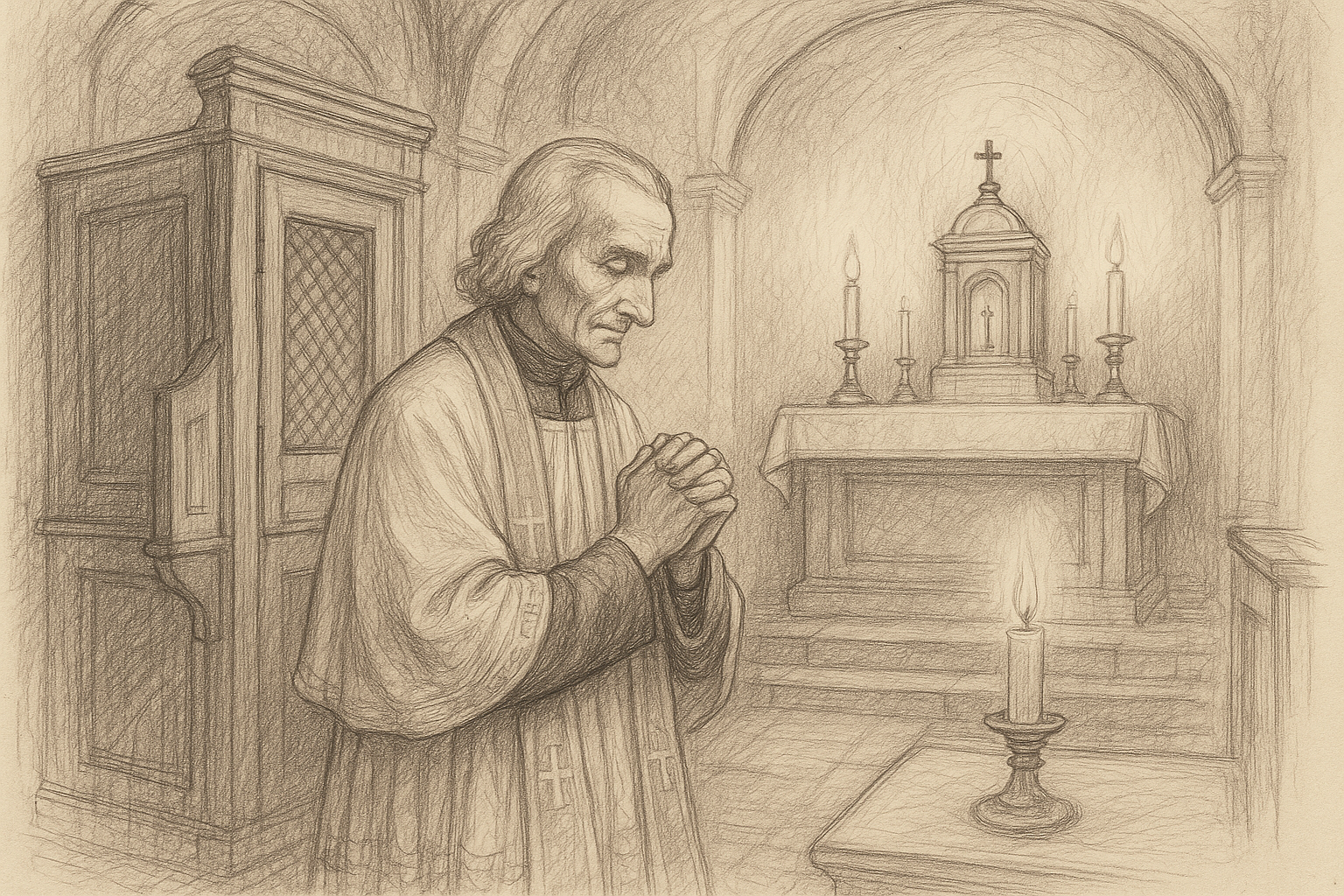
Many people know Padre Pio above all as a confessor. This was not because he offered easy reassurance. He was known for taking sin seriously and for urging penitents toward honesty. At the same time, he remained a minister of divine mercy. In him, Catholics saw that confession is not meant to be a spiritual formality, but a meeting with the mercy of Christ who heals what is broken.
Scripture reminds us that God does not despise a repentant heart: A contrite heart, O God, you will not spurn. Padre Pio's confessional ministry gave flesh to that truth. He called people to stop rationalizing sin and to come clean before God. Yet he also reflected the tenderness of a shepherd who wants souls restored, not humiliated.
For many Catholics today, confession is approached with hesitation, embarrassment, or routine. Padre Pio offers a bracing reminder that the sacrament is meant to be taken seriously because sin is serious, and mercy is serious too. He helps recover both fear of offending God and confidence in His forgiveness.
Lessons Catholics can carry into confession
- Examine the conscience honestly, without minimizing what is grave.
- Approach the sacrament with faith in Christ's mercy, not with despair.
- Accept guidance, penance, and correction as part of healing.
- Return regularly, not only when life feels desperate.
A witness to obedience when life became difficult
Padre Pio's life was not free from suspicion, misunderstanding, and restriction. At times, Church authorities limited aspects of his ministry while investigations were carried out. Whatever one thinks about the pain of those years, they are part of his story and should not be ignored. A saint is not someone who lives without hardship. A saint is someone who remains obedient within hardship.
His response to trial was deeply Catholic in the best sense. He did not build a private movement around himself. He remained a priest of the Church, bound to her sacramental life and discipline. That fidelity is one of the clearest signs that his holiness was genuine. As St. Paul writes, holiness is not self-made but made possible by grace: My grace is sufficient for you, for power is made perfect in weakness.
This is a hard lesson for modern people, who often assume that spiritual authority must be visible, smooth, and celebrated. Padre Pio shows another path: obedience that survives confusion, and trust that remains when admiration is mixed with suffering.
His wounds, his prayer, and the mystery of suffering
Padre Pio was also known for the stigmata, the wounds associated with Christ's Passion. The Church approached such matters with caution, and Catholics should do the same. We do not need to build our faith on extraordinary signs. Still, in Padre Pio's case, the wounds became part of the broader testimony to a man profoundly united to the Crucified Lord.
What mattered most was not curiosity, but participation in Christ's suffering. Padre Pio lived the truth that suffering, united to Jesus, can become fruitful for others. That is a deeply biblical and Catholic conviction. St. Paul speaks of filling up in his own flesh what is lacking in the afflictions of Christ for the sake of the Church I complete what is lacking in Christ's afflictions. This does not mean Christ's sacrifice was insufficient. It means believers are invited to join their suffering to His saving work.
Padre Pio's long hours in prayer, his endurance in physical pain, and his willingness to carry burdens for others all point toward this mystery. Suffering is not good in itself. But in union with Christ, it can be offered, purified, and transformed into love.
Why people still travel to him in spirit
Even though Padre Pio died in 1968 and was canonized in 2002, devotion to him continues because people sense that he spoke to the needs of ordinary Catholics. He did not preach a spirituality reserved for the strong or the polished. He preached repentance, prayer, Eucharistic devotion, humility, and confidence in God's mercy.
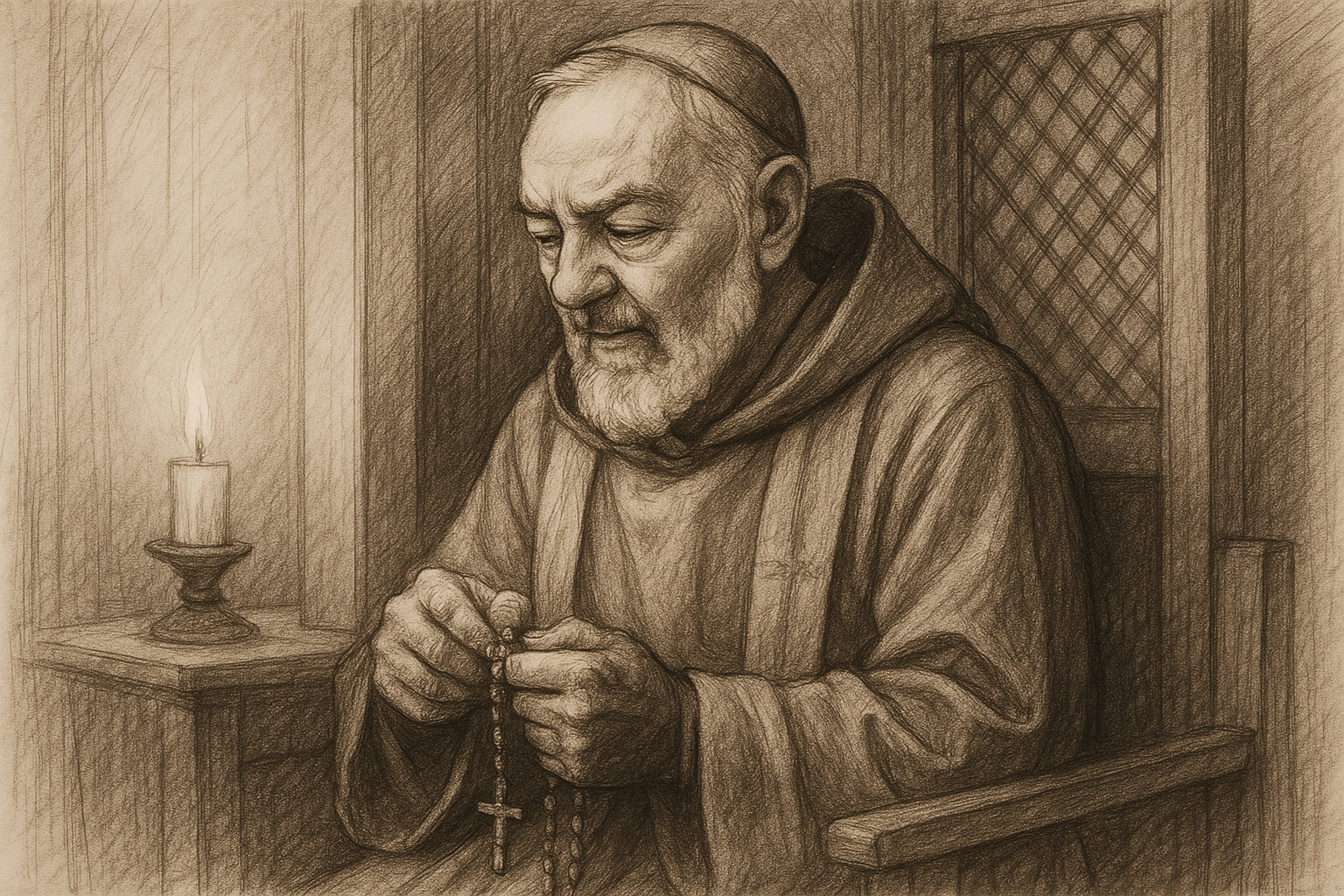
He also lived with practical intensity. He encouraged the Rosary. He loved the Mass. He urged devotion to Our Lady. These are not optional decorations in Catholic life. They are the ordinary channels by which grace shapes the soul. Padre Pio's popularity endures because he treated those practices as real means of holiness, not as sentimental habits.
There is also something deeply consoling in the fact that a man so deeply marked by suffering could still radiate spiritual authority. Catholics who are weary, burdened by sin, or unsure whether their small acts of fidelity matter can look to him and see that God builds sanctity in hidden ways.
Holiness often looks slow from the outside. In truth, it is the patient work of grace in a willing soul.
What Catholics can learn from Padre Pio today
Padre Pio's life speaks clearly to Catholics who want faith to be more than a label. He reminds us that serious prayer, regular confession, and obedience to the Church are not outdated disciplines. They are means of renewal.
He also warns against a shallow view of sanctity. A saint is not merely a person with strong feelings or popular appeal. A saint is someone who belongs to Christ. That belonging can include hidden suffering, misunderstood choices, and a great deal of patience. Padre Pio shows that the Christian life is not about controlling outcomes, but about offering oneself to God in trust.
For families, priests, religious, and laypeople alike, his witness can be summed up in a few practical commitments:
- Take confession seriously, and do not let fear keep you away.
- Make prayer a daily habit, especially the Rosary and time before the Lord.
- Accept suffering without turning it into bitterness.
- Stay close to the sacraments, where Christ meets His people in mercy.
- Let obedience and humility shape your decisions more than self-assertion.
Padre Pio did not need to be impressive in the modern sense. He needed to be faithful. That is what made his life fruitful. And that is why his witness still matters: not because it flatters the imagination, but because it calls the heart back to Christ, where mercy and truth meet, and where ordinary fidelity can become something luminous.
Keep Reading on Lets Read The Bible
Frequently Asked Questions
What is St. Padre Pio best known for?
He is best known as a Capuchin friar and priest noted for his long hours in confession, his deep prayer life, his devotion to the Mass and the Rosary, and the suffering he endured in union with Christ.
Why is Padre Pio connected so strongly with confession?
Because he spent many years hearing confessions and urging people toward sincere repentance. His ministry reminded Catholics that confession is a true encounter with God's mercy, not a routine formality.
What can Catholics learn from Padre Pio's life today?
His life teaches the value of prayer, obedience, regular confession, devotion to the Eucharist, and accepting suffering with faith rather than resentment.