Saints and Witnesses
St. Gianna Molla and the Quiet Strength of Holiness in Ordinary Life
A physician, wife, and mother whose faithful love still speaks powerfully to Catholics today
Site Admin | May 17, 2026 | 128 views
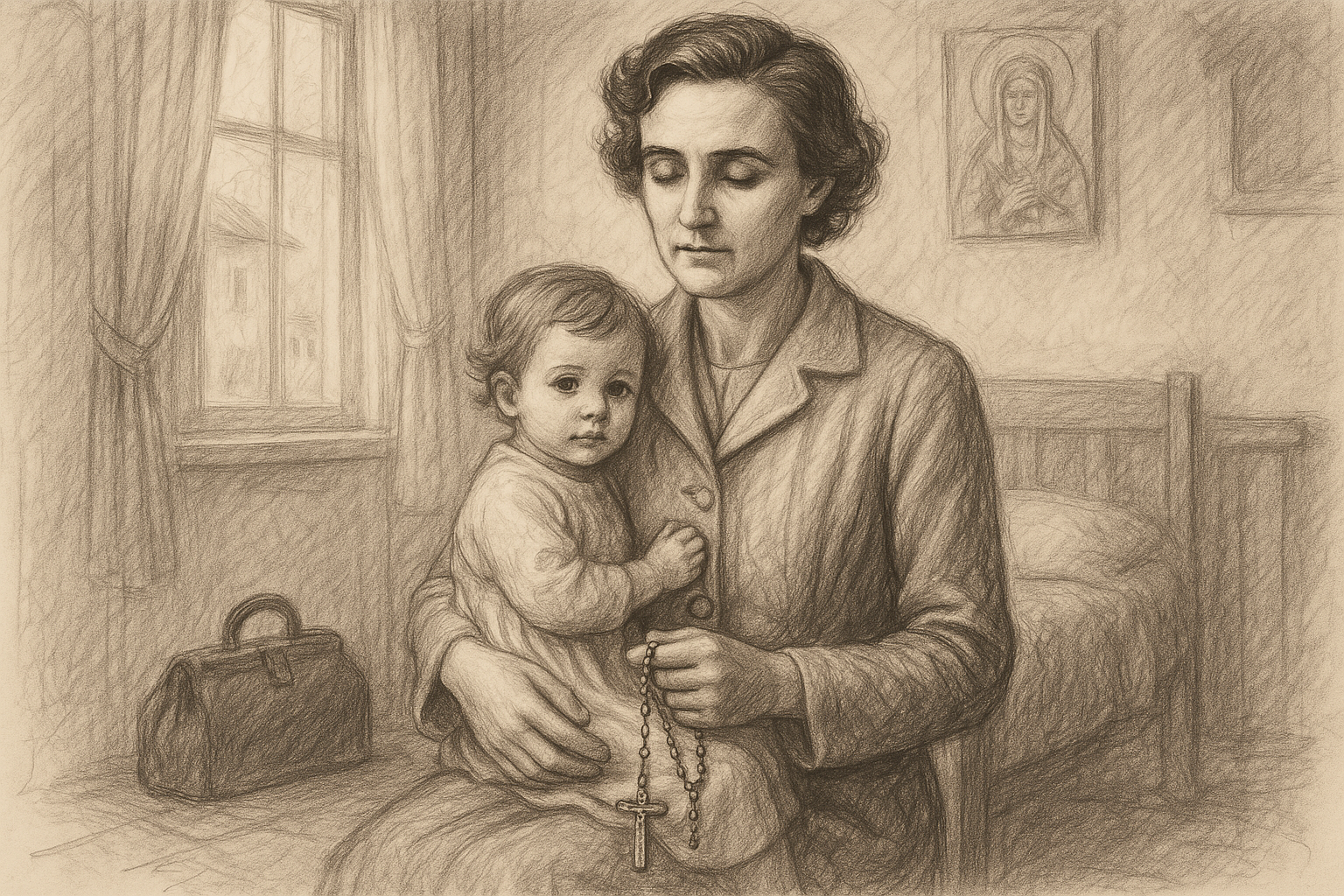
Some saints shine through public preaching, great writings, or dramatic martyrdom. St. Gianna Beretta Molla speaks in a quieter register. She was a doctor, a wife, and a mother who loved her family, practiced her faith, and tried to meet the demands of daily life with steadiness and grace. That is part of what makes St. Gianna Molla Catholic inspiration so enduring. She does not seem remote or unreachable. She looks like someone who took ordinary responsibilities seriously and allowed grace to fill them.
Gianna was born in 1922 in Magenta, near Milan, Italy, into a large Catholic family. She learned early that faith was not an accessory to life but its center. As a young woman, she studied medicine and became a physician, choosing a profession that would let her serve the sick and vulnerable directly. After her medical studies, she married engineer Pietro Molla, and together they raised a family rooted in love, work, and prayer.
Her life mattered not because it was easy, but because it was faithfully lived. Catholics often speak about holiness in lofty terms, yet the saints remind us that holiness takes shape in ordinary choices. A mother who rises to care for her children, a husband who provides with integrity, a doctor who treats patients with patience, a Christian who prays when tired and trusts God when uncertain all have before them the same invitation Gianna accepted: to belong wholly to Christ.
A saint formed by home, work, and prayer
Gianna's sanctity did not begin with a single dramatic gesture. It was formed over years of ordinary fidelity. She attended Mass, prayed, and drew strength from the sacramental life of the Church. She also understood her medical work as a true vocation. In her profession she saw not status but service. This is a deeply Catholic insight. Human work is not merely a way to earn a living. When united to God, it can become a means of love.
Her family life was equally central. Gianna and Pietro welcomed children and tried to build a home marked by faith and tenderness. She was known to be affectionate, practical, and joyful, even while carrying the ordinary burdens of family life. There is something especially luminous about a saint who does not separate devotion from daily duty. She shows that prayer is not meant to replace family life, work, and responsibility, but to sanctify them.
In the Church's tradition, holiness is never a private achievement. It is communion with God lived in the world. Gianna understood that a Catholic cannot love God only in the abstract. Love must take flesh in relationships, patience, and sacrifice. That is why so many Catholics find her witness close to home. Her life says that one does not need an unusual stage in order to be faithful. One needs a generous heart, a formed conscience, and the courage to love consistently.
The final trial that revealed her witness
Gianna's most widely known moment came during her last pregnancy. A medical condition created serious risk, and she was faced with a painful decision. In fidelity to Catholic moral teaching, she refused direct abortion and sought to preserve both her own life and the life of her child. The pregnancy ended with the birth of her daughter, Gianna Emanuela, but complications followed. St. Gianna died in 1962, shortly after giving birth.
It is important to speak about this carefully and truthfully. The Church does not celebrate suffering for its own sake. Nor does it ask parents to be reckless. Catholic moral teaching holds that every human life is sacred from conception to natural death, and that one may never directly kill an innocent human being. Gianna's decision was not a slogan or a political gesture. It was the expression of a conscience formed by faith. She acted as a mother who believed that both she and her child belonged to God.
Her death deeply affected those who knew her, and over time her witness came to be recognized by the wider Church. Pope John Paul II canonized her in 2004. Yet the meaning of her life does not rest only in the formal act of canonization. She had already become a sign to Catholics because her choices were intelligible as Christian discipleship. She loved life, she loved her family, and she trusted God even when the path became costly.
Gianna's witness is not that suffering is good in itself, but that love remains faithful when love has a cost.
What her witness teaches about the dignity of life
Modern Catholics often face pressure to speak about life in purely ideological terms. St. Gianna helps restore a more human way of seeing. The pro-life witness of the Church is not first about argument. It is about contemplation of the person. Every human being is made in the image of God. Every child in the womb is already known and willed by the Father. Every mother and father carry responsibilities that touch eternity. Gianna's life brings these truths down from the level of theory into lived reality.
Her example also clarifies something important about the relationship between medicine and morality. A good physician does not treat patients as problems to be solved, but as persons to be served. Gianna's life as a doctor shows that medical skill and reverence for life belong together. When Catholics honor her, they are not rejecting medicine. They are affirming that medicine should be ordered to the good of the whole person and guided by moral truth.
There is also a deeply Marian dimension to her witness. Catholic mothers have long looked to the Blessed Virgin Mary as the perfect model of trust and surrender. Gianna's final months echo that spirit of fiat, a generous yes to God's will. She was not sinless, of course, but she lived a daily openness to God that helped her meet a final trial with courage. Her fidelity calls to mind the words of the Psalmist: The Lord is my shepherd and I fear no evil, for you are with me.
Why her holiness feels so close to daily Catholic life
Many people are drawn to St. Gianna because she does not feel distant from the rhythms of ordinary Catholic life. She married. She worked. She cared for children. She faced the strain of duties that can feel repetitive and hidden. Most Catholics know something of that world. They know what it means to be tired, stretched thin, and still asked to love. Gianna did not escape those pressures. She transformed them into an offering.
That is one reason her witness is so useful in spiritual direction, family life, and parish life. She reminds the faithful that sanctity does not depend on visibility. Hidden fidelity matters. A patient conversation, a prayer said before dawn, a decision to forgive, a refusal to compromise on life, a workday offered to God, and a home kept in peace are all places where holiness grows.
Her example is especially helpful for those who think sainthood belongs only to clergy, religious, or heroic public figures. The Church teaches otherwise. The lay faithful are called to sanctity in the midst of the world. St. Gianna embodies that vocation with rare clarity. Her sanctity was not abstract. It was domestic, professional, sacramental, and maternal.
The Gospel itself places this kind of hidden greatness at the center of God's kingdom. Jesus blesses the meek, the merciful, and the pure of heart. He praises the servant who is faithful in little things. Well done, good and faithful servant is not a reward for spectacle, but for fidelity. Gianna's life helps Catholics hear that promise anew.
How Catholics can draw on her witness today
To honor St. Gianna well is not only to admire her. It is to imitate the virtues she lived. Catholics can do that in concrete ways.
- Pray for a conscience formed by the Church. Gianna's courage was not spontaneous. It came from a life shaped by prayer, the sacraments, and moral truth.
- Respect life in all its stages. Her witness calls Catholics to defend the unborn, care for mothers, and reject every mentality that treats life as disposable.
- Sanctify ordinary duties. Cooking, caregiving, professional work, and family responsibilities can all become offerings to God.
- Practice trust in suffering. Gianna did not choose suffering, but she refused to let fear govern her final decision.
- Ask for intercession with confidence. Saints are not distant symbols. They are living members of the Body of Christ who pray for us.
Her canonization also speaks to the Church's hope for families. In an age when family life is often fragile, Gianna and Pietro Molla stand as a reminder that marriage can be a school of holiness. Their life together was not perfect in a worldly sense, but it was real, faithful, and fruitful. That matters. The sanctity of family life is not measured by glamour but by charity lived under one roof.
For Catholics who feel overwhelmed by the scale of modern problems, Gianna offers a consoling truth: one faithful life can matter more than a thousand anxious opinions. A mother who loves well, a doctor who protects life, and a believer who trusts God in hardship may seem small to the world, but such souls are never small before heaven.
St. Gianna's witness remains compelling because it joins tenderness with moral clarity. She loved children, loved her husband, loved her patients, and loved God without separating those loves from one another. Her life tells Catholics that fidelity is possible, that holiness is real, and that grace can elevate even the most ordinary days into something radiant.
Keep Reading on Lets Read The Bible
Frequently Asked Questions
Who was St. Gianna Beretta Molla?
St. Gianna Beretta Molla was an Italian physician, wife, and mother who was canonized by the Church in 2004. She is remembered for her devotion to family life, her medical work, and her courageous defense of unborn life during her final pregnancy.
Why is St. Gianna important to Catholics today?
She shows that holiness can be lived in ordinary states of life, especially marriage, motherhood, and professional work. Her witness also gives Catholics a clear example of defending human life with both charity and moral conviction.
What does St. Gianna teach about Catholic pro-life witness?
Her life teaches that every human life is sacred and that love sometimes requires costly sacrifice. She helps Catholics see pro-life commitment not as an abstract position but as a personal, prayerful defense of the dignity of both mother and child.