Social Teaching
Technology at the Service of the Person
Catholic social teaching offers a steady way to think about tools, attention, work, and the dignity of the human person.
Site Admin | October 20, 2025 | 94 views
Modern technology can feel almost invisible because it is woven into ordinary life. It helps us pray with a digital missal, learn from distant teachers, navigate unfamiliar roads, and keep in touch with family. It can also fragment attention, tempt us toward comparison, and make silence feel strange. For Catholics, the question is not whether technology is good or bad in itself, but whether it is being ordered toward the truth about the human person.
The focus keyword, technology and the human person Catholic teaching, points to an older and deeper wisdom than any recent device. Catholic social teaching begins with the conviction that the human person is created in the image of God, redeemed by Christ, and called to communion. No tool, platform, or machine is neutral in the sense of being beyond moral judgment, because every human invention enters a world already shaped by virtue, sin, family life, labor, worship, and responsibility.
The human person comes before the machine
Catholic teaching does not begin with usefulness alone. It begins with dignity. A person is not a data point, a consumer profile, or a unit of output. Each man and woman has an inalienable worth that does not come from productivity, popularity, or technical skill. That worth is grounded in God Himself. Because of that, technology must remain a servant, never a master.
This principle matters in practical ways. A device that saves time can be a blessing, but if it erodes patience, weakens conversation, or keeps a family from shared meals, something important has gone wrong. A platform that makes communication faster can be helpful, but if it turns people into content to be consumed or opinions to be sorted into tribes, it can diminish the very relationships it claims to support. Catholic discernment asks not only, Can this be done? but also, What kind of person does this form me into?
Scripture offers a fitting perspective. The human being is given stewardship over creation, not domination in the modern sense of mastery without limits. In Genesis 1:27, we are told that God made man in His image. In Genesis 2:15, Adam is placed in the garden to till it and keep it. Human creativity is real, but it remains accountable to the Creator.
Technology should serve communion, not isolation
One of the deepest questions raised by modern technology is whether it strengthens or weakens communion. Human beings are not meant to live as isolated minds floating in private feeds. We are made for friendship, family, parish life, and the long patience of shared life. Catholic social teaching emphasizes the social nature of the person, which means our tools should help us love God and neighbor more faithfully.
There are obvious cases where technology supports communion. It allows the homebound to participate in prayer. It helps parents coordinate schedules. It can bring together people separated by distance, illness, or duty. During emergencies, it can be a genuine aid to solidarity and care. These are real goods.
But a technology that promises connection can also quietly encourage loneliness. If it allows us to be permanently reachable and never fully present, it may reduce the quality of our relationships even as it increases their quantity. If it replaces family conversation with constant scrolling, or parish friendship with detached commentary, it can imitate communion without actually giving it.
The Catholic imagination knows the difference between presence and mere access. A person is not loved because we can message them instantly. They are loved when we attend to them with patience, respect, and truth. Sometimes the holiest use of technology is to put it down and turn toward the people in the room.
Work, rest, and the shape of a humane life
Catholic teaching also considers work as part of the dignity of the person. Technology can make labor safer, more efficient, and more fruitful. In fields from medicine to manufacturing, tools can relieve burdens and extend human capacity. This is a real blessing, especially when it protects life and reduces unnecessary suffering.
Yet technological progress can become spiritually costly when it treats workers as interchangeable or disposable. The Church insists that work exists for the person, not the person for work. If technology is used to intensify exploitation, strip dignity from labor, or reward only speed and scale, then it has moved away from the moral order. Tools should assist human labor, not erase the need for prudence, craftsmanship, or rightful rest.
Rest is another overlooked test of technology. The Sabbath rhythm teaches that human life is not a machine that must keep producing without pause. We are not exhausted into holiness. We are invited into it. A healthy use of technology should help people honor rest, not make them permanently on call. Devices can be useful servants during work, but they become harsh masters when they invade every hour, including prayer, meals, and sleep.
In this sense, technology and the human person Catholic teaching are linked by a simple moral claim: what helps us live as whole persons is good, and what reduces us to functions is not. This applies to business, schooling, entertainment, and even home life. The measure is not novelty. The measure is human flourishing under God.
Discernment begins with virtue
Catholic discernment is not fear of innovation. Nor is it blind enthusiasm. It is the steady practice of judging choices in the light of virtue. Prudence helps us choose well. Temperance helps us use tools without being ruled by them. Justice reminds us that technology should not exploit the vulnerable. Fortitude helps us resist habits that are common but harmful. Charity keeps the whole question centered on love of God and neighbor.
These virtues can be brought into ordinary decisions. Before adopting a new app, a Catholic can ask whether it supports attention, honesty, and peace. Before buying a device, one can ask whether it will serve a real need or merely intensify restlessness. Before changing a family habit, parents can ask whether the change will help their children grow in conversation, responsibility, and gratitude.
Discernment also means naming temptation honestly. Some technologies are designed to capture attention, shape desire, and keep users returning. The user may think they are simply choosing to look, but the system may already be working to form their habits. Catholics should not be naive about this. Free will remains real, but it can be weakened by repeated patterns of manipulation. Prudence requires honest limits.
Practical discernment question: Does this technology help me love God, my neighbor, and my duties more faithfully, or does it make me less present, less patient, and less free?
Families need more than access
The home is often where the moral shape of technology is first revealed. Parents know that devices can aid learning, communication, and safety. They also know how quickly screens can crowd out conversation, chores, play, and prayer. Children do not learn virtue merely by having access to information. They learn it through habits, examples, and loving limits.
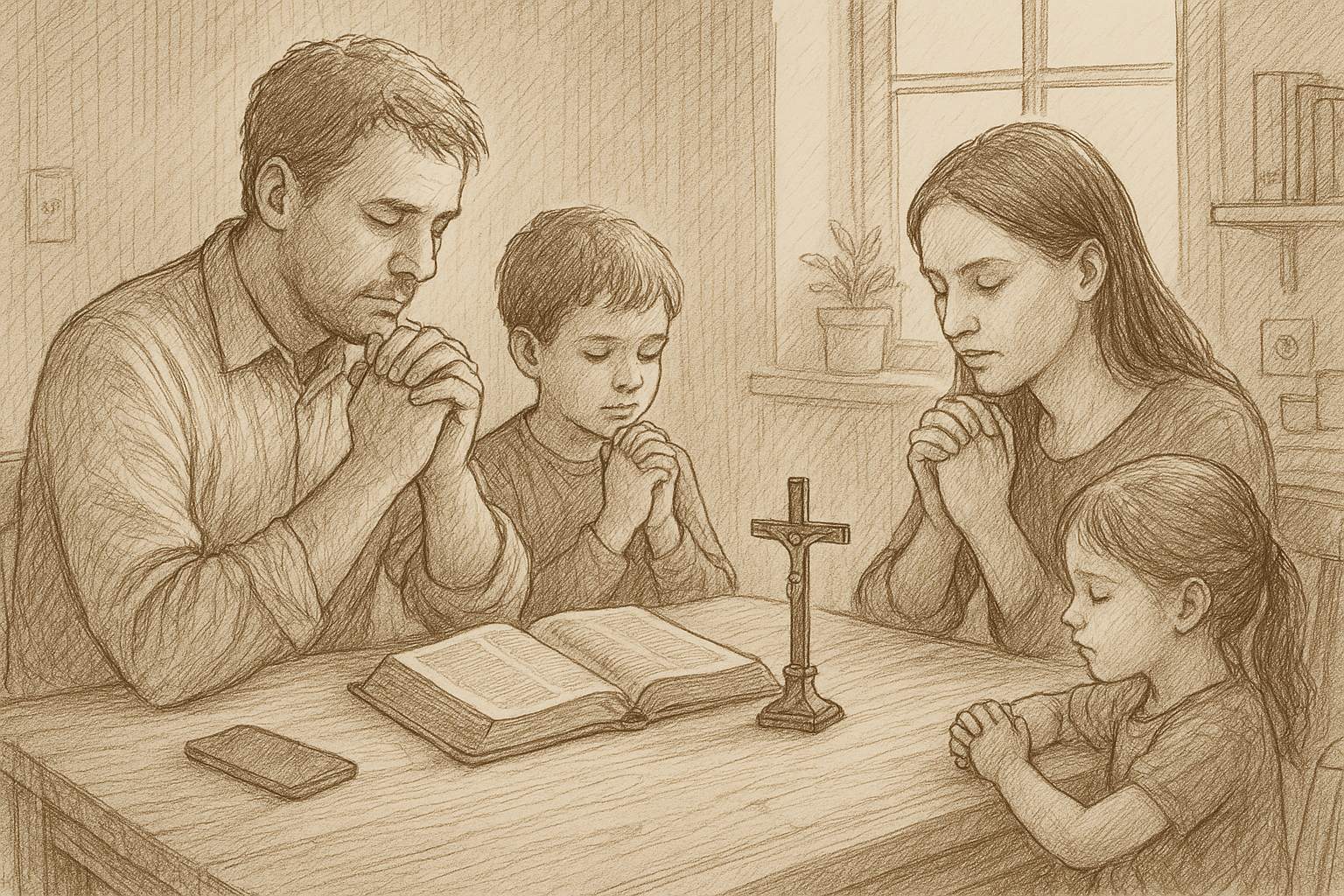
That is why families need more than rules for consumption. They need a household culture. Meals can be protected from screens. Bedrooms can be kept free from devices when prudence recommends it. The first and last moments of the day can belong to prayer rather than interruption. These practices are not anti-technology. They are pro-human.
When children see adults using devices with restraint, they learn that freedom is not the same as constant stimulation. They learn that attention is a gift. They learn that silence is not empty and that boredom can open space for creativity, conversation, and interior life. These lessons matter because a person who cannot attend cannot easily pray.
The Church has long understood that the family is the first school of love. In a digital age, that school needs clear boundaries. Technology can assist the home, but it cannot replace the patient, daily work of forming souls.
Truth, speech, and the moral weight of information
Another pressing issue is truth. Technologies that distribute information quickly can also spread falsehood with alarming speed. Catholic teaching holds that truth is not an optional preference. It is tied to the dignity of persons, because people deserve honesty and because truth leads us toward God.
This means Catholics should be careful not only about what they believe, but about how they share. A dramatic claim can be tempting to forward. A sharp image can inflame anger. A half-truth can win attention while damaging charity. Christian speech must be measured by more than effectiveness. It must be measured by truth, justice, and love.
At the same time, Catholics should resist the habit of living inside outrage. The digital world often rewards speed over reflection and provocation over wisdom. But the disciple of Christ is not called to constant reaction. He is called to discernment. Sometimes the most faithful response is to wait, verify, pray, and speak only when speech will build up rather than wound.
The commandment against bearing false witness applies not only in court but in everyday digital life. Even a casual post can mislead. Even a private message can harm. The moral life does not stop at the edge of the screen.
Technology is best received as a gift with limits
It is possible to receive technology with gratitude and sobriety at the same time. Catholics do not need to romanticize the past or reject the present. Many modern tools genuinely serve life. Medicine, transportation, education, and communication have all benefited from human ingenuity. These gifts should not be despised.
At the same time, every gift has limits. A tool that is good in one context may be harmful in another. Even a helpful device can become spiritually costly if it crowds out prayer, weakens relationships, or turns attention into a commodity. Catholic wisdom does not ask whether a thing is impressive. It asks whether it is ordered toward the common good and the sanctification of persons.
That is why the Church can speak about technology without surrendering to either panic or applause. She can affirm genuine progress while insisting that progress must be judged morally. The question is not simply what we can build, but what kind of world our building creates.
When technology is placed within that larger horizon, it can be received with peace. The Christian may use tools gratefully, refuse them when needed, and never forget that the human person is not completed by efficiency. We are completed by communion with God, which also teaches us how to love one another well. If technology helps in that journey, it is rightly welcomed. If it hinders that journey, it must be reexamined with courage and calm.
Keep Reading on Lets Read The Bible
Frequently Asked Questions
What does Catholic teaching say about technology in general?
Catholic teaching does not condemn technology as such. It evaluates technology by whether it serves human dignity, supports the common good, and helps people live in right relationship with God and neighbor.
How can Catholics discern whether a technology is harmful?
A helpful test is to ask whether it increases virtue, peace, truth, and responsible work, or whether it fosters distraction, addiction, dishonesty, isolation, or exploitation.
Can technology be used in a way that supports family life?
Yes. Technology can support family life when it helps with communication, learning, and safety, while being governed by clear limits that protect conversation, prayer, rest, and attention.