Social Teaching
When Age Becomes a Witness: Caring for the Elderly with Catholic Heart
Catholic life asks more than respect for the elderly. It asks a shared fidelity to dignity, memory, mercy, and the slow sanctification of ordinary care.
Site Admin | October 19, 2025 | 86 views
Age is not a loss of worth
In a culture that prizes speed, independence, and visible productivity, old age can be treated as if it were a fading season with little to offer. Catholic faith resists that instinct. Every human person bears the image of God, and that dignity does not diminish with time, illness, dependency, or memory loss. A person is never valuable only because of usefulness. This is one of the first truths behind care for the elderly and Catholic life.
Scripture gives old age a place of honor. The Book of Proverbs says, gray hair is a crown of glory when found in a righteous life. That is not sentimental language. It is a spiritual vision. The elderly are not merely waiting for the end. They are still living members of the Body of Christ, capable of prayer, patience, witness, gratitude, repentance, and love. Even when physical strength declines, the human person remains whole in dignity before God.
The Church does not ask us to look away from age or to dress it up with false optimism. She asks us to see it honestly. Growing old often brings vulnerability, and vulnerability can reveal what a society truly believes about the human person. If the weak are abandoned, then efficiency has become an idol. If the frail are cherished, then charity is still alive.
Honor for the elderly is not optional in Catholic life
The Fourth Commandment does not end with childhood. Honor your father and your mother is not only about obedience when we are young. It forms a lasting habit of reverence toward those who gave us life, and beyond our own families it becomes a broader moral posture toward older men and women. Catholic tradition sees this commandment as part of the social fabric. A society that forgets how to honor age will eventually forget how to honor life at every stage.
Jesus Himself lived this reverence. He entered human life through the love and protection of Mary and Joseph, and He spent His public ministry restoring the forgotten to communion. His concern for the vulnerable was not abstract. He touched the sick, welcomed the excluded, and taught that what is done to the least is done to Him. In that light, the elderly are not peripheral to the Church's concern. They are among those to whom Christ is mysteriously close.
The Catechism teaches that the family is the original place where older persons should receive honor and support. That does not mean every family can meet every need without outside help. It does mean that Catholic conscience should resist the idea that older relatives are someone else's problem. Love may require difficult decisions, professional care, or medical assistance, but it never permits indifference.
Old age reveals both gift and burden
Catholic realism does not romanticize aging. It recognizes that later life can involve grief, reduced mobility, loss of independence, and forms of suffering that are difficult to bear. There can be loneliness after a spouse dies, anxiety when driving is no longer possible, shame when one must ask for help, and confusion when memory slips. These are not small losses. They are part of the cross that many elderly people carry quietly.
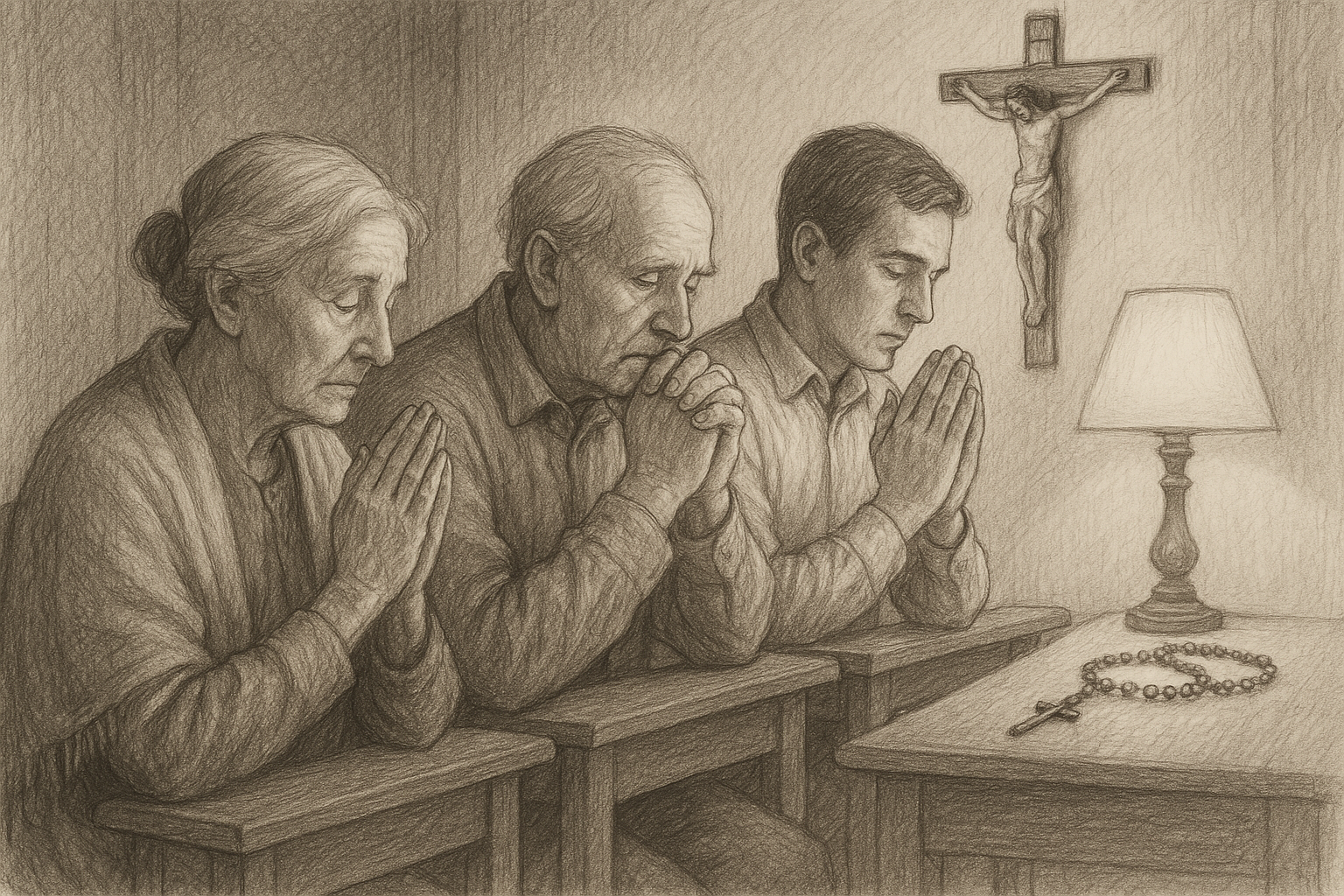
At the same time, old age can reveal gifts that younger people often overlook. It can deepen patience. It can sharpen gratitude. It can free a person from illusions about status and force a clearer dependence on God. Some older Catholics become especially powerful intercessors, praying with a steadiness that comes from having lived long enough to see that only the Lord remains constant. Others offer wisdom through memory, telling family stories that preserve identity across generations. A home or parish without the elderly loses a living archive of faith.
Even when health is fragile, the elderly still contribute to the Church by being, simply and profoundly, present. Their presence teaches younger Catholics that life does not begin at usefulness and end at retirement. It begins in gift and ends in gift. That truth is hard to preserve in a market culture, but it is central to Christian discipleship.
The corporal and spiritual works of mercy meet here
Care for the elderly belongs naturally to the works of mercy. Feeding, clothing, visiting, and sheltering are not separate from Catholic faith. They are its embodiment. The elderly may need help preparing meals, getting to Mass, taking medicine, or remaining safe at home. Those needs are not distractions from holiness. They are ordinary places where holiness becomes visible.
The spiritual works of mercy matter here too. The elderly often need patient listening, not just practical assistance. They may need someone to bear with repeated stories, offer encouragement, pray with them, or gently remind them that they are not forgotten by God. Some fear becoming a burden. Others fear death. Others carry regrets from earlier years. To accompany them with truth and tenderness is a real form of mercy.
Mercy is not pity at a distance. It is love that enters another person's need without fear of being changed by it.
Families, parishes, and Catholic ministries can all practice this kind of mercy. Sometimes it looks dramatic, but more often it looks ordinary. It is a daughter who checks in daily. A grandson who sits through the same story with real attention. A parishioner who offers a ride. A neighbor who notices that someone has stopped opening the curtains. These small acts matter because they say, You still belong among us.
Family life is tested by the care it gives
One of the clearest signs of moral maturity is how a family treats its oldest members. It is easy to celebrate grandparents on special occasions. It is harder to care for them when illness complicates schedules or memory fades or financial strain grows. Yet these are precisely the moments when Catholic life becomes concrete. Love is measured not only by affection but by fidelity under pressure.
Some families will keep an elderly parent at home as long as possible. Others will need assisted living, skilled nursing, or a blend of professional and family support. Catholic morality does not impose one rigid arrangement. It asks whether the arrangement serves the person's dignity, safety, and spiritual good. The right choice is the one that is truthful about needs and generous in response.
That truthfulness includes accepting limits. Adult children cannot become medical experts overnight. They may need guidance, respite, and help from other relatives or parish members. Caregiving can be exhausting, and the Church should not pretend otherwise. Still, exhaustion is not the same as abandonment. When burdens are shared wisely, the whole community reflects more clearly the communion Christ desires.
There is also a deep moral danger in treating the elderly as obstacles to convenience. If the only acceptable life is the independent life, then dependency appears shameful. But Catholic teaching knows that all of us are dependent creatures. We begin life needing everything, and we often end it the same way. To care for an elderly parent or neighbor is to acknowledge a truth that humbles pride: we are made for mutual need under God.
Parishes can make room for age
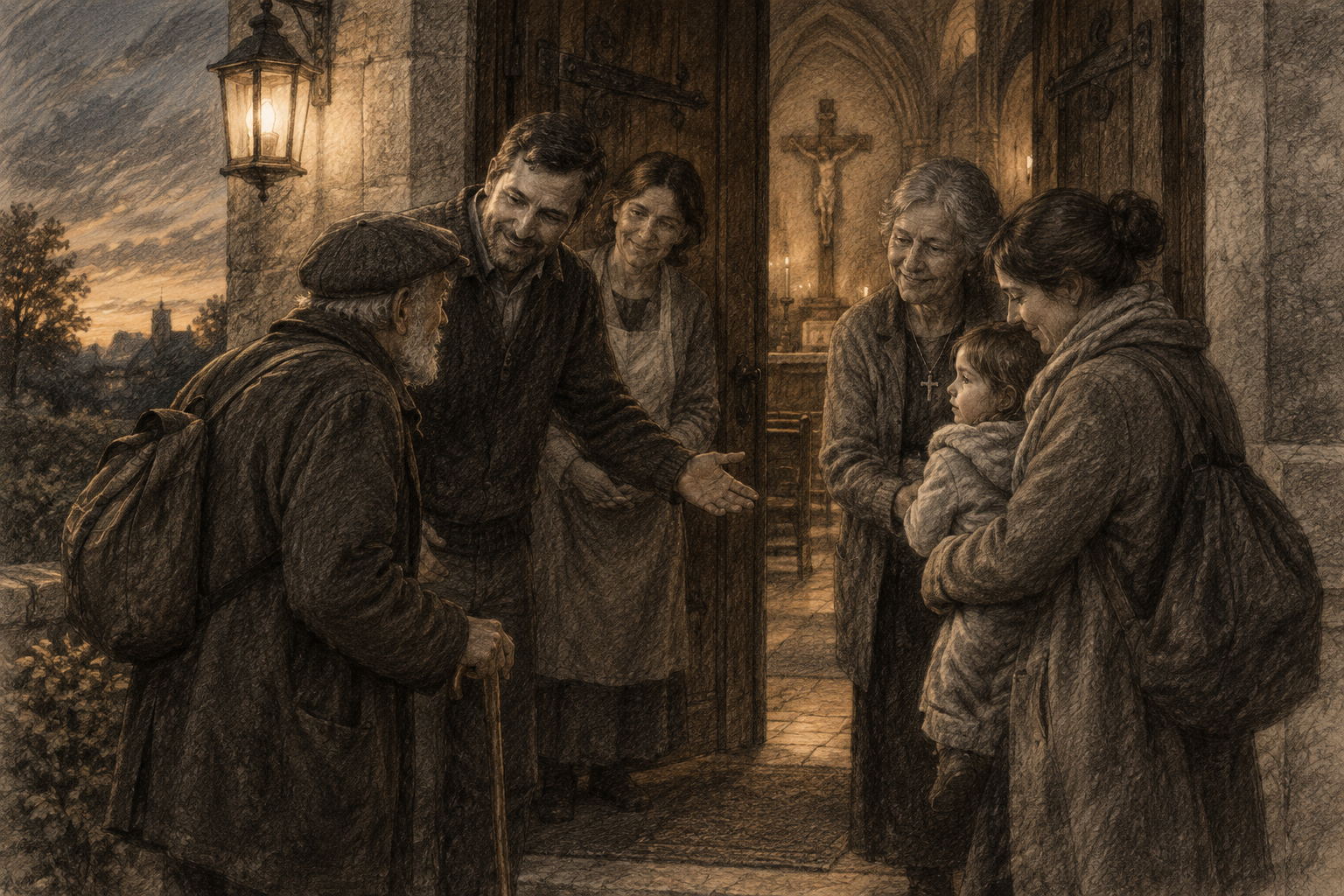
A parish that takes the elderly seriously will make practical room for them. That may mean accessible entrances, seating that works for those with limited mobility, transportation to Mass, home visits from clergy or parish volunteers, and direct inclusion in parish prayer. It also means cultural attention. The elderly should not be spoken to only as if they are fragile or dismissed as if they are out of touch. They should be welcomed as members whose faith and memory enrich the community.
Some elderly Catholics can still serve in visible ways. They may teach children to pray, knit for ministries, maintain prayer lists, or support life in quiet, hidden ways. Others can no longer do such things. Yet even then, they remain vital to the Church through suffering offered in union with Christ, and through the witness of perseverance. The parish should remember that a homebound Catholic is not a lesser Catholic.
Visitation is especially important. Many older adults receive fewer visitors as their peers die or move away. Loneliness can become a silent wound. A brief visit, a phone call, or a sacramental ministry can restore the sense that the Church is more than an event on Sunday. She is a people who remain near one another in need.
Mercy also means telling the truth
Christian care for the elderly is not kindness without boundaries or sentiment without discernment. Mercy includes truth. Sometimes the truth is that a person should not live alone. Sometimes the truth is that a home setting has become unsafe. Sometimes the truth is that family members need to ask for outside help rather than carry a burden they cannot sustain. Truth spoken with love protects dignity better than denial does.
There are also moral questions surrounding treatment, medical decisions, and end-of-life care. Catholic teaching insists that ordinary care should be given and that human life must never be intentionally destroyed. At the same time, the Church recognizes that not every possible medical intervention is required. The aim is always to respect the person, relieve suffering where possible, and avoid both abandonment and despair. Decisions should be guided by conscience formed in the Church, prudent medical counsel, and prayerful charity.
This is where care for the elderly and Catholic life become inseparable. The Church does not merely ask whether something can be done. She asks whether it should be done, whether it serves the person's true good, and whether it honors life as a gift from God. Truth and mercy are not rivals. They belong together.
What the elderly give back to the Church
It is easy to describe the elderly only in terms of what they need. Catholic faith asks for a fuller vision. Older persons give back to the Church in ways that are often hidden from public praise. They give memory, and memory guards against pride. They give patience, and patience slows a restless age. They give a reminder that suffering can be endured with faith. They give a quieter form of leadership, one that does not demand attention but still shapes a household or parish by example.
Many younger Catholics first learn fidelity by watching an older relative pray through difficulty, forgive after being wounded, or remain faithful to Sunday Mass even when leaving the house is hard. Such witness is not theoretical. It is embodied theology. It tells the young that holiness is not reserved for strong bodies and busy schedules. Holiness can be learned in a wheelchair, at a kitchen table, beside a hospital bed, or in the silence of a chapel.
For that reason, the elderly should not be regarded as people who were once important and are now simply receiving care. They are still active members of the communion of saints in formation. The Church needs their witness, and their witness becomes even more luminous when the world has little use for it.
Living this call with steady charity
Caring well for older people does not always require grand programs. It begins with a conversion of attention. Look for the person who has become isolated. Ask whether an older neighbor needs a ride, a meal, or help with errands. Speak to elderly relatives with patience rather than irritation. Encourage parish leaders to remember homebound members, caregivers, and those facing memory loss. Learn the names of the older people around you and pray for them by name.
Most of all, remember that the elderly are not a category to be managed. They are brothers and sisters in the Lord. They have lived, suffered, hoped, sinned, repented, loved, and endured. Some are joyful. Some are bitter. Some are peaceful. Some are afraid. Each one deserves to be seen in the full light of Christian charity.
When the Church cares for the elderly, she is not simply performing a duty. She is confessing something true about God and about man. The Lord who numbers our days does not discard us when our strength declines. He accompanies us, and He calls His people to do the same. That is why the patient care of older persons remains a measure of whether Catholic life is still taking the Gospel seriously.
Keep Reading on Lets Read The Bible
Frequently Asked Questions
What does the Church teach about caring for the elderly?
The Church teaches that every elderly person has inviolable dignity as someone made in the image of God. Families, parishes, and society are called to honor older persons, meet their real needs, and avoid treating them as burdens or afterthoughts.
Is it wrong for a Catholic family to use assisted living or nursing care?
No. Catholic teaching does not require one single arrangement for every family. The moral question is whether the care truly protects the person's dignity, safety, and spiritual good, while also respecting the family's real limits.
How can a parish support elderly parishioners in practical ways?
A parish can provide visitation, transportation, accessible liturgy, homebound ministry, prayer support, and simple inclusion. Small acts such as phone calls, rides, and regular check-ins can make a great difference to older parishioners who are lonely or isolated.