Social Teaching
Before the First Breath: How Catholic Faith Sees the Child in the Womb
A reverent look at human dignity, moral clarity, and the practical charity Catholics are called to live in defense of unborn life.
Site Admin | October 3, 2025 | 86 views
Many moral questions become easier when we remember a simple truth: a human being is never a project, an accident, or a disposable burden. From the first moment of existence, each person belongs to God. For Catholics, this is not a private sentiment or a political preference. It is part of the Church's understanding of creation, the human person, and the sanctity of life.
The dignity of unborn life and Catholic life is therefore not only about one issue among many. It touches the whole shape of discipleship. It asks whether we really believe that every person is made in the image of God, loved before birth, and called to eternal life. It also asks whether our speech, our choices, and our public witness reflect that belief with consistency and mercy.
The child in the womb is already a neighbor
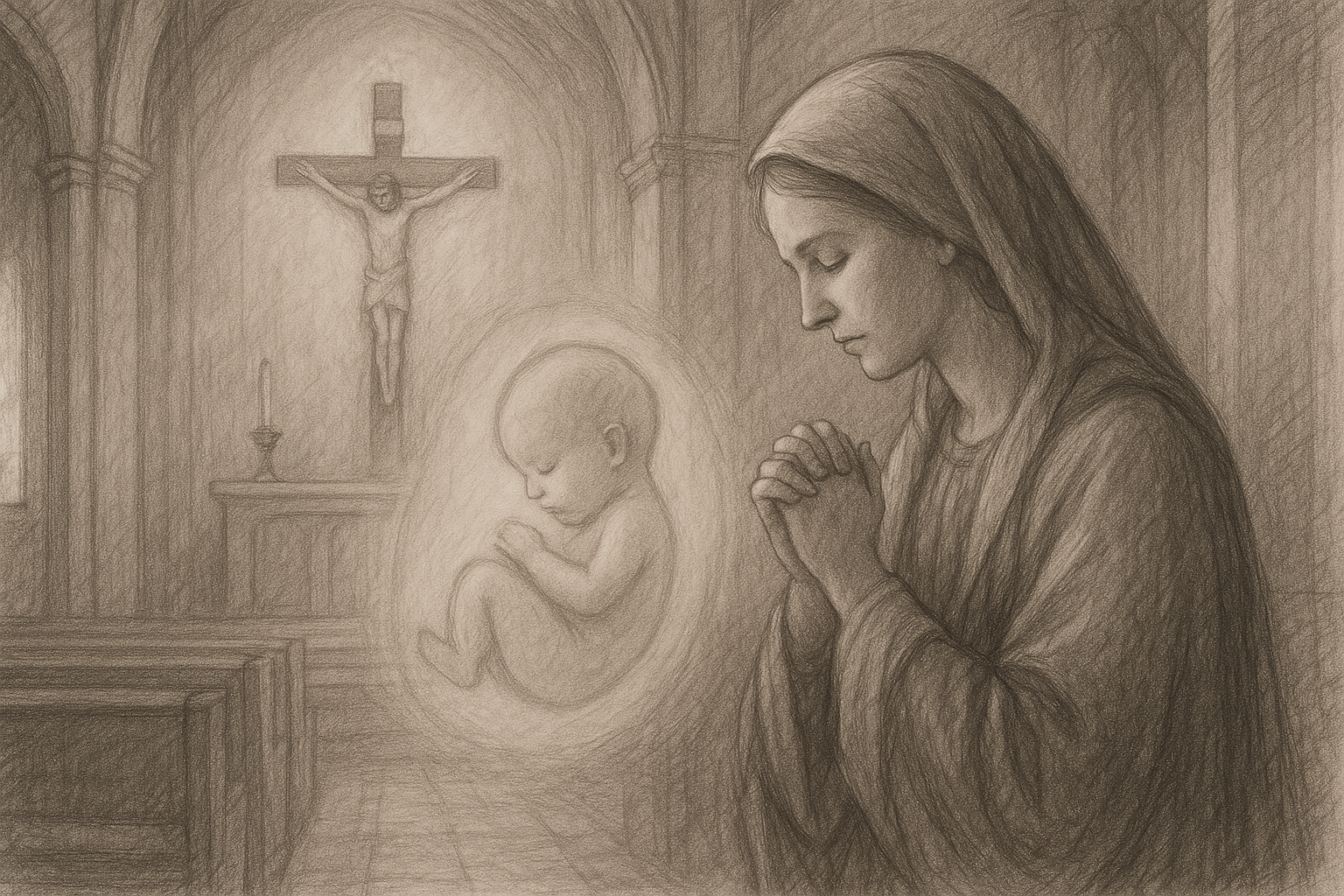
Scripture does not speak of unborn children as invisible or less real than those who have been born. The Lord tells Jeremiah, Before I formed you in the womb. The Psalmist prays, You formed my inward parts, and Elizabeth welcomes Mary's presence with joy when John the Baptist leaps in the womb The infant leaped in her womb. These are not decorative lines. They reveal a pattern in salvation history: God knows, calls, and loves the human person before birth.
That biblical vision matters because Catholic morality begins with reality, not convenience. If the child in the womb is truly a human person, then that child is not a possession, a medical variable, or a hidden concern to be weighed against preference. The child is a neighbor, one who cannot speak for himself or herself and therefore depends on the conscience of others.
To call unborn life sacred is not to deny the complexity of pregnancy or the pain that can surround it. It is to say that complexity does not erase dignity. Catholic thought has always insisted that the weak do not become less human because their needs are difficult. Rather, their vulnerability is precisely what calls forth moral responsibility.
Human dignity does not begin with usefulness
Modern culture often measures value by performance, independence, or wantedness. That way of thinking is subtle, and it reaches far beyond abortion. The elderly, the disabled, the poor, and the lonely can all be treated as though their worth rises and falls with what they can provide. Catholic teaching resists that whole pattern. A person is never valuable because he is useful. He is valuable because he exists.
This is why the unborn child matters so deeply to Catholic life. The child in the womb cannot yet reason publicly, build institutions, or contribute to the world in visible ways. But dignity is not earned by visibility. The unborn child already bears the divine image. Already belongs to the human family. Already stands within the scope of Christ's redemption.
When Catholics defend unborn life, they are not claiming that every case is emotionally simple. They are claiming something sturdier and more demanding: that moral truth does not change when compassion is required. In fact, compassion is deepest when it remains attached to truth. A charity that speaks only of feelings can become vague. A truth that ignores suffering can become cold. Catholic discipleship refuses both errors.
What the Church asks of conscience
The Church's pro-life teaching is not an isolated rule. It grows from the commandment not to kill, the call to love our neighbor, and the consistent defense of the vulnerable that runs through Catholic social teaching. The Catechism teaches that human life must be respected and protected absolutely from the moment of conception. That is not a slogan to win arguments. It is a moral claim about who the human person is.
Still, Catholics should be careful not to speak about life issues as if the answer were only a series of prohibitions. The Church does say no to abortion, but she also says yes to mothers, yes to children, yes to fathers, yes to family support, yes to adoption, yes to mercy, and yes to practical help for those in distress. Pro-life conviction becomes credible when it is visible as a culture of care.
The dignity of unborn life and Catholic life therefore includes the formation of conscience. Catholics need to be able to explain not only what the Church teaches, but why. A formed conscience is not a personal opinion dressed in religious language. It is a conscience shaped by Scripture, the moral law, prayer, and the wisdom of the Church. In that light, abortion is not merely one choice among many. It is a grave violation of the life and dignity of a human person.
Charity and truth belong together
Some people assume that firmness on unborn life must sound harsh. Others assume that kindness requires silence about moral truth. Catholic teaching rejects both assumptions. Our Lord is never less than truthful, but He is never less than merciful. He speaks clearly to the woman at the well, the tax collector, and the sinner who seeks a new beginning. His mercy does not pretend evil is good. It opens the door to repentance and healing.
That pattern should shape the Catholic approach to conversations about abortion. A person who has experienced abortion, considered abortion, or supported abortion may carry grief, fear, guilt, anger, or confusion. The Church must never answer that pain with contempt. She must answer with truth spoken in love. The goal is not humiliation. The goal is conversion, healing, and the safeguarding of life.
To defend unborn life is not to win an argument at all costs. It is to refuse to let fear, isolation, or convenience decide the worth of a human person.
This is also why Catholic speech should be disciplined. It is easy to become reactive in public debate, especially when the issue is morally urgent. But the witness of the Church is not served by cruelty, mockery, or triumphalism. A Catholic who speaks for unborn life should also be patient, accurate, and respectful. People are more likely to hear the truth when they see that it is carried by love.
Practical ways Catholics can live this teaching
Defending unborn life is not limited to voting or public statements, though those can matter. It begins in ordinary habits that form a culture of reverence. Catholics can live this teaching in several concrete ways:
- Pray regularly for mothers, fathers, unborn children, and all who are tempted to despair. Prayer keeps the issue from becoming abstract.
- Support pregnancy resource ministries, maternity homes, and parish efforts that offer material help. Many women need encouragement, practical support, and reliable companionship.
- Speak with patience and clarity in family conversations. Silence can seem like agreement, while anger can close hearts. Steady witness matters.
- Honor adoption and foster care as real signs of Christian love. These are not secondary concerns but part of a consistent respect for children and families.
- Examine personal habits of convenience. A culture that trains us to avoid sacrifice in small things will not easily welcome sacrifice in large ones.
These practices matter because pro-life faith is not only about protecting life in theory. It is about making room for life in practice. A parish that prays for expectant mothers, helps families in crisis, and welcomes children with joy gives a credible witness to the Gospel.
Mercy toward those who have been wounded
Catholic teaching on unborn life must always be joined to mercy for those who are wounded by abortion. Many people carry regret in silence, and others have been deeply influenced by fear, pressure, or loneliness. The Church does not ask them to hide forever in shame. She asks them to come into the light where Christ heals.
This is one reason sacramental life matters so much. Confession is not a public performance. It is the place where sin meets mercy and mercy is not abstract. The Lord who forgives also restores. Catholics who speak for unborn life should remember that the same Gospel that protects the child in the womb also offers hope to the brokenhearted.
Mercy, however, does not mean moral indifference. To say that healing is possible is not to say that the wrong was small. It is to proclaim something stronger: that no sin is greater than God's mercy, and no wound is beyond His reach. That truth should make Catholics more compassionate, not less committed.
A whole vision of the human person
At bottom, the dignity of unborn life and Catholic life rests on a vision of the human person that is larger than any one debate. We are not self-made. We are received. We are body and soul, not souls trapped in bodies. We are called into relationship, and our obligations begin before we feel ready for them. A society that forgets this becomes lonely, anxious, and spiritually thin.
Catholic faith offers a better way. It says that life is a gift, that vulnerability is not disgrace, and that the weakest member of the human family deserves defense. It says that mothers are to be honored, that fathers are called to responsibility, that children are blessings, and that the poor should not be left alone. It says that love is costly but fruitful, and that the measure of a society can be seen in how it treats those who cannot repay it.
For Catholics today, then, defending unborn life is not an optional cause attached to personal preference. It is part of belonging to a Church that proclaims Christ's lordship over every life. If we believe that the Lord knows the child in the womb, then we must learn to see that child as He does, speak for that child with humility, and build communities where every life is welcomed as a gift.
Keep Reading on Lets Read The Bible
Frequently Asked Questions
What does the Church mean by the dignity of unborn life?
The Church teaches that human life must be respected and protected from conception because every human being is created in the image of God. Unborn life has dignity not because of ability or recognition, but because it is human life known and loved by God.
How should Catholics speak about abortion with charity?
Catholics should speak clearly about the moral teaching while avoiding anger, ridicule, or shame. Charity means telling the truth with patience, compassion, and a real concern for healing and conversion.
How can a parish support unborn life in practical ways?
A parish can pray for expectant mothers, support pregnancy help ministries, offer material assistance to families, encourage adoption and foster care, and create a community where parents are not left alone.