Social Teaching
A Child Known Before Birth: Catholic Teaching on Unborn Human Dignity
The Church's defense of unborn life begins with a simple truth: every human person is made in the image of God, from the first moment of existence.
Site Admin | October 2, 2025 | 87 views
Catholic teaching on the dignity of unborn life begins not with politics, but with the human person. The Church looks at every unborn child and sees someone already called into being by God, already bearing a life that is not disposable, and already worthy of reverence. This conviction is not a side note in Catholic moral thought. It flows from the faith's deepest claims about creation, the Incarnation, and the meaning of human dignity.
In a culture where life in the womb is often described in impersonal terms, the Church insists on a more truthful way of seeing. A child in the womb is not a private project, a medical problem, or a symbol in an argument. He or she is a neighbor in the fullest sense, hidden from view but not hidden from God. Catholic social teaching asks believers to receive that truth with clarity and then to let it shape conscience, speech, law, and mercy.
Human dignity begins in God, not in usefulness
The Church's defense of unborn life rests on a simple but demanding principle: human dignity does not depend on age, ability, size, health, or social approval. Every person has worth because every person is created in the image and likeness of God. Scripture opens with that truth in the story of creation: Genesis 1:27. The dignity of the unborn child is therefore not granted by society. It is recognized by society, or ignored by society, but it is never created by society.
This matters because modern moral language often measures value by what a person can do. Yet Catholic faith refuses to reduce the human being to productivity, independence, or self-awareness. A sleeping infant, an elderly person with memory loss, and a child still in the womb all possess the same basic human dignity, even if their abilities differ dramatically. If dignity could be earned, it could also be taken away. Catholic teaching will not accept that logic.
The unborn child also stands within a wider biblical pattern. The Lord knows persons before they can know themselves. The prophet Jeremiah hears this divine word: Jeremiah 1:5. Saint John the Baptist leapt in his mother's womb at the presence of Christ Luke 1:41. These passages are not biological treatises, but they do reveal a sacred imagination in which life before birth is not spiritually empty or morally invisible.
The Church's moral reasoning is personal, not ideological
Catholic social teaching approaches unborn life through the dignity of the human person. This is important because the Church does not merely ask whether a particular policy is effective. She first asks whether a person is being protected. In Catholic moral theology, the unborn child is never a category to be managed. The child is a person to be loved.
That personalism gives the Church's pro-life witness its shape. The aim is not hostility toward women, nor triumph in public debate, nor the reduction of a complex moral crisis to slogans. The aim is to protect both mother and child while telling the truth about what pregnancy means: the presence of a second human being. Once that truth is denied, compassion becomes detached from reality. But when the truth is named, real compassion becomes possible.
Every serious Catholic reflection on this subject must hold together truth and mercy. The Church does not speak only to the child in the womb. She also speaks to parents facing fear, pressure, poverty, isolation, coercion, or grief. The moral seriousness of unborn life does not cancel pastoral concern. On the contrary, it heightens it. A consistent respect for life should make Catholics more attentive to expectant mothers, more generous with material help, and more ready to walk with families in distress.
Life in the womb is hidden, not lesser
One reason unborn life is vulnerable in public discussion is that it is hidden. We can see ultrasounds, but we cannot meet the child face to face in the ordinary way. Human beings often struggle to love what they cannot easily see. Catholic faith responds by training the heart to recognize the invisible as real.
In the Gospel, the Lord repeatedly calls His people beyond appearances. He sees the heart, not merely the outward form. This is a deeply Catholic way of thinking about unborn life as well. The child in the womb is small, but smallness is not a moral defect. Dependency is not a failure. Hiddenness is not insignificance.
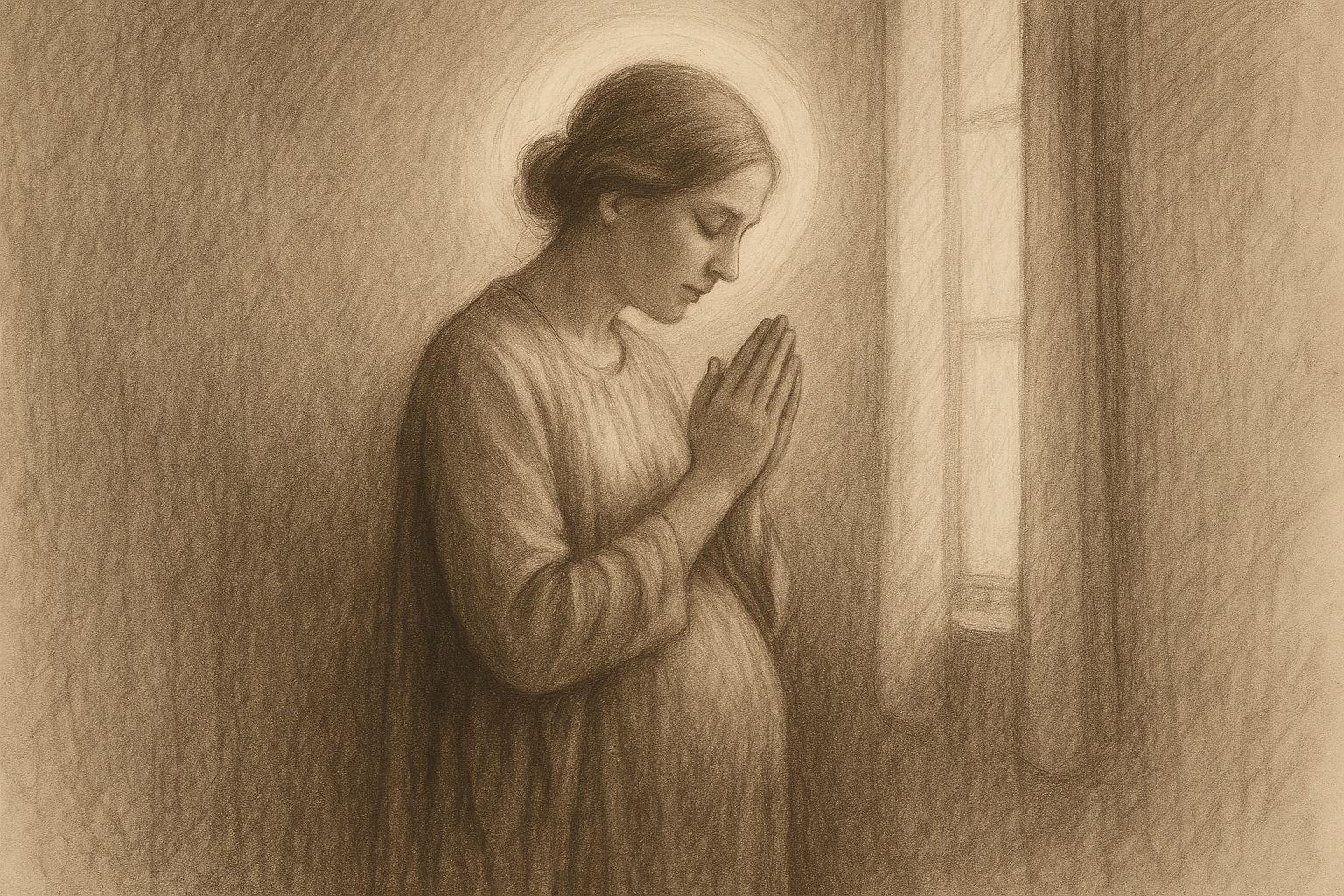
The nativity of Christ also illuminates this mystery. The Son of God did not enter the world by appearing fully formed in public view. He came through the quiet, bodily reality of a woman's pregnancy. The Incarnation sanctifies ordinary human development from within. Catholic devotion has long contemplated that hidden beginning of earthly life, not because the womb itself is the center of faith, but because Christ chose to pass through it.
When Catholics speak of unborn dignity, then, they are not making a narrow claim about one issue among many. They are affirming that God works through embodied human life from the beginning. The womb is not a place outside God's care. It is a place within it.
What Catholic social teaching asks of conscience
Catholic social teaching is often summarized by a few principles: the dignity of the human person, the common good, solidarity, and care for the vulnerable. Unborn life touches each of these. If the weakest members of the human family are not protected, then the moral logic of society becomes unstable. A community that overlooks the child before birth may eventually overlook others who are inconvenient, dependent, or burdensome.
At the same time, Catholic teaching asks conscience to be formed rather than simply felt. Personal preference is not the same as moral truth. The Church invites believers to study Scripture, listen to the natural law, and receive the witness of the tradition. This does not mean every question is easy, but it does mean that the dignity of unborn life is not a matter of private taste. It is a matter of justice.
The Catechism states this plainly when it teaches that human life must be respected and protected absolutely from the moment of conception. That teaching is not a political talking point. It is a moral claim grounded in the Church's understanding of the human person. From this flows a consistent ethic of care for unborn children, their mothers, fathers, and families.
True reverence for unborn life never ends at the level of principle. It becomes patient accompaniment, practical support, and a willingness to bear another person's burden.
Mercy and truth belong together
Some Catholics hesitate to speak about unborn life because they fear sounding harsh. That concern should be taken seriously. The defense of life must never become self-righteous. Yet silence can also fail the vulnerable. Mercy without truth can become sentiment. Truth without mercy can become cruelty. Catholic discipleship refuses both distortions.
For that reason, the Church's pro-life witness includes more than opposition to abortion. It includes care for pregnant women, support for adoption, assistance to families under strain, compassionate listening, and honest moral formation. It also includes prayer, because the deepest wounds surrounding unborn life are not healed by argument alone. Hearts are changed by grace.
This is especially important when speaking with people who carry regret or sorrow. The Church's moral teaching is firm, but the Church's pastoral life must remain open. The same faith that defends unborn children also calls sinners to repentance and all the wounded to hope. No one is beyond the mercy of Christ. A parish, a family, or a Catholic community that truly believes in the dignity of life should be ready to help women and men find forgiveness, support, and a new beginning.
Practical signs of a pro-life Catholic life
Belief becomes credible when it takes concrete form. Catholics who say they believe in the dignity of unborn life are called to let that belief show in ordinary habits. That does not require public activism from everyone, but it does require consistency.
- Pray regularly for mothers, fathers, unborn children, and those who work in pregnancy support and maternal care.
- Offer practical help to pregnant women or families in need, whether through parish outreach, donations, meals, transportation, or childcare.
- Speak about unborn life with clarity and charity, avoiding contempt, caricature, and partisan reflex.
- Support efforts that protect women and children together, especially those that reduce isolation and provide real assistance.
- Examine your own conscience honestly, asking where fear, convenience, or indifference may have dulled your response to vulnerable life.
These acts may seem ordinary, but Catholic social teaching often works through ordinary fidelity. A culture of life is not built in speeches alone. It is built when Christians notice need, tell the truth, and remain present.
The unborn child is part of the human family
It can be tempting to think of unborn life as a specialized subject reserved for debates among experts. The Church does not permit that separation. The unborn child belongs to the human family in the fullest way possible. That child is not waiting to become a person. He or she already is one.
When Catholics defend unborn life, they defend something larger than one issue. They defend a way of seeing the world in which the weakest are not expendable, the hidden are not forgotten, and dependence does not cancel dignity. This is why the Church's witness must remain steady, even when unpopular. Love of neighbor is not selective, and justice does not begin only after birth.
To speak of the dignity of unborn life Catholic teaching is to speak of the tenderness of God toward human beings at every stage. It is to trust that the Creator who fashions each life in secret also calls His people to protect that life in public. And it is to remember that the smallest among us are never outside the heart of the Church, because they are never outside the care of Christ.
For Catholics, then, the question is not whether unborn life matters. The question is whether we will let that truth shape our worship, our compassion, and the way we treat those whose lives are most easily overlooked.
Keep Reading on Lets Read The Bible
Frequently Asked Questions
What does the Catholic Church mean by the dignity of unborn life?
The Church teaches that every human being has dignity from the first moment of existence because each person is created in the image of God. This dignity does not depend on age, health, size, or usefulness.
How does Catholic social teaching support unborn life?
Catholic social teaching begins with the dignity of the human person and the protection of the vulnerable. Because the unborn child is among the most vulnerable human beings, the Church calls for direct protection, practical support for mothers and families, and a culture that respects life at every stage.
Can Catholics support unborn life without being harsh in tone?
Yes. In fact, they should. Catholic witness should combine truth and mercy, speaking clearly about the moral reality of unborn life while also offering compassion, help, and accompaniment to women and families facing difficult circumstances.