Catholic Living
When the Stars Start Speaking Too Loudly
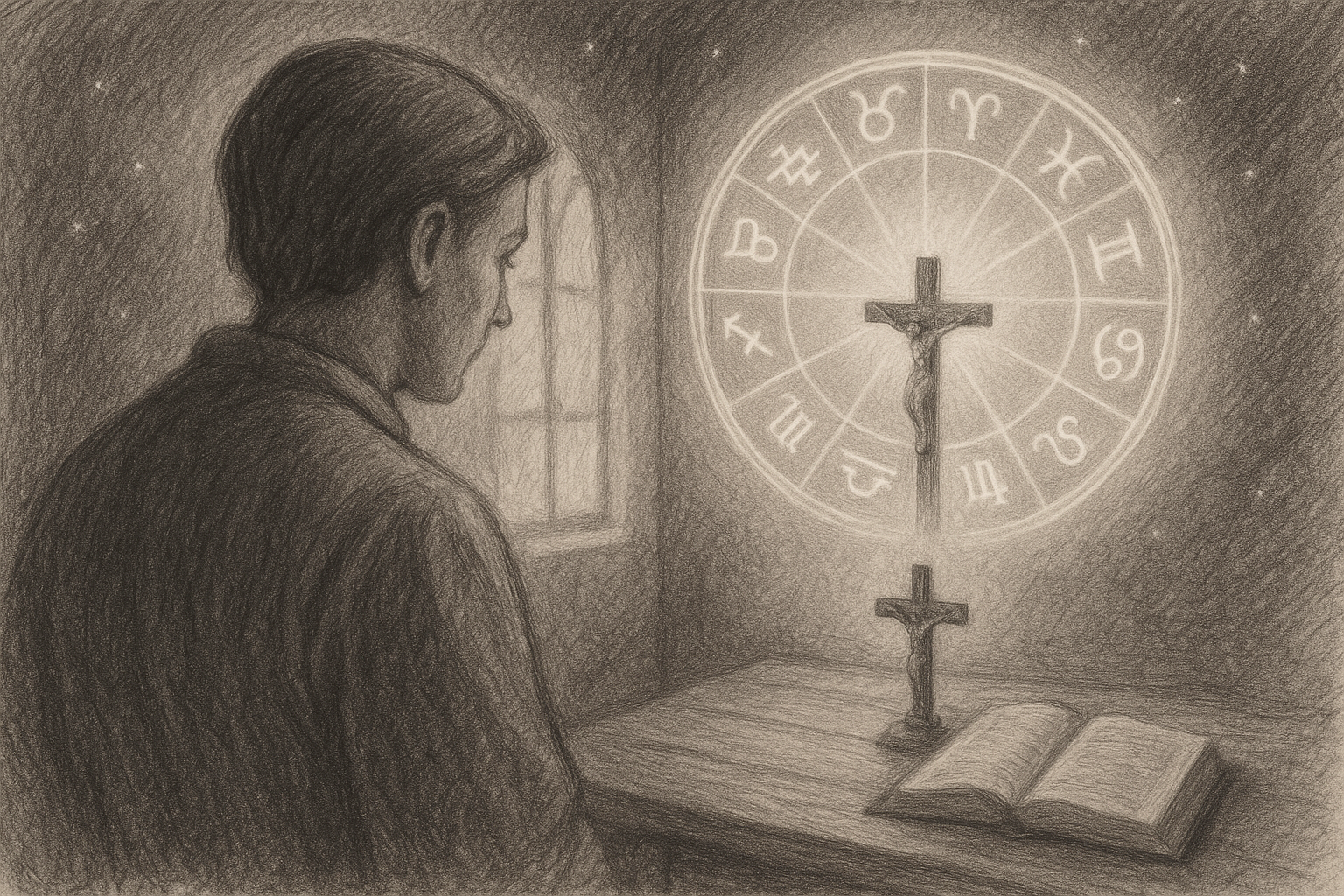
Astrology can seem harmless, but Catholic moral life asks a deeper question: what do we trust, and who do we allow to guide us?
Site Admin | September 1, 2025 | 85 views
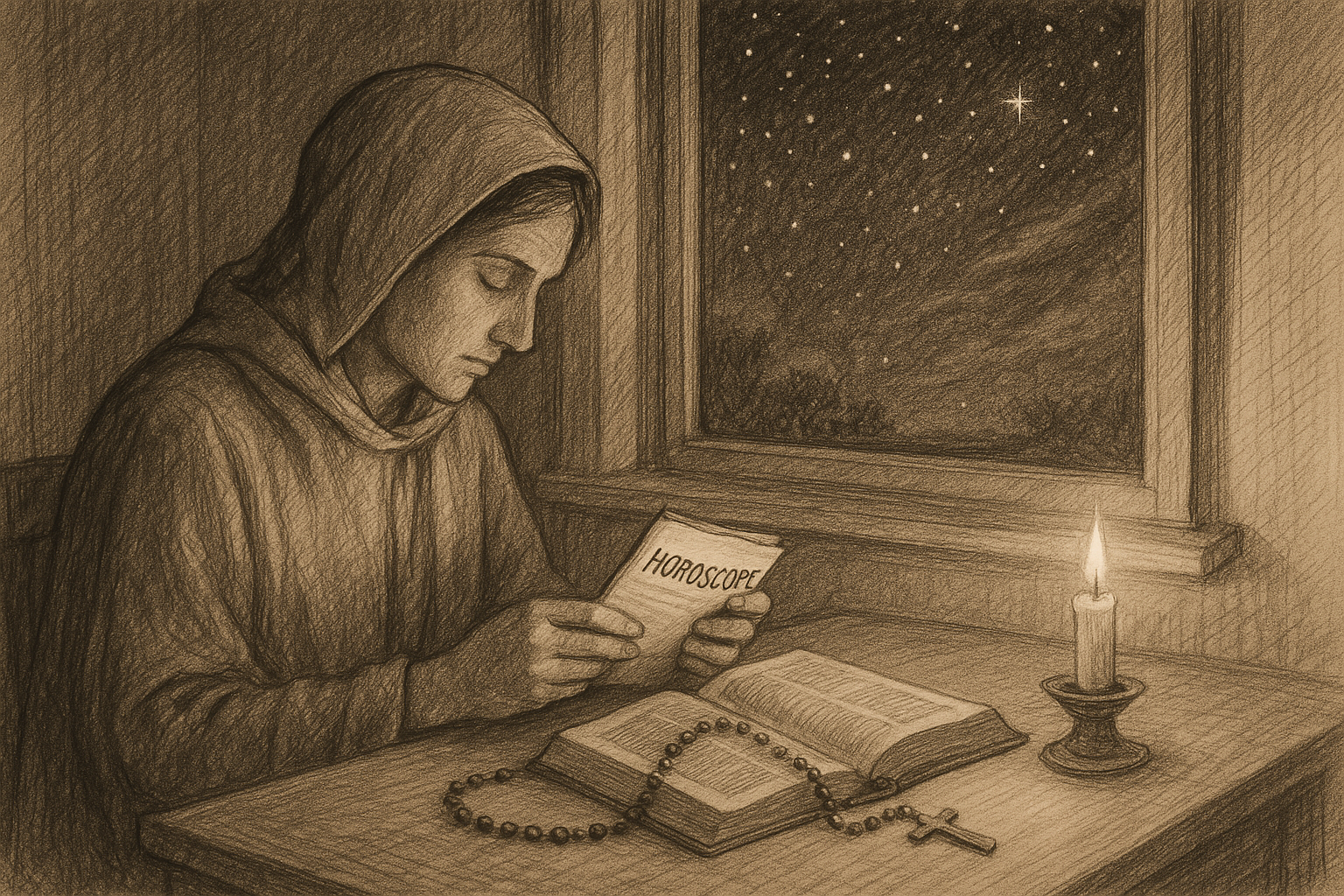
Astrology is often presented as light and harmless, something to glance at over coffee or scroll past on a phone screen. For many people, it begins that way. A personality description, a daily horoscope, a compatibility quiz, a sense that the stars might explain a mood or a relationship. Yet the question for Catholics is not only whether astrology is entertaining. The deeper question is what it does to the soul. That is where astrology and Catholic life meet, and where discernment becomes necessary.
The Church does not approach this issue with panic. She does not pretend that every curiosity is a grave sin, nor does she deny that many people turn to astrology out of anxiety, loneliness, or a desire to make sense of life. But she does teach that the human person is not meant to seek guidance from created signs in place of the living God. The stars are part of God's creation. They are not masters of our destiny. They are not personal powers to be consulted for hidden knowledge about our future, our relationships, or our choices.
The heart of the moral issue
At the center of astrology is a temptation as old as the human heart: the desire to control what we cannot see. When life feels uncertain, it can be comforting to imagine that patterns in the sky will tell us what to do next. But comfort is not the same as truth. Catholic moral life asks whether a practice leads us toward trust in God or away from it. Astrology matters because it can quietly train the imagination to look elsewhere for meaning, guidance, and reassurance.
Scripture consistently warns against turning to divination or seeking hidden knowledge apart from the Lord. Israel was repeatedly called to reject the pagan temptation to read fate in created signs. The prophet Isaiah speaks with force against those who try to predict the future apart from God, and the wisdom tradition reminds us that human beings are not sovereign over the mysteries of time. We are creatures. God is Creator. That distinction matters in prayer, in conscience, and in ordinary decision making.
The Bible also gives a better way of understanding the heavens. In The heavens declare the glory of God the sky is not a secret code for private destiny but a witness to divine glory. In Let there be lights in the dome of the sky the stars and lights are signs of times and seasons, not personal omens. They mark order, beauty, and praise. They do not replace providence.
What the Church is protecting
When the Church cautions against astrology, she is protecting several goods at once. First, she protects faith. To rely on astrological charts or horoscopes for guidance can weaken the habit of trusting God in prayer, Scripture, and conscience. Second, she protects freedom. A Christian should not think that his choices are fixed by the hour of birth, the movement of planets, or a personality label attached to his sign. Third, she protects humility. We are not asked to master the hidden mechanics of our lives. We are asked to receive our lives from God and respond faithfully.
The Catechism speaks clearly about practices of divination, which include astrology when it is used to seek knowledge of the future, unveil hidden realities, or control outcomes. It is not a matter of superstition alone. It is a moral matter because it concerns the way a person seeks truth and security. A Catholic can acknowledge that certain horoscopes are vague, culturally familiar, or even amusing without assuming that they are spiritually neutral. Repeated habits shape desire. What begins as casual reading can become reliance.
This is why astrology and Catholic life cannot be separated into a small private corner. A habit of consulting the stars can affect the conscience more than we realize. It can foster passivity, as if our decisions are already written. It can encourage blame, as if our faults are in the planets rather than in our own will. It can even foster fear, as if the future is a set of forces to appease rather than a path to walk with God.
Why people are drawn to it
It is worth being honest about why astrology remains attractive. It often offers language for feelings that are hard to name. It gives a sense of identity. It can make people feel seen. It can offer structure in a confusing world. For someone who feels invisible, astrology may seem to provide a map. For someone who feels anxious, it may seem to offer reassurance. For someone who has been hurt, it may seem safer than trusting another person.
That emotional appeal deserves compassion. Catholics should not mock people who are drawn to astrology, and they should not speak as though every person who has read a horoscope is deliberately rejecting God. Many are simply searching. Yet compassion must not stop at sympathy. Love tells the truth. If a habit begins to function as a substitute for providence, then it deserves scrutiny. If it starts to govern choices, then it has crossed from curiosity into moral risk.
Sometimes the issue is not a full-blown belief in fate but a subtle dependency. A person checks a horoscope before making plans. A person hesitates to act because a chart seems unfavorable. A person dismisses a friendship because a sign compatibility article told them to. These may seem small, but small habits can harden into spiritual drift. The moral life is often shaped by little permissions.
Discernment in everyday life
Discernment is not merely about avoiding obvious evil. It is about training the mind and heart to recognize what leads toward Christ. A Catholic approach to astrology and Catholic life begins with a simple but serious question: does this practice help me trust God, or does it make me more dependent on signs that cannot save?
One useful test is to examine what happens when an astrological reading disagrees with reality. Does the person hold it loosely, or does the reading become a controlling script? Another test is emotional fruit. Does this habit produce peace, hope, and freedom, or does it produce confusion, fear, and preoccupation? A final test is spiritual direction. Does the practice draw a person toward prayer, Scripture, the sacraments, and virtue, or does it redirect attention toward self-reference and prediction?
In Christian discernment, the center is never the stars but Christ. When we pray the Our Father, we ask for daily bread, forgiveness, and deliverance from evil. We do not ask the heavens to reveal our worth. We ask the Father to form us in truth. That alone tells us something important about where security belongs.
Repentance without despair
Some Catholics reading this may recognize a long habit of checking horoscopes, natal charts, or astrology content. Others may remember turning to it during grief or uncertainty. If that is your story, do not meet the truth with shame. The Gospel is not embarrassed by human weakness. Repentance is not humiliation. It is a return.
Begin simply. Tell the Lord honestly that you have looked for guidance where it does not belong. Ask forgiveness without dramatic language. If there has been serious dependence, bring it to confession. The sacrament of reconciliation is not only for dramatic sins; it is also for habits that slowly shape the soul away from trust. Grace reaches into pattern, not just event.
Then make a concrete break. Delete the apps, unfollow the accounts, stop reading the daily horoscope, and remove the books or cards that have become an unnecessary spiritual crutch. This is not an act of fear. It is an act of freedom. When a habit has a grip, practical boundaries can help the heart catch up with the will.
After that, replace the empty space. The soul rarely thrives on subtraction alone. Fill the time with something better: a psalm in the morning, a short Gospel passage at lunch, an examen before bed, or a decade of the rosary when anxiety rises. If you need language for the future, turn to prayers of surrender rather than predictions. Trust grows by practice.
Healing the deeper hunger
Astrology often feeds a hunger for meaning, identity, and belonging. Catholic life answers those needs more deeply. Your identity is not written in the stars. It is given in baptism. You are not ruled by a sign. You are called by name. You are not trapped in a cosmic pattern. You are invited into communion with God.
That truth can heal what astrology only imitates. The saints show us that holiness is not about decoding fate but cooperating with grace. They lived in uncertainty too. They suffered setbacks, misunderstandings, illness, and loss. Yet they learned to say yes to God in the middle of not knowing. That is a far stronger way to live than trying to reduce life to a forecast.
There is also mercy for anyone who used astrology because they had been wounded. Some people turn to the stars because they do not know how to trust people. Some are trying to manage fear after disappointment. Some are seeking a personal narrative when life has felt chaotic. The Church's answer is not a cold rule. It is a home where truth and mercy belong together.
That home is built through ordinary Catholic habits. Receive the sacraments often. Keep a steady prayer rule, even if brief. Read Scripture slowly. Ask a trusted priest or spiritual director for help if you feel spiritually entangled. Learn to notice what gives peace that is rooted in God rather than in prediction. Over time, the heart becomes less reactive and more anchored.
Practical steps for growth in virtue
If you want to move away from astrology and toward greater freedom, begin with manageable steps:
- Renounce reliance. Say plainly that you will not use astrology to make decisions, predict relationships, or measure your future.
- Confess the habit. Bring it to the sacrament of reconciliation if it has become habitual or spiritually harmful.
- Curate your media. Remove accounts, newsletters, and apps that feed the habit.
- Practice detachment. When you feel the urge to check a horoscope, pause and pray a short act of trust.
- Seek better guidance. Use Scripture, prayer, and wise counsel for real discernment.
- Build patience. Accept that not every question can be answered immediately.
These steps are small, but they matter. Virtue grows through repeated acts. The more often a Catholic chooses prayer over prediction, the more natural trust becomes. The point is not to become suspicious of every symbol in the sky. The point is to see creation rightly, as gift, not oracle.
In the end, astrology and Catholic life stand before a single question: where do we look when we need truth? The answer for a Christian is not far away. It is in Christ, who knows the human heart better than any chart and leads us more faithfully than any constellation. If the stars are silent, that is not a loss. It is a mercy. Silence makes room for the voice that saves.
Keep Reading on Lets Read The Bible
Frequently Asked Questions
Can a Catholic read horoscopes for fun without sinning?
A casual glance is not always the same as formal superstition, but even light entertainment can become a habit of dependence. The safer Catholic approach is to avoid practices that normalize seeking guidance from astrology, especially if they begin to affect decisions, fear, or trust in God.
Is astrology the same as superstition?
They are not identical, but they can overlap. Astrology becomes spiritually and morally serious when it is used to predict the future, explain hidden realities, or guide choices apart from God. In that sense, it can function as a form of divination.
What should I do if I have relied on astrology for years?
Begin with honest repentance, then go to confession if needed. Remove the sources that feed the habit, pray regularly, and ask for help from a priest or spiritual director. Healing usually comes through steady, practical steps rather than immediate change.