Catholic Living
The Quiet Cost of Opening the Wrong Doors
A Catholic look at the occult, spiritual danger, and the ordinary path back to grace
Site Admin | August 30, 2025 | 83 views
When curiosity becomes a spiritual risk
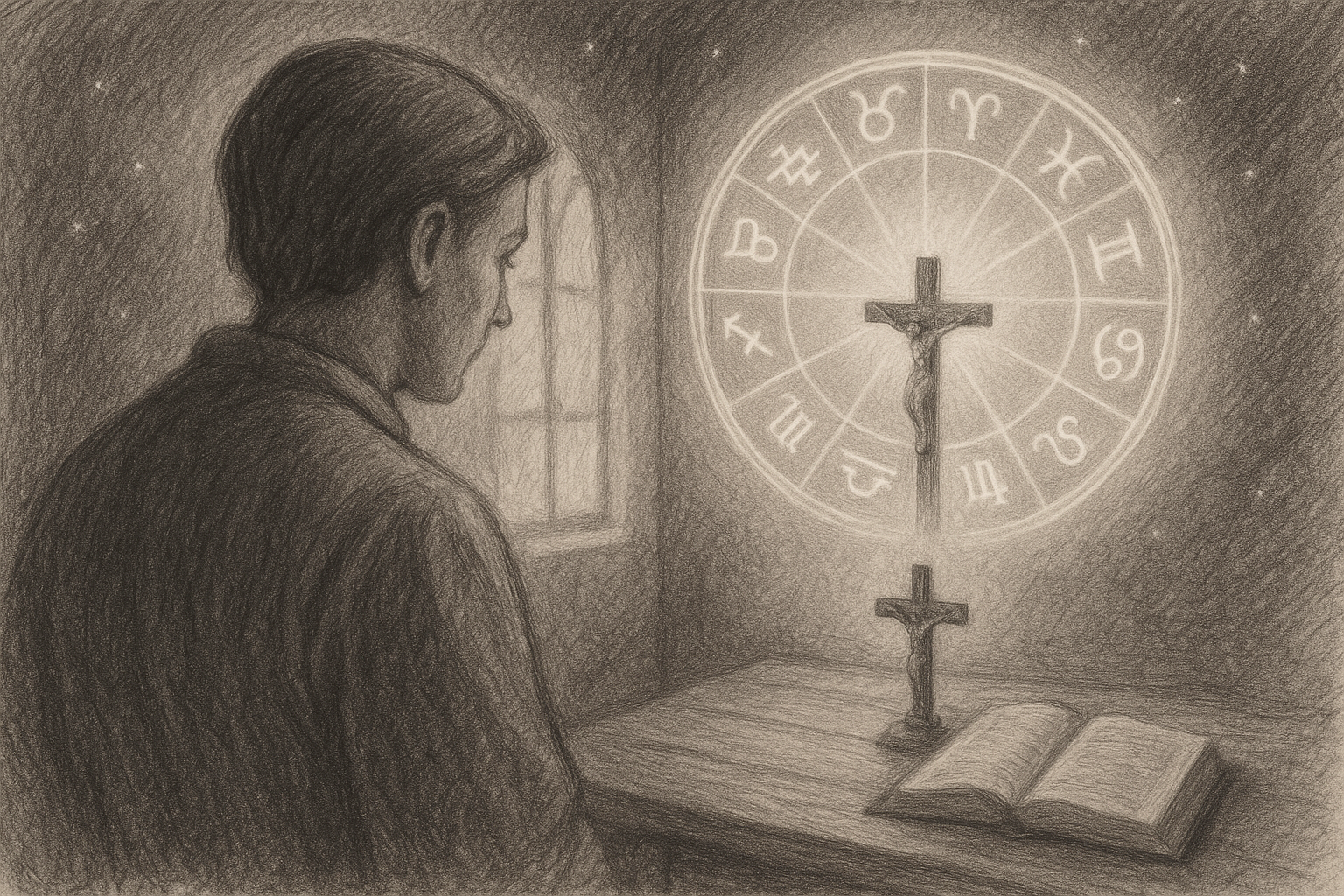
Many people first encounter the occult through curiosity. A horoscope shared by a friend, a deck of tarot cards at a party, a social media video about manifestation, a promise of secret knowledge, or a harmless sounding game can all seem too small to matter. Yet Catholic faith does not judge actions only by how dramatic they appear. It asks what they do to the soul.
The Church teaches that the occult seeks hidden power apart from God, whether through divination, magic, or attempts to manipulate spiritual forces. This is not simply a strange hobby or a private preference. It is a moral matter because it tries to gain control through means that do not belong to the freedom of faith. Scripture warns against this in strong language: There shall not be found among you a soothsayer, and again, Many of those who practiced magic collected their books and burned them.
Catholics should not respond with panic or superstition. We do not fear the occult as if evil were equal to God. But neither do we dismiss it as harmless entertainment. The spiritual life is real, and so are the choices that either open the heart to God or turn it away from Him. The issue is not only whether someone intends harm. The issue is whether a person is looking for guidance, comfort, power, or identity from sources that do not come from the Lord.
What the Church means by occult danger
The word occult refers to what is hidden. In Catholic moral teaching, the danger lies in seeking knowledge or influence through practices outside the trust we owe to God. This includes divination, spiritism, sorcery, and similar acts. The concern is not merely that such practices are unusual. The concern is that they replace humble dependence on Providence with an attempt to control what only God can rightly know and govern.
This matters because the human heart is always tempted to mastery. We want certainty about the future. We want relief from suffering. We want a way to make life bend to our hopes. The occult promises shortcuts. It whispers that we can get answers without conversion, power without prayer, and insight without obedience. But what looks like freedom often becomes a new form of bondage.
The Catechism of the Catholic Church teaches that all practices of magic or sorcery, by which one attempts to tame occult powers, are gravely contrary to the virtue of religion when they seek power over hidden forces. The deeper reason is spiritual: such acts can foster distrust in God, self-reliance without wisdom, and a disordered hunger for control. Even when someone begins in playfulness, the habit can train the heart away from reverence.
Faith does not mean passivity. It means receiving life as a gift, not grasping at hidden power as if we could save ourselves.
Why the occult can seem attractive
It is important to be honest about why people turn to these things. The occult often appears during seasons of fear, grief, loneliness, or confusion. Someone who feels powerless may be drawn to anything that promises knowledge or influence. Someone hurt by religion may look for a spiritual path without commandments. Someone bored with ordinary life may want mystery without discipline.
These motives deserve compassion. Not every person who becomes interested in the occult is trying to rebel against God. Some are searching for meaning. Others are trying to heal pain. But the fact that a motive is understandable does not make the practice safe. A medicine can be tempting because it offers relief, yet still be poison if taken in the wrong way.
Catholic life begins from a different starting point. We do not receive peace by dominating hidden powers. We receive peace by surrendering to the One who made us. Jesus does not flatter our desire to control. He calls us to trust. He does not offer secrets that make us feel superior. He offers truth that makes us free: The truth will set you free.
Spiritual danger is not the same as fearfulness
Some Catholics either minimize the occult or become obsessed with it. Both reactions miss the center. The Church is sober about spiritual warfare, but she does not ask the faithful to become fascinated with darkness. The normal Christian life is not lived by chasing signs of evil. It is lived by following Christ in grace, prayer, repentance, and the sacraments.
Spiritual danger becomes serious when a person begins to seek guidance from sources that are not God, or when curiosity hardens into trust. Repeated use of horoscopes, divination, occult rituals, or attempts to summon knowledge from spirits can weaken trust in divine providence. It can also dull conscience. Over time, what once seemed playful can shape imagination, desires, and even friendships.
At the same time, Catholics should remember that the power of Christ is greater than any darkness. The devil is not an equal force competing with God. He is a creature, limited and defeated by Christ. The believer need not live in dread. We live in vigilance, yes, but also in confidence. As Saint James writes, Resist the devil and he will flee from you.
Practical signs a person may need to step back
Not every encounter with the occult looks dramatic. Sometimes the warning signs are subtle. A person may begin to feel dependent on a practice for comfort or certainty. Another may use spiritual shortcuts when prayer feels slow or difficult. Someone else may keep occult objects, apps, or readings that feed anxiety rather than peace.
Questions worth asking include:
- Do I turn to this before I turn to prayer?
- Does it increase trust in God, or does it feed fear and control?
- Am I seeking wisdom, or am I seeking hidden knowledge?
- Does this practice lead me to greater charity, humility, and peace?
- Would I be comfortable presenting this habit honestly before Christ?
These questions are not meant to shame. They help a person examine whether a practice is forming virtue or weakness. Anything that clouds freedom, weakens prayer, or pulls the heart toward secret power deserves attention.
Repentance begins with truth
If someone has been involved with the occult, the first step is not self-condemnation. It is honesty. Bring the matter into the light before God. Name it plainly in prayer. If there were objects, practices, or commitments tied to occult activity, remove them. Letting go of them can be a concrete act of repentance, a sign that the soul no longer wishes to live divided.
Confession is the ordinary sacramental path of mercy. The sacrament does not exist to humiliate but to heal. When a person confesses occult involvement sincerely, receives absolution, and resolves to change, grace truly begins to reorder the heart. If the situation has been severe or long standing, a priest can help discern wise next steps, including prayer, accountability, and if needed, referrals for emotional support.
Some people carry fear that they are beyond help because of what they have done. That fear is itself one of the enemy's favorite lies. No sin is stronger than God's mercy when a sinner repents. The Prodigal Son returned with nothing to offer but honesty, and the Father ran to meet him. Grace does not wait for perfect preparation. It answers a contrite heart.
Healing grows through ordinary Catholic life
Healing from spiritual disorder is often quieter than people expect. It does not always come through dramatic experiences. More often, it comes through faithful habits that slowly retrain the soul to trust God.
Prayer is central. A simple daily rhythm of morning offering, Scripture reading, and evening examen can steady the imagination. The Rosary is especially powerful for many Catholics because it keeps the mind fixed on the mysteries of Christ. Sacred Scripture is also essential. The Psalms give words to fear, grief, hope, and praise. They teach the heart to speak honestly before God rather than seeking answers elsewhere.
The sacraments are not decorative additions. They are Christ's gifts to the Church. Frequent Confession restores clarity. The Eucharist strengthens union with the Lord. Sunday Mass re-centers the whole week. A soul that is nourished by the sacraments is less likely to be seduced by counterfeit sources of power.
It can also help to cultivate bodily habits that support spiritual peace. Regular sleep, less exposure to sensational spiritual content, wholesome friendship, and works of mercy all matter. Virtue grows in the ordinary. A person who learns to serve, to wait, to tell the truth, and to accept limits becomes less vulnerable to counterfeit forms of spiritual excitement.
How Catholics can speak about this without harshness
There is a way to speak about the occult that is both clear and gentle. We should avoid mockery. People drawn to these practices are often wounded, searching, or confused. Ridicule closes hearts. Charity opens them.
At the same time, kindness does not require silence. If a friend is involved in divination, spiritism, or similar practices, a Catholic can speak calmly and plainly: this does not come from God, and it is not good for the soul. Offer prayer. Offer to go to Confession together if appropriate. Suggest Mass, Scripture, or a conversation with a trusted priest. Do not try to become a spiritual expert. Simple fidelity is enough.
Families can help by keeping the home free from objects and habits that normalize superstition. Parents do not need to turn every children's game into a crisis, but they can form discernment early. Teach children to pray when they are afraid. Teach them that God is not a force to be manipulated. Teach them that holiness is more beautiful than hidden power.
Walking forward in freedom
The occult and spiritual danger matter because the human person is meant for communion, not manipulation. We are not called to manage the invisible world on our own terms. We are called to belong to Christ. That is a far greater freedom than secret knowledge can offer.
When Catholics live this truth, they begin to see that renouncing the occult is not a loss but a liberation. It clears space for prayer. It restores trust. It softens the heart. And it reminds us that the deepest mysteries are not hidden in shadows but revealed in the face of Jesus Christ, who meets us not with tricks or concealment but with mercy, truth, and peace.
If you are struggling with fear, uncertainty, or past involvement, do not be afraid to start small. Pray. Confess. Let go of what does not belong to Christ. Ask for help. The Lord does not despise a trembling return. He receives it, and He heals what has been divided.
Keep Reading on Lets Read The Bible
Frequently Asked Questions
Is every interest in the supernatural considered occult in Catholic teaching?
No. Catholic faith includes a strong belief in the supernatural, but it does not treat every interest in angels, miracles, or spiritual realities as occult. The concern is with seeking hidden knowledge or power through divination, magic, spiritism, or similar practices that bypass trust in God.
What should a Catholic do after involvement with tarot, astrology, or similar practices?
The first steps are honesty, repentance, and removal of any related objects or habits. A good confession is important, and a priest can help with further guidance. Many people also benefit from prayer, Scripture, the Rosary, and a deliberate return to the sacraments.
Can occult practices really affect a person's spiritual life?
The Church teaches that they can, because they direct the heart away from trust in God and toward hidden powers or false sources of guidance. Even when the effects are not dramatic, such practices can shape imagination, weaken reliance on Providence, and encourage fear or control.