Church History
Pope St. John XXIII and the Gentle Courage That Changed the Church
A look at the pope who called the Council, trusted God, and helped Catholics face a changing century with calm faith.
Site Admin | January 9, 2026 | 91 views
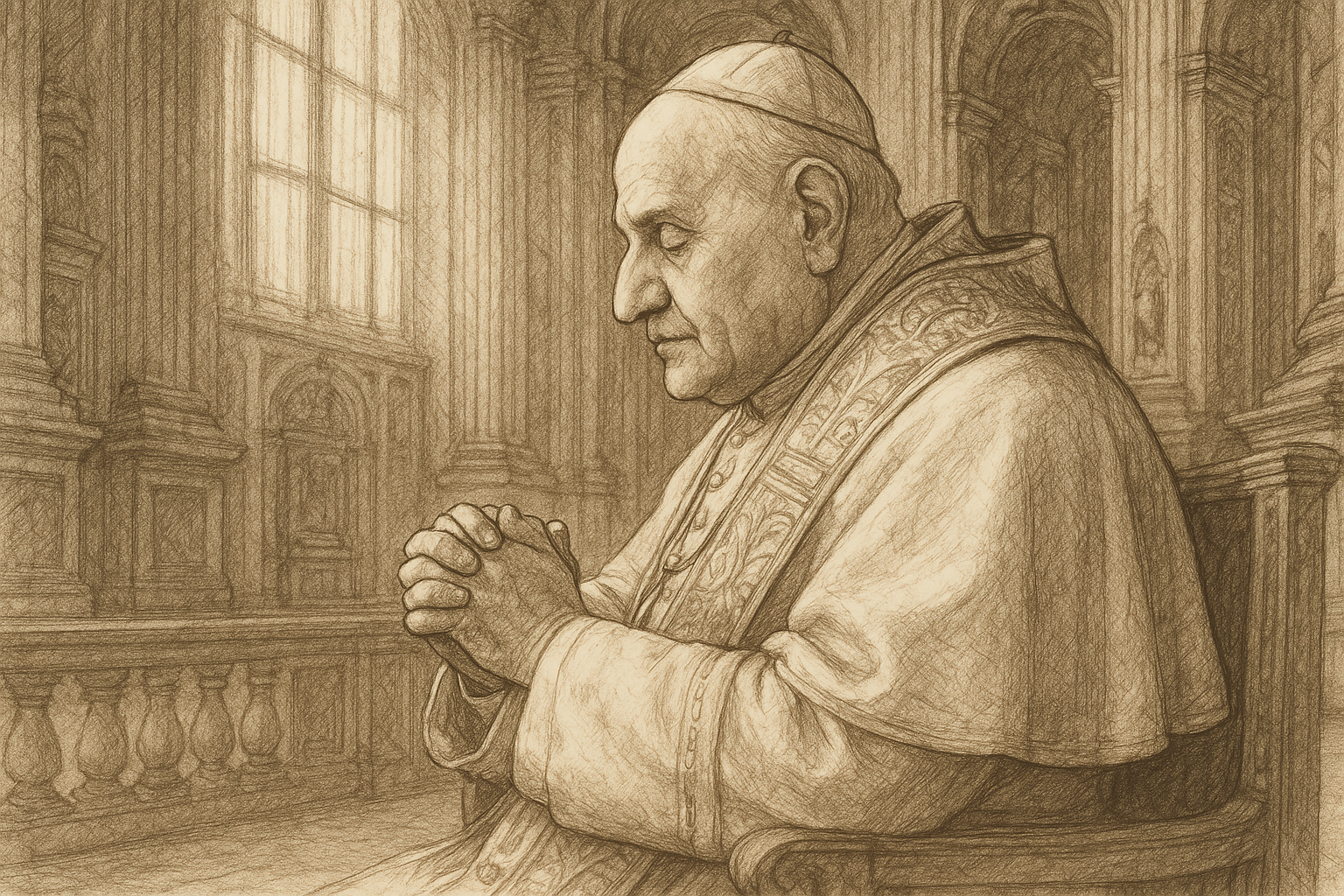
Pope St. John XXIII still matters because he showed that renewal in the Church does not begin with noise or novelty. It begins with faith, patience, and a pastor's heart. When Angelo Giuseppe Roncalli became pope in 1958, many Catholics saw in him a gentle and approachable shepherd. What they could not yet know was that his pontificate would become one of the most consequential in modern Church history.
To speak of Pope St. John XXIII Catholic history is to speak of a man who served the Church in a period of deep change. He was not a theorist detached from daily life. He was a parish priest, diplomat, bishop, and cardinal who knew the struggles of ordinary believers. He had lived through war, political tension, and the upheavals of the twentieth century. That experience shaped his pastoral instincts. He understood that the Church must remain faithful while speaking clearly to a world that often feels restless and unsure.
How his papacy began
John XXIII was elected pope on October 28, 1958, after the death of Pope Pius XII. At first, some observers assumed his pontificate would be transitional. He was already older when elected, and many expected little more than stability. Yet the Holy Spirit often works through unexpected instruments. John XXIII's first years showed that an apparently brief reign can leave a lasting mark when it is rooted in prayer and trust.
He chose the name John, a name not used by a pope for centuries, and the choice itself felt fresh without being revolutionary. He was known for warmth, humor, and personal kindness, but these traits were never mere personality. They were extensions of his pastoral charity. In an age tempted by cynicism, he reminded the Church that authority need not be cold and that holiness can be approachable.
The Council he called into being
John XXIII's most famous action was the convocation of the Second Vatican Council. He announced it on January 25, 1959, and the surprise was immense. He did not call the Council because the Church lacked doctrine. He called it because he believed the Church needed to proclaim the eternal Gospel with greater clarity to the modern world.
That distinction matters. Vatican II was not a break from the faith handed down from the apostles. It was an effort of the Church, under the guidance of the Holy Spirit, to speak with renewed missionary energy. John XXIII wanted a council that would foster deeper unity, encourage the faithful, and present the Church in a way that was intelligible to contemporary people without surrendering truth.
In his opening address to the Council, Gaudet Mater Ecclesia, he urged the bishops not to use the medicine of severity when the medicine of mercy could better heal. He called for a pastoral tone that would meet people where they are while still inviting them to conversion. His words remain memorable because they reveal a confidence that truth and charity belong together. The Church does not need to choose between firmness and kindness. She is strongest when she holds both.
A pope of charity, not sentimentality
John XXIII is often remembered for his tenderness, but his charity was not sentimental. It was concrete and disciplined. He prayed, visited, listened, and acted. He cared about the poor. He cared about prisoners. He cared about the wounds left by war and division. In his life, charity was never an abstraction.
The Gospel demands this kind of love. Christ does not call believers to a vague niceness. He calls them to a love that is patient, truthful, and self-giving. John XXIII embodied that spirit in a particularly human way. He could be direct when needed, but he usually preferred encouragement to harshness. He knew that many people come to the Church carrying burdens, not arguments. A pastor must first open the door.
This commandment of love stood at the center of John XXIII's pastoral style. He wanted the Church to be recognizable by the charity of Christ. That is still a bracing standard for Catholics today, especially in an age when religious discussion can become sharp, defensive, and self-protective.
His social teaching and concern for peace
John XXIII also mattered because he spoke to the moral crises of the world with unusual moral clarity. His encyclical Pacem in Terris, issued in 1963, was addressed not only to Catholics but to all people of good will. It reflected his conviction that peace depends on truth, justice, freedom, and charity. He linked human dignity to social order in a way that remains deeply relevant.
That encyclical came during a tense moment in world affairs, and its tone is important. John XXIII was not naive about politics, war, or ideology. He knew the world was scarred by fear. But he believed that peace is possible only when the dignity of the human person is honored. This insight belongs to the heart of Catholic social teaching. It speaks to matters of conscience, labor, rights, and the responsibility of nations.
He also gave voice to a broad moral vision in which faith is never sealed off from public life. Catholics do not bring the Gospel into the world as a slogan. They bring it as a leaven that shapes conscience and action. John XXIII helped remind the Church that holiness has social consequences.
His style of leadership was itself a lesson
Many popes are remembered for major documents or decisive reforms. John XXIII should be remembered also for the way he governed. He led with calm confidence. He did not appear frantic about control. He trusted that the Church belongs to Christ before it belongs to any pope or age. That trust gave him freedom.
There is something especially Catholic about that freedom. The Church is not sustained by panic. She is sustained by grace. Leaders serve her best when they are neither careless nor rigid, but prayerful and steady. John XXIII showed that a pope can be both firm in faith and open in spirit.
His famous openness to the world was sometimes misunderstood, even in his own time. Openness in the Catholic sense does not mean surrendering doctrine or blurring moral truth. It means refusing fear. It means approaching the modern world with discernment, ready to affirm what is true and reject what is false. John XXIII understood that the Church can enter conversation without losing her soul.
What Catholics can still learn from him
John XXIII's legacy is not only historical. It is practical. Catholics today can learn at least three enduring lessons from his life and papacy.
- Trust Providence. He reminds us that God guides the Church even when the future seems uncertain.
- Speak with charity. Firm convictions need not produce harsh speech. Truth is more persuasive when it is lived and spoken with love.
- Do not fear renewal. Genuine renewal is not a rejection of the past. It is a deeper reception of what the Church has always believed.
These lessons are especially important now, when many Catholics feel pulled between nostalgia and novelty. John XXIII offers another way: fidelity without despair, openness without confusion, and reverence without stiffness. He was not trying to invent a new Church. He was trying to help the Church shine more clearly.
The old temptation is to imagine that change itself saves. John XXIII knew better. He knew that only Christ saves, and that every reform in the Church must serve the proclamation of Christ. That is why he remains worth remembering. He pointed Catholics back to the essentials while encouraging them to face their age with courage.
His sainthood and his continuing witness
John XXIII was canonized in 2014. His sainthood did not make him perfect in every policy decision or remove the complexity of his historical moment. Sainthood never works that way. It confirms that a life was marked by heroic virtue and a sincere response to God's grace.
For Catholics, that is the deepest reason he still matters. He shows that holiness can be pastoral, practical, and even tender. He shows that major Church moments are often prepared by quiet virtues: patience, trust, generosity, and prayer. He shows that a pope can help prepare the Church for serious work by first persuading her to hope.
In a time when many people associate authority with anxiety, John XXIII offers a different image. He stands as a reminder that the Church does not need to become smaller in order to be faithful, nor louder in order to be strong. She needs saints who trust God enough to open the windows and let the fresh air of grace move through the house of faith.
That is why Pope St. John XXIII remains more than a historical figure. He is a living witness to Catholic confidence, and his quiet courage still invites believers to love the Church as she is, and to serve her future without fear.
Keep Reading on Lets Read The Bible
Frequently Asked Questions
Why is Pope St. John XXIII so closely linked to Vatican II?
He was the pope who convoked the Second Vatican Council and set its pastoral tone. He wanted the Church to present the unchanging Gospel with renewed clarity and charity in the modern world.
Was John XXIII trying to change Catholic doctrine?
No. He sought renewal in expression, pastoral approach, and missionary outreach, not a change in the faith itself. The Council he called was meant to serve the Church's perennial teaching.
What is one practical lesson Catholics can take from John XXIII today?
His calm trust in Providence is a lasting example. Catholics can learn to face uncertainty with prayer, charity, and confidence that Christ continues to guide the Church.