Church History
Benedict XVI and the Quiet Strength of a Teaching Pope
A historical look at Benedict XVI's pontificate, his challenges, and the doctrinal clarity he offered the Church.
Site Admin | January 16, 2026 | 104 views
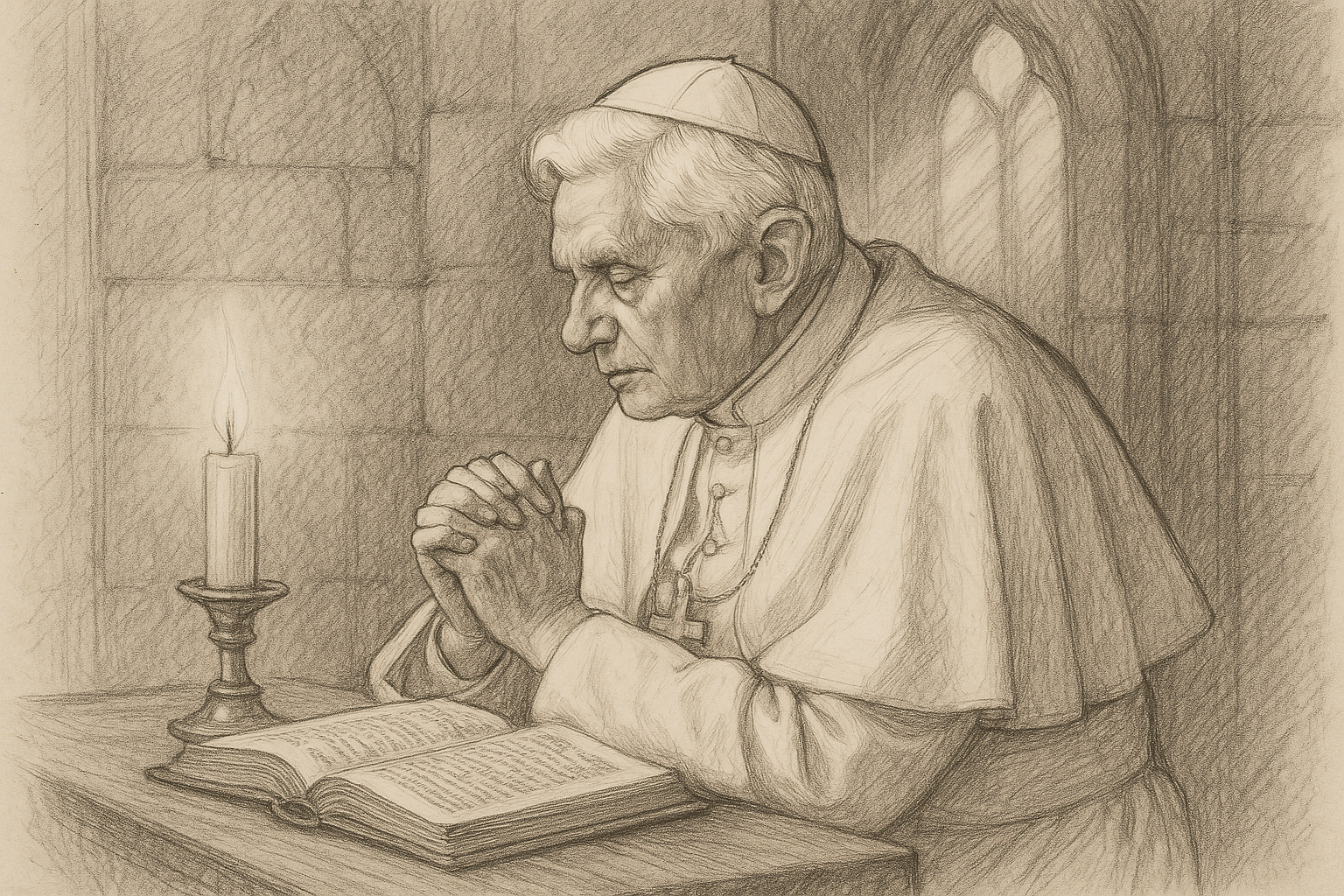
Among the modern popes, Benedict XVI stands apart for the unusual pairing of intellectual brilliance and striking gentleness. He was not a pope of dramatic gestures, yet his pontificate touched some of the deepest questions facing the Church in the early 21st century. To understand Pope Benedict XVI history, it helps to see the world into which he was elected, the burdens he carried, and the kind of witness he offered to Catholics who were searching for clarity in a noisy age.
Joseph Ratzinger was elected pope on April 19, 2005, after the death of St. John Paul II. By then, the Church had entered a period marked by both immense global reach and significant internal tension. Secularization had advanced quickly in Europe and North America. Public discussion of faith often treated religion as a private opinion rather than a claim on truth. At the same time, the Church was still living with the long reception of the Second Vatican Council, including debates over liturgy, authority, and the meaning of renewal. Benedict inherited a Church that needed confidence without arrogance, continuity without stagnation, and reform without rupture.
A theologian chosen for a difficult hour
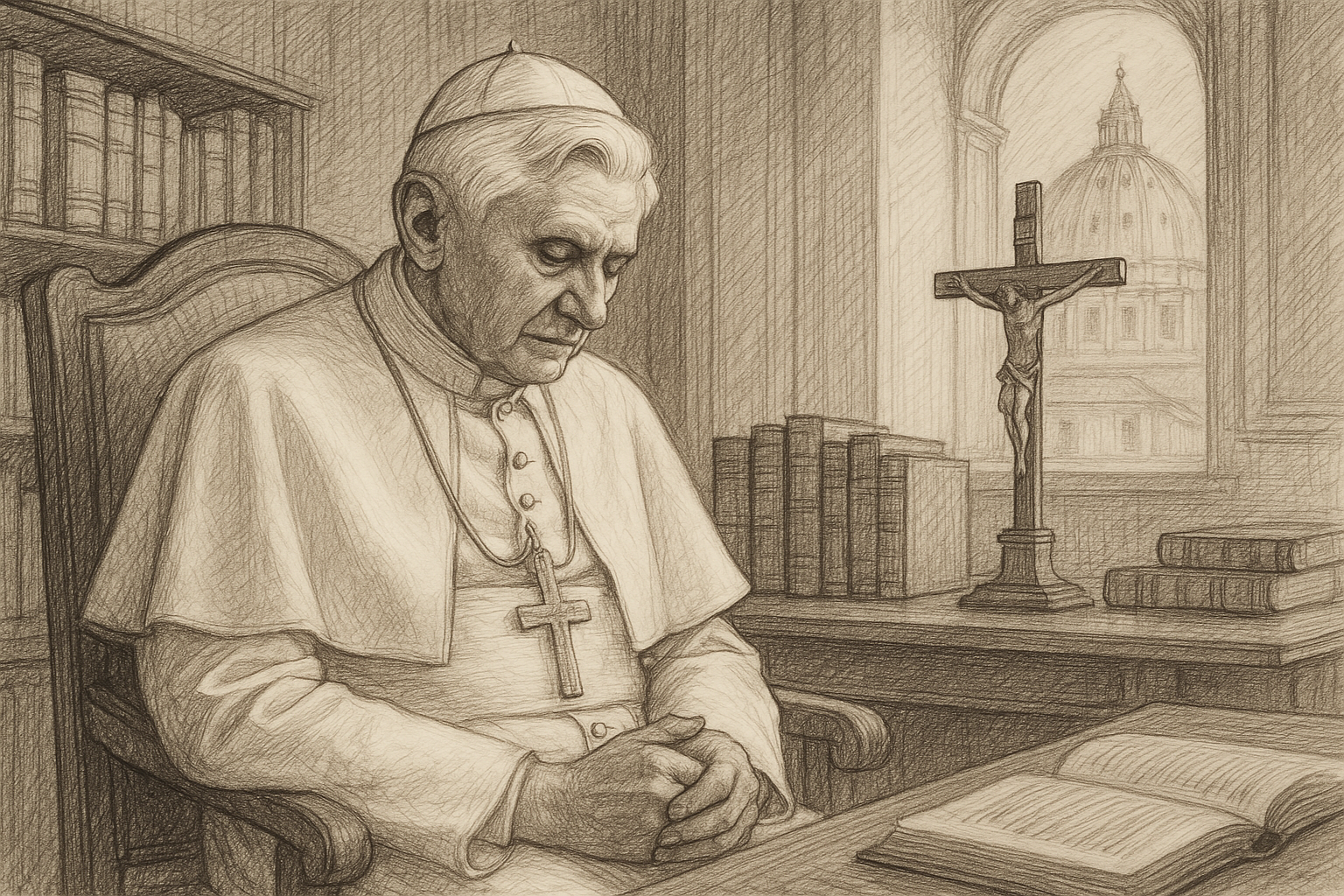
Before becoming pope, Ratzinger had already spent decades as one of the Church's most respected theologians. He served as a peritus at Vatican II and later as prefect of the Congregation for the Doctrine of the Faith from 1981 until 2005. That long service shaped his reputation. Some saw him mainly as a guardian of doctrine, but his own writings show something more balanced: a deep love for Christ, Scripture, the liturgy, and the interior life of faith. He believed that truth and love belong together, and that the Church cannot offer the world anything more important than Christ Himself.
His election came at a moment when many Catholics were looking for a pope who could make sense of the Church's identity after decades of change. Benedict answered that need not by promising novelty, but by calling the Church back to its center. Again and again, he stressed that Christianity is not first a moral system or a cultural inheritance. It is an encounter with Jesus Christ, who reveals the face of God and calls every person to conversion. In a world tempted to reduce religion to activism or sentiment, that insistence was both simple and demanding.
The major themes of his pontificate
Several issues defined Benedict XVI's years as pope. One was the relationship between faith and reason. In his famous 2006 address at Regensburg, he warned against separating religion from rational inquiry, and he also challenged the West to recover a broader vision of reason that includes moral and spiritual truth. The speech was widely discussed, and parts of it caused controversy, but its deeper purpose was not political provocation. Benedict was arguing that violence and faith cannot be reconciled, and that authentic religion must never be cut off from truth.
Another major theme was the liturgy. Benedict believed that worship is not something the Church invents for itself, but a gift received from God and handed on in continuity with the tradition of the Church. He encouraged reverence, beauty, and a sense of orientation toward the Lord. His apostolic letter Summorum Pontificum in 2007 broadened permission for the use of the 1962 Roman Missal. For some Catholics, this represented a healing of old liturgical tensions. For others, it raised questions about unity and reception. Benedict's intention, however, was pastoral: he hoped to show that the Church's liturgical heritage should not be treated as disposable.
He also repeatedly addressed the crisis of faith in the modern world. Benedict understood that the problem was not only external hostility. The Church also had to confront interior fatigue, doctrinal confusion, and a loss of missionary confidence. He spoke often about relativism, the tendency to deny that truth can be known. His warning was not abstract. If truth disappears, then human freedom loses its direction, and moral life becomes unstable. For Benedict, the answer was not harshness but a deeper conversion to Christ, because only Christ can reveal what the human person is made for.
Trials that marked the papacy
No account of Benedict XVI history can ignore the painful scandals that weighed on his pontificate. The sex abuse crisis, which had already wounded the Church deeply, demanded continuing attention, repentance, and reform. Benedict took the crisis seriously. He met with victims, called for purification, and pressed for accountability. He also faced criticism because many Catholics wanted faster and more visible change. Yet his approach showed a conviction that the Church must tell the truth about sin before she can speak credibly about mercy.
He also confronted tensions within the Church, especially in places where liturgical disagreements or theological disputes had become polarized. Benedict was not a pope of ideological warfare, even though his papacy unfolded amid ideological divisions. He often preferred patient argument, careful phrasing, and an appeal to continuity. That style won admiration from many and frustration from others. But it revealed something important: he believed the Church's deepest unity does not come from compromise on doctrine, but from shared fidelity to the Lord who founded her.
His papacy also overlapped with a rapidly changing communications landscape. The modern media environment amplified every speech, gesture, and misunderstanding. Benedict's thoughtful manner sometimes struggled to compete with a culture that rewards speed over depth. Yet in that setting, his calm and measured presence became its own witness. He reminded Catholics that the Church does not need to imitate the world to be effective. She needs saints, truth, and fidelity.
Key moments associated with Benedict XVI
Several events are especially linked to his name. His first encyclical, Deus Caritas Est, set the tone for his pontificate by reflecting on the nature of Christian love. It made clear that charity is not a vague humanitarian feeling but a participation in God's own life. His later encyclical, Spe Salvi, focused on Christian hope, reminding believers that hope is not optimism about earthly progress but trust in God who saves. Caritas in Veritate, issued in 2009, addressed social teaching and the moral foundations of economic life, again showing Benedict's concern that truth must guide love and action.
His 2008 visit to the United States, including a meeting with victims of abuse and a Mass at Yankee Stadium, was another important moment. It showed both his pastoral seriousness and the global scope of his ministry. He also established the Year of Faith in 2012, encouraging Catholics to rediscover the treasures of the creed, the sacraments, and the Church's mission. That initiative reflected a central concern of his pontificate: the need not merely for religious habit, but for renewed conviction.
Perhaps the most surprising moment came in 2013, when Benedict announced that he would renounce the papacy. In modern times, papal resignations are extraordinarily rare, and his decision stunned the world. Benedict explained that he lacked the strength to carry out the ministry as before. The act was humble, disciplined, and sober. It was not a retreat from responsibility, but an acknowledgment that the office of Peter requires real human strength. His resignation opened a new chapter in Church history and gave rise to many reflections on the nature of papal service.
What his witness offers modern Catholics
Benedict XVI's legacy is not confined to a list of documents or events. His witness is especially valuable because it shows how thoughtfulness can serve holiness. He loved the Church enough to speak plainly about her wounds, but he never lost sight of her beauty. He trusted that the faith of the Church is not a collection of slogans, but a living truth received from Christ through the apostles.
Modern Catholics can learn from his conviction that the Christian life begins in worship. If the liturgy becomes routine, the faith easily shrinks. If prayer is shallow, theology loses warmth. Benedict's insistence on reverence was never mere aesthetic preference. It flowed from his belief that man is created to adore God, and that the Church's worship forms the soul for mission. As Scripture says, Keep Reading on Lets Read The Bible
Frequently Asked Questions
Why is Pope Benedict XVI history important for Catholics today?
It shows how the Church responded to secularization, internal tension, and the need for doctrinal clarity in the modern world. Benedict's pontificate highlights the importance of truth, reverent worship, and a Christ-centered faith.
What was Pope Benedict XVI best known for as pope?
He was best known for his theological depth, his teaching on the relationship between faith and reason, his liturgical vision, and his emphasis on the centrality of Jesus Christ. He also issued major encyclicals on love, hope, and social teaching.
Why did Benedict XVI resign from the papacy?
Benedict stated that he no longer had the strength to carry out the ministry of the Bishop of Rome as required. His resignation in 2013 was a rare act in modern Church history and reflected humility, discernment, and a recognition of the demands of the office.