Catholic Living
Looking to the Stars Without Losing the Way
A Catholic reflection on astrology, discernment, and the difference between curiosity and surrender
Site Admin | August 31, 2025 | 94 views
When the stars seem to speak
Many people encounter astrology in ordinary, almost casual ways. A newspaper horoscope, a social media meme, a conversation with friends, or a late night search for meaning can all make the subject feel light and harmless. In a culture that often feels unstable, the appeal is easy to understand. People want patterns. They want reassurance. They want to know whether love, work, or suffering has some hidden script behind it.
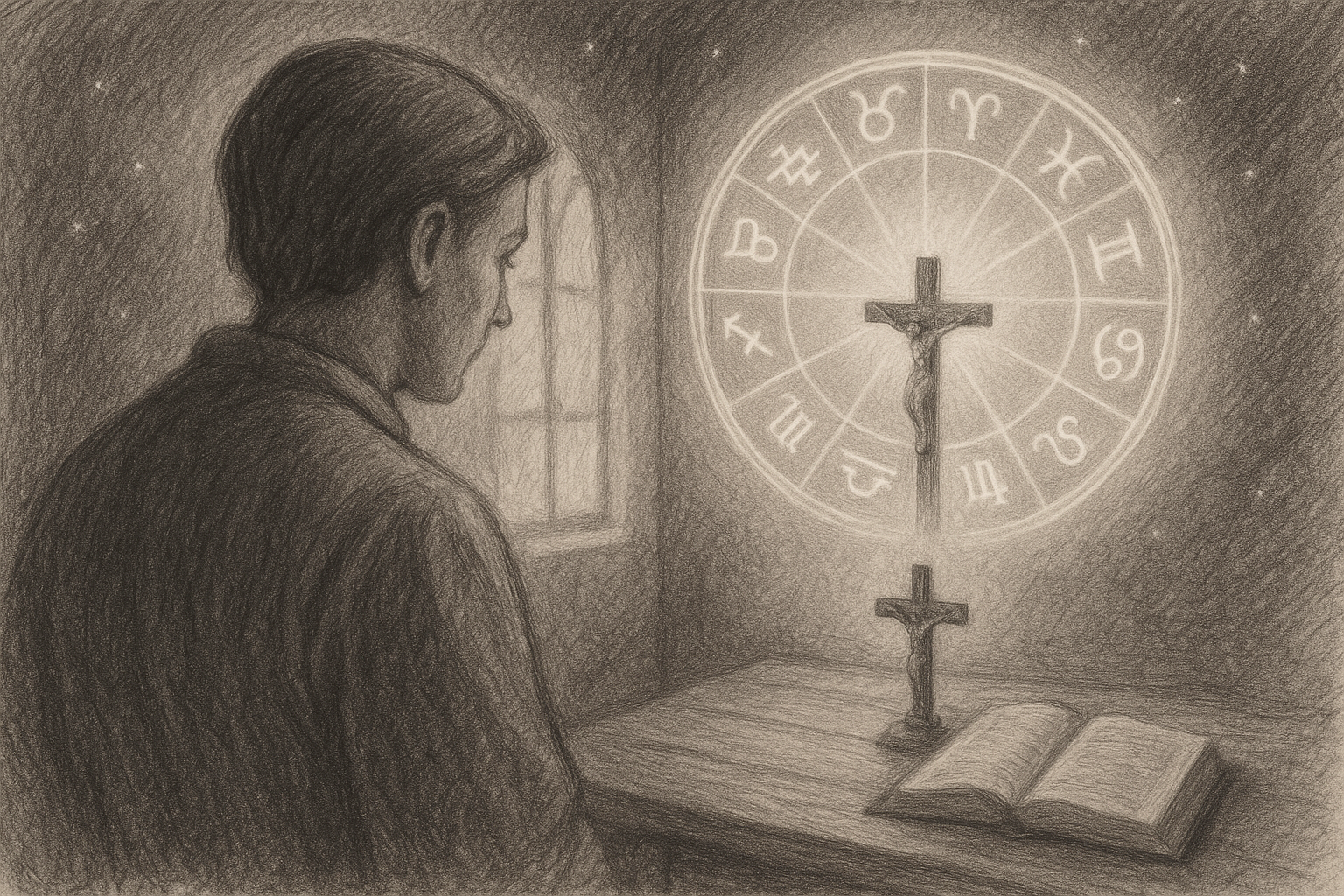
Catholic teaching does not dismiss that desire. Human beings are made to seek meaning, and we are not wrong to wonder about the shape of our lives. Yet astrology Catholic teaching draws an important line between healthy wonder and misplaced trust. The Church teaches that the future belongs to God alone, and that trying to read or control it through the stars is not a neutral habit. It can become a spiritual diversion from the freedom and trust God desires for his children.
The issue is not whether the heavens are beautiful. They are. Scripture itself praises the skies as part of God's handiwork: the heavens declare the glory of God the heavens declare the glory of God. The question is whether created signs are being treated as if they hold authority over the human person. That is where Catholic discernment begins.
What the Church actually rejects
The Catholic Church is not opposed to science, symbolism, or the natural order. It is opposed to superstition and to any practice that claims hidden knowledge or control apart from God. The Catechism places astrology within that wider warning. It states that all forms of divination are to be rejected, including recourse to horoscopes, astrology, palm reading, interpretation of omens, and similar practices, because they seek power over time, history, and persons that belongs to God alone.
This is a serious matter, but it should be understood carefully. The Church is not saying that every person who has glanced at a horoscope has committed grave sin. Moral responsibility depends on knowledge, freedom, and intention. A person may treat astrology as a joke, a habit, or a cultural curiosity without fully grasping its spiritual implications. Still, even casual use can shape the heart in ways that are not harmless. Repeated reliance on astrological predictions can nurture anxiety, determinism, and a subtle refusal to live by faith.
In Catholic life, the problem is not merely that astrology can be inaccurate. Plenty of false things are inaccurate without being spiritually dangerous. The deeper concern is that astrology invites a person to consult a system of signs as though it could reveal destiny apart from the Providence of God. That posture can weaken trust in prayer, providential freedom, and personal responsibility.
Why astrology can feel persuasive
It helps to be honest about why astrology continues to attract people. It often seems to offer three things at once: identity, explanation, and relief. If a person feels confused, astrology can provide a ready made story about personality and fate. If someone is hurt, it can offer a way to say, This is why I am like this. If the future feels uncertain, it can promise a kind of map.
That promise is emotionally powerful, especially for people carrying loneliness, disappointment, or fear. The human heart does not like emptiness. When faith is weak or prayer feels dry, a person may be tempted to seek guidance that feels immediate and concrete. Astrology offers patterns without requiring surrender. It can feel spiritual without asking for conversion.
But Catholic discernment asks a different question. Does this practice help me love God more fully and obey him more freely? Does it make me more humble, more truthful, more peaceful, more responsible? Or does it quietly train me to interpret life through fear, labels, and fixed expectations? A system that seems comforting at first may end by narrowing the soul.
Scripture warns against placing ultimate confidence in signs detached from God. The prophet Isaiah speaks sharply against those who look to the heavens as if they could govern what only the Lord can govern Let the astrologers stand forth. The point is not contempt for creation. It is a warning against confusing the creature with the Creator.
Fate, freedom, and the Christian life
One of the deepest conflicts between astrology and Catholic faith is the issue of human freedom. Astrology tends to frame personality and events as governed by impersonal forces. Even when presented in soft language, it often suggests that the self is fixed by the stars and that life unfolds according to cosmic patterns outside the reach of personal responsibility.
Catholic teaching speaks differently. God created each human person with dignity, reason, and freedom. We are shaped by temperament, family, wounds, culture, and choices, but we are not trapped by them. Grace does not erase freedom; it heals and elevates it. The Christian life is not a script read from the sky. It is a real relationship with God in which prayer, virtue, repentance, and trust matter.
That is why astrology can be spiritually corrosive even when it is treated lightly. If I begin to believe that my future is fixed by a chart, I may stop praying with courage. If I believe someone is simply a certain sign, I may stop seeing the person before me and start seeing a label. If I believe my failures are written into the stars, I may excuse what needs conversion. In this way, astrology can quietly undermine the moral life.
The Gospel offers something far more hopeful. Jesus does not tell people to consult the heavens for their future. He tells them not to be anxious and to seek first the kingdom of God seek first the kingdom of God. Christian hope is not vague optimism. It is trust that the Father knows what we need and leads us through real choices, real grace, and real mercy.
Pastoral concerns for families and young people
Astrology often enters Catholic homes through ordinary channels. Teenagers see it online. Adults share quizzes and personality charts as entertainment. Friends use zodiac language to explain relationships. None of this usually begins with hostility toward the faith. More often, it begins with curiosity, humor, or the desire to feel understood.
That is why pastoral response matters. A harsh or mocking approach may miss the underlying hunger. Many people drawn to astrology are not trying to rebel against God. They are trying to locate themselves. They may be searching for reassurance that their life has meaning, or for language to describe complex emotions. If Catholics respond only with scolding, they may fail to offer a better answer.
Parents can help by teaching children early that their identity comes first from being loved by God, not from a sign, a label, or a trend. Youth ministers and catechists can also speak clearly without turning the issue into a culture war. The goal is not panic. It is formation. Young Catholics should learn that curiosity about the stars can become an invitation to praise, while dependence on astrology can become an obstacle to freedom.
In pastoral conversation, it is often helpful to distinguish between beauty and belief. It is perfectly Catholic to admire the night sky, study astronomy, or reflect on the order of creation. It is not Catholic to seek hidden guidance in horoscopes or to let astrological claims direct major decisions. That distinction is simple enough for a child to understand, and deep enough for an adult to live by.
How to respond if astrology has become a habit
For many people, the most useful question is not whether astrology is theoretically wrong. It is what to do when it has already become familiar. Some Catholics quietly read horoscopes every day. Others keep a few astrology apps on their phones. Others have built friendships or romantic expectations around zodiac language. If that is your situation, the Church does not offer shame. She offers a path back to freedom.
Start by naming the habit honestly before God. A simple prayer can help: Lord, I want to trust you more than I trust signs, predictions, or my own fear. Then remove the most obvious sources of temptation. Unsubscribe from astrology feeds, delete apps, and stop treating zodiac claims as harmless entertainment if they are not actually harmless for you.
It can also help to replace the habit with something richer, not just something stricter. Read the Psalms. Spend time with the daily Gospel. Ask for the intercession of your patron saint. Learn to make decisions through prayer, counsel, and reason. Catholic discernment is concrete. It is not about decoding the universe. It is about listening for God's will in the real conditions of daily life.
Confession can also be a place of healing if astrology has become spiritually entangled with fear or dependence. A priest can help a penitent distinguish between habit, curiosity, and culpable attachment. Often, the most freeing step is simply bringing the matter into the light. What is hidden tends to grow stronger. What is confessed begins to lose its hold.
The Christian does not need the stars to tell him who he is. He belongs to Christ, and that identity is deeper than any chart.
Creation points beyond itself
Catholic teaching does not leave us with a sterile prohibition. It invites us to see the heavens in a truer way. The stars are not messengers of fate. They are part of creation, signs of beauty, order, and wisdom. They can stir awe, humility, and praise. In that sense, they do speak, but they speak of the Creator rather than replacing him.
That distinction can change how we live. Instead of asking the sky to explain our destiny, we can ask God to guide our steps. Instead of searching for certainty in a chart, we can seek wisdom in Scripture, the sacraments, and the counsel of the Church. Instead of surrendering to labels, we can surrender to grace.
The Christian life is not less mysterious than astrology. It is more personal. God does not reduce us to patterns. He calls each of us by name. He knows our failures, our fears, and our desires, and he still leads us toward holiness. That is a better promise than any horoscope could offer.
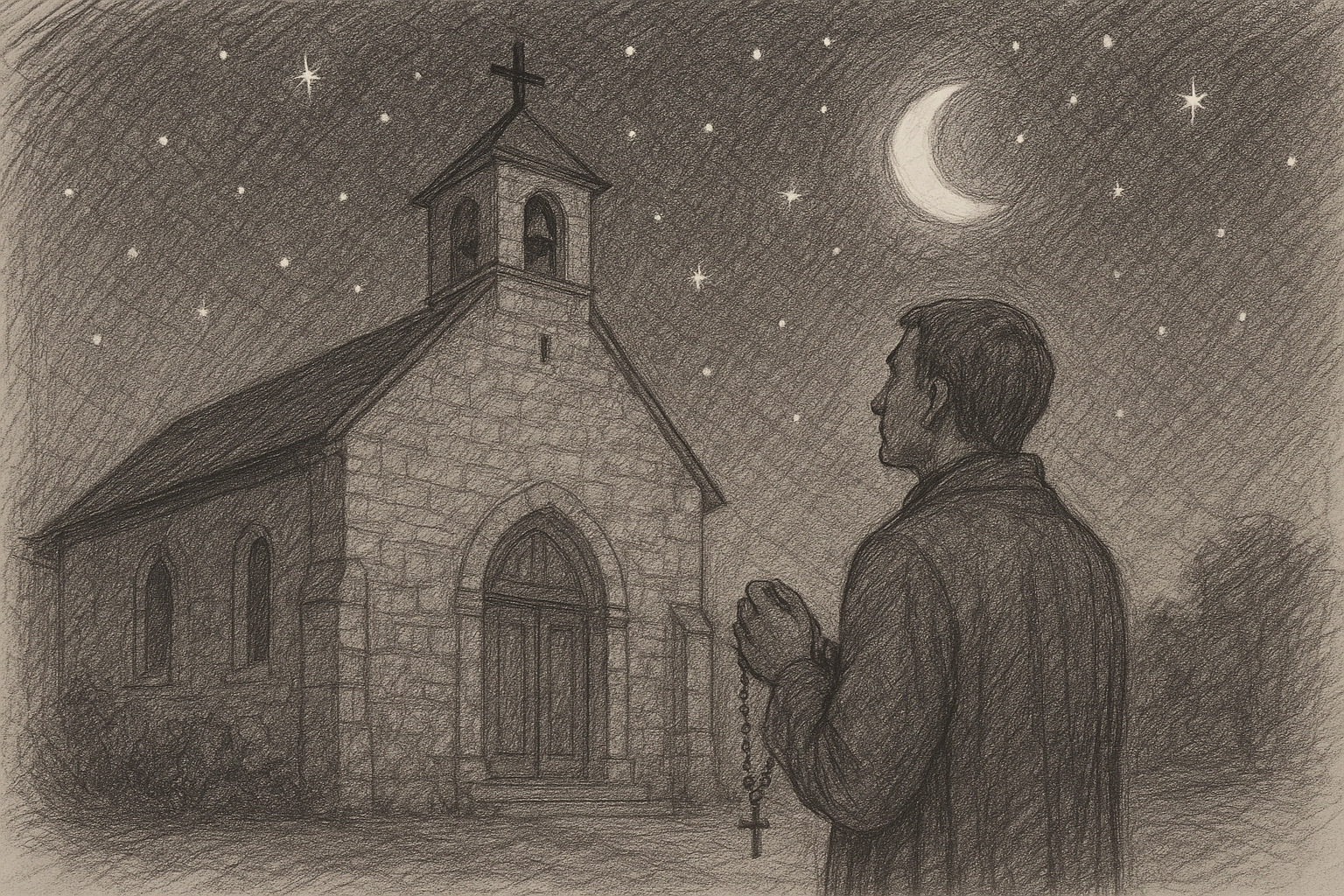
So if the language of the stars has followed you for years, you do not need to respond with fear. Begin with one act of trust. Look up at the night sky and remember that the One who made it also made you. The heavens are not your master. Christ is. And in him, the future is not hidden as a riddle to be solved, but given as a path to be walked with faith, hope, and peace.
Keep Reading on Lets Read The Bible
Frequently Asked Questions
Is astrology a mortal sin in Catholic teaching?
Not automatically. The Church rejects astrology as a form of divination, but personal guilt depends on knowledge, freedom, and intention. Casual exposure is different from deliberate, ongoing reliance on astrology for guidance.
Can Catholics read horoscopes for entertainment?
Catholic teaching urges caution. Even when treated as entertainment, horoscopes can normalize a mindset of dependence on hidden forces. If they do not lead you toward faith and freedom, it is better to avoid them.
What is the difference between astrology and astronomy?
Astronomy is the scientific study of celestial bodies and their movements. Astrology claims that the stars and planets influence personal fate or reveal hidden knowledge about human affairs. Catholic teaching rejects astrology, not astronomy.