Catholic Living
Living Together Before Marriage: A Clearer Catholic Path to Love and Freedom
A compassionate look at cohabitation, chastity, and the healing power of choosing God's order for marriage
Site Admin | August 6, 2025 | 89 views
In many parts of the world, living together before marriage has become so ordinary that it no longer raises questions. Couples may see it as practical, economical, or even a wise way to test compatibility. Family and friends may treat it as normal. Yet the Catholic Church invites us to look more deeply. The issue of cohabitation before marriage and Catholic life is not only about a living arrangement. It touches the meaning of marriage itself, the call to chastity, and the kind of freedom that allows love to become faithful and lasting.
The Church does not speak about this matter to shame couples or to deny the real affection that can exist between them. Many who cohabit sincerely want to build a future together. Some are already engaged. Others believe living together will help them avoid hardship. But Catholic moral teaching asks whether a relationship is being shaped in a way that truly serves the good of the spouses, their future marriage, and their witness before God. That question deserves honesty, patience, and mercy.
Marriage is meant to be publicly given, not quietly assumed
Catholic teaching sees marriage as a covenant, not merely a private promise or a romantic state of mind. It is a public, lifelong consent by which a man and a woman give themselves to one another before God and the Church. That is why the wedding is not just a ceremony attached to an already complete reality. It is the moment when marital life is established in a visible and sacramental way.
When a couple lives together as husband and wife before exchanging vows, they begin to live a sign of marriage without actually making the covenant. That can blur the truth of what marriage is. It can make the body say one thing before the soul and the promises are ready to say it. In Catholic moral life, signs matter. The way we live should correspond to the truth we profess.
Scripture shows that covenant love is not casual. It is faithful, ordered, and rooted in God's own fidelity. Jesus speaks of marriage with great seriousness when He recalls that the two become one flesh and that what God has joined must not be divided [[VERSE|matthew|19|4-6|Matthew 19:4-6]]. Saint Paul also presents marriage as a profound mystery that reflects Christ's union with the Church [[VERSE|ephesians|5|31-32|Ephesians 5:31-32]]. When Catholic life takes marriage seriously, it treats the path to marriage seriously as well.
Why the Church sees cohabitation as spiritually risky
The main moral concern is not simply that a couple shares an address. The deeper concern is that cohabitation before marriage can place two people in a setting that makes chastity harder to preserve and discernment harder to practice. Living together often introduces habits, expectations, and emotional pressures that can make it difficult to keep boundaries clear. Even when a couple intends to remain chaste, the environment itself can work against that intention.
Cohabitation can also create a false sense of certainty. A relationship may seem stable because the practical details are already shared, yet the sacramental commitment is still absent. The couple may feel married in everything but name, which can reduce the urgency of facing important questions honestly. Are we truly ready for lifelong fidelity? Have we spoken plainly about children, finances, faith, and sacrifice? Or have we allowed the comfort of shared life to postpone the truth?
There is also the question of witness. Catholic life is never only personal. It shapes how others see the goodness of marriage, the seriousness of chastity, and the meaning of commitment. When Catholics live as though marriage can be assumed before it is vowed, the signs of sacramental life can become blurred for those around them. The Church calls her children to a clearer and more beautiful witness.
Chastity protects love instead of weakening it
Some people hear the Church's moral teaching and assume that chastity is a negative rule, a set of restrictions meant to make love smaller. In truth, chastity safeguards love so that it can grow in truth. It helps a couple respect one another as persons rather than possessing one another as if marriage were already settled. Chastity keeps desire ordered toward the full gift of self that belongs to marriage alone.
Saint Paul writes that the body is not meant for immorality but for the Lord 1 Corinthians 6:13, and he reminds believers that their bodies are temples of the Holy Spirit [[VERSE|1-corinthians|6|19-20|1 Corinthians 6:19-20]]. This does not mean the body is bad. It means the body is holy. A Catholic approach to cohabitation before marriage and Catholic life begins here: the body is not a tool for convenience, but a gift to be offered in the right order, within a covenant that has been freely and publicly made.
Chastity is not only about avoiding sin. It is about learning reverence, restraint, and self-gift. A couple preparing for marriage can grow in tenderness without living as though marriage has already been accomplished. Indeed, many couples discover that choosing chastity before the wedding deepens trust and forces real conversation. They learn to love with patience instead of impulse, and to prepare for marriage as a vocation rather than a possession.
When a couple is already cohabiting, mercy comes before panic
People often ask what to do if they are already living together. The Church's answer is not despair. It is conversion. Grace is real, and God does not ask anyone to fix everything alone. If cohabitation is already part of a relationship, the first step is to stop defending it and begin examining it honestly before God.
That examination should be calm and concrete. Are both people truly preparing for marriage in the Catholic sense? Have they spoken with a priest? Have they set a date? Are they living together because of serious practical necessity, or because they have simply delayed making a change? Honest answers matter. If the relationship is moving toward marriage, the couple should work with a priest or trusted pastoral guide to shape a plan that protects chastity and clarifies intentions.
Sometimes the most faithful response is to live separately until the wedding, even if that requires inconvenience, humility, or help from family and friends. For some couples, separate bedrooms, strong boundaries, and a clear timeline may be temporary steps while they arrange a fuller change. The important thing is not perfection in a day, but a real willingness to turn toward the truth.
Repentance in Catholic life is never only about regret. It is about turning the heart and the habits of daily life back toward God, one honest step at a time.
If a couple has sinned gravely, confession is a place of healing, not humiliation. The sacrament of Penance restores grace and strengthens the will. It also helps a person distinguish between shame that crushes and sorrow that converts. A priest can help a couple discern whether they should continue planning marriage, whether they need to live apart for a time, and how to approach the future with integrity.
Practical steps toward repentance, healing, and virtue
Because moral teaching becomes clearer when it is lived, it helps to name practical steps. These are not tricks or loopholes. They are habits that support freedom.
- Speak plainly. If you are cohabiting, do not hide behind vague language. Name the situation honestly before God and, if needed, before a confessor or pastor.
- Make a concrete plan. Decide whether you will move apart, sleep separately, or set another temporary arrangement that better reflects chastity while you prepare for marriage.
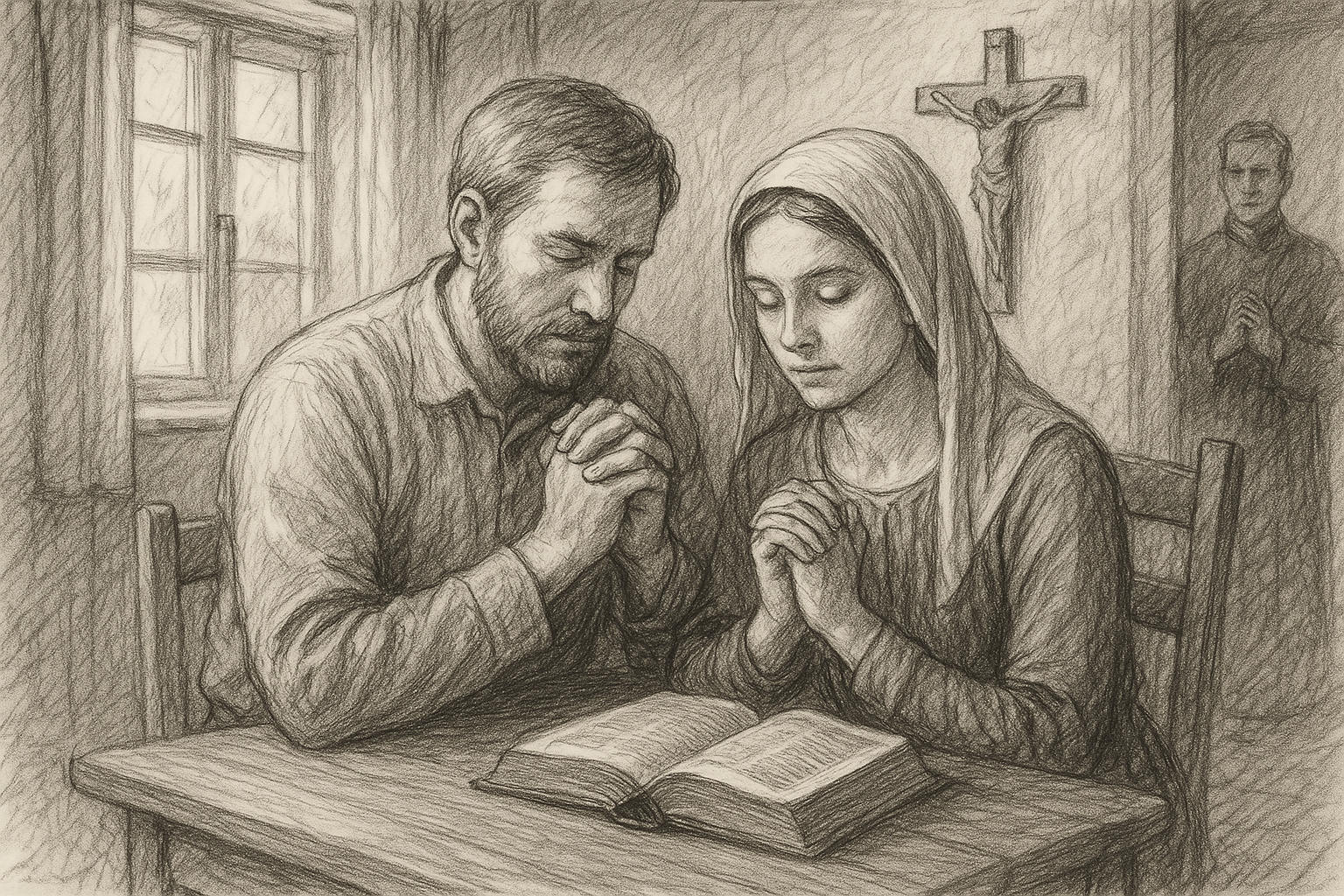
- Pray together and separately. Ask for purity, patience, and the grace to love one another well. Shared prayer should not replace conversion, but it can support it.
- Go to Confession. The sacrament brings truth into the light and helps the soul begin again.
- Seek counsel. A priest, deacon, or mature Catholic mentor can help couples make wise decisions without panic.
- Prepare seriously for marriage. Marriage prep is not paperwork alone. It is formation in communication, sacramentality, sacrifice, and lifelong fidelity.
These steps matter because virtue is built through practice. If a couple learns now to make choices that respect God's order, they are better prepared for the promises of married life later. That includes ordinary things: how they handle money, how they resolve conflict, how they resist temptation, and how they speak to one another when emotions are strained.
What this teaches about love itself
One of the quiet tragedies of cohabitation is that it can train a couple to treat love as a private arrangement rather than a covenant open to God. Catholic life insists that love is more than chemistry and more than comfort. It is a gift that seeks the good of the other, even when that good requires sacrifice.
In this light, waiting until marriage is not a punishment. It is a way of honoring the truth that bodies, promises, and souls belong together. The wedding vow gives a couple the right setting in which to live as husband and wife, not before. That order protects both dignity and peace. It also teaches the heart to trust that God's commandments are for our flourishing, not our loss.
The Church's teaching on cohabitation before marriage and Catholic life ultimately rests on confidence that God's design for marriage is wise. A couple that embraces that design may feel the cost at first, especially if change requires sacrifice. But the deeper cost is often in staying where the truth is dimmed. When couples choose chastity, repentance, and clear preparation for marriage, they make room for a love that can endure hardship, bear fruit, and remain faithful in the presence of God.
For those already struggling, the invitation is still open. Begin again. Tell the truth. Seek grace. Let the Lord reorder what has become confused. In that surrender, love does not shrink. It becomes more honest, more patient, and more ready for the covenant it was always meant to serve.
Keep Reading on Lets Read The Bible
Frequently Asked Questions
Is cohabitation before marriage always a mortal sin in Catholic teaching?
The moral seriousness depends on the person's knowledge, freedom, and intention, as with any grave matter. The Church does teach that living together in a way that places a couple in a situation contrary to chastity and the meaning of marriage is morally disordered. A priest can help someone examine the concrete facts and form a proper conscience.
What should a Catholic couple do if they are already living together and planning a wedding?
They should speak honestly with a priest, go to Confession if needed, and make a concrete plan to protect chastity. That may mean moving apart, living separately within the home, or taking other temporary steps until the wedding. The goal is not panic, but a sincere return to God's order.
Can living together before marriage ever be justified for practical reasons?
Some couples may face real financial or family pressures, but practical difficulty does not change the Church's moral teaching. If a temporary arrangement cannot be avoided, the couple should still set clear boundaries and seek pastoral guidance so that the situation does not become a habitual denial of chastity or marriage preparation.